Table of Contents >> Show >> Hide
- 1. The Assyrian “Billboard of Brutality”
- 2. War Elephants: Nature’s Loudest Threat Display
- 3. The Trojan Horse: “Free Gift” Infiltration
- 4. Themistocles and the Fake Tip-Off at Salamis
- 5. The Feigned Retreat (and the “Parthian Shot”)
- 6. Trophy Theater: “We Got Your Guy” Morale-Killers
- 7. Drums, Horns, and Battle Cries That Turn Knees to Jelly
- 8. Engineering Flexes: Caesar’s Rhine Bridge as a Threatening Memo
- 9. Propaganda You Can Spend: Coins as Mass Messaging
- 10. Sacred Spectacle: Aztec Reputation Warfare
- So What’s the Point (Besides Making History Feel Extremely Intense)?
- Field Notes: Modern “Experiences” With Ancient Psywar (Extra 500+ Words)
- SEO Tags
Before there were loudspeakers, leaflets, or social media arguments that start with “Actually…,” commanders still understood something timeless:
if you can crack the enemy’s confidence, you don’t have to crack as many helmets. Ancient armies fought with spears and swords, surebut they also
fought with fear, rumor, spectacle, and the occasional “totally normal gift” that definitely wasn’t a trap.
Psychological warfare (or “psywar,” if you enjoy syllable-saving) isn’t a modern invention. Ancient leaders used intimidation campaigns,
clever deception, and reputation management long before PR firms existed. Below are ten tactics from the ancient world that targeted the mind
firstand the battlefield secondplus a modern “experience” section at the end to show why these tricks still feel uncomfortably effective.
1. The Assyrian “Billboard of Brutality”
The Neo-Assyrian Empire didn’t just conquer citiesit advertised what happened when you resisted. Relief art and official records emphasized
harsh punishments, mass deportations, and public displays meant to shout one message: “Rebellion is a bad hobby.” This wasn’t random cruelty;
it was a strategy. If one city saw (or heard about) what happened to the last city, surrender started sounding like a smart, wellness-forward choice.
Psychologically, the tactic works like a terrifying rumor you can’t un-hear. It spreads faster than armies march, and it forces leaders to weigh
not only military odds but the social cost of being the person who “got everyone punished.” Ancient psywar, in this case, was basically intimidation
with a long-term branding plan.
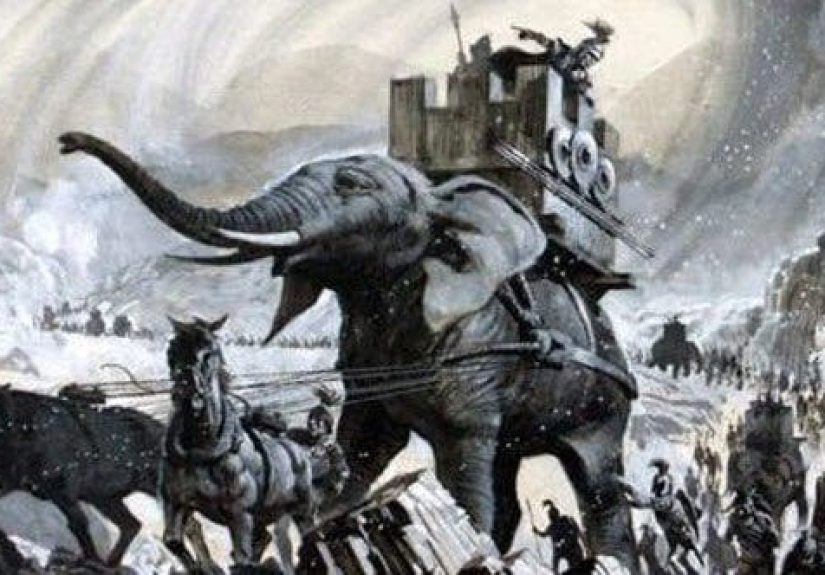
2. War Elephants: Nature’s Loudest Threat Display
If you’ve never faced an elephant in battle, congratulations on your excellent life choices. In antiquity, war elephants were “living tanks” that
brought noise, size, smell, and sheer panic into formations that depended on discipline. Even trained soldiers could break ranks when confronted
with a wall of muscle that trumpets, charges, and does not respect personal space.
Commanders used elephants for more than physical impactthey used them to rattle morale before contact. An army that flinches early fights worse
later. And elephants also helped shape reputation: if you were the general with elephants, you felt bigger than your headcount. The downside?
Elephants can panic too, and nothing says “bad day at work” like your own war elephant reversing direction through your friends.
3. The Trojan Horse: “Free Gift” Infiltration
The Trojan Horse is the ancient world’s most famous reminder that “free” is sometimes the most expensive word in human history. Whether you treat it
as myth, legend, or metaphor, the psychological principle is real: people drop defenses when a threat looks like a trophy. A gift reframes the story.
Instead of “they’re attacking,” the mind hears “we won.”
That mental shift is the whole trick. The defenders become their own security breach. They celebrate, they relax, they argue about what it means
(because humans can debate anything), and they bring the danger inside the walls themselves. Ancient psywar didn’t always need perfect stealthjust
enough plausibility to get people to override their instincts.
4. Themistocles and the Fake Tip-Off at Salamis
Sometimes psychological warfare is just sending the right message to the right person at the wrong time. Before the Battle of Salamis (480 BCE),
Themistocles used deception to push the Persians into fighting where Greek advantages mattered most: narrow waters that limited the enemy’s ability
to maneuver a massive fleet.
The genius isn’t only tacticalit’s psychological. By making the enemy believe they were about to catch the Greeks in a trap, you encourage haste,
overconfidence, and messy coordination. In other words, you let the opponent sabotage themselves with enthusiasm. Ancient commanders understood that
“winning the decision-making” is often the first step to winning the battle.
5. The Feigned Retreat (and the “Parthian Shot”)
Few tactics mess with the human brain like a retreat that isn’t a retreat. Step one: look like you’re losing. Step two: let the enemy’s confidence
inflate like a parade balloon. Step three: when they chase, spring the trap. Mounted archers perfected this style, including the famous “Parthian shot”
firing backward while riding awayso pursuit felt both irresistible and punishing.
The psychological hook is ego. Chasing a fleeing opponent feels like victory in progress, and people rush to “finish it.” That urgency turns
disciplined units into scattered clusters. Once formation breaks, fear spreads fast: nobody likes realizing the “runaway” enemy is still dangerous
and now has you out of position.
6. Trophy Theater: “We Got Your Guy” Morale-Killers
Ancient armies understood the power of symbolsespecially symbols attached to a spear. Displaying trophies, captured standards, or the unmistakable
proof that a key leader had fallen could puncture morale like a pin through a waterskin. It wasn’t just grief; it was the sudden collapse of the plan
everyone thought they were following.
A unit that believes its commander is dead (or captured) often feels unmoored: Who’s in charge? Is help coming? Are we already doomed and nobody told us?
That confusion creates hesitation, and hesitation is where routs are born. The tactic also works in reverse: your own troops see the trophy and think,
“We’re winning,” which can stiffen resolve even when conditions are messy.
7. Drums, Horns, and Battle Cries That Turn Knees to Jelly
Noise is an underrated weapon. Sudden, coordinated soundwar drums, horns, mass chantingcan trigger panic and distort perception. At Carrhae, the
Parthians used bellowing war drums, producing a psychological shock that helped destabilize Roman confidence before the fight fully unfolded.
Elsewhere, battle cries served as both intimidation and internal rhythm, helping fighters feel part of something larger than their individual fear.
This is ancient psywar at its simplest: make the enemy feel surrounded, outnumbered, or facing something inhumanly unified. Humans are social animals;
we read group confidence like weather. When the opposing army sounds like a single giant organism, it’s hard not to wonder if your side is the snack.
8. Engineering Flexes: Caesar’s Rhine Bridge as a Threatening Memo
Julius Caesar didn’t just fight battleshe staged demonstrations. Building a bridge across the Rhine (rapidly, with military precision) wasn’t only
a practical crossing. It communicated an idea: “This river you think protects you? We can rewrite geography.” The message lands even if no decisive
battle follows. The point is that the barrier isn’t a barrier anymore.
Psychological warfare loves “proof of capability.” A bold construction project becomes intimidation you can point at. It can also shape future
negotiations: once your enemy believes you can show up anywhere, they start making concessions earlier. Caesar’s bridge was a physical structure with
a mental aftershock.
9. Propaganda You Can Spend: Coins as Mass Messaging
Ancient empires didn’t have newsfeeds, but they had something better: money. Coins circulated widely and carried images, slogans, and carefully
curated portraits that told people who was in chargeand why that leader was unstoppable. Victories, divine favor, generosity, and military power
could all be “printed” into daily life.
This kind of psywar targets civilians and soldiers alike. If your enemy’s face is everywhereon currency, monuments, public artit creates the sense
that resistance is temporary and rule is permanent. It also boosts internal morale: subjects are reminded that they belong to a winning machine.
In modern terms, it’s brand consistency… with legions.
10. Sacred Spectacle: Aztec Reputation Warfare
The Aztec world used ritual and spectacle in ways that could intimidate rivals and reinforce power. Public ceremonies communicated religious meaning
internally, but they also broadcast a message outward: this state has the will, organization, and cultural certainty to do extreme thingsand do them
in front of everyone, on purpose.
Reputation warfare matters because it shapes how enemies calculate risk. If a neighboring city-state believes you’re relentless, it may choose tribute
over war. If captives believe resistance leads to a terrifying fate, they may break sooner. The unsettling efficiency of sacred spectacle is that it
merges belief, politics, and fear into one reinforced story: “We are powerful because the cosmos says so.”
So What’s the Point (Besides Making History Feel Extremely Intense)?
Ancient psychological warfare tactics worked because they targeted predictable human vulnerabilities: fear of uncertainty, fear of humiliation, fear
of being outnumbered, and fear that your leaders aren’t in control. The weapons changed over time, but the emotional circuitry hasn’t. A well-timed
deception can still cause overconfidence. A loud, unified signal can still trigger panic. A public display can still alter behavior far away from the
battlefield.
The smartest takeaway isn’t “try this at home” (please don’t). It’s recognizing how much conflict is about perception. The ancient world didn’t
separate “information” from “combat.” It treated the mind as terrainand then fought over it like it was the high ground.
Field Notes: Modern “Experiences” With Ancient Psywar (Extra 500+ Words)
Even if you’ve never marched in a phalanx (and if you have, you should probably disclose that on your taxes), you’ve likely felt the emotional
afterimage of these tactics in safer settingsmuseums, books, documentaries, historical sites, reenactments, and yes, strategy games that turn
ancient history into a surprisingly personal series of bad decisions.
Start with the intimidation factor. Walk through a gallery of Near Eastern reliefs or read translated royal inscriptions, and you’ll notice how
often conquest is described like a warning label. The “experience” isn’t gore; it’s the deliberate certainty. The text doesn’t say, “We might win.”
It says, “We win, and here is what happens next.” That tone is a psychological weapon all by itself. It’s the ancient equivalent of a door sign that
doesn’t read “No Soliciting,” but “Solicitors Will Be Memorized.”
Or take war elephants. Watch a documentary segment describing elephants on a battlefield and your brain does something funny: it tries to simulate
the noise and chaos. You can feel the formation-level panic without ever being in danger. That’s the pointthese tactics were designed to trigger
imagination. If you’re a Roman recruit hearing rumors about elephants for the first time, you’re fighting an animal you haven’t seen and a fear you
can’t measure. In modern life, we still react strongly to threats that are vivid but unfamiliar, which is why sensational stories spread faster than
boring truth.
The deception tactics show up in a different kind of modern “experience”: the moment you realize you were nudged into a conclusion. Reading about
Salamis or the Trojan Horse doesn’t just teach historyit teaches that people are surprisingly persuadable when a story flatters their hopes. “They’re
leaving!” “We’re about to win!” “This gift proves we’re safe!” If you’ve ever clicked something because it seemed to confirm what you already wanted
to believe, congratulations: you’ve met the ancient mind at its most relatable.
Then there’s the battlefield theaterdrums, horns, mass chants. Today, you can feel a tame version of that effect at a sports stadium or a concert.
When thousands of people move and sound as one, it’s thrilling if they’re “your side” and unsettling if they’re not. Ancient commanders weaponized
that sensation. They didn’t need to convince every soldier intellectually; they only needed to hit the nervous system hard enough to cause hesitation,
mistakes, and loss of cohesion.
Finally, the propaganda piececoins, monuments, victory narrativesmay be the most modern-feeling experience of all. When you see how rulers stamped
their image into daily transactions, you realize that psychological warfare isn’t always loud. Sometimes it’s quiet repetition. You see the leader’s
face so often that it feels normal. Then it feels permanent. And once something feels permanent, resisting it feels like resisting gravity.
The strange comfort of studying ancient psywar is that it makes modern persuasion feel less mysterious. Humans haven’t changed nearly as much as our
technology has. We still fear uncertainty, follow confident signals, and sometimes chase a “retreating” idea right into an ambush of our own making.