Table of Contents >> Show >> Hide
- 1) Misconception: If You Touch a Baby Bird, Its Parents Will Reject It
- 2) Misconception: Bread Is a Perfect Snack for Ducks and Other Birds
- 3) Misconception: Birdsong Is Just “Happy Chirping”
- 4) Misconception: Only Male Birds Sing
- 5) Misconception: Birds Mate for Life and Never Cheat
- 6) Misconception: “Birdbrain” Means Birds Are Dumb
- 7) Misconception: Owls Can Turn Their Heads 360 Degrees
- 8) Misconception: Ostriches Bury Their Heads in the Sand
- 9) Misconception: Backyard Feeders Make Birds Dependent and Stop Migration
- 10) Misconception: Birds Are Fragile Because All Their Bones Are Hollow (and They’re Not Really Dinosaurs)
- Final Thoughts: Bird Myths Are FunBird Facts Are Better
- Experience Add-On: What People Notice Once They Stop Believing Bird Myths (500+ Words)
- SEO Tags
Birds have a PR problem. For creatures that can migrate across continents, memorize songs, and survive weather that sends humans hunting for blankets, they still get stuck with some pretty goofy myths. “Birdbrain,” “owls spin like horror-movie props,” “bread is fine for ducks,” and the classic “don’t touch that baby bird or its parents will disown it!” all keep flapping around the internet.
In this guide, we’re busting the most common misconceptions about birds with real science, practical examples, and a little humor (because birds deserve better than bad rumors). If you love backyard birding, feed birds in winter, or just want to stop repeating weird bird myths at family BBQs, this one is for you.
1) Misconception: If You Touch a Baby Bird, Its Parents Will Reject It
This is one of the most stubborn bird myths, and it makes well-meaning people panic for no reason. In most cases, parent birds do not abandon a chick because a human touched it.
What’s actually true
Most birds rely far more on sight and sound than smell, so “human scent” is not the dramatic deal-breaker people imagine. If a nestling falls out of the nest and it’s safe to do so, returning it to the nest is usually the best move. And if the young bird is fully feathered and hopping around, it may be a fledglingbasically a bird teenager learning the ropes while the parents still feed it nearby.
Translation: don’t assume every baby bird needs a rescue mission. Sometimes it just needs a little space, and maybe for your cat to stay indoors.
2) Misconception: Bread Is a Perfect Snack for Ducks and Other Birds
Tossing bread at ducks feels wholesome. It looks like a postcard. It is, unfortunately, a nutrition fail.
Why bread is a bad idea
Bread fills birds up without giving them the nutrients they need. It can also grow mold or bacteria quickly, especially around ponds and parks, which increases disease risk. In other words, bread is the bird-food equivalent of living on fries and soda.
If you want to help birds, skip the bread and focus on species-appropriate food or, even better, habitat: native plants, clean water, and safe spaces. Birds don’t need a bakery. They need a healthy ecosystem.
3) Misconception: Birdsong Is Just “Happy Chirping”
Yes, birdsong sounds cheerful. No, your backyard robin is not dropping an acoustic album because it’s in a great mood.
What birds are really “saying”
Bird vocalizations usually serve practical purposes: defending territory, attracting mates, warning others, staying in contact, or coordinating behavior. That gorgeous dawn chorus isn’t random background music. It’s more like a neighborhood-wide group chat with zero privacy settings.
This misconception matters because people often interpret bird behavior emotionally instead of biologically. Birds do have complex behavior, but song is first and foremost communication. Once you start listening that way, birding gets a lot more interesting.
4) Misconception: Only Male Birds Sing
This myth used to show up in old field guides and casual bird talk all the time. It’s also incomplete.
The better version
In many North American temperate species, males are more likely to produce the longer, more elaborate songs people notice. But females sing tooespecially in many tropical species, and in some temperate species as well. In some birds, males and females even duet.
So if you hear someone say, “That must be the male,” the scientifically correct response is: “Maybe. But not automatically.” Bird science keeps revising old assumptions, and this is one of the biggest examples.
5) Misconception: Birds Mate for Life and Never Cheat
This one is half romance novel, half oversimplification.
What “mate for life” really means
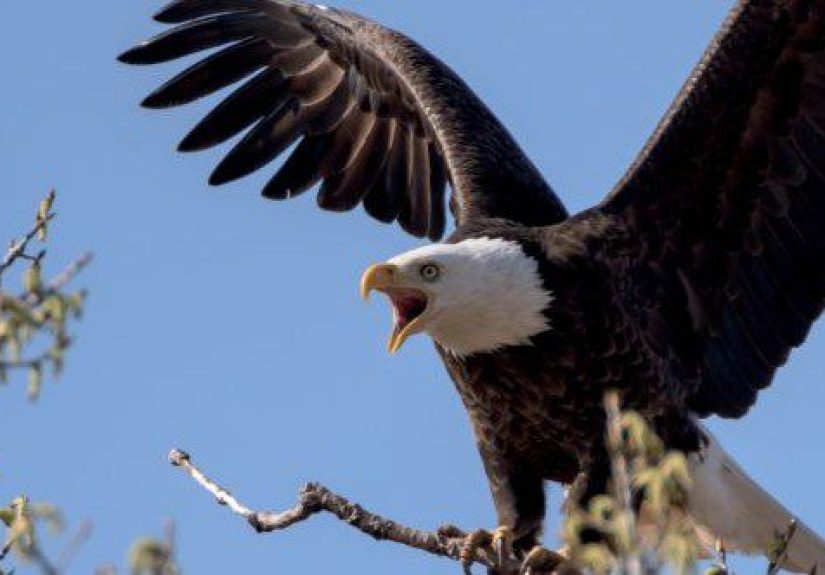
Some birds do form long-term pair bonds and may return to the same partner season after season. Bald eagles are a famous example and are often very faithful to a mate and nest site. But in many species, the more accurate term is social monogamy: a pair raises young together, yet extra-pair mating can still happen.
Bird relationships are less “fairytale marriage” and more “co-parenting contract with occasional plot twists.” Nature is efficient, not sentimental.
6) Misconception: “Birdbrain” Means Birds Are Dumb
If anyone calls a bird dumb, introduce them to a crow and then stand back.
Bird intelligence is real
Corvids (crows, ravens, jays) are especially famous for problem-solving, memory, and flexible behavior. Some can solve multi-step tasks, recognize patterns, and even count at a level that surprises people who still think “birdbrain” is an insult.
Even beyond crows and ravens, birds show serious cognitive skills: food caching, route memory, vocal learning, tool use, and social learning. Their brains are built differently from mammal brains, but “different” does not mean “less capable.”
7) Misconception: Owls Can Turn Their Heads 360 Degrees
This myth gets repeated so often that it might as well have its own fan club.
The real number
Owls can rotate their heads up to about 270 degrees, which is still wildly impressive. They need that flexibility because their eyes are fixed in their sockets, so they can’t move their eyes around like humans do.
So no, an owl can’t spin all the way around like a haunted desk lamp. But it can rotate far enough to make you check twice during a nighttime walk.
8) Misconception: Ostriches Bury Their Heads in the Sand
Classic myth. Great cartoon material. Not true.
Why people believe it
Ostriches do lower their heads to the ground when tending nests or turning eggs, and from a distance that can look like “head in the sand.” They also crouch low to avoid detection. But they are not literally hiding their heads underground and pretending the world doesn’t exist.
Honestly, if an ostrich wanted to avoid trouble, the better strategy would be using those long legs to leave at high speedwhich is exactly what they do.
9) Misconception: Backyard Feeders Make Birds Dependent and Stop Migration
This myth scares many people away from bird feeding, especially in fall and winter.
What the evidence suggests
Birds are not tiny freeloaders waiting for a permanent handout. Feeders can supplement their diet, but wild birds still forage naturally. Research and expert guidance suggest there’s little evidence that feeding creates total dependence. Migration timing is driven strongly by cues like day length (photoperiod), hormones, and seasonal changesnot simply because one yard has a full feeder.
The better concern is feeder hygiene. Dirty feeders can spread disease. So the real rule is not “never feed birds”; it’s “feed responsibly”: clean feeders regularly, keep seed dry, and avoid overcrowded, neglected setups.
10) Misconception: Birds Are Fragile Because All Their Bones Are Hollow (and They’re Not Really Dinosaurs)
This last one is actually two myths wearing the same trench coat.
Myth A: Bird bones are hollow, so birds are fragile
Bird skeletons are lightweight, and many bird bones are air-filled, which helps with flight efficiency. But lightweight does not mean weak. Bone shape, density, and structure help bird bones stay strong and stiff relative to their size. In short: birds are engineered, not flimsy.
Myth B: Birds are totally separate from dinosaurs
Modern birds are part of the dinosaur story. Paleontology has shown that birds evolved from theropod dinosaurs. So when a pigeon struts across a parking lot like it owns the place, it’s not just being dramaticit’s carrying dinosaur history on two feet.
Once you know this, everyday birds become a lot more interesting. A chickadee is cute, sure. It’s also part of one of the greatest evolutionary plotlines on Earth.
Final Thoughts: Bird Myths Are FunBird Facts Are Better
Misconceptions about birds usually start with a grain of truth, a weird observation, or something somebody’s uncle said at a lake in 1998. But birds are more complex than the myths suggest. They’re smarter, tougher, and more behaviorally sophisticated than most people realize.
The best part? Once you stop believing old bird myths, birdwatching becomes way more fun. You notice fledglings instead of “abandoned babies.” You clean feeders instead of worrying they’ll ruin migration. You hear song as communication, not just noise. And every time you see a crow solve a problem, you gain new respect for the so-called “birdbrain.”
Bird facts don’t make birds less magical. They make them more incredible.
Experience Add-On: What People Notice Once They Stop Believing Bird Myths (500+ Words)
One of the most interesting things about learning bird facts is how quickly your everyday experiences change. People often think birding starts with binoculars and a fancy field guide, but it usually starts with one small moment of confusion: a baby bird on the sidewalk, a duck begging for bread, an owl doing a dramatic head turn, or a crow acting suspiciously smarter than expected.
A very common experience happens in spring. Someone spots a young bird under a shrub, hops online, and immediately assumes it has been abandoned. This is where misconceptions cause stress. In reality, many of those birds are fledglingsawkward, fluffy, and deeply committed to looking helpless while their parents monitor them from nearby. Once people learn this, they start watching instead of panicking. They notice the parent birds arriving with food every few minutes. They hear the calls. They realize they were seeing a normal stage of bird development, not a wildlife emergency.
Another experience many people mention is what happens at backyard feeders over time. At first, the goal is simple: “I want birds in my yard.” Then they start recognizing patterns. Certain species arrive early. Others dominate the feeder like tiny feathered mob bosses. Some birds grab one seed and fly off, while others stay and snack. People who used to worry that feeders would “spoil” birds often discover the opposite: birds still forage all over the yard, inspect plants, chase insects, and disappear for hours. The feeder is part of a bigger routine, not the whole routine.
There’s also a big “aha” moment with birdsong. At first, bird sounds blur together like random background noise. Then someone learns that songs often signal territory or courtship, and suddenly they hear structure in the chaos. That repeated morning song from the same branch? Territory. That sharp alarm call when a cat appears? Problem detected. That noisy burst at dawn? A whole neighborhood of birds announcing, “I am here, and this spot is taken.” It turns casual listening into active observation, and many people say that’s when birding becomes addictive.
Owl myths create their own kind of experience. People who see an owl for the first time at dusk often describe it as “creepy” or “impossible-looking,” mostly because of the head movement. Once they learn owls rotate about 270 degreesnot 360the moment becomes less spooky and more impressive. The same thing happens with crow behavior. A person watches a crow drop a nut onto the road, wait for traffic, and then retrieve it later, and suddenly “birdbrain” sounds like a bad joke.
Even park visits change when the bread myth disappears. Families who stop bringing bread often start bringing curiosity instead. They spend more time observing how ducks tip forward to feed, how geese defend space, how different birds use different parts of the pond. The focus shifts from “feeding” to “watching,” and that small change usually leads to better birding habits and healthier wildlife interactions.
The biggest experience shift, though, is respect. When people learn that birds are tied to dinosaur ancestry, migrate using seasonal cues, and solve complex problems, everyday birds stop feeling ordinary. The pigeon at the train station, the robin in the yard, the jay yelling from a treenone of them are background decoration. They’re active, adaptable animals living complicated lives right in front of us. And once you see that, bird myths lose their appeal fast.