Table of Contents >> Show >> Hide
- Why “Unusual Evidence” Can Be So Powerful
- 1) Seed Pods That Matched a Specific Tree
- 2) Wood Grain “Fingerprints” From a Homemade Ladder
- 3) A Cat’s Shed Hair That Turned Into Courtroom Science
- 4) Pollen Grains That Pointed to a Specific Hangout
- 5) Insects That Helped Narrow a Timeline
- 6) A Fitbit That Argued With an Alibi
- 7) An Apple Watch and Phone That Helped Map Movements
- 8) A Smart Speaker (and a Smart Water Meter) That Raised Eyebrows
- 9) A Family Tree Built From DNA Matches
- 10) A Car That Reported Its Location Like a Chatty Friend
- What These Cases Teach Us (Without the TV Drama)
- Experience Section: What It’s Like When “Weird Evidence” Is the Break
- Conclusion
If you’ve ever watched a crime show, you’ve probably seen the “big three” evidence types get the spotlight:
fingerprints, DNA from a clear sample, and a dramatic confession timed perfectly for a commercial break.
Real investigations, though, often hinge on something much smaller, stranger, or unexpectedly… domestic.
Sometimes it’s a pollen grain. Sometimes it’s a fitness tracker. Sometimes it’s a tree basically pointing a branch
and saying, “Yeah, that person was right here.”
This list isn’t about gore or shock value. It’s about the surprising cluesbiological, digital, and downright odd
that helped investigators test alibis, narrow locations, connect suspects to scenes, and push cases toward answers.
Think of it as the “miscellaneous drawer” of forensic science: the place where the weird stuff lives… and occasionally
saves the whole day.
Why “Unusual Evidence” Can Be So Powerful
Unusual evidence works for the same reason a tiny burr sticks to your sock: the world sheds information constantly.
Plants drop fragments. Devices log data. Animals leave hair. Vehicles record movement. And because people don’t always
realize these traces exist, they often don’t plan around them.
The key is that none of these clues should stand alone like a lone superhero cape fluttering in the wind. Investigators
use them to corroborate timelines, challenge stories, and connect dots alongside
interviews, lab work, and traditional forensic evidence. When done right, the weird evidence isn’t “random”it’s a testable,
repeatable link in a larger chain.
1) Seed Pods That Matched a Specific Tree
Unusual evidence: Plant DNA from palo verde seed pods
In an Arizona murder investigation, a tiny piece of nature became a forensic fingerprint: seed pods from a palo verde tree.
Investigators found pods in a suspect’s truck and compared them to pods from a particular tree near where the victim was found.
The court case State v. Bogan discusses expert testimony that DNA testing indicated the pods from the truck “matched” the
tree at the scenean early example of plant DNA being used in a homicide case.
Why this is unusual: Most people know DNA can identify humans. Fewer realize that plants also carry genetic signatures that can be
compared, especially when a specific tree is involved. It’s like a leafy, photosynthetic version of “caught in 4K.”
Why it matters: Plant material can be stubbornly honest. It doesn’t forget where it grew. It doesn’t “misremember” timelines.
It just… exists, quietly waiting to be collected, tested, and explained to a jury that didn’t expect botany class.
2) Wood Grain “Fingerprints” From a Homemade Ladder
Unusual evidence: Wood/ring pattern comparison and toolmark-style matching
One of the most famous “plant CSI” stories is the Lindbergh kidnapping case, where wood analysis helped link a homemade ladder
to lumber associated with the suspect. A wood technologist compared patterns in the woodgrowth rings and unique characteristics
and testified about the match.
Why this is unusual: When people say “forensics,” they rarely mean “forestry.” But wood can carry distinctive features, and careful
comparison can connect an object to its source materialsespecially when construction is homemade and imperfect.
Why it matters: Crimes often involve tools, props, or improvised objects. Those items can retain manufacturing quirks and material
signatures that are hard to fake and easy to overlook.
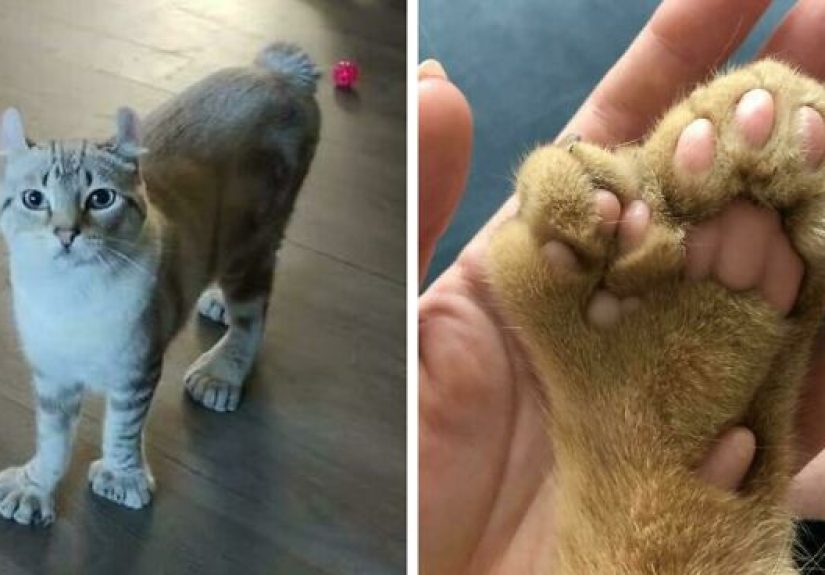
3) A Cat’s Shed Hair That Turned Into Courtroom Science
Unusual evidence: Non-human DNA (pet hair) linking a suspect to a victim
The “Snowball” case (the murder of Shirley Duguay) is legendary in forensic circles because it showcased a new idea at the time:
using DNA from a domestic animal to help connect a suspect to evidence. Investigators found cat hairs and pursued testing to determine
whether they came from the suspect’s family cat. Reporting at the time described it as a first-of-its-kind moment for animal DNA in court.
Why this is unusual: People expect human DNA. Pet DNA feels like a plot twist. And it raises practical questionslike how to show the
result isn’t just “some cat,” but that cat, in a way that’s scientifically and legally persuasive.
Why it matters: Animals are walking, purring (or barking) trace evidence machines. If a suspect and a pet share a space, pet hair can travel,
cling to clothing, and become a tiny transferable signature.
4) Pollen Grains That Pointed to a Specific Hangout
Unusual evidence: Forensic palynology (pollen/spore analysis)
Forensic palynology is the art and science of using pollen like microscopic “location glitter.” In a case discussed in public radio reporting,
a palynologist observed unusual pollen grains associated with a particular area and compared them to samples from a location tied to suspects.
The pollen evidence helped investigators connect the victim’s movements to a specific place and strengthened the investigative focus.
Why this is unusual: Pollen is basically invisible to the average personuntil it ruins your allergies. But it can be distinctive by region,
season, and local conditions, making it useful for linking people or objects to environments.
Why it matters: Pollen sticks. It persists. And it can quietly answer questions like “Where has this clothing been?” when witnesses can’t or won’t.
5) Insects That Helped Narrow a Timeline
Unusual evidence: Forensic entomology (insect life cycles)
Forensic entomologists use insect development to estimate time since death and sometimes whether remains were moved. The concept goes back over a
century, including a notable early case in which insect life stages helped determine that a death occurred months earlierinformation that shifted
investigators away from current occupants and toward prior residents.
Why this is unusual: It’s biology class, but with a stopwatch. The “evidence” is the predictable growth of insects under given conditions.
Why it matters: When a timeline is disputedor when a scene is discovered lateentomology can provide an independent anchor that doesn’t care about
anybody’s alibi.
6) A Fitbit That Argued With an Alibi
Unusual evidence: Wearable step/distance data
In the Connecticut “Fitbit murder” case involving Connie Dabate, investigators used data from her Fitbit to challenge the timeline presented by her
husband. Reporting describes the Fitbit showing movement over a period that conflicted with his accountan example of a device silently logging
reality while humans attempt creative storytelling.
Why this is unusual: A fitness tracker is built to nag you into walking, not to testify in court. Yet its timestamps can become a powerful timeline tool.
Why it matters: Wearables can corroborate (or contradict) claims about when someone was active, when they were likely home, and whether a sequence of events
makes sense.
7) An Apple Watch and Phone That Helped Map Movements
Unusual evidence: Smartwatch location/activity signals and paired device data
In an Iowa homicide investigation reported by AP, authorities used information from a victim’s Apple Watch and phone to help determine key locations and build
investigative leads. The reporting notes that watch data and phone tracking information contributed to identifying places relevant to the case.
Why this is unusual: This isn’t a “single smoking gun” clueit’s a digital trail made of tiny data points: pings, timestamps, sensor readings, and location
signals thattogetherform a map.
Why it matters: Modern life produces logs. When investigators can lawfully access and interpret those logs, they can test narratives with a level of detail
that would’ve felt like science fiction not long ago.
8) A Smart Speaker (and a Smart Water Meter) That Raised Eyebrows
Unusual evidence: Internet-of-Things data and smart-home activity records
The James Bates case in Arkansas became widely discussed because investigators sought data from an Amazon Echo (Alexa). A legal analysis in The Army Lawyer
notes the Echo’s proximity to where the death occurred and also points out another smart device: a smart water meter that recorded a large water usage window
overnight, potentially consistent with cleaning activity described by investigators.
Why this is unusual: Your house can keep receipts. Not paper receiptsdigital ones. A smart speaker may store interaction logs; a smart utility meter can
record usage patterns. None of it is designed for homicide investigation, yet it can become relevant when timelines are disputed.
Why it matters: IoT evidence can be perishable (logs can be overwritten or deleted). When it exists, it can add a surprisingly objective layer to an otherwise
messy set of accounts.
9) A Family Tree Built From DNA Matches
Unusual evidence: Genetic genealogy (DNA + public matching databases)
Genetic genealogyusing DNA matches with distant relatives to build family treeshas reshaped cold case investigations. TIME reported on the Angie Dodge case,
in which genetic genealogy helped identify a different suspect and contributed to exoneration for a man who had been convicted. The same general approach is
closely associated with how investigators identified the Golden State Killer suspect, a story detailed in major reporting including the Los Angeles Times.
Why this is unusual: It’s not just “Does this DNA match a person in a database?” It’s “Does this DNA match someone’s cousin, and can we follow that
breadcrumb trail through records and family connections until we narrow down to one individual?”
Why it matters: Traditional DNA hits require a direct match. Genetic genealogy can generate leads even when the suspect isn’t already in law enforcement databases,
making it especially potent for decades-old caseswhile also raising serious privacy and policy questions.
10) A Car That Reported Its Location Like a Chatty Friend
Unusual evidence: Vehicle telematics (OnStar) used to locate a victim’s vehicle
Cars aren’t just transportation anymore; they’re rolling data centers. In a DOJ press release about a 2010 murder case in Washington, D.C., investigators used
OnStar GPS technology to locate the victim’s vehicle after contacting next-of-kin and learning it was equipped with the system. The release describes OnStar
locating the vehicle and using a remote ignition block to prevent it from being restarted after shutdown.
Why this is unusual: People expect phones to track location. They don’t always remember their car can do it toosometimes with manufacturer assistance and
additional features.
Why it matters: Vehicle location and access data can help find critical physical evidence faster, preserve investigative opportunities, and tighten timelines
around movement.
What These Cases Teach Us (Without the TV Drama)
- Small traces can be loud. A seed pod, a hair, a grain of pollentiny doesn’t mean trivial.
- Timelines win cases. Wearables, insects, and device logs often matter because they test “when,” not just “who.”
- Corroboration is everything. Unusual evidence is strongest when it aligns with other facts (records, witness statements, lab findings).
- Science evolvesand courts follow. Plant DNA and genetic genealogy show how new methods migrate from lab to courtroom over time.
Experience Section: What It’s Like When “Weird Evidence” Is the Break
Most people imagine murder investigations as a straight line: a clue appears, a detective points, handcuffs happen. In real life, the “experience” of unusual
evidencewhat it feels like for investigators, analysts, and even jurorsis closer to assembling a massive puzzle while someone keeps shaking the table.
The unusual clue often doesn’t arrive like a neon sign. It shows up as a question: “Why is this detail here?” or “Does this timeline actually work?”
Start with the crime scene itself. Professionals who process scenes tend to describe two competing pressures: move fast, but touch nothing wrong. Weather,
foot traffic, and time degrade evidence constantly. That’s where odd traces become surprisingly meaningful. A seed pod in a truck bed might look like yard debris
until someone realizes the scene had a scraped tree nearby. Pollen on clothing might seem like background noise until a specialist recognizes a rare pattern.
In the moment, it can feel less like “Eureka!” and more like “Huh… that’s strange. Let’s not ignore it.”
Then there’s the lab sidethe experience of translating weird stuff into courtroom language. A botanist, entomologist, or digital forensics examiner usually
can’t rely on the audience having any shared vocabulary. So the work becomes twofold: do the science and explain the science. That explanation has to be careful,
because unusual evidence can sound like a magic trick if it’s oversold. The best experts tend to be almost boring on purpose: they describe methods, error rates,
alternative explanations, and limitations. Ironically, that calm honesty is what makes the evidence persuasive.
Digital evidence adds a different kind of experience: the uncomfortable realization that ordinary life produces constant logs. A fitness tracker doesn’t “know”
it’s collecting evidence; it just collects. A smart speaker doesn’t “listen” like a person; it stores interactions and metadata in systems designed for convenience.
Vehicles keep location and usage records to deliver features, not justice. When those logs become part of a case, investigators often have to navigate not only the
technical puzzle of extraction and interpretation, but also legal questions about warrants, consent, and what data should be admissible.
For families and communities, unusual evidence can be emotionally complicated. On one hand, it can feel like a lifeline: a path toward accountability when a case
is stuck. On the other, it can feel unsettlinglike privacy has a price tag, or like the truth depends on an obscure specialist who might live hundreds of miles away.
That’s why many investigators treat unusual evidence as a support beam, not the whole house. They use it to pressure-test stories, narrow searches, and confirm
patterns, while still building a broader case that stands up even if one piece is challenged.
If there’s a single “takeaway experience” across these examples, it’s this: unusual evidence is rarely glamorous in the moment. It’s often tedious, technical,
and easy to dismiss. But when someone pays attentionwhen they bag the seed pod, preserve the device log, or call the right expertthat same weird detail can
become the thread that pulls an entire investigation into focus. The lesson isn’t that every strange clue is meaningful. It’s that the best investigations leave
room for the world’s quiet, accidental witnesses… including bugs, plants, and your step counter.
Conclusion
Murder cases are solved by persistence, careful testing, and a willingness to follow evidence wherever it leadseven when that evidence is a pollen grain, a
smartwatch, or the world’s most unintentional snitch: a tree. The unusual clues on this list work because they do what good evidence should do: they narrow
possibilities, challenge assumptions, and help investigators move from “maybe” to “provable.”
And if nothing else, consider this a friendly reminder: the universe is shedding receipts everywhere. Sometimes they’re microscopic. Sometimes they’re digital.
And sometimes they’re sitting on your shoulder, repeating a phrase that makes everyone in the room go quiet.