Table of Contents >> Show >> Hide
- The Letter That Launched a Thousand “Awws”
- Why This Tiny Note Hit So Hard
- What Troy Accidentally Got Right About Being a Great Dog Sitter
- If You’re the Neighbor: How to Say Yes Without Getting Weird (or Unsafe)
- Kid + Dog = Magic… With Safety Rules
- Dog Walking Basics (Because “I Can Take Your Dog On Walks” Is a Whole Job)
- What COVID-19 Changed for Pet Households (And What People Learned)
- How a Kid Can Turn “I Love Dogs” Into a Safe, Responsible Side Hustle
- The Big Takeaway: Small Gestures Build Real Community
- Experiences Related to “After This Virus… Do You Need a Dog Sitter?” (Extended)
In the middle of a year when everyone was learning to bake bread, mute themselves on video calls, and pretend sweatpants were “business casual,” a 10-year-old kid did something wildly radical: he wrote a polite letter.
Not a “Dear Sir/Madam, I am writing to inform you…” kind of letter. More like a “Hi, I noticed your dog exists, and I would like to be involved” kind of letter. And honestly? Same.
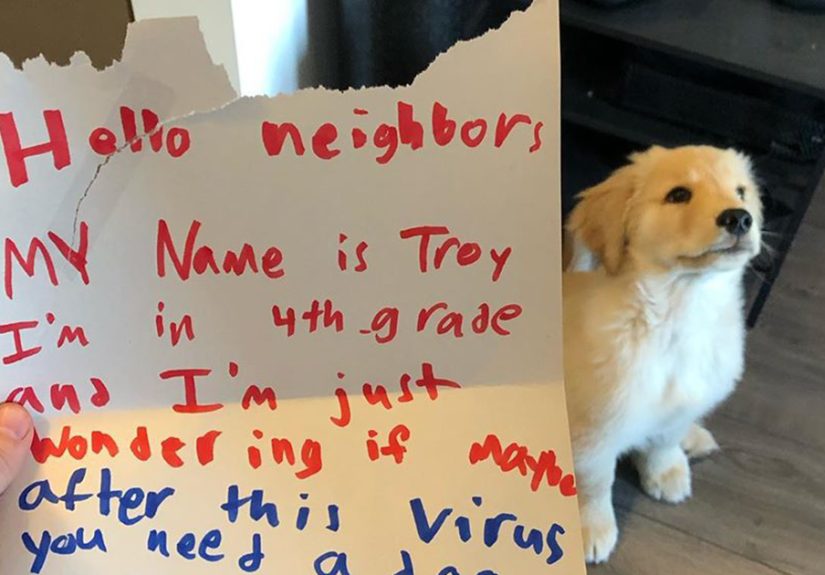
The notewritten by a fourth grader named Troyasked his neighbors if, once things were safer, they might need help with their puppy. The puppy was a fluffy golden retriever named Arthur (aka “Arthur the Floof” online), and the internet immediately filed this story under “Content We Needed”.
The Letter That Launched a Thousand “Awws”
Here’s the core of what Troy wrote (paraphrased for brevity, because this is a blog, not a museum exhibit): he introduced himself, mentioned he’s in fourth grade, and asked ifafter the “virus”they’d ever need a dog sitter who could take the pup on walks and help out.
The message spread because it hit three sweet spots at once: it was kind, it was respectful, and it was about a dog. (If you’ve ever wondered what runs the internet, it’s mostly dogs, snacks, and validation.)
Arthur’s humans shared the letter online, and it made the rounds on social media and pop-culture sites. Arthur even got a “play date” with Troy, with extra care taken around privacy and distancing at the time. Later updates noted that Troy and Arthur spent time together before Arthur’s family moved away (yes, even wholesome viral friendships have bittersweet season finales).
Why This Tiny Note Hit So Hard
1) It was pure neighborhood energy
During the pandemic, lots of us realized we didn’t actually know our neighborslike, at all. We knew their Wi-Fi name (shout-out to “FBI_Surveillance_Van”), but not their actual names. A handwritten letter felt old-school in the best way: slow, intentional, human.
2) It captured a kid’s logic in one sentence
Kids are incredible at stating the obvious with confidence. “There is a dog. I would like to walk the dog. Please advise.” It’s straightforward, hopeful, and weirdly professionallike Troy was already building his résumé.
3) It offered help without pressure
The letter didn’t demand anything. It didn’t guilt anyone. It simply offered: if you need help later, I’m interested. That “no-pressure kindness” is a skill many adults are still trying to unlock.
What Troy Accidentally Got Right About Being a Great Dog Sitter
If you strip away the cuteness, Troy’s letter actually models several best practices for pet sitting and dog walkingespecially for someone young. Here’s what he did right (and what anyone can copy without needing to be 10 years old or armed with colorful markers):
He asked first (consent matterseven with cute puppies)
He didn’t approach the dog, open the gate, or attempt a spontaneous leash audition. He asked the owners. That’s not just polite; it’s safer for everyone involved.
He defined the job
“Dog sitter” can mean anything from “I will take a walk with your dog” to “I will become your dog’s emotional support human.” Troy kept it simple: walks and basic help.
He suggested “after this virus”
In one phrase, he signaled that he understood timing and safety. Even better, it gave the neighbors space to decide what “safe” looked like for them.
If You’re the Neighbor: How to Say Yes Without Getting Weird (or Unsafe)
Getting a letter like this can feel like a rom-com meet-cute, except the main character is a golden retriever and the love interest is community. If you want to say yes, here’s how to do it thoughtfully.
Step 1: Loop in the adults
If the dog walker is a child, you want a parent/guardian involved. This is non-negotiable. It protects the child, protects you, and protects your dog from confusion like, “Wait… who is this tiny human and why are we jogging?”
Step 2: Do a “meet & greet”
A meet-and-greet is basically a vibe check with a purpose: does the dog feel comfortable, does the sitter understand instructions, and do the humans agree on expectations?
- Meet outside first if possible (less intense for many dogs).
- Review walking gear (leash, harness, poop bagsyes, poop bags are part of the lifestyle).
- Share routines: feeding rules, walk routes, triggers, and what the dog is not allowed to eat (including “mystery sidewalk snacks”).
- Set boundaries: where the dog can go, how long the walk is, and what “and more” absolutely does not mean.
Step 3: Write it down (simple, not scary)
Even a one-page checklist helps: emergency contacts, vet info, the dog’s quirks, and instructions like “does not enjoy skateboarders” or “will attempt to befriend every squirrel.”
Step 4: Start small
Begin with a supervised walk or a short play session in the yard. The goal is confidence and familiaritynot tossing a brand-new relationship into “three-hour dog sit” mode.
Kid + Dog = Magic… With Safety Rules
Dogs and kids can be the best of friends, but adults have to set the stage. The big theme from veterinary and pediatric safety guidance is simple: supervision and respectful interaction.
Teach “dog body language 101”
A wagging tail isn’t always an invitation. A stiff posture, whale eye, backing away, or growling are communication signalsnot “bad behavior.” Kids benefit from learning how to approach and when to pause.
Use the universal rules
- Always ask the owner before petting.
- Let the dog sniff first.
- Don’t bother dogs while they’re eating or sleeping.
- No rough games like wrestling or tug-of-war unless the owner says it’s okay (and the dog clearly enjoys it).
- Never leave a young child alone with a dogno matter how sweet the dog is.
These guidelines aren’t about fear; they’re about predictability. Predictable interactions help dogs feel safeand safe dogs make better buddies.
Dog Walking Basics (Because “I Can Take Your Dog On Walks” Is a Whole Job)
Walking a dog isn’t just “go outside, vibe, return home.” It’s exercise, enrichment, training reinforcement, and safety management rolled into one very sniff-heavy package.
A smart walk looks like this
- Leash on (and proper ID on the dog).
- Age-appropriate duration (puppies often need shorter, more frequent outings).
- Watch the ground so the dog doesn’t eat random stuff.
- Heat/cold awareness (paws on hot pavement are not the vibe).
- Water when needed, and breaks when the dog is tired.
- Clean-up (yes, you must pick it upno, you can’t pretend you didn’t see it).
What COVID-19 Changed for Pet Households (And What People Learned)
Troy’s “after this virus” line was more than cuteit reflected a real shift in how households handled contact. Public health guidance has generally emphasized that people sick with COVID-19 should limit close contact with pets, and that the risk of pets spreading COVID-19 to people is considered low.
Translation: if you’re sick, don’t treat your dog like a fuzzy nurse. And please don’t put masks on pets or wipe them down with harsh chemicals. Dogs are not countertops.
How a Kid Can Turn “I Love Dogs” Into a Safe, Responsible Side Hustle
Troy’s letter is basically a masterclass in kid-friendly entrepreneurship: identify a need, make a polite offer, and deliver valuepreferably in the form of a tired, happy dog.
A practical starter plan (with parent help)
- Start with people you know: neighbors, family friends, or relatives with pets.
- Offer one service at first: short walks, yard play, or helping refill water bowls.
- Set clear limits: no off-leash time, no dog parks without permission, no handling aggressive dogs.
- Use a simple checklist: schedule, gear, emergency number, and the dog’s rules.
- Practice first: walk with the owner once to learn the route and the dog’s habits.
And for adults? If a kid offers help with your dog, you can support that initiative while still keeping boundaries and safety front and center. Kindness works best when it comes with a plan.
The Big Takeaway: Small Gestures Build Real Community
This story isn’t viral because it’s complicated. It’s viral because it’s simple: a kid noticed someone else’s joy (a new puppy), and he tried to be part of it in a respectful way.
In a time when people felt isolated, a handwritten note reminded everyone that community can start with one brave sentence and a whole lot of hope. Also, a golden retriever in the background doesn’t hurt.
Experiences Related to “After This Virus… Do You Need a Dog Sitter?” (Extended)
Stories like Troy’s blew up because they mirrored what so many households were quietly living through: pets became routine, comfort, and comic relief all at once. Families who adopted or raised puppies during the pandemic often describe the same mix of emotionsgratitude for the companionship, and mild panic when the puppy learned a new hobby called “stealing socks and sprinting.”
One common experience people share is how neighborhood dogs turned into neighborhood celebrities. You’d see the same pup on the same sidewalk every day, and suddenly you knew their name, their favorite treat, and the exact corner where they always insisted on stopping to sniff a particular shrub like it contained state secrets. Even when adults kept distance, that shared routine created small, repeated moments of connectionwaves, laughs, quick hellos. For many, that was the most social part of the week.
Another theme: kids missed their friends, and dogs became a safe “bridge.” Parents often noticed that children who were usually shy in social settings felt more confident approaching from a respectful distance when a dog was involvedbecause the dog gave them something joyful to focus on. A kid could ask, “What’s your dog’s name?” and suddenly a conversation happened without the awkwardness of small talk. When kids offered to help with walking or feeding, it wasn’t just about earning money; it was about feeling useful and connected.
Plenty of families also learned, the hard way, that “dog sitting” is a real responsibilityeven when the dog is sweet. People describe the moment they realized every dog has preferences: some hate bicycles, some fear trash trucks, some act like mailboxes are their sworn enemies. That’s why meet-and-greets became a practical ritual. A short supervised walk revealed everything: whether the dog pulls, whether they react to other dogs, and whether the walker knows how to stay calm. More than a few adults admitted they got humbled by a 35-pound “puppy” who suddenly discovered their strength.
And then there’s the “after this virus” lesson that stuck around: communication matters. People who successfully traded pet-sitting favors with neighbors often had one thing in commona simple written plan. Not fancy paperwork, just clarity: the dog’s schedule, what treats are allowed, which door sticks, what to do in an emergency, and who to call if the dog pulls a disappearing act with a sandwich. Those small details prevented misunderstandings and made everyone feel safer.
The most heartwarming experiences, though, are the ones where the dog benefited as much as the humans. When routines returned and households got busier, neighbors who had built that little “pet care community” kept it going. A teen would walk the dog after school. A retired neighbor would do a midday potty break. A parent would cover weekends. The dog got more enrichment, the humans got more breathing room, and the neighborhood felt a little more like a team. In that way, Troy’s letter wasn’t just adorableit was a blueprint for how people actually want to live: helpful, connected, and united by the universal truth that dogs deserve more walks and we all deserve more kindness.