Table of Contents >> Show >> Hide
- 1. Start With a Garden “Room,” Not Just Random Pots
- 2. Use Containers in Layers for Depth and Calm
- 3. Go Vertical and Reclaim the Air Above You
- 4. Create Privacy Without Making the Space Feel Boxed In
- 5. Add Shade So the Space Feels Livable, Not Punishing
- 6. Keep the Color Palette Calm and Repetitive
- 7. Mix Edibles With Ornamentals for Beauty That Earns Its Rent
- 8. Choose One Really Comfortable Seating Moment
- 9. Use Lighting to Make Evenings Feel Magical
- 10. Introduce a Water Feature or Sound-Softening Element
- 11. Design for Real Life: Wind, Weight, and Watering
- 12. Make It Seasonal, Flexible, and a Little Personal
- Why These Balcony and Rooftop Garden Ideas Work So Well
- Extra Experience and Insights: What a Serene Balcony or Rooftop Garden Actually Feels Like
- Conclusion
If you have a balcony or rooftop, congratulations: you own a tiny slice of sky. Sure, it may currently look like a place where folding chairs go to retire, but with the right balcony and rooftop garden ideas, it can become a peaceful outdoor room that feels miles away from traffic, deadlines, and that one neighbor who seems to vacuum emotionally. The magic is not in cramming in more plants than a nursery clearance rack. It is in making smart choices about layout, comfort, privacy, texture, and mood.
A serene garden does not need sprawling square footage. It needs intention. The best small outdoor spaces use containers creatively, take advantage of vertical room, soften hard edges, and balance beauty with practicality. In other words, they work with the space instead of arguing with it. Below are 12 ideas to help you turn a balcony, terrace, or rooftop into a calm, stylish escape that actually gets used.
1. Start With a Garden “Room,” Not Just Random Pots
One of the easiest mistakes in a small-space garden is treating every square inch like a separate little project. That is how you end up with three lonely succulents, a tomato plant with stage fright, and a chair nobody can actually sit in. Instead, think of your balcony or rooftop as an outdoor room.
How to do it
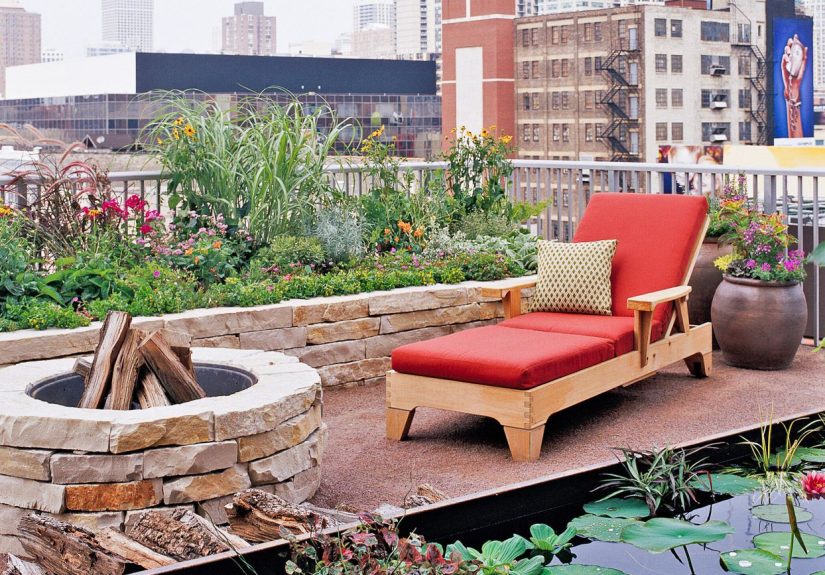
Begin by deciding what the space is for. Morning coffee? Evening reading? Container vegetables? Quiet lounging? Once you know the main purpose, arrange everything around that use. Keep a clear path, place seating first, and let the plants support the experience rather than block it. A compact bistro set, one lounge chair, or a small bench can anchor the area and prevent the garden from feeling cluttered.
This approach also makes the space feel larger. When the layout has a focal point, the whole balcony or rooftop looks intentional, not accidental.
2. Use Containers in Layers for Depth and Calm
Flat rows of planters can make a garden feel stiff. A layered arrangement feels softer and more immersive. Think of it like styling a bookshelf, except the bookshelf is outside and occasionally grows basil.
What layering looks like
Combine planters at different heights: floor pots, plant stands, railing boxes, and hanging baskets. Put taller plants at the back or in corners, medium-height containers around seating, and trailing plants near edges where they can spill naturally. This creates depth, helps frame views, and gives even a very small balcony garden a fuller look.
Layering also lets you mix plant functions. A dwarf tree or tall grass can provide privacy, a middle layer of flowering plants adds color, and lower herbs or trailing vines soften the hard lines of railings and flooring.
3. Go Vertical and Reclaim the Air Above You
When square footage is limited, the obvious move is to start thinking upward. Vertical gardening is one of the smartest rooftop and balcony garden ideas because it increases planting space without eating up the floor.
Best vertical options
Trellises, wall planters, ladder shelves, railing planters, and hanging pockets all work beautifully. A vertical herb wall near the door keeps basil, mint, thyme, and rosemary within easy reach. A trellis with jasmine, clematis, or another climber can make a balcony feel more enclosed and tranquil. Even a simple set of slim shelves can hold a collection of small pots without turning the floor into an obstacle course.
The visual effect is huge. Vertical greenery makes the space feel lush and cocooning, especially in urban settings where concrete tends to dominate the view.
4. Create Privacy Without Making the Space Feel Boxed In
Serenity and privacy are practically cousins. It is hard to feel blissed out when you are making direct eye contact with someone in the apartment across the way while watering parsley.
Soft privacy solutions
Try slatted screens, outdoor curtains, bamboo panels, tall grasses, or vine-covered trellises. These options create separation while still letting in light and air. If you are decorating a small balcony, avoid solid barriers on every side unless you are aiming for the mood of “stylish bunker.” Instead, use partial screening where you most need it, such as the side facing neighboring windows or a busy street.
Plants are especially useful here because they multitask. A row of tall containers planted with ornamental grasses, bamboo, or upright shrubs can provide screening, movement, and texture all at once.
5. Add Shade So the Space Feels Livable, Not Punishing
A rooftop can be glorious in spring and feel like a cast-iron skillet by midsummer. If you want a serene outdoor space, shade is not a luxury. It is part of the survival plan.
Easy shade ideas
Use a patio umbrella, shade sail, pergola, retractable canopy, or outdoor curtain panel depending on your setup. Even one well-placed umbrella can transform a roasting-hot corner into a usable reading spot. Shade also helps certain plants thrive by filtering the harshest sun and slowing how quickly containers dry out.
For style, choose soft fabrics or natural-looking materials that blend with the garden palette. The goal is to cool the space down visually as well as physically. Harsh sun and harsh design choices rarely create peace.
6. Keep the Color Palette Calm and Repetitive
If your dream is serene, not circus, resist the urge to make every pot and every flower a new headline. A calmer space usually relies on repetition and restraint.
What works best
Pick two or three main colors and repeat them through pots, cushions, rugs, and plants. Greens, soft whites, muted purples, silvery foliage, terracotta, charcoal, and natural wood tones work especially well for a restful look. Repeating the same planter style or a few related plant varieties helps unify the space.
This does not mean boring. It means edited. A rooftop garden with repeated textures and colors feels polished, while a jumble of unrelated choices can make even a lovely collection of plants feel visually noisy.
7. Mix Edibles With Ornamentals for Beauty That Earns Its Rent
There is something deeply satisfying about stepping outside and snipping herbs for dinner. A serene balcony garden feels even better when it is useful.
Easy edible choices
Herbs are the obvious stars: basil, thyme, chives, parsley, oregano, and mint all work well in containers. Leafy greens, peppers, strawberries, and compact tomatoes can also thrive in pots when they get enough light. Pair them with ornamental plants so the whole garden looks designed rather than purely practical. Lavender next to rosemary, lettuce tucked under marigolds, or a dwarf citrus tree beside flowering annuals can create that sweet spot between productive and pretty.
Edibles also invite you outdoors more often. When the garden plays a role in daily life, it stops being decoration and starts becoming ritual.
8. Choose One Really Comfortable Seating Moment
Not every serene space needs a full outdoor living room. Sometimes one excellent chair beats a crowded set of mediocre ones every single time.
Make the seat the hero
Pick seating that suits the way you actually relax. A cushioned lounge chair, a compact loveseat, or a bench with soft pillows can instantly give the garden a purpose. Add a side table for tea, a book, or a dramatic-looking sparkling water, and suddenly your balcony feels like a destination.
Small-space gardening works best when furniture is scaled properly. Foldable pieces, benches with storage, and slim-profile chairs keep the footprint light while still making the garden welcoming.
9. Use Lighting to Make Evenings Feel Magical
Daytime gardens get all the glory, but nighttime is where the mood really shows off. Good lighting turns an ordinary rooftop into a retreat and a tiny balcony into a soft little jewel box.
Lighting that feels gentle
String lights, lanterns, rechargeable table lamps, and solar path lights all add warmth without making the space feel like a parking lot. Focus on layered light rather than brightness. A few low, warm glows are more calming than one glaring overhead fixture.
Lighting also extends how often you use the space. A balcony garden that only works between 9:00 a.m. and 4:00 p.m. is nice. One that welcomes you after dinner feels luxurious.
10. Introduce a Water Feature or Sound-Softening Element
City noise has a special talent for ruining a peaceful mood right when you are starting to enjoy yourself. One of the smartest balcony and rooftop garden ideas is to add something that softens or masks harsh sound.
Options for a calmer soundscape
A small tabletop fountain, a compact water bowl, rustling grasses, or even dense plant groupings can make the space feel quieter. Water features add movement and a gentle soundtrack, while plants soften echoes and visually buffer the environment. You do not need a grand fountain worthy of a hotel lobby. A modest water element can still become a focal point and make the garden feel more meditative.
Even when the city keeps being the city, your garden can feel like a pause button.
11. Design for Real Life: Wind, Weight, and Watering
Now for the least glamorous but most important truth: a serene rooftop garden is still a rooftop garden. Wind can be stronger, sun can be harsher, and containers can get heavy fast. The prettiest plan in the world will fail if it ignores physics.
Smart practical moves
Use stable containers with good drainage, and be mindful of the overall weight of soil, pots, furniture, and water features. On exposed balconies and rooftops, wide-based containers are often safer than tall, top-heavy ones. Choose materials that fit your situation: lightweight fiberglass, resin, or grow bags may be easier to manage than heavy ceramic. Group plants with similar water needs together so maintenance stays simple, and consider self-watering planters if you are away often or your space dries out quickly.
This is the secret sauce of low-stress gardening. A garden feels peaceful when it is not constantly one windy afternoon away from chaos.
12. Make It Seasonal, Flexible, and a Little Personal
The most inviting outdoor spaces evolve. They are not frozen in one perfect catalog moment. They change with the weather, your schedule, and what you want from the space.
How to keep it fresh
Swap out a few seasonal plants, rotate cushions, add a throw blanket in fall, or move containers around to follow the sun. Bring in potted bulbs in spring, herbs in summer, ornamental kale in fall, and evergreen structure in winter if your climate allows. Personal touches matter too: a ceramic mug you always use outside, a favorite lantern, a vintage stool, or a weatherproof speaker for soft music can make the space feel like yours rather than generically “nice.”
A serene balcony or rooftop garden is not about perfection. It is about creating a place you instinctively want to return to.
Why These Balcony and Rooftop Garden Ideas Work So Well
The best balcony and rooftop garden ideas all share one thing: they combine function with feeling. They solve practical problems like privacy, sun exposure, limited floor space, and watering needs while also creating atmosphere. That is why a serene garden is never just about pretty flowers. It is about comfort, rhythm, and ease.
When you layer plants, repeat colors, add shade, include one comfortable seat, and soften the sound and light, a small outdoor area starts behaving like a real sanctuary. It does not matter whether you are working with a compact apartment balcony or a larger rooftop terrace. A thoughtful design makes the space feel more generous, more useful, and far more relaxing.
Extra Experience and Insights: What a Serene Balcony or Rooftop Garden Actually Feels Like
There is a particular kind of joy that comes from stepping into a garden you built in the sky. It is not dramatic. It is not fireworks and violin music. It is smaller than that, and somehow better. It is the feeling of opening the balcony door early in the morning and being greeted by leaves instead of just heat and concrete. It is brushing past rosemary and catching that scent on your sleeve. It is realizing that your rooftop no longer feels like leftover square footage but like an actual part of your home.
People often imagine serene spaces as perfectly styled, but the real experience is more lived-in and more charming. A balcony garden becomes the place where coffee tastes better for no scientific reason. A rooftop with layered plants and a comfortable chair becomes the place where you go after a long day because the air feels different there, even if the city is still humming beyond the railing. You sit down, notice the light moving through tall grasses, and your shoulders stop being so ambitious.
There is also something wonderfully grounding about tending a small garden in a high place. Watering containers, pinching herbs, deadheading flowers, or adjusting a pot that leans a little too enthusiastically toward the sun can become tiny rituals. They are not big tasks, but they create a rhythm. In a busy week, that rhythm matters. A small-space garden gives you regular contact with the season. You notice when basil suddenly takes off, when the evenings cool down, when a dwarf citrus puts out fresh glossy leaves, or when ornamental grasses start to catch the light in a different way.
Another underrated part of the experience is how these spaces can hold different moods. In the morning, the garden may feel fresh and hopeful. At noon, with an umbrella up and leaves casting shadows, it becomes a private hideaway. In the evening, once the lights come on and the city starts sparkling beyond the planters, the same little area feels intimate and cinematic. Not in a cheesy way. More in a “maybe I should stay out here ten minutes longer” way.
And yes, there will be real-life moments too. A windy day may toss a cushion dramatically. Mint may attempt a small coup. You may discover that one plant hates your balcony for reasons known only to that plant. But even those moments become part of the charm. A rooftop or balcony garden teaches you to adjust, simplify, and notice what truly works. Over time, the space becomes less about decorating and more about belonging. That is the real secret behind creating a serene space: it should feel good to be there, not just good to photograph.
So whether you start with a single chair and three pots or go all in with screens, climbers, edibles, lighting, and layered containers, the payoff is bigger than the square footage suggests. You are not just planting a balcony garden or styling a rooftop. You are creating a pocket of calm that lives surprisingly close to your everyday life. And honestly, that is a pretty wonderful use of a few square feet and a little sunlight.
Conclusion
Creating a peaceful balcony or rooftop garden is less about size and more about smart design. Use vertical space, choose stable containers, add privacy and shade, repeat calming colors, and make room for comfort. Mix edible and ornamental plants so the garden feels beautiful and useful at the same time. Most of all, design the space around how you want to feel when you step outside. If the answer is calmer, softer, and a little more human, these ideas will get you there.