Table of Contents >> Show >> Hide
- 1. Star Wars: The Last Jedi (2017)
- 2. Star Wars: Episode I – The Phantom Menace (1999)
- 3. Batman v Superman: Dawn of Justice (2016)
- 4. Iron Man 3 (2013)
- 5. Captain Marvel (2019)
- 6. Thor: Love and Thunder (2022)
- 7. Jurassic World Dominion (2022)
- 8. Indiana Jones and the Kingdom of the Crystal Skull (2008)
- 9. The Matrix Resurrections (2021)
- 10. Alien 3 (1992)
- 11. Halloween Ends (2022)
- 12. The Godfather Part III (1990)
- 13. The Dark Knight Rises (2012)
- Why We Love Arguing About Divisive Franchise Movies
- Real-World Experiences With Movies Audiences Love Or Hate
- Conclusion
Some franchise movies are like pineapple on pizza: perfectly normal to enjoy, but guaranteed to start an argument at the table.
These aren’t just bad sequels or flawless masterpieces. They’re the divisive franchise movies that split friends,
families, and entire fandoms into “this is genius” and “this ruined my childhood” camps.
Below are 13 polarizing franchise entries that audiences either love or hate. For each one, we’ll look at what its defenders adore,
why its critics can’t stand it, and what these debates say about modern blockbuster culture. Buckle up: your favorite movie might
be someone else’s villain origin story.
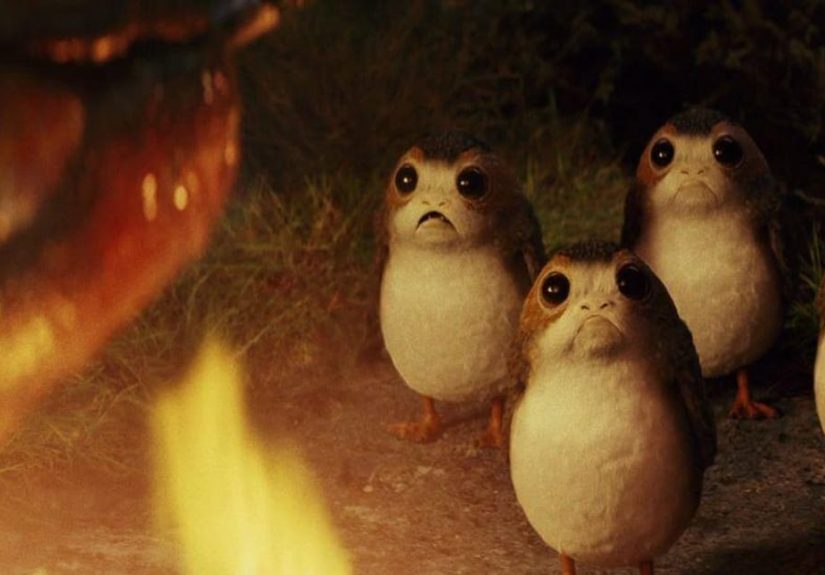
1. Star Wars: The Last Jedi (2017)
Few modern blockbusters have been as polarizing as The Last Jedi. Critics praised it as bold, emotional, and visually stunning,
while a loud chunk of the fandom treated it like a personal betrayal. It quickly became the poster child for “love it or hate it”
franchise cinema.
Why some fans love it
Supporters argue that The Last Jedi injects real risk into the Star Wars saga. It pushes Luke Skywalker into complex,
flawed territory, challenges the idea of “chosen ones,” and suggests that heroism can come from anywhere. The movie’s willingness
to question nostalgia, play with expectations, and deliver striking visualslike the silent hyperspace ramming sequencehas turned
it into a cult favorite for many.
Why others can’t stand it
Detractors feel it “breaks” the rules of the universe, undercuts mysteries set up in The Force Awakens, and mishandles beloved
characters. For them, Luke’s disillusionment, the casino subplot, and some of the humor don’t feel like Star Wars at all.
It’s not just a disappointing sequel in their eyes; it’s a philosophical disagreement about what the franchise should be.
2. Star Wars: Episode I – The Phantom Menace (1999)
When The Phantom Menace arrived, expectations were galactic. What fans got was a mix of thrilling podraces, dense political plotting,
and one extremely controversial Gungan. Over time, the film has gone from “franchise disaster” to “misunderstood favorite,” especially
among younger viewers who grew up with it.
Why some fans love it
Supporters appreciate the film’s world-building: Coruscant, the Jedi Council, and the sense of a living, functioning Republic.
Darth Maul’s design and the “Duel of the Fates” lightsaber battle remain iconic. For many millennial and Gen Z fans, this
is their first Star Wars, making it emotionally bulletproof.
Why others roll their eyes
Critics point to wooden dialogue, uneven pacing, and the tonal whiplash between serious political conflict and slapstick humor.
Jar Jar Binks became a lightning rod for complaints about comic relief gone wrong. To these viewers, The Phantom Menace
symbolizes how hype can crash into hard reality.
3. Batman v Superman: Dawn of Justice (2016)
On paper, Batman fighting Superman should have been the easiest billion-dollar crowd-pleaser in history. Instead,
Batman v Superman turned into one of the most contentious superhero movies ever released, sparking endless discourse
about tone, politics, and what these characters should represent.
Why some fans love it
Fans of the film praise its operatic, mythic approach. They like that it treats superheroes as modern gods burdened with
moral and political consequences, not just quip machines. Some viewers respond strongly to the darker, more philosophical tone,
the complex depiction of Bruce Wayne, and the visual stylization of Zack Snyder’s direction.
Why others hate it
For its critics, the movie is overstuffed, dour, and obsessed with symbolism at the expense of coherence. The infamous “Martha”
moment became a cultural meme, and many found Jesse Eisenberg’s Lex Luthor more irritating than intimidating. To them,
this divisive superhero movie feels less like a clash of icons and more like homework with capes.
4. Iron Man 3 (2013)
As the end of Tony Stark’s solo trilogy, Iron Man 3 made some daring choices, especially with its main villain. Those choices
turned what could have been a safe Marvel sequel into one of the most debated MCU entries.
Why some fans love it
Supporters celebrate Iron Man 3 for grounding Tony Stark post–Avengers. It digs into his anxiety and PTSD, explores who he is
without the suit, and leans into writer-director Shane Black’s snappy, offbeat sensibility. Many now see it as one of the MCU’s
best character studies, cleverly deconstructing superhero identity rather than just escalating explosions.
Why others feel burned
The big sticking point is the Mandarin twist. Comic fans who expected a terrifying, iconic villain instead got a meta joke,
and not everyone appreciated the gag. Some see the film as too jokey, with an underwhelming final showdown that doesn’t live
up to the buildup. For these viewers, it’s a prime example of Marvel undercutting its own drama with humor.
5. Captain Marvel (2019)
Captain Marvel was always going to carry extra baggage as Marvel’s first female-led superhero film. It smashed box office numbers,
but it also became ground zero for culture-war arguments, review-bombing, and debates about fan expectations.
Why some fans love it
Fans appreciate its ’90s throwback energy, the buddy-cop dynamic between Carol Danvers and Nick Fury, and the way it reframes
the Skrulls as sympathetic refugees rather than simple villains. For many viewers, especially women and girls, seeing a powerful
heroine who doesn’t apologize for taking up space is a big deal.
Why others remain unconvinced
Critics of the film say it feels structurally awkward and emotionally distant, with a protagonist who’s hard to connect with
until late in the story. Others argue that it leans too heavily on MCU continuity and ’90s nostalgia, making it feel more
like a puzzle piece than a stand-alone movie.
6. Thor: Love and Thunder (2022)
After the wildly beloved Thor: Ragnarok, expectations for Love and Thunder were sky high. What audiences got was a movie
that doubled down on silliness while telling a surprisingly dark story about mortalityan odd tonal cocktail that left viewers split.
Why some fans love it
Supporters enjoy the wild energy, the Guns N’ Roses–powered soundtrack, and the heartfelt arc for Jane Foster as Mighty Thor.
They appreciate its earnest message about love and faith buried underneath the jokes. For these viewers, the film is a colorful,
goofy comfort watch that still packs emotional punches.
Why others tap out
The main complaint is tonal inconsistency. Many feel that constant jokes undercut Gorr the God Butcher’s tragic storyline and
the film’s heavier themes. To them, Love and Thunder is what happens when a franchise mistakes “funny” for “emotionally resonant,”
leaving a lot of potential on the table.
7. Jurassic World Dominion (2022)
Jurassic World Dominion promised to blend the original Jurassic Park cast with the newer trilogy’s stars in an epic finale.
Instead, it became one of the lowest-rated entries in the entire dinosaur saga, even as some fans still defend it as big, dumb fun.
Why some fans love it
For defenders, seeing Ellie Sattler, Alan Grant, and Ian Malcolm back together again is worth the price of admission. They enjoy
the globe-trotting adventure, the dinosaur chases, and the nostalgic callbacks. If you’re there mainly to watch prehistoric
creatures cause chaos, the movie delivers exactly that.
Why others think it should go extinct
Critics argue that the plot is messy, the locust subplot is baffling, and the dinosaurs feel weirdly sidelined in their own movie.
The film’s attempt to be both a thoughtful legacy sequel and a modern action blockbuster satisfies neither camp. For many,
it’s a cautionary tale about overextending a franchise.
8. Indiana Jones and the Kingdom of the Crystal Skull (2008)
Aliens. Fridges. CGI monkeys. Crystal Skull is the Indiana Jones movie that launched a thousand arguments. Roger Ebert called it a film people either liked or hated, and that’s still true today.
Why some fans love it
Supporters argue that it captures the pulpy, serial-inspired spirit of the earlier films, just updated to a 1950s sci-fi flavor.
They enjoy an older Indy grappling with age, the return of Marion, and the idea that the character can grow beyond endless bachelor adventures.
Why others still grumble
For critics, the overreliance on CGI and the infamous “nuke the fridge” moment turned instant excitement into disappointment.
The alien angle doesn’t work for everyone, and some feel it drifts too far from the grounded fantasy feel of the original trilogy.
It’s become the go-to shorthand for “legacy sequel gone sideways.”
9. The Matrix Resurrections (2021)
Nearly two decades after the original trilogy, The Matrix Resurrections returned to a very different pop culture landscape.
Instead of trying to outdo the original action, it became a meta-commentary on sequels, fandom, and corporate IPsomething that
delighted some viewers and infuriated others.
Why some fans love it
Fans of the film appreciate its self-awareness and emotional focus on Neo and Trinity. They see it as a deliberate rejection of
mindless franchise escalation, using the Matrix as a lens on trauma, choice, and the commodification of rebellion. For them,
the movie’s weirdness is very much the point.
Why others unplug immediately
For detractors, the action doesn’t match the original trilogy, the plot feels meandering, and the meta elements come off as smug
rather than clever. Some viewers simply wanted bullet time 2.0, not an essay about sequels disguised as one.
10. Alien 3 (1992)
Following up Alien and Aliens was a nearly impossible task. Alien 3 tried anyway, killing off beloved characters off-screen,
pushing Ripley into a bleak new setting, and embracing a grim tone that many fans still haven’t forgiven.
Why some fans appreciate it
Over time, a subset of viewers has come to respect Alien 3especially in its assembly cutfor its boldness. It returns the franchise to
horror roots, gives Ripley a tragic, sacrificial arc, and leans into industrial, prison-camp nihilism instead of safe fan service.
Why others consider it a franchise misstep
Many fans see it as a betrayal of Aliens, casually discarding the found family dynamic of Ripley, Newt, and Hicks.
The production troubles are visible in the uneven storytelling and effects, and some find the film’s relentless misery more exhausting than profound.
11. Halloween Ends (2022)
As the conclusion to the modern Halloween trilogy, Halloween Ends made a radical choice: it shifted a huge chunk of focus away from
Michael Myers to a new character, Corey. Some fans appreciated the risk; others felt like they’d bought tickets to the wrong movie.
Why some fans love it
Supporters argue that the film at least tries something new instead of rehashing the same slasher beats. They see it as an exploration
of how evil spreads through a community, using Corey as a vessel for Haddonfield’s trauma and paranoia.
Why others want a do-over
Critics say it sidelines Laurie and Michael in what was advertised as their final showdown. They find the tone uneven and the
“passing the torch of evil” concept underdeveloped. For many, it’s a frustrating end to decades of buildup.
12. The Godfather Part III (1990)
Coming after two of the most acclaimed films ever made, The Godfather Part III was destined to disappoint someone. The question is
whether it’s a disaster or just a decent movie living in the shadow of masterpieces.
Why some fans defend it
Defenders see real value in its themes of regret, aging, and the cost of Michael Corleone’s choices. The movie’s final scenes,
especially the opera-set climax, are remembered as powerful, haunting moments. Viewed separately from the first two films,
it plays as an ambitious, flawed tragedy.
Why others say “just stop at Part II”
Critics point to uneven pacing, some questionable casting, and a sense that the story doesn’t fully justify its existence.
When your competition is The Godfather and The Godfather Part II, “pretty good” can feel like failure.
13. The Dark Knight Rises (2012)
Christopher Nolan’s finale to his Batman trilogy is big, ambitious, and messyand that’s exactly why it’s so divisive.
Some fans see it as a grand, emotional conclusion; others consider it a bloated step down from The Dark Knight.
Why some fans love it
Supporters are drawn to its themes of pain, recovery, and legacy. They enjoy Bane’s physical threat, the image of a broken Bruce
Wayne crawling out of the pit, and the sense of Gotham as a city fighting for its soul. As a capstone to Nolan’s trilogy,
it ties together motifs of fear, chaos, and hope.
Why others remain skeptical
Detractors question the film’s logic (that timeline, those police in the sewers, that autopilot), feel that Bane’s arc fizzles out,
and find the ending too neat and sentimental. For them, it’s proof that bigger doesn’t always mean betterespecially in superhero finales.
Why We Love Arguing About Divisive Franchise Movies
What all these love-it-or-hate-it franchise movies have in common isn’t just mixed reviews. They touch on something deeper:
ownership of stories. Fans invest yearssometimes decadesinto a universe, so when a sequel challenges their expectations,
it can feel personal.
Modern franchises also live under a microscope. Social media amplifies every hot take, turning personal reactions into
fandom-wide wars. A bold narrative choice that might once have inspired quiet debate at film school now becomes a trending hashtag.
And yet, that friction is part of what keeps these franchises alive. A totally forgettable sequel rarely inspires passionate essays,
heated group chats, or late-night YouTube breakdowns. Divisive franchise films might be frustrating, but they’re also proof that
audiences still care enough to argue.
Real-World Experiences With Movies Audiences Love Or Hate
If you’ve ever walked out of a theater buzzing with excitement, only to discover your friend absolutely hated the movie,
you already know how wild these divisive films can make everyday life. Experiences around movies like The Last Jedi,
Batman v Superman, or The Matrix Resurrections don’t stop at the end creditsthey keep going in the parking lot,
the group chat, and at work the next day.
One common pattern with polarizing franchise entries is the “silent ride home” scenario. You’re replaying your favorite scenes
in your head, maybe that Luke Skywalker moment or a jaw-dropping twist, while your friend is mentally drafting a 50-tweet thread
about why the movie destroyed the franchise. There’s a weird social dance that happens next: who speaks first, and do you admit
you liked it if everyone else is clearly sharpening their pitchforks?
Streaming has added a new twist to this experience. Instead of waiting years to rewatch a polarizing sequel, you can revisit it
at home within weeks. That’s how a lot of fans have slowly changed their minds on movies like Iron Man 3 or
Indiana Jones and the Kingdom of the Crystal Skull. The first watch in a crowded theater, fueled by hype and expectations,
can feel overwhelming. A second watch on your couch, with lower stakes and a pause button, often reveals details, themes,
and character beats that were easy to miss the first time.
There’s also the generational divide. Ask older fans about The Phantom Menace and you might hear stories about crushing
disappointment in 1999. Ask younger fans who grew up with the prequels, and the same film might be described as comfort viewing.
For them, divisive movies aren’t “franchise killers”they’re the movies they watched on DVD a hundred times, memorizing every line.
That nostalgia is powerful and can turn once-mocked films into cult favorites over time.
Friend groups and families sometimes develop running jokes around these movies. Maybe one person insists Jurassic World Dominion
is secretly good, another thinks Thor: Love and Thunder is unwatchable, and a third will defend The Matrix Resurrections
like it’s a thesis project. Movie nights become mini focus groups. You learn a lot about people from which divisive movie they’ll defend
to the bitter endand which one they refuse to ever sit through again.
For creators and fans alike, these “love or hate” reactions can be strangely energizing. A safe, bland sequel rarely inspires
fan edits, long Reddit discussions, or multi-hour podcasts. Divisive movies do. They push us to articulate what we want from
stories, how we see beloved characters, and where we think a franchise should go next. Even if you end up agreeing to disagree,
the conversation itself can be a big part of the fun.
So the next time you finish one of these much-argued-over franchise films and feel that urge to shout “masterpiece!” or
“never again!”lean into it. Just maybe warn your group chat first. Divisive franchise movies may not unite audiences in
opinion, but they absolutely unite us in one shared experience: having something juicy to talk about.
Conclusion
Whether you cherish these 13 divisive franchise movies or keep them on your personal blacklist, they all highlight the same truth:
the more a story matters to people, the more fiercely they’ll argue about it. Love or hate is, in a strange way, a compliment.
Indifference is the real box-office curse.
As franchises keep expandingwith reboots, legacy sequels, and multiverse crossoversyou can expect more of these polarizing entries.
Some will age badly, some will be rediscovered and reappraised, and a few might even jump from “most hated” to “secret favorite.”
Either way, they’ll continue to give movie fans something to debate, defend, and occasionally shout about for years to come.