Table of Contents >> Show >> Hide
- Before You Start: Tools, Materials, and Planning
- 13 DIY Bed Frame Projects With Gorgeous Results
- 1. The Essential 2×6 Platform Bed
- 2. The Easy 2-Tool Modern Platform Bed
- 3. Farmhouse Bed Frame With Headboard
- 4. Storage Bed With Built-In Drawers
- 5. Pallet Bed Frame for a Relaxed Vibe
- 6. Rustic 2×4 or 2×6 Bed With Chunky Legs
- 7. Japanese-Inspired Low Platform Bed
- 8. Floating Bed Frame With LED Lighting
- 9. Upholstered Bed Frame Refresh
- 10. Kids’ Loft or Bunk-Style Bed
- 11. Basic and Budget-Friendly Beginner Frame
- 12. Headboard-Focused Frame
- 13. Custom Bed From Step-by-Step Build Guides
- Key Tips for Gorgeous DIY Bed Frame Results
- Real-Life Experiences: What DIYers Learn From Building Bed Frames
- Conclusion
If your mattress is still sitting on a sad metal frame that squeaks every time you blink, this is your sign: it’s time for a DIY bed upgrade. The good news? You don’t need a woodworking degree or a full-blown workshop to build a gorgeous bed frame. With simple tools, affordable lumber, and a free weekend, you can create a custom bed that looks designer but costs a fraction of the price.
Drawing inspiration from popular DIY communities like Hometalk, Ana White, Kreg Tool, and other U.S.-based home and woodworking sites, this guide walks you through 13 DIY bed frame projects that range from beginner-friendly platform beds to smart storage frames and stylish upcycled pieces. Along the way, you’ll pick up tips on materials, tools, safety, and clever shortcuts so your new bed is as sturdy as it is stunning.
Before You Start: Tools, Materials, and Planning
Most DIY bed frames share a common toolkit. Many projects can be built with just a drill/driver and a saw, which is exactly how several modern platform bed tutorials are designed: simple cuts, hidden fasteners, and solid construction so beginners can still get polished results.
Basic tools you’ll probably need
- Drill/driver with wood screws
- Circular saw or miter saw (or even a jigsaw for basic cuts)
- Measuring tape and carpenter’s square
- Clamps to hold joints in place
- Sander or sanding block (80–120 grit to start)
- Safety gear: eye protection, ear protection, and dust mask
Common materials
- 2x4s, 2x6s, or 2x8s for frame rails and legs
- 1x4s, slats, or plywood for mattress support
- Construction screws or pocket-hole screws
- Wood glue for added strength
- Stain, paint, or clear finish
Most DIY builders start by sketching the frame and double-checking mattress measurements. Many online plans provide cut lists and diagrams so you can avoid guesswork and minimize waste. Some step-by-step guides even break the process into clear phasescutting wood, assembling the frame, sanding, and finishingto keep you organized.
13 DIY Bed Frame Projects With Gorgeous Results
1. The Essential 2×6 Platform Bed
If you want a straightforward, sturdy upgrade, the basic platform bed frame is your new best friend. Using 2×6 lumber for the outer frame and simple slats or a sheet of plywood for support, you can build a low-profile bed that works with almost any décor. Many popular plans use off-the-shelf boards and minimal hardware, which keeps the budget friendly.
To build it, cut your side rails and end rails to match your mattress size, assemble a rectangle with screws, then add a center support and slats. Sand everything smooth and finish with stain or paint. A design like this is often recommended for beginners because it uses square cuts and basic joinery but still looks clean and modern.
2. The Easy 2-Tool Modern Platform Bed
Several modern DIY plans are specifically designed to be built with just a drill and a saw. These frames often rely on hidden fasteners and a clever layout so the finished bed looks professionally built, even if it’s your first time working with lumber. The style is usually sleek and low, perfect for a minimalist bedroom or small apartment.
Expect to build a simple inner support structure with 2x4s, then wrap it in wider boards or plywood to hide the frame. A clear finish highlights the wood grain for that upscale look without the upscale price tag.
3. Farmhouse Bed Frame With Headboard
If you’re dreaming of cozy, farmhouse-inspired bedrooms, a farmhouse bed frame with a tall paneled headboard is a classic project. Many DIY farmhouse beds use 4×4 posts for chunky legs, 2x lumber for the frame, and 1x boards for the headboard paneling. It’s more lumber-intensive than a basic platform but still accessible for intermediate DIYers.
Farmhouse plans often come in all mattress sizes, so you can scale your build up to king or down to twin. Adding cross-bracing and a center support ensures the bed can handle real-life use (kids jumping included).
4. Storage Bed With Built-In Drawers
Short on closet space? A storage bed frame with built-in drawers or cabinets basically doubles as a dresser. Many designs use box-like drawer units around the perimeter of the bed, supporting a plywood or slatted platform on top.
One clever approach is an IKEA-style hack where stock cabinets or drawer bases become the foundation, and you frame a platform over them with 1x and 2x boards. It’s a smart way to get custom storage without having to build each drawer box from scratch.
5. Pallet Bed Frame for a Relaxed Vibe
For the ultimate budget bed, DIYers often reach for wood pallets. When sanded well and arranged correctly, pallets can create a casual, boho platform bed with built-in ledges that double as nightstands. Many U.S. DIY and décor sites highlight pallet beds as a quick weekend project, especially for guest rooms and teen spaces.
Key tip: choose heat-treated (HT) pallets, inspect them for damage, and sand thoroughly to avoid splinters. You can leave them natural, stain them for a richer look, or paint them white for coastal style.
6. Rustic 2×4 or 2×6 Bed With Chunky Legs
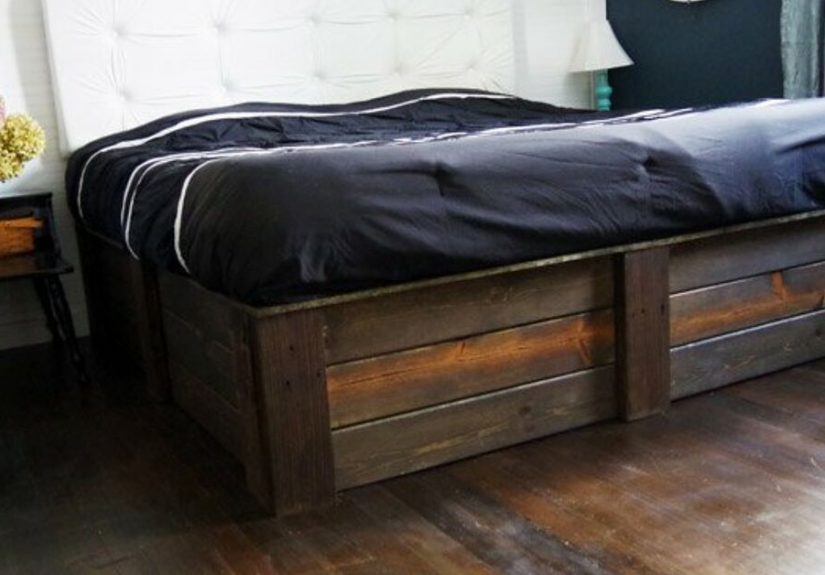
Rustic-modern bed frames use simple construction lumber2x4s, 2x6s, sometimes 4×4 postsand lean into visible wood grain, knots, and a hand-built look. Many designs use 2×6 rails and a simple headboard, then finish with a warm stain for that cabin-meets-modern aesthetic.
This style is forgiving because small imperfections in the cuts or finish just add character. It pairs beautifully with plaid bedding, chunky knit blankets, and metal bedside lamps.
7. Japanese-Inspired Low Platform Bed
If you love a calm, minimalist bedroom, a low platform bed inspired by Japanese design is a fantastic DIY choice. These frames are typically close to the floor, with clean, straight lines and a simple silhouette. Many tutorials use a basic rectangular frame with slightly recessed legs so the bed appears to float.
Use clear, light-toned finishes and keep hardware hidden. Pair with neutral bedding, a single piece of art, and perhaps a floor lamp to get a serene, hotel-worthy vibe.
8. Floating Bed Frame With LED Lighting
Want something that looks high-tech and custom? Try a floating bed frame. The trick is building a smaller, inner support base (often a sturdy rectangle of 2x lumber) and attaching the visible platform so it overhangs the base by several inches all around. Add LED strip lights under the overhang and suddenly your bed looks like it’s hovering.
This design is usually recommended for intermediate builders because it needs strong joinery and good weight distribution, but you’re still using common tools and materials.
9. Upholstered Bed Frame Refresh
You don’t always have to start from scratch. A lot of DIYers give an existing bed frame a new life by reupholstering it with inexpensive fabric and a staple gun. Some tutorials show how to wrap damaged or dated rails and headboards in new fabric, adding batting for a soft, cushy finish.
This is ideal if your frame is structurally sound but visually tired. Swapping the fabric can completely change the vibethink linen for a calm, coastal look or velvet for something glam.
10. Kids’ Loft or Bunk-Style Bed
For shared rooms or small spaces, a DIY loft bed or low bunk can be a game changer. Many popular plans use 2x4s and 4×4 posts to create a raised sleeping platform with room for a desk, play area, or storage underneath. Others stack two low frames with guard rails and a ladder.
When building loft or bunk-style beds, follow safety guidelines: use strong hardware, install guard rails on all exposed sides, and secure the ladder. Several woodworking and tool manufacturers publish step-by-step guides precisely because safety is so important with elevated beds.
11. Basic and Budget-Friendly Beginner Frame
If you’re brand new to DIY, look for “basic” or “beginner” bed frame tutorials. Many of these use simple 2×6 rectangles with pre-drilled pilot holes and straightforward screw assembly. One common beginner approach is to build the outer frame, pre-drill holes in short end boards, and use them as a template to drill matching holes in long boards, which makes assembly more accurate and keeps everything square.
It’s the same logic used in a lot of beginner-friendly online plans: repeatable steps, minimal measuring errors, and lots of diagrams.
12. Headboard-Focused Frame
Sometimes the “wow” factor comes from the headboard more than the frame itself. Many tutorials pair a simple platform or box frame with a statement headboard made from shiplap, salvaged doors, or upholstered panels.
If you already have a sturdy metal or wooden base, you can build just the headboard and attach it to the wall or frame. This is a great way to get a designer look fast, without reinventing the entire bed structure.
13. Custom Bed From Step-by-Step Build Guides
If you like a more technical approach, some DIY resources break down building a bed into detailed sequences: cutting lumber, prepping side panels, assembling the frame, installing cross supports, and adding feet. These step-by-step guides often come from tool brands and are written to help DIYers tackle bigger projects with confidence.
These builds take a bit longer but reward you with a truly custom bed you can tweak to your room’s dimensions and style.
Key Tips for Gorgeous DIY Bed Frame Results
1. Measure Twice, Cut Once (Seriously)
Mattress sizes are standardized, but real-world measurements can still vary. Measure your mattress and add a little wiggle roomtypically about 1/2 to 1 inch aroundso sheets and blankets tuck easily without big gaps.
2. Prioritize Structural Strength
The best-looking bed frame won’t feel gorgeous if it wobbles. Use a center support beam for full, queen, and king sizes, and make sure your slats or platform are securely fastened. Many tried-and-true plans reinforce frames with additional cross-bracing or leg supports to prevent sagging.
3. Sand and Finish Like It Matters
Sanding might feel boring, but it’s what separates “DIY” from “designer.” Progress from a rough grit (like 80) to finer grits (120–150+), focusing on edges where your shins and hands will make contact. Then finish with stain, paint, or a clear coat that matches your décor and protects the wood from everyday wear.
4. Match the Style to Your Room
Farmhouse beds look amazing with shiplap walls and warm textiles. Minimalist platforms shine in clean, modern spaces. Pallet beds and upcycled frames fit perfectly in eclectic, boho rooms. Choose a design that complements your existing style so the bed looks intentional, not random.
5. Don’t Be Afraid to Mix DIY and Store-Bought
Plenty of DIYers combine ready-made componentslike cabinets, metal legs, or pre-made headboardswith homemade frames. It’s a smart way to save time and keep the project within your skill level while still getting a custom look.
Real-Life Experiences: What DIYers Learn From Building Bed Frames
Reading tutorials is great, but the real learning happens when you’ve got sawdust in your hair and a half-assembled bed in the middle of your bedroom. Here are some common experiences and lessons from people who’ve tackled DIY bed frame projectsexperiences you’ll probably relate to as soon as you start your own “13 DIY Bed Frame Projects With Gorgeous Results | Hometalk” journey.
The First Cut Is the Scariest
Almost every beginner builder describes the first cut as the most nerve-racking part. You’ve measured carefully, but there’s still that moment of doubt before the saw blade hits the wood. The reality? Even seasoned DIYers make small mistakes. The difference is that they’ve learned to plan for themcutting slightly long and trimming down, or keeping a spare board on hand “just in case.” Once you’ve made the first few cuts and realized the world didn’t end, your confidence ramps up quickly.
Dry Fits Save the Day
One of the most useful habits DIYers pick up is the “dry fit.” That means assembling key pieces without glue or final screws to check alignment and sizing. With a bed frame, a dry fit lets you see if the mattress will sit correctly, if the legs are square, and if any boards need to be planed or sanded a bit more.
People who skip the dry fit often end up doing awkward gymnastics laterunscrewing and re-screwing boards while the frame is half standing in the room. It’s doable, but much more frustrating than testing everything first.
Bedrooms Are Smaller Than You Think
One funny but very real lesson: moving a king-sized frame through doorways and around corners can be its own DIY puzzle. Many experienced builders now design their bed frames in sectionsthe headboard, side rails, and footboard can be assembled and disassembled easily.
DIYers quickly realize it’s smart to think like a furniture delivery driver: how will this move up stairs, through tight hallways, or into a future home? Building in knock-down components with bolts or brackets makes your bed easier to relocate and repair.
Finishing Takes Longer Than Building
A common surprise is how much time sanding, staining, and sealing actually takes. It’s not unusual for builders to finish the structural frame in a day, then spend the next couple of evenings sanding, applying finish, and letting each coat dry fully.
The payoff is big, though. People often say that after the final coat, the bed suddenly looks like something bought from a high-end furniture store, not a pile of 2x4s that used to be in the back of a pickup truck.
The Pride Factor Is Real
Ask anyone who has built a bed frame, and they’ll tell you: the first night sleeping on a bed you made yourself hits differently. There’s a mix of pride, relief, and a little bit of “I hope this doesn’t collapse” humor. Over time, that nervousness fades, replaced by a quiet satisfaction every time you walk into the room.
DIYers often report that the bed becomes a conversation pieceguests ask where it’s from, and when they hear “I built it,” the reaction is always the same: a mix of admiration and slight envy. That kind of validation is a pretty great reward for an afternoon with a drill and some lumber.
One Bed Leads to Many Projects
Perhaps the biggest shared experience is that a single DIY bed frame project rarely stays “just one project.” Once you realize you can build a functional, beautiful piece of furniture, it opens the door to matching nightstands, storage benches, dressers, and more.
For many people, the first bed frame is the confidence-building gateway into a whole new hobbyor even a side hustle. They start sharing photos, posting tutorials, and inspiring others on platforms like Hometalk and other DIY communities, continuing the cycle of creativity.
So when you dive into these 13 DIY bed frame ideas, you’re not just building a place to sleep. You’re building skills, confidence, and a more personal homeone project at a time.
Conclusion
From simple 2×6 platforms to storage-savvy frames and glamorous upholstered refreshes, these 13 DIY bed frame projects prove you don’t need a designer budget to get a designer bedroom. With thoughtful planning, basic tools, and a little patience, you can create a custom bed that fits your style, your space, and your skill level.
Start with the design that feels most achievable, follow a reputable step-by-step guide, and give yourself room to learn as you go. The result won’t just be a gorgeous bed frameit’ll be the daily reminder that you can build beautiful, functional things with your own two hands.