Table of Contents >> Show >> Hide
- Before You Build: A Quick Outdoor Kitchen Game Plan
- Outdoor Kitchen Layouts That Actually Work
- 15 Outdoor Kitchen Plans and Design Ideas
- 1) The Weeknight Grill Strip (Straight-Line Minimalist)
- 2) The L-Shape “Prep on One Side, Fire on the Other”
- 3) The U-Shape Entertainer’s Workhorse
- 4) The Social Island With Bar Seating
- 5) The Covered Pavilion Kitchen (All-Weather Upgrade)
- 6) The Poolside Kitchen With Wet/Dry Separation
- 7) The Pizza-and-Party Station
- 8) The Smoker Corner (Low-and-Slow Headquarters)
- 9) The Compact Balcony or Small Patio Micro-Kitchen
- 10) The Modular “Start Now, Expand Later” Plan
- 11) The DIY Block-and-Counter Build (Budget-Friendly, Big Impact)
- 12) The Farmhouse Stone Kitchen (Warm, Classic, Hide-the-Mess Style)
- 13) The Modern Stainless & Concrete Kitchen (Sleek and Tough)
- 14) The “Outdoor Pantry” Kitchen (Storage-First for Serious Hosts)
- 15) The Indoor-Outdoor Connection Plan (Pass-Through + Matching Finishes)
- Smart Add-Ons That Make Outdoor Kitchens Feel Finished
- Budget Reality Check (So Your Dream Doesn’t Become a Spreadsheet Horror Story)
- of Real-Life Experience: What People Wish They’d Known
- Conclusion
An outdoor kitchen is basically a backyard cheat code: fewer trips inside, more time with your people, and a near-guarantee that someone will say,
“Wow… this is NICE,” while holding a paper plate like it’s fine china.
But great outdoor kitchen plans aren’t just about buying the biggest grill you can brag about. The best setups feel effortless because the layout,
utilities, materials, and weather strategy were thought through upfront. Below, you’ll get a practical planning framework plus 15 outdoor kitchen
design ideasranging from budget-friendly and DIY to “my patio now has a zip code.”
Before You Build: A Quick Outdoor Kitchen Game Plan
1) Choose a location that works with your life (not against it)
Start with how you actually cook and host. If you’re grilling on weeknights, a kitchen tucked across the yard behind three hedges and a mystery
incline will get old fast. A location closer to the indoor kitchen can reduce hauling food, trays, and that one missing spatula you will absolutely
forget every time.
Then watch the “microclimate”: afternoon sun, prevailing wind (smoke loves a dramatic entrance), and whether rain tends to hit that corner of the
patio like it’s personal. If your space is covered or enclosed (like a lanai or pavilion), plan ventilation so smoke and heat don’t get trapped.
2) Design with zones (it’s not fancyit’s functional)
The easiest outdoor kitchens to use are organized into simple zones:
- Hot zone: grill, side burner, pizza oven, smoker
- Prep zone: counter space, cutting area, trash pull-out
- Cold zone: fridge drawers, beverage cooler, ice maker
- Wet zone: sink, soap, towel hook (because nobody wants “mystery hands” handling buns)
- Serve zone: pass-through ledge, plating counter, bar top
If you’ve heard of the “kitchen triangle,” the same idea applies outdoors: keep the main points (cook, rinse, chill) close enough that you’re not
training for a marathon between burgers.
3) Utilities are the make-or-break moment
Outdoor kitchens often need some combination of gas, electric, and plumbing. Even if you’re going simple now, it’s smart to plan for future upgrades:
a capped gas stub, an extra conduit, or a dedicated circuit can save a painful redo later. If you’re adding new gas, water lines, drains, or multiple
circuits, assume permits and inspections may apply. (Your future self will appreciate “built right” when you’re not troubleshooting outlets during a party.)
4) Use weather-smart materials (because the outdoors is rude)
Indoors, cabinets live a gentle life. Outdoors, they face sun, moisture, temperature swings, grease, and the occasional flying leaf that acts like it pays rent.
Prioritize outdoor-rated cabinetry and appliances, corrosion-resistant metals, and countertops that can handle heat, UV, and stains.
Stainless steel (often 304, or 316 in coastal areas), concrete, and stone are popular for good reason: they’re tough and relatively low-drama.
That said, “low-drama” is not the same as “no maintenance,” so plan realistic upkeep.
Outdoor Kitchen Layouts That Actually Work
Straight-line (single wall)
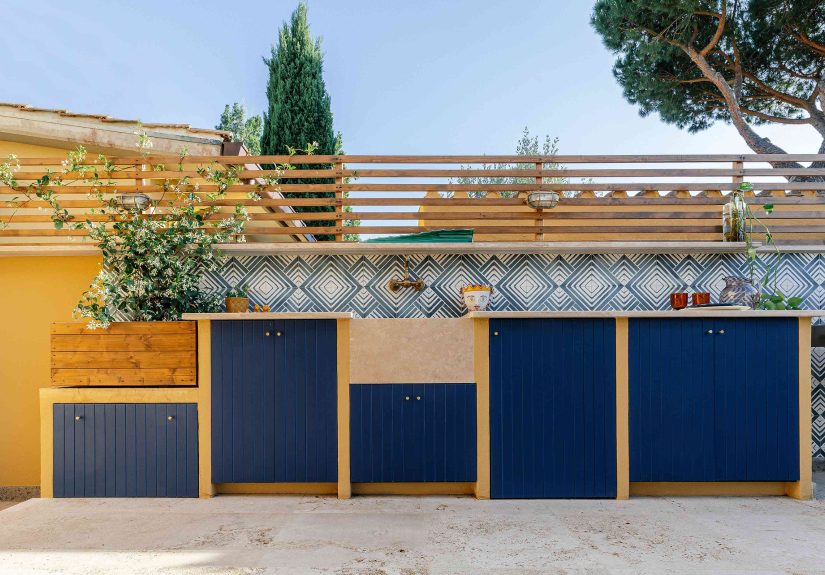
Best for tight patios and “I just want a killer grill station” builds. You can still include a sink and fridgejust keep the counter space generous so
you’re not balancing raw chicken on a single square inch like a reality show challenge.
L-shape
A classic for a reason: it naturally separates hot and prep zones and creates a corner that’s perfect for a sink or a dedicated beverage area.
It also feels social because guests can hang near the short leg without blocking the cook.
U-shape
This is the “serious cook” layout with maximum counter space and a clear workflow. It shines when you host often and want helpers to chop, plate, and
assemble without creating a traffic jam.
Island
A freestanding island is a backyard crowd magnet. Add a raised bar top and suddenly your guests have a place to perch while you cook, which means fewer
people wandering into the hot zone asking, “Is it done yet?” every two minutes.
15 Outdoor Kitchen Plans and Design Ideas
1) The Weeknight Grill Strip (Straight-Line Minimalist)
Plan: grill + two big counters + sealed storage. Keep it simple, fast, and easy to clean. Add a small under-counter beverage fridge if you entertain
even a littlebecause people will open the indoor fridge 47 times if you let them.
2) The L-Shape “Prep on One Side, Fire on the Other”
Put the grill and side burner on one leg, then reserve the other leg for prep, plating, and a sink. This layout keeps raw ingredients away from open flame
and gives you a calm, organized prep zone.
3) The U-Shape Entertainer’s Workhorse
If you want the outdoor kitchen to feel like a real kitchen, this is it. Place the grill in the center section, a sink on one side, and refrigeration on the other.
Bonus: the U creates a natural “keep out” boundary so guests don’t drift into your workspace.
4) The Social Island With Bar Seating
An island with a raised counter turns your cooktop into the show. Keep the hot zone facing away from the seating side so guests can chat without leaning into heat
or smoke. Add task lighting under a pergola or roof so you can cook after sunset without using your phone flashlight like a camp counselor.
5) The Covered Pavilion Kitchen (All-Weather Upgrade)
Plan a roof or pavilion with fans, lighting, and weather-proof outlets. If your grill is under cover, choose an outdoor-rated vent hood or make sure the space has
strong airflow so smoke doesn’t collect overhead. This design is perfect for people who host beyond “nice weather only.”
6) The Poolside Kitchen With Wet/Dry Separation
Use two surfaces: a durable prep counter near the grill, plus a “dry bar” area for snacks and drinks away from splashes. Include towel hooks, a drop zone for goggles,
and a mini-fridge for hydration. It’s practicaland it quietly prevents the “wet kid grabs burger buns” situation.
7) The Pizza-and-Party Station
Build around a pizza oven (or an outdoor-rated oven insert) with landing space for dough trays, toppings, and cutting. Add a heat-resistant surface nearby and a drawer
for peels, cutters, and heat gloves. This plan is less “burger night” and more “neighborhood legend.”
8) The Smoker Corner (Low-and-Slow Headquarters)
Dedicate a separate corner for a smoker so it can run for hours without crowding your main cook zone. Include a heat-safe shelf, covered pellet storage, and a small counter
for wrapping and resting meats. If your patio is breezy, add a windbreak wall to stabilize temps.
9) The Compact Balcony or Small Patio Micro-Kitchen
For tight spaces: choose a slim grill, a narrow counter, and vertical storage (hooks, shelves, magnetic strips). Keep fuel and heat sources compliant with local building and fire rules.
A folding prep shelf can add workspace when you need it and disappear when you don’t.
10) The Modular “Start Now, Expand Later” Plan
Use modular components (prefab islands, ready-to-assemble cabinets, or movable bases) so you can build in phases. Start with grill + counter + storage, then add refrigeration,
a sink, or specialty appliances later. It’s the rare plan that respects both your budget and your future ambition.
11) The DIY Block-and-Counter Build (Budget-Friendly, Big Impact)
A DIY-friendly plan uses concrete block or metal framing with a durable counter surface. Add a drop-in grill, then finish with tile, stone veneer, or stucco.
Keep it clean and simple: the goal is “sturdy and handsome,” not “mystery wobble.”
12) The Farmhouse Stone Kitchen (Warm, Classic, Hide-the-Mess Style)
Wrap the base in stone veneer and choose warm-toned counters that age gracefully. Add a big prep counter, a deep sink, and closed storage to hide tools and supplies.
This style looks intentional even when your grill brush and tongs are living their truth.
13) The Modern Stainless & Concrete Kitchen (Sleek and Tough)
Go minimal: stainless cabinetry, concrete counters, and crisp lines. Add LED task lighting and black hardware for contrast. This plan is easy to wipe down and stands up well to weather,
especially when you choose corrosion-resistant metals.
14) The “Outdoor Pantry” Kitchen (Storage-First for Serious Hosts)
If you’re always running inside for foil, seasoning, or serving trays, this is your plan: add extra drawers, a dry-goods cabinet, and a dedicated trash/recycling pull-out.
Include a slim “landing counter” near the fridge for quick staging and restocking.
15) The Indoor-Outdoor Connection Plan (Pass-Through + Matching Finishes)
Design the outdoor kitchen to visually connect with your indoor space: similar colors, complementary materials, and a pass-through window or serving ledge if possible.
It makes the whole home feel biggerand it turns carrying plates into a two-step process instead of a full expedition.
Smart Add-Ons That Make Outdoor Kitchens Feel Finished
Lighting that doesn’t ruin the vibe
Use layers: bright task lighting over prep and grill zones, plus softer ambient lighting for seating. Path lights help guests move safely, and under-counter
lighting makes the kitchen look polished at night.
Storage that’s actually outdoor-ready
Choose cabinetry made for outdoors and add weather seals where appropriate. Include a specific spot for trash, paper towels, and grilling tools so your counters stay clear.
Seating that respects the cook’s personal space
Keep seating close enough for conversation but far enough from heat and smoke. A raised bar counter or a separate lounge zone helps guests hang out without orbiting the grill like moths to a flame.
Budget Reality Check (So Your Dream Doesn’t Become a Spreadsheet Horror Story)
Outdoor kitchens range from “simple grill nook” to “fully loaded backyard restaurant.” Costs depend heavily on size, materials, utilities, and whether you’re using prefab/modular components
or building custom. In the U.S., published estimates commonly show projects spanning from a few thousand dollars for basic setups to tens of thousands for larger, utility-heavy builds.
A practical approach: decide your non-negotiables first (usually grill + prep counter + some storage), then add upgrades that match how you entertain (refrigeration, sink, pizza oven, lighting,
cover structure). Your budget will go further when you build on an existing patio/slab and keep utility runs shorter.
of Real-Life Experience: What People Wish They’d Known
Let’s talk about the stuff nobody puts in the glossy inspiration photos: the awkward “where do I set the raw chicken package” moment, the surprise gust of wind that sends smoke directly into your
neighbor’s open window, and the universal truth that outdoor kitchens attract friends like free Wi-Fi.
First: counter space is never “extra.” People plan for the grill and forget the landing zoneswhere trays sit, buns get built, and cooked food rests. In real life, you’ll use prep counters more than
you use the grill shelf. If you can afford one upgrade, make it more continuous workspace. Even a modest, uninterrupted stretch of counter turns chaos into calm.
Second: storage is the quiet hero. Outdoor cooking involves tools (tongs, brushes, thermometers), supplies (foil, gloves, skewers), and cleanup gear (trash bags, paper towels, spray cleaner). If those
items don’t have a home, they’ll migrateinto your indoor kitchen, onto your patio table, or into a random plastic bin that looks like it survived three moves and a small flood. People who love their
outdoor kitchens almost always have a dedicated tool drawer and a hidden trash solution. It’s not glamorous, but it’s what makes the kitchen feel “easy.”
Third: weather changes your habits. A kitchen that’s perfect in May can be punishing in July without shade. If your cook zone faces direct afternoon sun, you’ll feel it fast. The most comfortable outdoor
kitchens usually have some kind of cover strategyan umbrella, pergola, pavilion, or even a thoughtfully placed shade sail. And if you grill under cover, airflow matters. You want comfort and safety, not
a smoke layer that clings to your ceiling like it’s taking a long-term lease.
Fourth: put the “people zone” on purpose. Guests want to be near the action, but they don’t need to be in the action. When seating is planned as part of the kitchenbar stools on the cool side of an
island, a nearby table, or a lounge area angled toward the cookyou’ll host more comfortably. You’ll also cook better because you’re not constantly stepping around someone who has chosen the grill as their
favorite place to stand and provide commentary.
Finally: plan one “signature moment.” It can be tiny: a built-in herb planter by the prep station, a pizza oven corner, a beverage fridge with a dedicated mocktail shelf, or a gorgeous light fixture under
a pergola. Those little choices are what make the space feel personaland what make people say, “Okay, this is officially the hangout spot.”
Conclusion
The best outdoor kitchen plans balance flow, safety, and materials that can handle real weatherthen layer in the fun: pizza nights, pool days, family cookouts, and the kind of hosting that feels relaxed
because your setup actually works. Pick a layout that fits your space, organize by zones, plan utilities early, and invest in counter space and storage. Your future self (and your guests) will thank you.