Table of Contents >> Show >> Hide
- Before You Start: Declutter and Define Your Zones
- 20 Shed Organization Ideas for a Smarter Storage Space
- 1. Maximize Vertical Space with Wall Shelving
- 2. Install a Pegboard Tool Wall
- 3. Use Rail or Slatwall Systems for Long-Handled Tools
- 4. Add a Corner Tool Rack
- 5. Store Small Parts in Mason Jars, Bins, and Drawers
- 6. Use Clear Lidded Totes and Labels
- 7. Create a Ceiling Storage Zone
- 8. Don’t Forget the Back of the Door
- 9. Add a Folding or Narrow Workbench
- 10. Use a Rolling Utility Cart
- 11. Create Dedicated Zones with Visual Cues
- 12. Install Better Lighting
- 13. Use Wire or Ventilated Shelving
- 14. Tame Hoses, Cords, and Ropes
- 15. Add Bike Hooks or Racks
- 16. Use Clear “Grab-and-Go” Bins for Frequently Used Kits
- 17. Keep Hazardous Items in a Lockable Cabinet
- 18. Rotate Seasonal Storage
- 19. Consider a Vertical Tool Shed for Tiny Yards
- 20. Build a Maintenance Habit (So It Stays Organized)
- Real-Life Shed Organization Experiences and Lessons Learned
If your shed currently looks like a crime scene involving a lawn mower, a pile of rakes, and that bag of potting soil from 2018, you’re not alone. Sheds tend to become the “junk drawer” of the backyard. The good news? With a few smart shed organization ideas and a little sweat equity, you can turn that cluttered cave into a genuinely functional storage space that actually makes outdoor projects easier.
Home improvement and storage pros agree on a few big themes: use vertical space, create zones, keep the floor as clear as possible, and rely on flexible systems like shelves, hooks, and bins to adapt as your hobbies change.
Before You Start: Declutter and Define Your Zones
Before you buy a single hook or bin, pull everything out of the shed. Yes, all of it. Sort items into categories like “keep,” “donate/sell,” and “recycle/trash.” Storage companies and professional organizers consistently recommend this as the first step because there’s no point in organizing stuff you don’t actually use.
Once you’ve edited down your stash, sketch a simple floor plan and divide your shed into activity-based zones:
- Gardening zone: pots, soil, seeds, hand tools.
- Yardwork zone: rakes, shovels, trimmers, mower accessories.
- DIY / tools zone: hand tools, small hardware, power tools.
- Recreation zone: bikes, balls, camping gear.
- Seasonal zone: snow shovels, holiday decor, patio cushions.
Labeling these zones on your sketch makes it easier to choose the right shed storage solutions for each wall or corner.
20 Shed Organization Ideas for a Smarter Storage Space
1. Maximize Vertical Space with Wall Shelving
Vertical storage is your best friend in a small shed. Wall-mounted shelves keep paint cans, garden supplies, and smaller containers off the floor and at eye level. Retailers like Lowe’s and Home Depot note that freestanding or wall-mounted shelving is one of the easiest ways to instantly expand storage in a shed or garage.
Choose adjustable shelving if you can; as your needs change, you can move shelves to fit tall totes or tiny boxes without starting from scratch.
2. Install a Pegboard Tool Wall
A pegboard wall is classic for a reason. It turns every square inch into customizable storage for hand tools, extension cords, and lightweight gear. You can swap hooks and small bins around as your setup evolves. Many shed and garage organization guides highlight pegboard as one of the most flexible, budget-friendly storage systems available.
3. Use Rail or Slatwall Systems for Long-Handled Tools
Rakes, shovels, string trimmers, and brooms are notorious for creating chaos. A rail or slatwall system with specialized hooks lets you hang long-handled tools securely and keep them off the floor. Big-box stores sell rail systems that can hold heavy tools and even ladders, making them great for tight sheds where every inch counts.
4. Add a Corner Tool Rack
Corners are often wasted space. A freestanding corner rack corrals up to a couple dozen long-handled items in a small footprint and stops them from sliding into a messy pile. Some manufacturers design resin corner racks specifically for sheds to maximize every inch without needing complicated installation.
5. Store Small Parts in Mason Jars, Bins, and Drawers
Tiny piecesscrews, nails, sprinkler fittings, picture hookscan make a shed feel chaotic fast. Many storage experts recommend clear jars, small drawers, or pegboard-mounted cups so you can see what you have at a glance.
Bonus points if you label the lids and place them on a shallow shelf near your main work surface.
6. Use Clear Lidded Totes and Labels
Clear plastic bins with tight-fitting lids are a go-to for outdoor storage because they protect items from dust and pests while making it easy to see what’s inside. Organizing pros often pair clear bins with bold label tags to prevent the dreaded “mystery bin” situation.
Keep most-used items in bins at chest height and stash rarely used seasonal items on the highest shelves.
7. Create a Ceiling Storage Zone
The ceiling in most sheds is wasted real estate. Home and garden experts suggest hanging sturdy hooks, wires, or ceiling racks to store lightweight but bulky items like ladders, spare lumber, or seasonal decor. One clever hack uses tensioned wire or rods to hang watering cans and baskets overhead, freeing floor and shelf space.
8. Don’t Forget the Back of the Door
The back of your shed door is an underrated storage spot. Add narrow rail racks for garden sprayers and bottles, a shallow pegboard, or an over-the-door organizer for gloves, small tools, and twine. Barn and shed builders frequently recommend door storage as a smart way to fit more into smaller sheds.
9. Add a Folding or Narrow Workbench
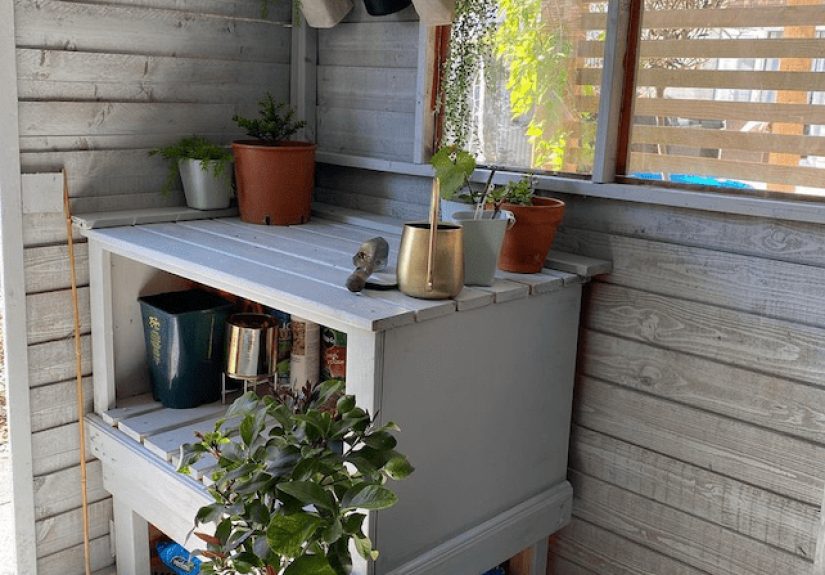
If you like to pot plants or tinker, a work surface is essentialbut it doesn’t have to eat your entire shed. Consider a wall-mounted folding workbench that drops down when you need it and folds flat afterward, or a narrow fixed bench running along one wall. Guides on maximizing shed storage often highlight fold-down benches as perfect for compact spaces.
10. Use a Rolling Utility Cart
A rolling cart acts like a mini portable shed within your shed. Several shed organization guides suggest carts for gardening supplies or painting gear, since you can roll everything to the patio or garden bed, then park it back in a corner when you’re done. Look for locking casters so it doesn’t wander away on its own.
11. Create Dedicated Zones with Visual Cues
Once your shelves and hooks are in place, reinforce your “zones” with visual cues: a strip of colored tape on the floor outlining the mower parking spot, different colored bins for sports gear vs. gardening, or distinct label styles per category. Storage companies point out that clearly defined zones make it easier for everyone in the household to put items back where they belong.
12. Install Better Lighting
The most organized shed still feels chaotic if you can’t see anything. Add battery-powered puck lights, solar lights near the door, or a basic LED strip along the ceiling. Wire shelving and light-colored walls help reflect that light, making it easier to find small items quicklyeven at dusk.
13. Use Wire or Ventilated Shelving
Wire shelves are popular in outdoor storage because they let light and air flow through. That makes it easier to see labels and helps reduce moisture buildup around gardening supplies and chemicals. Shed organization guides often recommend metal or wire shelving for durability in unconditioned spaces.
14. Tame Hoses, Cords, and Ropes
If there’s one thing guaranteed to trip you in a shed, it’s a rogue hose or extension cord. Use heavy-duty hooks, DIY PVC hangers, or hose reels to keep loops neat and off the floor. Garden and shed experts emphasize that dedicated hose and cord organizers eliminate some of the most annoying everyday clutter.
15. Add Bike Hooks or Racks
Storing bikes in a shed can swallow floor space. Vertical bike hooks or wall-mounted racks let you lift bikes off the ground and hang them by the tire or frame. Lifestyle and organizing sites recommend this especially if you share the shed between yard tools and recreational gear.
16. Use Clear “Grab-and-Go” Bins for Frequently Used Kits
Think in terms of kits: a “planting kit,” “painting kit,” or “grill kit.” Store each in a lidded bin with everything needed for that task. Then, when it’s time to stain the fence, you just grab one bin instead of hunting for brushes, gloves, and stain in three different corners of the shed.
17. Keep Hazardous Items in a Lockable Cabinet
If you store pesticides, pool chemicals, fuel, or sharp tools, a lockable cabinet is non-negotiableespecially around kids and pets. Many shed organization guides include a dedicated “safety zone” with locking storage high off the ground.
18. Rotate Seasonal Storage
Treat your shed like a mini seasonal warehouse. In spring and summer, keep gardening gear front and center while snow shovels and holiday decor move to upper shelves. As the weather changes, swap positions. This simple rotation keeps the shed feeling fresh and prevents out-of-season items from hogging prime real estate.
19. Consider a Vertical Tool Shed for Tiny Yards
If you’re dealing with a narrow patio or tiny yard, a standalone vertical tool shed might be a better option than a large walk-in. Vertical resin sheds sold through major U.S. retailers are praised for being weather-resistant, compact, and surprisingly roomy insideperfect for storing long-handled tools and a few bins without taking over your yard.
20. Build a Maintenance Habit (So It Stays Organized)
The finaland maybe most importantshed storage idea is to schedule quick maintenance sessions. Professional organizers often suggest a 10–15 minute reset once a month or once per season: sweep the floor, return strays to their zones, and pull out anything broken or no longer needed.
Think of it like brushing your teeth: a little regular effort prevents a big, painful job later.
Real-Life Shed Organization Experiences and Lessons Learned
Organizing a shed looks simple on paperbuy some hooks, stack a few bins, done. In reality, most of us go through a few rounds of trial and error before the space finally works. Here are some experience-based lessons that can help you skip a few mistakes.
First, most people underestimate just how much time the “declutter” phase takes. Pulling everything out of the shed can feel overwhelming, but it’s also where the biggest wins happen. Many homeowners report that once they got rid of duplicates, rusted tools, and random “I might use this someday” stuff, they needed far fewer shelves than they expected. It’s common to reclaim 25–40% of the floor space simply by being honest about what you actually use.
Another common lesson: cheap, wobbly furniture rarely survives shed life. Because sheds are subject to temperature swings and humidity, flimsy particleboard shelving tends to warp or sag. People who’ve organized multiple sheds often end up replacing those early bargain shelves with metal or heavy-duty plastic ones. Spending a bit more up front usually pays off in fewer collapses and safer storageespecially for paint, chemicals, and heavy tools.
Labeling turns out to be surprisingly important. At first, you might feel silly writing “GARDEN HAND TOOLS” or “SPRINKLER PARTS” on every bin. But families quickly notice that labeled zones and containers reduce the endless “Where are the pruning shears?” questions. Kids are more likely to put sports gear back in the right spot when it’s clearly labeled, and you’re less likely to buy another box of screws you already own.
People who garden frequently often say that a simple potting station is a game-changer. It doesn’t have to be fancy: a sturdy table, a small pegboard, and a few jars for plant labels and twine can transform planting from a backbreaking chore into a quick, enjoyable task. When everything is laid out at waist height, you’re more likely to start a project, because you don’t have to spend 20 minutes hunting for soil and trowels first.
Many shed owners also discover that “pretty” doesn’t have to be the enemy of “practical.” A fresh coat of light-colored paint on the walls or interior sheathing makes the space brighter and more inviting, and it helps you see spiders, spills, and leaks more easily. Adding hooks for wreaths, decor, or a simple wall clock can make your shed feel more like a mini workshop than a dark storage cavewhich, in turn, makes you more inclined to keep it tidy.
Finally, the most successful shed setups are treated as living systems, not one-time projects. As hobbies changemaybe you quit keeping chickens and get into biking, or swap vegetable gardening for landscapingyou can rearrange rail systems, pegboard accessories, and bins without tearing everything down. When you choose storage that’s modular and easy to move, the shed grows with you instead of fighting you.
In short, the best shed organization ideas aren’t just about clever gadgets; they’re about building a space that makes your outdoor life easier and more enjoyable. Once your shed stops being the place where projects go to die, you’ll be surprised how motivated you feel to tackle the next one.