Table of Contents >> Show >> Hide
- Who Is Nacho Diaz (Naolito)?
- The Charm of “Before & After” Cartoons
- Why These 21 Illustrations Went Viral
- Breaking Down the Themes in Nacho Diaz’s Before & After Series
- The Art Style: Simple Lines, Big Personality
- Relatable Humor in the Age of Social Media
- What These Illustrations Say About Us
- How to Enjoy Nacho Diaz’s Before & After Series Even More
- of Real-Life Experiences Inspired by These Illustrations
- Conclusion
Some artists paint landscapes. Others paint portraits. Spanish illustrator Nacho Diaz – also known online as
Naolito – draws the little drama happening between “before” and “after” in everyday life.
From the first blessed sip of coffee to the sad fate of a banana left too long in the fruit bowl, his
cartoon-style before & after illustrations capture moments we all know a little too well.
The viral Bored Panda feature “21 Hilariously Relatable Before & After Illustrations By Spanish Artist
Nacho Diaz” helped introduce millions of readers to this series of clever comics. In them, Diaz personifies
coffee cups, vegetables, planets, and even abstract concepts like diet or sleep, turning them into characters
that act out our daily struggles with a big wink. The result is the perfect mix of cute, smart, and
painfully honest.
In this deep dive, we’ll look at who Nacho Diaz is, why his before & after illustrations are so
relatable, and what makes this Bored Panda collection stand out in the world of humorous art and
social-media-friendly cartoons.
Who Is Nacho Diaz (Naolito)?
Ignacio “Nacho” Diaz Arjona is a designer, illustrator, animator, and filmmaker from Spain who has been
working under the name Naolito since around 2009. Over the years he’s grown a large online
following by posting funny, pop-culture-inspired illustrations and selling his work on T-shirts, prints, and
other merchandise through his own brand and store.
His style is instantly recognizable: rounded, cartoon characters with expressive faces, simple color palettes,
and punchline-driven concepts. Many of his pieces rely on clever visual puns, double meanings, and playful
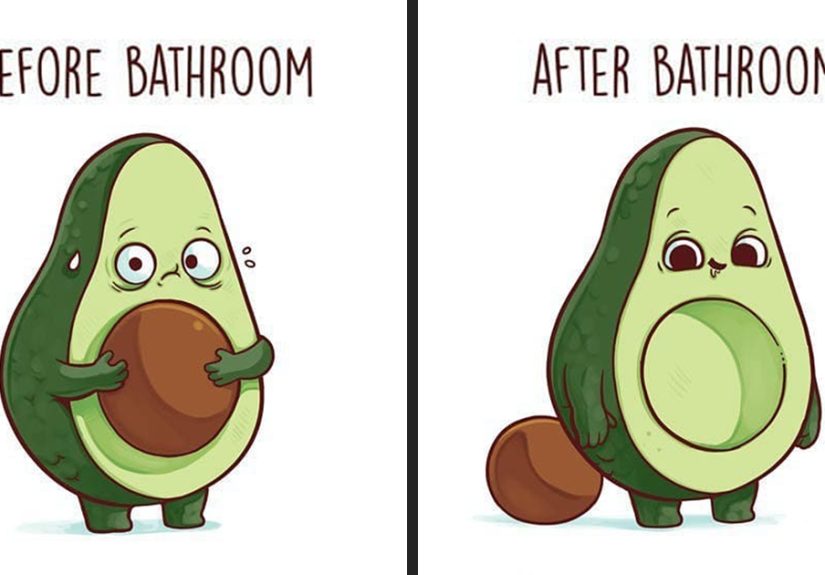
exaggeration. A slice of bread might dream of becoming toast royalty; an avocado might struggle with losing
its pit-“weight”; a pencil might feel exhausted after a long day of drawing.
What makes Diaz stand out from many other online cartoonists is how consistently he builds emotional
connection into these jokes. In interviews, he’s said that he likes to use objects and everyday items to
represent human feelings so that viewers can immediately see themselves in the situationeven when the main
character is a mug or a moon.
The Charm of “Before & After” Cartoons
The “before and after” format is simple: one image shows a starting state, and the other shows what happens
later. But in Diaz’s hands, this classic formula becomes a playground for social commentary and self-deprecating
humor.
In the Bored Panda collection of 21 illustrations, each pair is like a mini story told in two panels.
You don’t need text bubbles or long captions. Just a few visual cues are enough to trigger thoughts like:
- “Yep, that’s me before coffee vs. after coffee.”
- “That’s exactly what my ‘healthy diet’ looks like by the weekend.”
- “Mood: that wilted plant that used to be full of hope.”
The magic lies in exaggeration and honesty. Diaz amplifies what we already know about our own habits, then
translates it into characters who are just dramatic enough to make us laugh instead of cry. It’s like
holding up a mirror to our lack of self-controlbut the mirror is a cute cartoon donut with big eyes.
Why These 21 Illustrations Went Viral
When Bored Panda spotlighted Diaz’s before & after series, the images quickly spread across Instagram,
Pinterest, and Facebook. Other art and design sites picked them up, and soon the same panels were being
shared with captions like “This is me every Monday” or “Tag a friend who can relate.”
A few reasons this specific set of 21 illustrations struck such a nerve:
- Universal topics. Coffee, sleep, diet, aging, seasons, expectations vs. realitythese
are experiences shared across cultures. - Instant recognition. You don’t need to read a long explanation. One glance and you
understand the joke. - Soft, friendly art style. Even when Diaz is poking fun at our worst habits, the
illustrations feel cozy rather than cruel. - Shareable format. Two-panel comparisons are perfect for TikTok slideshows, Instagram
carousels, and Bored Panda listicles.
Many art and design blogs noted how clean and effective these pieces are: no clutter, no unnecessary details,
just a clear setup and a punchline that hits home.
Breaking Down the Themes in Nacho Diaz’s Before & After Series
While the Bored Panda feature focuses on 21 illustrations, the series itself taps into a handful of recurring
themes that show up again and again in Diaz’s work.
1. Coffee: The Most Honest Before & After of All
One of Diaz’s most famous before & after illustrations involves coffee. Before coffee, the cup looks
dull, sleepy, and maybe a little dead insidelike it pulled an all-nighter it definitely regrets. After
coffee, that same cup is wide-eyed and energized, practically vibrating with excitement.
It’s a simple gag, but it captures the daily ritual so many people rely on. The “before” is your alarm going
off at 6 a.m.; the “after” is the moment caffeine hits and your brain finally decides to join the meeting.
By turning coffee into a character instead of just a beverage, Diaz transforms an everyday habit into a tiny
narrative about transformation.
2. Diet, Fitness, and the Eternal Struggle
Another favorite theme in these illustrations is the gap between our health goals and what actually happens
after a few days. Think of a confident, muscular version of a character labeled “Before the weekend,” and a
softer, rounder version labeled “After the weekend,” surrounded by snack crumbs.
Diaz doesn’t shame anyoneif anything, he laughs with us. These drawings resemble a visual diary of
broken resolutions. They’re funny because they show that the “after” most of us achieve is not the
gym-commercial fantasy, but something much more human and imperfect.
3. Sleep, Stress, and the Modern Lifestyle
Our relationship with sleep is another recurring subject. A fluffy, well-rested character stands in for
the dreamy “before,” and a zombie-like figure represents the “after” of too many late-night scroll sessions
on social media.
The contrast is relatable for anyone who has stayed up “just one more episode” later than they should.
Without using any text beyond simple labels like “Before” and “After,” Diaz comments on how digital life
chips away at rest, energy, and mental clarity.
4. Seasons, Mood, and the Passage of Time
Some of the 21 illustrations play with the cycle of seasons or the passage of time. A character might appear
bright, colorful, and hopeful in spring, then return in the “after” panel bleached by the harsh sun of summer
or worn down by winter’s darkness.
These panels give a playful nod to seasonal mood changes. We start the year full of optimism; by the time
we reach the busiest months, we might feel as wilted as a plant that missed a few watering sessions.
5. Body Image and Self-Perception (Handled Gently)
Diaz occasionally uses before & after to poke fun at how we see ourselves in the mirror versus how things
really are. The “before” might show a character feeling hopeful and polished, while the “after” reveals a
more chaotic, unfiltered version.
What keeps these cartoons from feeling mean-spirited is how he distributes the joke evenly. No character is
perfect; everyone, from food to objects to humans, is flawed in a cute, sympathetic way. It’s less “you should
look different” and more “we all feel like this sometimes.”
The Art Style: Simple Lines, Big Personality
Visually, the 21 illustrations look effortlessalmost like they could have been sketched on the corner of a
notebook. But that simplicity is carefully engineered:
- Bold outlines keep characters readable even on a tiny phone screen.
- Soft shading adds depth without overpowering the concept.
- Limited color palettes keep the focus on expressions and the joke.
- Minimal backgrounds ensure nothing distracts from the before & after contrast.
This style also translates well to merchandise. Many of Diaz’s designs appear on T-shirts, prints, and
posters, which demands clarity and impact at a glance. You don’t need to read a paragraph to “get it”one
look is enough.
Relatable Humor in the Age of Social Media
The success of “21 Hilariously Relatable Before & After Illustrations” isn’t just about cute drawings.
It’s also about timing and format. Social media loves:
- Short, bite-sized visual stories.
- Clear emotional hooks (“That’s me!”).
- Memes that can be captioned and recaptioned endlessly.
Diaz’s work slides perfectly into this ecosystem. The before & after panels can be reposted, turned into
reaction images, or edited into TikTok compilations. Each one becomes a kind of visual meme template, even
if it wasn’t designed that way.
At the same time, there’s a genuine warmth beneath the humor. Instead of doom-scrolling through bad news,
you get a reminder that other people share your tiny frustrations and contradictions. That combination of
comfort and comedy helps explain why so many viewers fall in love with his work.
What These Illustrations Say About Us
Taken together, the 21 before & after illustrations form a lighthearted portrait of modern life:
- We rely heavily on coffee and sugar for energy.
- We make ambitious plans and then surrender to temptation.
- We want to be well-rested but sabotage our own sleep.
- We see time, seasons, and aging as things that constantly reshape us.
None of this is presented with judgment. Instead, Diaz’s characters invite us to laugh at ourselves and
maybe feel a little less alone. If even a cartoon croissant can’t stick to its resolutions, maybe we can
forgive ourselves for not being perfect either.
How to Enjoy Nacho Diaz’s Before & After Series Even More
If you came across the Bored Panda article and instantly loved the style, here are a few ways to go deeper
into the world of Naolito:
- Follow his social channels. Diaz regularly posts new illustrations, including more
before & after concepts, pop-culture parodies, and seasonal designs. - Check out his shop and prints. Many of his designs are available on shirts and posters,
which means your morning coffee mug can stare at you with exactly the right amount of judgment. - Look for recurring jokes. You’ll start to notice themes: overworked planets, moody foods,
introverted objects, and running gags about caffeine, naps, and snacks.
The more you see, the more you realize that the 21 illustrations featured in that viral Bored Panda post
are just the doorway into a much bigger cartoon universe.
of Real-Life Experiences Inspired by These Illustrations
One reason the “21 Hilariously Relatable Before & After Illustrations” resonate so much is that you can
plug your own life into them instantly. Let’s be honest: most of us have lived at least ten different “before
and after” stories this week.
Take the classic “before coffee / after coffee” scenario. Before coffee, you might shuffle into the kitchen
half awake, wearing mismatched socks and having a deep debate with yourself about whether it’s socially
acceptable to call in “tired” to work. After coffee, suddenly you’re answering emails, starting projects, and
briefly believing you can reorganize your entire life before lunch. Diaz captures that transformation with
two versions of the same cupbut if you’ve ever stared at your mug waiting for it to cool, you know exactly
what that little character is feeling.
Or think about “before the diet / after the diet.” Before, you’re full of determination: you meal-prep, you
buy a mountain of vegetables, you swear this is it, this is your new lifestyle. After a few days, real life
sneaks in. A friend invites you out for pizza, there’s a birthday at the office, or you remember that ice
cream exists. The “after” panel in real life is rarely the perfectly sculpted version we imagine. It’s more
like a half-eaten salad next to an empty cookie package. Diaz’s cartoons don’t scold you for thatthey just
nod and say, “Same.”
Many people see themselves in the “before weekend / after weekend” storyline. Before the weekend, you sketch
an ambitious list: clean the house, catch up on reading, prep healthy lunches, maybe even start that personal
project you’ve been dreaming about. After the weekend? You’ve watched three seasons of a show you “weren’t
going to get hooked on,” your laundry is in a slightly different pile, and your big accomplishment is that
you finally changed the batteries in one remote. In Diaz’s hands, that gap between intention and reality
becomes a lovable, slightly frazzled character whose eyes say, “I tried, okay?”
The illustrations also reflect the emotional roller coaster of social interaction. Imagine a comic where the
“before going out” character is glowing, excited, and full of energy, and the “after socializing” version is
drained, slumped on the couch, and quietly questioning every sentence they said. For introverts (and tired
extroverts), that contrast is painfully real. It’s the visual representation of needing a day of silence after
a two-hour party.
Even something as simple as weather becomes material for a before & after story. Before summer vacation,
you’re a bright ball of sunshine, dreaming of beach days and carefree afternoons. After a week of heat and
sunburn, you might feel more like a melted popsicle than a glamorous travel influencer. When Diaz turns that
into a cartoon, the joke works because you can still feel the sand in your shoes and the peeling sunscreen on
your nose.
The truth is, we all carry dozens of these invisible two-panel comics in our heads:
- Before starting a new hobby vs. after realizing it’s hard.
- Before cleaning your room vs. after giving up and shoving everything into a closet.
- Before adopting a “minimalist lifestyle” vs. after one trip to the store’s home decor section.
Diaz’s genius isn’t just that he draws cute objects. It’s that he gives shape to these mini dramas and
lets us laugh at our own inconsistencies. When you see a cheerful “before” and a chaotic “after,” you’re
not just looking at a jokeyou’re looking at your own habits reflected back in a kinder, softer way.
That’s ultimately why the Bored Panda collection of 21 before & after illustrations has such staying power.
It doesn’t just entertain you for a few seconds while you scroll. It leaves you with a quiet little reminder
that everyone else is winging it, too. Behind every polished “before” is a messy, honest “after”and in
between the two, there’s a story worth smiling about.
Conclusion
“21 Hilariously Relatable Before & After Illustrations By Spanish Artist Nacho Diaz” is more than a viral
gallery of cute cartoons. It’s a snapshot of how modern life feels: hopeful, chaotic, caffeinated,
imperfect, and strangely comforting. Through his Naolito persona, Diaz uses simple drawings to show us that
everyone struggles with the same small battleswaking up, eating well, resting enough, and living up to our
own expectations.
The next time you’re having a “before & after” momentbefore Monday / after Monday, before coffee / after
coffee, before plans / after realitypicture one of Diaz’s illustrations. If you can laugh about it, even just
a little, you’re already turning your own life into the kind of story his art tells so well.