Table of Contents >> Show >> Hide
- Before You Plant: Match the Vine to the Structure
- 26 Flowering Vines to Grow (With Real-World Notes)
- 1) Clematis (Clematis hybrids)
- 2) Virgin’s Bower Clematis (Clematis virginiana)
- 3) Climbing Rose (Rosa climbing types)
- 4) American Wisteria (Wisteria frutescens or Wisteria macrostachya)
- 5) Trumpet Vine (Campsis radicans)
- 6) Crossvine (Bignonia capreolata)
- 7) Coral Honeysuckle (Lonicera sempervirens)
- 8) Passionflower / Maypop (Passiflora incarnata)
- 9) Carolina Jessamine (Gelsemium sempervirens)
- 10) Star Jasmine (Trachelospermum jasminoides)
- 11) Confederate Jasmine (Trachelospermum jasminoides ‘Confederate’ types)
- 12) Climbing Hydrangea (Hydrangea anomala subsp. petiolaris)
- 13) Dutchman’s Pipe (Aristolochia macrophylla)
- 14) Bougainvillea (Bougainvillea spp.)
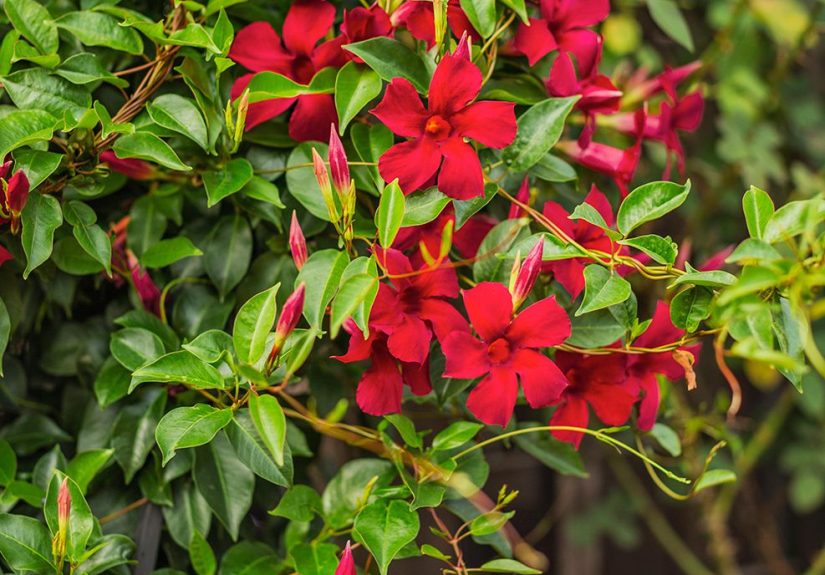
- 15) Mandevilla (Mandevilla spp.)
- 16) Dipladenia (Mandevilla relatives)
- 17) Black-Eyed Susan Vine (Thunbergia alata)
- 18) Morning Glory (Ipomoea purpurea and relatives)
- 19) Moonflower (Ipomoea alba)
- 20) Sweet Pea (Lathyrus odoratus)
- 21) Hyacinth Bean (Lablab purpureus)
- 22) Scarlet Runner Bean (Phaseolus coccineus)
- 23) Nasturtium (Tropaeolum majus)
- 24) Canary Creeper (Tropaeolum peregrinum)
- 25) Climbing Snapdragon / Twining Snapdragon Vine (Asarina scandens / related species)
- 26) Snail Vine (Cochliasanthus caracalla)
- How to Get Better Blooms (Without Turning Your Yard Into a Vine Situation)
- Real-World Experiences and Lessons Gardeners Learn the Fun Way (About )
- Conclusion: Pick the Vine That Fits Your Life (Not Just Your Fence)
A fence is basically a blank wall that’s begging for a makeover. An arbor is a photo booth waiting to happen.
And a trellis? That’s just a polite way of saying, “Please climb here, not on my downspout.”
If you’ve got vertical space, flowering vines can turn it into living color, fragrance, and pollinator trafficoften
with less square footage than a traditional flower bed.
This guide covers 26 flowering vines that work beautifully on fences, arbors, pergolas, and trellisesranging from
hardy, long-lived climbers to fast annuals you can sow for instant summer drama. You’ll also find practical notes on
growth habit, best uses, and a few “learn from other people’s mistakes” warnings (because vines are the definition of
“give them an inch, they’ll take your whole yard”).
Before You Plant: Match the Vine to the Structure
Know how it climbs
- Twining vines wrap stems around supports (great for trellises, wires, thin posts).
- Tendril climbers grab with curly tendrils (perfect for lattice and mesh).
- Clingers use aerial rootlets or adhesive pads (can climb walls, but may damage some surfaces).
- Scramblers need tying and training (beautiful, but they won’t “solve it themselves”).
Support matters (and so does physics)
A mature vine can get heavyespecially woody vines like wisteria, climbing roses, or trumpet vine.
For arbors and pergolas, choose sturdy, anchored structures. For fences, check that posts are solid and panels are
in good shape. If the fence wobbles now, the vine will find out and take it personally.
Plan for pruning like you plan for coffee
Many flowering vines bloom better with regular pruning. Some need a light tidy-up; others require an annual haircut
that looks dramatic but is actually very healthy. If you want “plant it and ignore it,” choose a vine known for low-maintenance habits.
If you enjoy a little seasonal gardening ritual, you’ll have more options.
26 Flowering Vines to Grow (With Real-World Notes)
1) Clematis (Clematis hybrids)
The poster child of trellis flowers: big blooms, tons of colors, and a variety of bloom times. Many prefer “cool roots,
sunny tops,” so mulch the base and let the vine climb into sun.
2) Virgin’s Bower Clematis (Clematis virginiana)
A North American native with clouds of small white flowers that pollinators love. Great for a naturalized look along a fence,
especially if you want wildlife value and a slightly wilder vibe.
3) Climbing Rose (Rosa climbing types)
Not a true vine, but it behaves like one when trained. Climbing roses can cover an arbor with romantic blooms and fragrance.
They typically need tying to supports and benefit from pruning to encourage flowering canes.
4) American Wisteria (Wisteria frutescens or Wisteria macrostachya)
If you want the classic drooping flower clusters but fewer regrets, choose American species. They’re still strong growers,
but generally less aggressive than some Asian wisterias. Needs a robust arbor or pergolathis vine lifts weights.
5) Trumpet Vine (Campsis radicans)
Hummingbird magnet with bold trumpet flowers. It can be vigoroussometimes very vigorousso it’s best for large,
sturdy structures and gardeners who aren’t afraid of pruning.
6) Crossvine (Bignonia capreolata)
Evergreen to semi-evergreen in warmer areas, with orange-red tubular blooms that hummingbirds visit early. Strong, reliable,
and a great choice for fences in sunny spots.
7) Coral Honeysuckle (Lonicera sempervirens)
A well-loved native vine with coral-red flowers (often followed by berries). Unlike invasive honeysuckles, this one is generally
a garden-friendly choice and a pollinator favorite.
8) Passionflower / Maypop (Passiflora incarnata)
Exotic-looking purple-and-white flowers that stop people mid-sentence. Maypop is hardy in many regions and can spread by roots,
so consider edging or a dedicated area if you prefer tidy boundaries.
9) Carolina Jessamine (Gelsemium sempervirens)
Fragrant yellow blooms that can light up an arbor in warmer climates. Note: all parts are toxic if eatenso it’s a “look, don’t snack”
plant, especially around curious pets and kids.
10) Star Jasmine (Trachelospermum jasminoides)
Glossy evergreen leaves and intensely fragrant white flowers. Fantastic on fences and trellises in mild climates.
It’s tidy compared to some woody climbers, yet still gives that “private garden courtyard” energy.
11) Confederate Jasmine (Trachelospermum jasminoides ‘Confederate’ types)
Often used interchangeably with star jasmine in everyday gardening talksimilar fragrance, similar habit, and similarly good at making
your backyard smell like a fancy candle (but real).
12) Climbing Hydrangea (Hydrangea anomala subsp. petiolaris)
A shade-tolerant favorite with lacy white flower clusters. It climbs with clinging rootlets, so use it on masonry or sturdy wood,
and avoid delicate painted surfaces if you worry about marks. Slow to start, then steadily impressive.
13) Dutchman’s Pipe (Aristolochia macrophylla)
Grown as much for big, leafy coverage as for its unusual flowers. It’s also known as a host plant for certain swallowtail butterflies.
Excellent for creating a living green wall on a fence.
14) Bougainvillea (Bougainvillea spp.)
Not subtle. Not shy. Not interested in “a gentle pop of color.” Bougainvillea delivers bright bracts and thrives in full sun and warmth.
Perfect for arbors in frost-free or protected climates.
15) Mandevilla (Mandevilla spp.)
A popular patio and trellis vine with large trumpet flowers (pink, red, white). Great for summer color; in colder regions, treat as an annual
or overwinter indoors as a container plant.
16) Dipladenia (Mandevilla relatives)
Similar look to mandevilla, often with a slightly bushier habit and good container performance. Train it up a small trellis near a seating area
for a “resort balcony” feel.
17) Black-Eyed Susan Vine (Thunbergia alata)
Fast, cheerful, and easy: daisy-like blooms with dark centers in orange, yellow, and cream. Ideal for quick fence coverage in summer
and friendly to beginner gardeners.
18) Morning Glory (Ipomoea purpurea and relatives)
Classic funnel-shaped blooms that open in the morning. Easy from seed, great for trellises, and a favorite for creating a soft, cottagey look.
Be mindful: some types can self-seed enthusiastically in certain regions.
19) Moonflower (Ipomoea alba)
The night-shift cousin of morning glory: large white blooms that open in the evening and often smell sweet. Plant near a patio arbor so you can
enjoy the after-dinner show.
20) Sweet Pea (Lathyrus odoratus)
Cool-season climber with famously fragrant blooms. Best in spring or early summer depending on your region.
It’s perfect for fences and obelisks where you want perfume-level fragrance without a long-term commitment.
21) Hyacinth Bean (Lablab purpureus)
Purple stems, purple flowers, and glossy purple podsthis vine understood the assignment. Great for fast privacy on a trellis.
Common note: ornamental parts can be toxic if eaten; grow it for looks, not lunch.
22) Scarlet Runner Bean (Phaseolus coccineus)
A multitasker: red flowers, vigorous growth, and edible beans (when prepared properly). Plant along a sunny fence with string or netting and it
will climb happily while feeding pollinators.
23) Nasturtium (Tropaeolum majus)
Technically a trailing plant that can climb when given support. Bright, edible flowers and lily-pad leaves make it a charming addition to low
trellises or fences. Bonus: it’s famous for being easygoing.
24) Canary Creeper (Tropaeolum peregrinum)
A delicate climber with fringy yellow flowers that look like little birds in flight. Lovely on smaller trellises or mixed into other vines for texture
without overpowering everything.
25) Climbing Snapdragon / Twining Snapdragon Vine (Asarina scandens / related species)
Tubular flowers (often pinks and purples) on a vine that looks airy and elegant. Great for containers with a trellis, or for weaving through a fence
where you want a lighter, less “jungle takeover” effect.
26) Snail Vine (Cochliasanthus caracalla)
Named for its curled, snail-like bloomsand yes, it really does look like botanical origami. Often grown as an annual in cooler climates, it’s a
conversation piece for arbors and patio trellises where you want guests to ask, “Wait… what is that?”
How to Get Better Blooms (Without Turning Your Yard Into a Vine Situation)
Planting tips that actually matter
- Dig wide, not just deep: loosen soil so roots expand easily.
- Water deeply at first: consistent moisture helps vines establish faster and bloom better.
- Mulch for stable roots: especially helpful for clematis and new plantings.
- Feed thoughtfully: too much nitrogen can mean lots of leaves and fewer flowers. Choose a balanced approach.
Train early, train gently
Most vines are easier to guide when young. Start tying stems to supports early, directing growth where you actually want it.
The goal is a vine “layered” across the trellismore flowering points, fewer tangled knots, and less time playing detective later.
Be honest about vigor
Some vines are naturally aggressive (trumpet vine, some wisterias, and certain fast self-seeders). If your fence is shared, your HOA is watchful,
or you prefer “controlled elegance,” pick a vine known for good manners, or commit to regular pruning.
Real-World Experiences and Lessons Gardeners Learn the Fun Way (About )
Gardeners tend to have the same origin story with flowering vines: you plant one because you want a little charm, and thensuddenlyyou’re
hosting a leafy curtain that could hide a small marching band. The good news is that “vine surprises” are mostly avoidable with a few practical
habits that show up again and again in real backyards.
First, the structure always matters more than you think. A light trellis that seems fine for a small vine in April can become a wobbling
modern-art sculpture by August once a vigorous grower hits its stride. Many gardeners eventually learn to overbuild the support: thicker posts,
better anchors, sturdier screws, and cross-bracing where it counts. It’s not being dramaticit’s being prepared. A mature vine doesn’t politely
ask your arbor how it’s feeling; it assumes it’s load-bearing.
Second, placement is half the battle. Vines placed too close to a fence line often end up difficult to water evenly, and you may find yourself
trying to thread a hose through a living hedge like you’re defusing a bomb. A little breathing roomenough space to water, mulch, and inspect
for pestsmakes everything easier. Gardeners also notice that vines near reflective heat (like a sunny wall or a pale fence) may need extra
water during hot stretches, even if the plant is “drought tolerant” on paper.
Third, training early saves you later. When vines are young, you can gently direct them across the trellis for an even, full looklike spreading
out fairy lights instead of letting them tangle in a ball. Gardeners who skip this step often end up with a vine that rockets to the top, blooms
mostly where nobody can see it, and leaves the lower fence looking strangely bare. The fix is simple: start guiding stems sideways and back
through the support early in the season, which creates more flowering points at eye level.
Fourth, pruning feels scary until you see the results. Many flowering vines respond to pruning with better airflow, healthier growth, and more
blooms. Gardeners commonly find that a once-a-year “big tidy” can turn a vine from a messy green blob into a structured, flower-packed feature.
The key lesson is to learn whether your vine blooms on old wood or new growthbecause that timing affects when you prune. If you prune at the
wrong time, you don’t kill the vine; you just temporarily cancel the flower show, which feels personal.
Finally, gardeners learn to love the right kind of vigor. Fast annual vines like black-eyed Susan vine, sweet peas, and morning glories can give
you quick summer coverage without long-term commitmentperfect for testing a spot or filling in while a slower perennial establishes. And for
those who want drama with fewer headaches, choosing native or well-behaved species often delivers the same “wow” factor with less ongoing
wrestling. In the end, the best vine is the one that matches your climate, your structure, and your willingness to prunebecause the vine will
absolutely take whatever effort you give it and turn it into growth.
Conclusion: Pick the Vine That Fits Your Life (Not Just Your Fence)
The best flowering vines for fences, arbors, and trellises aren’t only the prettiestthey’re the ones that match your sunlight, climate, and
maintenance style. If you want long-term structure and seasonal blooms, woody perennials like clematis, climbing roses, crossvine, and
climbing hydrangea can become “garden architecture.” If you want quick color and flexibility, annual vines like black-eyed Susan vine,
sweet peas, and moonflower can transform your space in one season.
Choose thoughtfully, give your vine a strong support, and train it early. Do that, and your fence won’t just be a fenceit’ll be a living wall of
flowers, fragrance, and pollinators doing happy little laps around your yard.