Table of Contents >> Show >> Hide
- First, a quick reality check: what counts as “aggressive”?
- Way 1: Use calm, confident boundaries (and keep your feet moving)
- Way 2: Create space, change the setting, and get help when needed
- Way 3: Offer “help” without putting yourself at risk (and without turning it into a lecture)
- Extra tips that make all three ways easier
- Frequently asked questions
- Real-world experiences and lessons people share
- Conclusion
- SEO Tags
Being asked for money in public is a normal part of city lifeand sometimes, it’s even a calm, human moment.
But when the approach turns pushy, blocking your path, following you, or making you feel unsafe, your nervous system
starts doing that “Hello, I would like to exit this situation immediately” thing.
This guide keeps it practical, respectful, and safety-first. You’ll learn three grounded ways to respond to aggressive panhandling
without escalating the situation, while also staying mindful that panhandling itself is often protected speech and that people asking
for help may be dealing with hardship, illness, or crisis. The goal is simple: get you out of the encounter safely and keep your
conscience intact.
First, a quick reality check: what counts as “aggressive”?
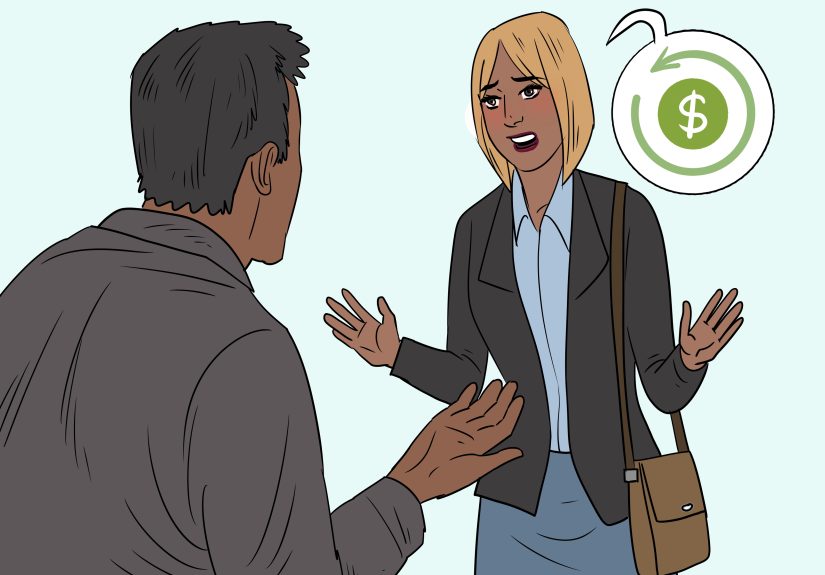
“Aggressive panhandling” usually isn’t about the requestit’s about the behavior. Many cities define it as conduct that intimidates,
threatens, follows, blocks someone’s path, or involves unwanted touching. Rules vary a lot by location, but your internal alarm matters:
if you feel threatened, treat it like a safety situation, not a debate club tryout.
Way 1: Use calm, confident boundaries (and keep your feet moving)
Why it works
De-escalation guidance across safety and security training is remarkably consistent: stay composed, keep your voice steady, and avoid
feeding the conflict. A calm tone and simple boundary can reduce the chance of the interaction turning into a confrontation.
What to say (simple scripts that don’t invite negotiation)
- “Sorry, I can’t.” (Short. Boring. Effective.)
- “No, thank you.” (Polite, but final.)
- “I’m not able to help today.” (Less personal, less arguable.)
- “I don’t carry cash. Take care.” (Use only if you can say it without stopping.)
How to say it
The delivery matters more than the words. Think “calm authority,” like you’re politely declining an offer of mall-kiosk hair straighteners.
- Keep walking at a normal pace (don’t sprint unless you truly need to).
- Hands visible and relaxed. No clenched fists, no dramatic gestures.
- Brief eye contact is fine; a prolonged stare can be interpreted as a challenge.
- Don’t reach for your wallet or open your bag. If you choose to give later, do it when you’re no longer in the interaction.
What not to do (if you enjoy avoiding chaos)
- Don’t argue about politics, life choices, or “how money is spent.” You won’t win; you’ll just stay longer.
- Don’t insult or shame the person. That escalates quickly and helps no one.
- Don’t make promises (“I’ll be right back”) unless you truly intend to return safely.
- Don’t stop in place if the situation already feels aggressive. Stopping turns a passing encounter into a standoff.
Specific example: the “follow-and-pressure” scenario
If someone follows you while repeating demands“Come on, you can spare something!”your best move is to keep moving and reduce engagement:
“No, I can’t.” (Keep walking.) If they continue, repeat once, then disengage: no more explanation, no debate. Your job is to exit, not to persuade.
Way 2: Create space, change the setting, and get help when needed
Why it works
Many safety guidelines emphasize changing the environment and creating distance. You’re not trying to “handle” the person; you’re trying to
reposition yourself into a safer contextmore people, more light, more cameras, more exits.
Use the environment like a grown-up game of “not today”
- Step into a public business (coffee shop, pharmacy, busy lobby). More witnesses changes behavior fast.
- Angle away rather than squaring up. Body language that says “I’m leaving” is clearer than “let’s talk.”
- Cross the street if safe, or move toward groups of people.
- Head toward well-lit areas and away from corners, alleys, or enclosed spaces.
When to call 911 (and what to say)
If you feel threatenedbecause the person is blocking you, touching you, threatening you, or you fear being harmedtreat it as an emergency.
Move to safety and call 911. Be ready with basics: location, what’s happening, and a description. You’re not “getting someone in trouble for being poor.”
You’re reporting threatening behavior.
If your city has a non-emergency number or a 311 system, that can also be appropriate for reporting persistent issues when there is no immediate threat.
(Local rules vary, so your safest default is: imminent danger = 911.)
Specific example: the “blocked sidewalk” moment
Someone steps into your path and insists you stop. Don’t negotiate from the trapped position. Shift sideways, keep your voice steady:
“No.” If they mirror your movement or close the distance, change the setting immediatelystep into the nearest open business or join a group.
If you can’t safely disengage, call 911.
If you’re in a car (intersections, gas stations, parking lots)
- Keep doors locked and windows mostly up if someone approaches aggressively.
- Don’t display cash or your wallet through the window.
- If you feel unsafe, drive away when it’s legal and safe to do sono sudden maneuvers, no panic turns.
- At a gas station, move near the storefront or other people, and ask staff for help if needed.
Way 3: Offer “help” without putting yourself at risk (and without turning it into a lecture)
Why it works
Sometimes the pressure you feel comes from two directions: safety concerns and empathy. You can honor both by separating
“I’m not giving money in this moment” from “I’m willing to support solutions.”
Safer alternatives to giving cash in the moment
- Donate later to local shelters, outreach groups, or food programs (when you’re safe and not under pressure).
- Give non-cash items only if you’re comfortable and it’s safe (sealed water, snack). Don’t do this if the person is agitated or blocking you.
- Use local resource lines to find nearby services you can support or reference.
Resource options many U.S. communities use
If you want to point someone toward help without escalating the interaction, keep it short. In many places, dialing 211 connects
people to local community resources (housing, food, services). If you believe someone is in mental health or substance-use crisis and needs
immediate support, 988 is the U.S. Suicide & Crisis Lifeline (call, text, or chat). If there’s imminent danger, call 911.
What to say if you want to be compassionate but firm
- “I can’t give money, but I hope you stay safe.”
- “SorryI can’t. Take care.”
- “I’m not able to help.” (Repeat once. Then disengage.)
A note on rights, laws, and why “just ban panhandling” isn’t simple
In the U.S., solicitation is often treated as protected expression under the First Amendment, and many panhandling restrictions have been
challenged or struck down in court when they target speech too broadly. That said, cities commonly try to restrict aggressive behavior
(threats, intimidation, blocking, touching) and certain sensitive locations. Translation: your safest approach is behavior-based, not assumption-based.
You respond to what’s happening, not what you think the person “is.”
Extra tips that make all three ways easier
Practice the “broken record” technique
Pick one sentence and repeat it calmly: “No, I can’t.” The more you explain, the more you offer openings for pressure.
Plan your “escape routes” like a pleasantly paranoid adult
- Know where you can duck into: stores, lobbies, well-lit corners, staffed locations.
- If you use an ATM, choose one inside a bank or a busy store when possible.
- When walking at night, stay in brighter, more trafficked areas even if it adds a minute.
If you’re with kids
Keep it simple and non-scary: “We’re not stoppingstay next to me.” Model calm boundaries. Then, later, you can talk about empathy and safe ways to help.
If you’re a business employee or manager
Don’t try to physically remove anyone. Prioritize staff safety, use calm boundary language, and follow your workplace policy for contacting security,
non-emergency services, or 911 if there’s a threat.
Frequently asked questions
Should I ignore aggressive panhandlers completely?
If “ignore” means “don’t engage, keep moving, and get to a safer setting,” yesdisengagement is often the safest option. If there’s a threat,
don’t just ignore itget help.
Is it rude to say “No” and keep walking?
It can feel rude, but safety isn’t a politeness contest. You can be respectful and still be firm. “No, I can’t” is a complete sentence.
What if I’m worried the person is in crisis?
If you suspect a mental health or substance-use crisis, you can contact local crisis resources (988 in the U.S.) for guidanceespecially if the person
seems disoriented, extremely agitated, or at risk of harm. If anyone is in immediate danger, call 911.
Real-world experiences and lessons people share
Below are common, real-life patterns people describe when dealing with aggressive panhandling. These aren’t meant to stereotype anyonejust to help you
recognize situations and respond with less panic and more plan.
1) The “ATM hover” experience
A lot of people report their most uncomfortable encounters happening near ATMsbecause it’s a perfect storm of vulnerability (you’re literally accessing money)
and distraction (screens, PINs, receipts, bags). The lesson many learn the hard way: if someone approaches while you’re using an ATM, don’t try to be
“nice enough to finish the transaction.” Cancel it. Step away. Choose an indoor ATM next time if possible. If a person is blocking or following you,
go straight into a nearby business and ask staff for help.
A small but powerful tweak: before you walk up to an ATM, look around for a beat. If anything feels offsomeone lingering unusually close, someone watching
multiple userstrust that instinct. The best de-escalation move is not needing one.
2) The “gas station window tap” experience
Another common story: you’re stopped, seatbelt on, mentally reorganizing your life, and suddenly there’s a tap on the glass. Most people’s first impulse
is to crack the window and explain they don’t have cashbecause we’re socialized to be polite. But many say the safer move is to keep the window up and
gesture “no” (a small head shake is fine), then focus on leaving when it’s safe. If you want to help, do it later through a donation or supplies you keep
in the trunk for situations where you feel comfortable.
One person’s rule of thumb (and it’s a good one): “If I can’t leave quickly, I don’t start a conversation.” Cars are great for transportation and terrible
for negotiations.
3) The “guilt spiral” experience
People also talk about the emotional whiplash: you set a boundary, then you feel guilty for the next three blocks like you just kicked a puppy in public.
That guilt is commonand it can lead to risky choices, like pulling out your wallet to “make it right” even when the interaction felt unsafe. A healthier
strategy is to separate the moment from the mission.
The moment is about safety: you’re allowed to say no, keep walking, and protect your space. The mission is about helping: you can support a local shelter,
community outreach team, food pantry, or resource line when you’re not under pressure. Many people find it calming to choose a specific “help plan,” like
donating monthly to a local organization or keeping a list of resources handy. That way, you’re not deciding ethics in real time while your heart rate
is doing parkour.
4) The “accidental escalation” experience
A surprising number of tense encounters start with something tiny: a joke that lands wrong, a sarcastic “I already said no,” or a frustrated eye-roll.
People who’ve been through it often say the same thing: the fastest way out is the calmest way out. It’s not about being “submissive”it’s about not
turning a brief interaction into a power struggle. A flat, calm line (“No, I can’t”) plus movement toward a safer space works better than a clever
comeback every single time.
5) The “bystander boost” experience
If you’re being followed or blocked, many people report that simply moving closer to other peopleespecially a store counter or a groupchanges the entire
dynamic. Some even use a simple line to recruit help without drama: “Hey, can I stand here for a second?” or “Can you call someone for me?” You don’t
have to make a speech. You just need witnesses and space.
Conclusion
Dealing with aggressive panhandling isn’t about winning a conversationit’s about ending it safely. Keep your response short, calm, and confident.
Create distance. Change the setting. Get help if you feel threatened. And if you want to support people in need, build a plan that doesn’t require you to
pull out cash during a high-pressure moment. Safety first, compassion second, and absolutely no starring in someone else’s public meltdown.