Table of Contents >> Show >> Hide
- Why Victoria Lee’s Hyper-Realistic Tattoos Hit So Hard
- What Makes Hyper-Realistic Tattoo Art Look Real Instead of Merely Detailed
- Breaking Down the 30 Tattoos: The Themes That Define Victoria Lee’s Style
- Why Skin Is the Hardest Canvas in the Room
- How to Keep Hyper-Realistic Tattoos Looking Sharp
- What These 30 Tattoos Say About Tattoo Culture Right Now
- Final Thoughts
- A More Personal Look: What It Feels Like to Experience Hyper-Realistic Tattoos Like These
There are tattoos, and then there are tattoos that make you squint, lean in, and wonder whether you are looking at ink or a paused movie frame. Victoria Lee’s work lives firmly in that second category. Her hyper-realistic tattoos do not just decorate skin; they stage tiny visual ambushes. One minute you are admiring a forearm piece, and the next minute your brain is muttering, “That cannot possibly be a tattoo. Someone clearly printed a photograph on this person.” Spoiler: they did not.
Across a collection of 30 standout works shared online, Victoria Lee shows exactly why realism remains one of the most mesmerizing styles in modern tattooing. Her portfolio moves through portraits, animals, fantasy figures, cinematic scenes, and deeply personal tribute pieces with the confidence of an artist who understands more than technique. She understands drama. She understands restraint. Most importantly, she understands that realism is not about stuffing the skin with detail until it cries for help. It is about using detail with intention so the final piece feels alive.
That is why these tattoos feel bigger than a simple roundup of impressive body art. They reveal what happens when draftsmanship, patience, tonal control, and emotional storytelling collide on a living canvas. And yes, “living canvas” can sound a little dramatic, but in this case, the phrase earns its rent.
Why Victoria Lee’s Hyper-Realistic Tattoos Hit So Hard
Victoria Lee’s appeal starts with realism, but it does not end there. Plenty of artists can render a convincing face, a polished eye, or a carefully shaded animal. What separates her work is the way the tattoos keep their emotional center while chasing technical perfection. In this set of 30 pieces, you can see portraits that feel intimate rather than mechanical, fantasy characters that still read as believable, and pop-culture-inspired tattoos that avoid looking like cheap fan service.
That range matters. In one piece, a child appears surrounded by delicate imagery, creating a softer and more sentimental mood. In another, lace framing around a female portrait adds elegance and theatrical texture. Elsewhere, darker subjects such as plague-doctor imagery, skeletal elements, and dramatic character studies push the work into moody, cinematic territory. There are also pieces built around movement and spectacle, including sports-inspired imagery and scene-based compositions that look as though they were frozen mid-action.
In other words, the 30 tattoos do not all sing the same note. They form a portfolio with rhythm. Some whisper. Some roar. Some walk in wearing a tuxedo, while others kick the door open like they just escaped from a fantasy RPG. That variety keeps the collection from feeling like a technical flex and turns it into a fuller artistic statement.
What Makes Hyper-Realistic Tattoo Art Look Real Instead of Merely Detailed
Light and Shadow Do the Heavy Lifting
The secret behind a strong hyper-realistic tattoo is not simply “more detail.” If that were true, every tattoo with a thousand tiny lines would look like a masterpiece, and the internet would be an even louder place than it already is. Realism depends on value control: where the deepest darks sit, where midtones create structure, and where highlights suggest light striking the skin in a believable way.
Victoria Lee seems especially fluent in this language. Her tattoos often look dimensional because the shading is not random decoration. It builds form. Cheekbones feel rounded, fabric seems to fold, fur appears soft, and metallic or glossy surfaces read as reflective because the tattoo is organized around contrast. This is the difference between a tattoo that is detailed and a tattoo that feels present.
Texture Sells the Illusion
Texture is where a lot of realism tattoos either become unforgettable or quietly fall apart. Hair must look like hair, not melted spaghetti. Lace has to feel airy and delicate instead of like gray static. Skin within a portrait must suggest softness without turning muddy. In Lee’s portfolio, texture becomes a storytelling device. A lace detail can make a portrait feel elegant. A tiger cub or animal element can introduce warmth. A rougher fantasy or horror texture can make the piece feel ominous.
This is also why viewers stop scrolling. Realistic tattoos are not impressive only because they resemble photographs. They are impressive because they manage to translate multiple tactile sensations into ink. You are not simply seeing a subject. You are almost feeling fabric, fur, stone, smoke, or weathered skin. That is where the illusion gets deliciously weird in the best possible way.
Composition Keeps the Tattoo From Becoming Chaos
Skin is not a sheet of paper sitting politely on a desk. It curves, stretches, ages, moves, tans, heals, and occasionally does very unhelpful things to perfect symmetry. So a realism tattoo must be designed with placement in mind. A brilliant face can still fail if it is crammed into the wrong spot or packed so tightly that the image loses clarity as the piece settles into the skin.
One of the quieter strengths in this set of 30 tattoos is composition. Many of the works appear designed to flow with an arm or forearm rather than fight against it. Figures are arranged to suit vertical space. Background elements support the main image instead of bullying it. Negative space is used strategically. The result is that the tattoos look complete, not crowded.
Breaking Down the 30 Tattoos: The Themes That Define Victoria Lee’s Style
Portraits With Emotional Weight
Portrait realism is the high-wire act of tattooing. A tiny error in the mouth, the nose, or the eye can turn a meaningful tribute into a long-term lesson in regret. That is why portrait work remains one of the clearest indicators of artistic control. In Lee’s collection, portrait tattoos appear again and again, and they do more than show likeness. They convey atmosphere.
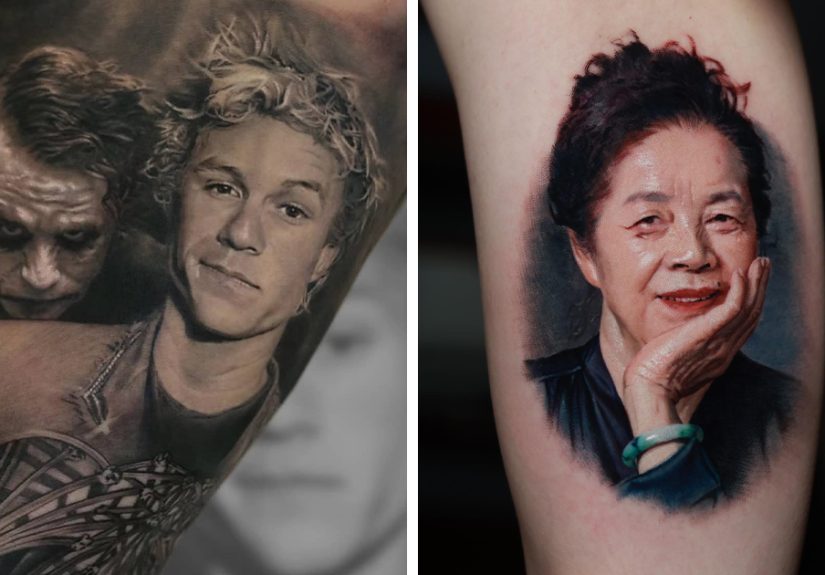
Some portraits feel intimate and memorial-driven, the kind of pieces that are clearly meant to preserve a person or a memory rather than simply showcase a cool image. Others lean cinematic, pulling from recognizable visual culture and delivering the sort of face-focused realism that only works when proportion, tone, and expression are all locked in. This is where her tattoos most clearly blur the line between body art and visual storytelling.
Animals That Look Ready to Blink
Animal realism is another category that exposes an artist very quickly. Fur direction, wet eyes, nose texture, whiskers, feather softness, and believable anatomy all have to cooperate. In the Victoria Lee collection, animal imagery does not feel like filler. It feels purposeful. The presence of creatures, whether tender or fierce, expands the emotional register of the portfolio.
A soft animal detail can make a tattoo feel affectionate or nostalgic. A powerful creature can push the work toward myth, strength, or fantasy. Either way, the realism matters because animals are familiar to the eye. We know instantly when they look wrong. Lee’s success is that they do not.
Cinema, Fantasy, and Pop-Culture Drama
Some of the most memorable tattoos in this 30-piece collection pull from cinematic and fantasy-inspired imagery. There are dramatic characters, dark compositions, and pieces that feel like they belong somewhere between a film still, a game cutscene, and an illustrated fever dream. These tattoos are not realistic in a narrow documentary sense. They are realistic in the sense that impossible subjects are rendered with believable texture and depth.
That distinction is important. Hyper-realism does not have to be boringly literal. It can be theatrical. A plague doctor, a skull-adjacent composition, a moonlit figure with antlers, clown-inspired makeup, and fantasy-world iconography all show how realism can support imagination rather than limit it. Lee seems comfortable letting realism serve spectacle, which is a big reason these tattoos feel so modern.
Motion, Action, and Freeze-Frame Energy
Stillness is hard enough in tattooing. Motion is even harder. When an artist captures an athlete or a scene with implied action, the image has to feel dynamic without becoming messy. Among the 30 tattoos, movement-based pieces stand out because they preserve gesture and intensity. A sports-themed tattoo, for example, has to do more than copy a body. It has to suggest momentum, impact, and timing.
That is where Lee’s realism becomes cinematic again. The best motion tattoos feel like they have been paused one second before the next dramatic beat. You are not only seeing what happened. You are sensing what is about to happen.
Why Skin Is the Hardest Canvas in the Room
One reason hyper-realistic tattoos impress people so much is that most of us instinctively know skin is a terrible place to fake perfection. Skin moves. Skin heals. Skin has pores, undertones, elasticity, and limits. A tattoo artist is not working on a blank digital layer with an undo button waiting nearby like a loyal golden retriever. They are placing pigment into living tissue, and every pass has consequences.
That makes realism especially unforgiving. In portrait work, a slight shift in anatomy can be obvious immediately. In a fantasy piece, too much darkness can flatten the design. In lace or hair textures, overworking can make the whole image lose freshness. That is why strong realism artists tend to think like painters, photographers, and designers all at once. They are considering contrast, balance, reference, placement, healing, and longevity in a single piece.
When Victoria Lee’s tattoos succeed, they do so because they respect those constraints rather than pretending they do not exist. The realism is disciplined. The drama is controlled. The result feels bold, but never reckless.
How to Keep Hyper-Realistic Tattoos Looking Sharp
A tattoo this detailed deserves better than neglect and one tragic summer of “I forgot sunscreen.” Realistic tattoos can lose some of their crispness if they are not cared for properly, especially during healing and after repeated sun exposure. That does not mean you need to wrap yourself in velvet and avoid daylight forever. It does mean you should treat the tattoo like the investment it is.
During healing, gentle cleansing and consistent moisturizing matter. Avoid soaking the area, do not pick at flaking skin, and resist the universal bad idea of scratching a healing tattoo like you are trying to tune an old radio. After healing, sun protection becomes the long game. Broad-spectrum SPF, covered clothing when needed, and good skin hydration help preserve contrast and clarity over time.
That advice may not sound glamorous, but neither does spending good money on a masterpiece just to let UV rays slowly bully it into mediocrity. Hyper-realism is too hard-won for that.
What These 30 Tattoos Say About Tattoo Culture Right Now
The popularity of Victoria Lee’s work also says something bigger about tattoo culture. Audiences are increasingly drawn to tattoos that feel custom, art-forward, and emotionally specific. People do not just want symbols anymore. They want atmosphere. They want portraits that hold memory, animals that carry personality, and fantasy pieces that look like they escaped from a high-budget visual universe.
At the same time, social media has changed the way realism spreads. A powerful tattoo can travel globally in seconds, which means artists who understand visual impact have more opportunities to build massive audiences. That can be a blessing and a curse. The blessing is visibility. The curse is that hyper-realism becomes trendy enough for less-skilled artists to imitate it badly. And realism, more than almost any other style, is merciless to bad imitation.
That is why portfolios like Victoria Lee’s stand out. They remind viewers that realism is not a filter or a gimmick. It is a craft. It asks for time, design intelligence, technical maturity, and a very steady hand. Probably also snacks. Long tattoo sessions and low blood sugar are not a glamorous combination.
Final Thoughts
Victoria Lee’s 30 hyper-realistic tattoos blur the line between art and reality because they do exactly what great realism should do: they convince the eye while stirring something deeper than simple admiration. These pieces are technically sharp, yes, but they are also emotionally tuned. They move between tenderness, spectacle, memory, fantasy, and portraiture without losing their clarity of purpose.
That is what makes the collection memorable. It is not just that the tattoos look real. It is that they feel intentional. Each one seems designed to hold attention a little longer than expected. Each one makes a case for tattooing as a serious visual medium rather than a novelty. And in a world where everyone is scrolling at the speed of panic, making someone stop and stare is no small achievement.
Victoria Lee does not merely tattoo skin. She stages illusions on it. Sometimes elegant, sometimes eerie, sometimes sentimental, sometimes cinematic, her work leaves the same impression over and over: reality may be overrated, but it sure looks incredible in ink.
A More Personal Look: What It Feels Like to Experience Hyper-Realistic Tattoos Like These
Seeing hyper-realistic tattoos up close is a very different experience from seeing them on a phone screen. Online, the reaction is usually immediate: wow, that looks insanely real. In person, though, the reaction becomes more layered. First there is surprise. Then there is curiosity. Then, if the piece is truly excellent, there is that strange moment where your brain keeps switching channels between “tattoo” and “image.” You know perfectly well the work is made of ink, but your eyes keep treating it like a photograph that somehow settled into skin and decided to stay there rent-free.
That experience becomes even stronger with portraits. A great portrait tattoo does not just resemble a person; it creates presence. It can feel like memory has been given physical form. That is probably why realistic portrait tattoos hit people so hard emotionally. They are not abstract. They do not ask the viewer to decode symbolism or guess at meaning. They arrive already charged. A face is a face. A familiar expression is a familiar expression. When it is rendered well, the tattoo does not merely show someone. It recalls them.
Animal realism creates a different kind of response. People tend to soften around it immediately. A tiger cub, a watchful eye, soft fur, or an intense gaze can make even a heavily tattooed sleeve feel tender. There is something oddly moving about seeing a creature translated so carefully onto skin, especially when the tattoo captures vulnerability as well as beauty. It feels less like decoration and more like companionship. You are not just wearing an image. You are carrying a mood, a memory, or a bond.
Fantasy and cinematic realism, meanwhile, create the most obvious double takes. These are the tattoos that tend to make strangers ask awkwardly enthusiastic questions in public. They are dramatic on purpose. A dark character study, a horror-tinged composition, or a scene that looks lifted from a film can stop conversations cold because the tattoo feels too detailed to be casual. It has gravity. It announces itself without screaming. In the best versions, there is also a sense of scale beyond size. Even a medium-sized tattoo can feel huge when the depth is convincing enough.
There is also the wearer’s experience to consider. Living with a hyper-realistic tattoo is probably different from living with a simpler symbol or minimalist design. Realistic pieces attract inspection. People stare longer. Friends ask for the story behind them. Strangers become amateur art critics in coffee shops. Sometimes that attention is welcome. Sometimes it is probably exhausting. But either way, the tattoo becomes interactive in a way many smaller designs do not. It keeps generating conversation because realism invites people to test their own eyes.
That, ultimately, is the thrill behind collections like Victoria Lee’s. They make tattooing feel elastic. They stretch public expectations of what can be done on skin. They show that tattoos can be intimate without being small, dramatic without being sloppy, and technically advanced without losing soul. When you encounter work like this, you come away with the same basic thought every time: human beings are absurdly inventive, and apparently some of them looked at skin and said, “You know what would be fun? Turning this into a gallery.” Honestly, fair enough.