Table of Contents >> Show >> Hide
- Why Props Get Weirdly Famous (and Weirdly Expensive)
- 30 Iconic Props and the Wild Stories Behind Them
- 1) Dorothy’s Ruby Slippers (The Wizard of Oz)
- 2) The Wicked Witch’s Hat (The Wizard of Oz)
- 3) “Rosebud,” the Sled (Citizen Kane)
- 4) The Maltese Falcon Statuette (The Maltese Falcon)
- 5) Indiana Jones’ Bullwhip (Indiana Jones and the Last Crusade)
- 6) Darth Vader’s Hero Lightsaber (The Empire Strikes Back / Return of the Jedi)
- 7) Luke Skywalker’s Lightsaber (Star Wars)
- 8) Princess Leia’s Gold Bikini Costume (Return of the Jedi)
- 9) The Ghostbusters Proton Pack (Ghostbusters)
- 10) Deckard’s Blaster (Blade Runner)
- 11) Cobb’s Spinning Top Totem (Inception)
- 12) The DeLorean Time Machine (Back to the Future)
- 13) The Red Swingline Stapler (Office Space)
- 14) The Leg Lamp (A Christmas Story)
- 15) The “Blood” in the Shower (Psycho)
- 16) Bruce the Mechanical Shark (Jaws)
- 17) An Original E.T. Model (E.T. the Extra-Terrestrial)
- 18) Sam’s Piano (Casablanca)
- 19) The Letters of Transit Paperwork (Casablanca)
- 20) Forrest’s Bus Stop Bench (Forrest Gump)
- 21) The Box of Chocolates (Forrest Gump)
- 22) The “Heart of the Ocean” Necklace (Titanic)
- 23) Jack Torrance’s Axe (The Shining)
- 24) The Horse Head (The Godfather)
- 25) The Ghostface Mask (Scream)
- 26) Mjölnir, Thor’s Hammer (Thor: The Dark World)
- 27) Harry Potter’s First Signature Wand (Harry Potter and the Sorcerer’s Stone)
- 28) The Ten Commandments Stone Tablets (The Ten Commandments)
- 29) Wilson the Volleyball (Cast Away)
- 30) Marilyn Monroe’s White Dress (The Seven Year Itch)
- What These Props Teach Us About Movie Magic
- Fan Experiences and Prop-Spotting Adventures (Extra )
- SEO Tags
Hollywood movie props are supposed to be background playersquiet little objects that do their job and go home.
And then there’s reality: props get stolen, mislabeled, swapped, auctioned for the price of a small island, and occasionally become
more famous than the actors holding them. (Looking at you, volleyball.)
Below are 30 iconic film props and the true, delightfully chaotic stories behind themhow they were made, why they survived,
and what happens when “just a prop” becomes screen-used legend. Expect famous movie costumes, hero props vs. stunt versions,
and a few moments where you’ll whisper, “Wait… that was REAL?”
Why Props Get Weirdly Famous (and Weirdly Expensive)
A prop becomes “famous” when it does at least one of these things: (1) it’s the visual shortcut for the whole movie,
(2) it’s tied to a character moment you can quote in your sleep, or (3) it has an off-screen story that’s even juicier than the script.
Add scarcity, nostalgia, and a rock-solid paper trail (a.k.a. provenance), and you’ve got movie memorabilia that collectors treat like
cultural artifacts.
Also: studios rarely make one prop. They make multipleshero versions for close-ups, stunt versions for action,
backups for breakage, and “please don’t let the lead actor lose this again” versions for… obvious reasons.
That’s why you’ll hear phrases like “one of four surviving pairs” or “one of several screen-used examples.” Hollywood loves redundancy.
Your group chat could learn a thing or two.
30 Iconic Props and the Wild Stories Behind Them
1) Dorothy’s Ruby Slippers (The Wizard of Oz)
These are the Holy Grail of Hollywood movie props: a surviving pair was stolen in 2005, recovered years later, and then sold at auction
for a record-setting priceproof that nostalgia can beat inflation, real estate, and common sense in one dramatic swoosh. Bonus irony:
the slippers’ legend is partly powered by the fact that multiple pairs were made for filming.
2) The Wicked Witch’s Hat (The Wizard of Oz)
When people say “iconic,” they often mean “recognizable as a silhouette.” This hat is exactly thatpure character design in one pointy shape.
It also became headline material at auction, because sometimes the most powerful magic is a rarity, a story, and a bidder with feelings.
3) “Rosebud,” the Sled (Citizen Kane)
For decades, Rosebud felt like a myth you couldn’t possibly ownuntil a surviving sled surfaced and later sold for a jaw-dropping figure.
Its backstory includes being rediscovered and then tucked into later films as an Easter egg. That’s one way to keep a prop employed after retirement.
4) The Maltese Falcon Statuette (The Maltese Falcon)
A whole noir universe spins around one bird-shaped object, and the real-world legend is just as twisty: multiple “Falcons” exist,
authentication gets complicated, and collectors pay for the one with the clearest chain-of-custody. It’s basically a mystery about a mystery.
5) Indiana Jones’ Bullwhip (Indiana Jones and the Last Crusade)
A whip is already dramatic. Add royal giftingHarrison Ford reportedly gave one to then–Prince Charles, later associated with Princess Dianaand
you’ve got a prop story that sounds like a deleted scene from a very fancy crossover. The auction world ate it up like it was the Holy Grail itself.
6) Darth Vader’s Hero Lightsaber (The Empire Strikes Back / Return of the Jedi)
The rare “hero” version (the close-up star) is the kind of item collectors dream about and accountants fear.
One sold for an eye-watering sumconfirming that the Force is strong, and it has a very aggressive bidding paddle.
7) Luke Skywalker’s Lightsaber (Star Wars)
The original trilogy’s prop magic wasn’t born in a labit was often built from real-world parts and clever fabrication.
That scrappy, hand-built feel is part of why early lightsabers are so beloved: they’re icons that still carry a whiff of workshop ingenuity.
8) Princess Leia’s Gold Bikini Costume (Return of the Jedi)
Few film costumes have had a more complicated cultural afterlife. The outfit became famous, debated, and endlessly referenced
and it continues to generate headlines in the auction market. It’s a reminder that costumes can be props, symbols, and lightning rods all at once.
9) The Ghostbusters Proton Pack (Ghostbusters)
The pack looks like sci-fi, but the story screams “resourceful prop department.”
It’s a Frankenstein buildan object assembled from real parts, clever detailing, and the kind of problem-solving that turns “junk” into “legend.”
Fans still obsess over every knob because the design feels plausible enough to almost work… almost.
10) Deckard’s Blaster (Blade Runner)
One of the most famous “kitbash” weapons ever: a prop built by combining components to create something instantly unfamiliar yet strangely believable.
That’s why it remains a favorite in prop collecting circleshalf film noir, half futuristic fever dream, all craftsmanship.
11) Cobb’s Spinning Top Totem (Inception)
A small object with a massive job: it carries the movie’s central question in your pocket.
Screen-used versions have shown up with detailed descriptions of wear and dimensionsbecause when fans argue about endings,
they’ll happily measure the prop like it’s evidence in court. (Your honor, the top would like to plead “ambiguous.”)
12) The DeLorean Time Machine (Back to the Future)
The movie didn’t just turn a car into a prop; it turned a prop into a pop-culture vehicle.
Multiple DeLoreans were modified for different shots and stunts, and surviving screen-used examples have become prized collectibles,
proving “1.21 gigawatts” is also a unit of nostalgia.
13) The Red Swingline Stapler (Office Space)
A humble office tool became a comedic iconand then the real world did the most corporate thing possible: it listened.
The “red stapler” popularity helped fuel real demand for red versions, turning a prop choice into a merchandise phenomenon.
Capitalism, but make it funny (and slightly cursed).
14) The Leg Lamp (A Christmas Story)
It’s tacky, unforgettable, and oddly heartfeltlike the movie itself.
The lamp’s “major award” energy didn’t stop at the screen: replicas became holiday lawn decor, and the prop’s origin story has been dissected
by fans with the seriousness of an archaeological dig. Fra-gee-lay, indeed.
15) The “Blood” in the Shower (Psycho)
Sometimes the wildest prop is a liquid in a squeeze bottle.
Because the film was shot in black-and-white, the famous shower-scene “blood” could be something surprisingly ordinarychosen for how it read on camera,
not how it looked in real life. It’s a perfect example of movie magic: optics over chemistry.
16) Bruce the Mechanical Shark (Jaws)
The shark became a legend partly because it was so difficult: mechanical problems shaped the filmmaking approach,
forcing suspense to do more work than rubber and gears could. Today, the shark’s behind-the-scenes saga is basically a masterclass in
turning production pain into cinematic gain.
17) An Original E.T. Model (E.T. the Extra-Terrestrial)
E.T. was created through a blend of animatronics and puppetry, and surviving models are treated like Hollywood relics.
When an original piece appears on the market, it’s not just “a prop”it’s a tangible slice of the era when creatures were built by hand,
not rendered in a GPU.
18) Sam’s Piano (Casablanca)
Some props feel like supporting characters. This piano is one of theman object tied to one of the most emotionally loaded musical moments in film.
It later sold at auction for a price that suggests “As Time Goes By” also applies to value.
19) The Letters of Transit Paperwork (Casablanca)
A MacGuffin doesn’t have to sparkle to be priceless.
The “letters of transit” are essentially paper propsbut they carry the entire plot’s oxygen.
Collectors love these items because they’re pure storytelling: proof that a document can be as thrilling as a chase scene.
20) Forrest’s Bus Stop Bench (Forrest Gump)
The bench is cinema comfort food: simple, familiar, instantly recognizable.
It wasn’t a permanent fixture of the filming locationproduction brought it in, made it iconic, and then it lived on as a collectible artifact.
A great example of how a “boring” object becomes legendary through repetition and emotion.
21) The Box of Chocolates (Forrest Gump)
Here’s a prop secret that’s both practical and hilarious: the famous box wasn’t full of chocolates on set.
To help it sit right and behave on camera, it was weightedbecause props aren’t just about looking good.
They’re about cooperating with gravity while an actor delivers an iconic line.
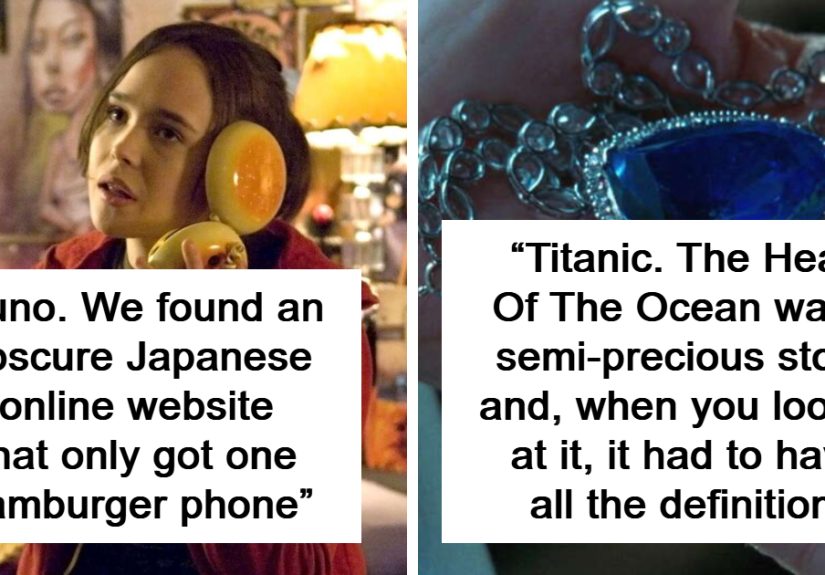
22) The “Heart of the Ocean” Necklace (Titanic)
The movie’s centerpiece jewel is fictional, but its cultural impact is extremely real.
The on-screen version was made as a film prop, and later inspired real-world recreations and high-profile showingsone of the clearest examples
of a prop escaping the film and entering fashion mythology.
23) Jack Torrance’s Axe (The Shining)
Horror props don’t need to be complicatedthey need to be convincing.
Multiple axes were made for filming, and surviving examples are treated like cinematic relics.
It’s the kind of object that makes you laugh at the craftsmanship… right until you remember the scene, and then you stop laughing.
24) The Horse Head (The Godfather)
One of the most infamous props in film history is infamous for a reason: the production used a real horse head sourced from outside the studio.
The scene still sparks debate because it sits at the intersection of shock, realism, and ethicsproof that prop decisions can echo for decades.
25) The Ghostface Mask (Scream)
In early 2026, the Ghostface mask was at the center of a legal dispute over rightsan off-screen drama worthy of its own sequel.
It’s a rare case where a “simple” costume piece becomes a major business and authorship argument, reminding everyone that iconic designs have long tails.
26) Mjölnir, Thor’s Hammer (Thor: The Dark World)
Superhero props often come in multiple versions (lightweight, weighted, stunt-safe), because actors must swing them all day without
dislocating reality. A screen-used hero hammer sold at auctionproving that even fictional enchantments can become very real collectibles.
27) Harry Potter’s First Signature Wand (Harry Potter and the Sorcerer’s Stone)
Wands are story tools disguised as sticksmeaning a screen-used “first” wand hits collectors right in the nostalgia.
When one appears with documented wear and auction paperwork, it becomes a tangible “beginning of the franchise” artifact.
(Also: yes, people absolutely whisper “the wand chooses the wizard” while bidding.)
28) The Ten Commandments Stone Tablets (The Ten Commandments)
Some props are literally carved mythology. Tablets associated with classic epics have surfaced in major memorabilia auctions,
linked to the legacy of old-Hollywood spectacle. They’re a reminder that “prop departments” used to operate like entire miniature civilizations.
29) Wilson the Volleyball (Cast Away)
The emotional power-to-budget ratio here is unmatched: a volleyball becomes a character, audiences cry, and then the object turns into a valuable collectible.
It’s one of the clearest examples of how performance + story can “animate” an ordinary itemuntil it stops being ordinary forever.
30) Marilyn Monroe’s White Dress (The Seven Year Itch)
A costume can function like a prop when it becomes the movie’s visual shorthand.
This dressforever tied to the subway grate momenthelped set records in the memorabilia world and remains a benchmark for how valuable
a single, unforgettable image can become over time.
What These Props Teach Us About Movie Magic
The wildest thing about iconic film props isn’t the price tagit’s how normal they often start.
A shoe, a hat, a stapler, a piece of paper. Movies turn objects into symbols through repetition, framing, and performance.
Then collectors add a second layer of storytelling: provenance, rarity, and the thrill of owning a physical piece of a shared cultural memory.
If you’re building a mental checklist for spotting “future famous props,” look for items that (1) appear in posters or key scenes,
(2) carry plot information, (3) are tied to a catchphrase or meme-able moment, and (4) have a behind-the-scenes story that’s easy to retell at dinner.
You know, the kind that starts with “So apparently…” and ends with your friend yelling “NO WAY.”
Fan Experiences and Prop-Spotting Adventures (Extra )
Seeing a famous movie prop in person hits differenteven if you’re not a collector. In a museum setting, the experience is strangely intimate:
you’re standing inches from an object that once lived under hot lights, surrounded by crew members, while a camera tried to make it look like
the most important thing in the world. And now it’s behind glass, quiet, and small. That contrast is the whole magic trick: cinema inflates objects
into myth, and real life gently deflates them back into craftsmanship.
Fans often describe two competing feelings. First: childlike awe (“That’s the thing!”). Second: nerdy curiosity
(“Wait, why is it scratched there?”). Those scratches are the real story. Wear marks can reveal how an actor held an item, how often it was used,
or whether it was a hero piece or a backup. In other words, props are like fossilsonly the dinosaurs were assistant directors with walkie-talkies.
Then there’s the auction atmosphere, which is its own genre of entertainment. Even watching online, you can feel the adrenaline:
lots open, bids jump, and suddenly a “simple” object has the emotional weight of a championship trophy. The bidding isn’t just about money;
it’s about identity. People aren’t buying a hammer or a hat. They’re buying the version of themselves who first watched that movie,
plus the bragging rights of being the prop’s next chapter.
If you’ve ever tried building a replicasay, a DIY proton pack or a makeshift “totem” spinning topyou learn the prop master lesson fast:
the camera is unforgiving, but the audience is emotional. Your replica doesn’t have to be perfect; it has to be believable at a glance and satisfying up close.
That’s why prop-making communities obsess over materials and finishes: paint can fake age, weathering can fake history, and the right texture can sell the illusion.
In cosplay circles, people trade tips like chefs: how to make plastic look like metal, how to make “old” look intentional, how to hide screws, how to keep it safe.
The best fan experience is when you stop thinking of props as “stuff” and start thinking of them as storytelling technology.
A prop is a contract between filmmakers and viewers: “Believe this object matters, and we’ll give you a feeling in return.”
Whether you’re visiting an exhibit, pausing a Blu-ray to prop-spot, or bidding on a screen-used relic, you’re participating in the same loop:
movies make objects meaningful, and people keep that meaning alive long after the credits roll.