Table of Contents >> Show >> Hide
- What Makes a Traditional Kitchen Timeless?
- 32 Traditional Kitchen Ideas That Never Go Out of Style
- 1. Start with Shaker cabinets
- 2. Consider inset cabinetry for extra polish
- 3. Use warm white instead of stark white
- 4. Bring in historic color tones
- 5. Choose a furniture-style island
- 6. Add glass-front upper cabinets
- 7. Use beadboard for texture
- 8. Let crown molding finish the cabinets
- 9. Install an apron-front sink
- 10. Pick a faucet with classic lines
- 11. Use marble where it makes sense
- 12. Give soapstone a serious look
- 13. Warm things up with butcher block
- 14. Stick with subway tile for the backsplash
- 15. Try checkerboard flooring
- 16. Do not underestimate hardwood floors
- 17. Give the range hood some architecture
- 18. Hide modern appliances in plain sight
- 19. Use brass hardware for warmth
- 20. Add bin pulls and latch-style details
- 21. Use open shelving sparingly
- 22. Bring back the plate rack
- 23. Choose pendants with old-world charm
- 24. Mix metals, but keep it controlled
- 25. Make room for a pantry or larder feel
- 26. Add a breakfast nook if you can
- 27. Display dishware you actually love
- 28. Add natural wood accents
- 29. Build around symmetry
- 30. Decorate with art, not just gadgets
- 31. Use a farmhouse table or banquette for dining
- 32. Embrace quiet contrast
- The Secret to a Traditional Kitchen That Lasts
- Real-Life Experience: What People Love After Living With a Traditional Kitchen
Some kitchen trends arrive like a marching band and leave like a magician: loud entrance, mysterious disappearance. Traditional kitchens do the opposite. They stroll in quietly, set down a pie on the counter, and somehow still look good 20 years later. That is the magic of a timeless kitchen design. It is not boring. It is disciplined. It knows the difference between “classic” and “what were we thinking?”
If you are dreaming about a space that feels elegant, welcoming, and actually livable, traditional kitchen ideas are worth stealing from the past. The best ones combine beauty, craftsmanship, and practicality. Think cabinetry with character, materials that age gracefully, and details that make the room feel collected instead of copied from a showroom. Below are 32 ideas that prove a classic kitchen style never has to feel stale.
What Makes a Traditional Kitchen Timeless?
A traditional kitchen usually leans on symmetry, familiar materials, and architectural detail. It favors comfort over shock value and substance over gimmicks. That can mean Shaker cabinets, marble or soapstone counters, warm white paint, vintage-inspired lighting, or furniture-style islands. It can also mean practical choices, like a smart galley layout, glass-front cabinets for visual breathing room, and finishes that still look better after a few years of real life. In other words, a traditional kitchen is not trying to win the internet for six minutes. It is trying to become the favorite room in your house.
32 Traditional Kitchen Ideas That Never Go Out of Style
-
1. Start with Shaker cabinets
If traditional kitchens had a greatest-hits album, Shaker cabinets would be track one. Their clean frame-and-panel design works in grand old homes, cozy cottages, and newer builds that need a little soul. They are detailed enough to feel classic, but simple enough to keep the room from turning fussy.
-
2. Consider inset cabinetry for extra polish
Inset cabinets sit inside the frame rather than on top of it, which gives everything a tailored, furniture-like look. They cost more, yes, but they also deliver that custom feel people love in a traditional kitchen. Think of them as the well-fitted blazer of cabinetry: not flashy, just sharp.
-
3. Use warm white instead of stark white
White kitchens endure because they bounce light, feel fresh, and pair with almost anything. But the timeless version is rarely a blinding laboratory white. Softer shades with creamy, ivory, or putty undertones feel calmer, richer, and much more forgiving when daylight changes throughout the day.
-
4. Bring in historic color tones
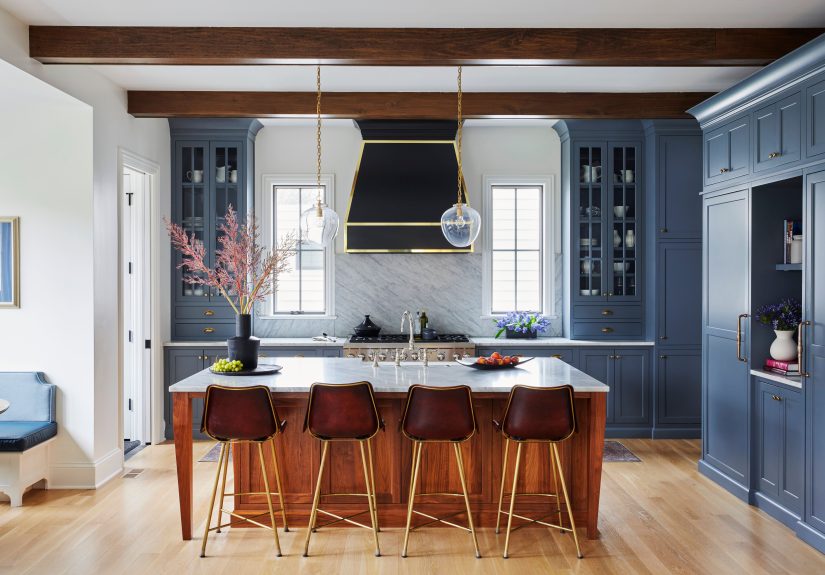
Traditional does not mean colorless. Dusty blue, sage green, mushroom beige, buttery cream, and muted gray all belong here. These shades feel rooted rather than trendy, especially on lower cabinets or islands. They add personality without making the room look like it is auditioning for a paint commercial.
-
5. Choose a furniture-style island
A big box in the middle of the room gets the job done. A furniture-style island adds charm while doing it. Look for turned legs, open shelves, fluted corners, or a contrasting wood top. That slight freestanding look helps the kitchen feel layered, as though it evolved over time instead of arriving in one truck.
-
6. Add glass-front upper cabinets
Glass-front doors break up a wall of cabinetry and lighten the entire room. They also invite you to display dishes, glassware, or serving pieces that deserve better than total darkness. In a traditional kitchen, glass fronts feel gracious and airy, especially when balanced with plenty of closed storage elsewhere.
-
7. Use beadboard for texture
Beadboard is one of those details that quietly does a lot of work. It can appear on an island, backsplash, cabinet ends, or a breakfast nook wall. The vertical grooves add texture and old-house charm without overwhelming the room. It is humble, hardworking, and surprisingly effective at warming up simple spaces.
-
8. Let crown molding finish the cabinets
Cabinets that stop short of the ceiling can feel abrupt. Crown molding gives them a more architectural ending and helps the whole room feel finished. In traditional kitchen design, those top details matter. They signal craftsmanship, close awkward gaps, and make even standard cabinetry look more intentional.
-
9. Install an apron-front sink
Few features say “classic kitchen” faster than an apron-front sink. It has presence, practicality, and a little farmhouse swagger. Fireclay and porcelain versions are perennial favorites, but the real appeal is emotional as much as visual. This sink says, “Yes, I can handle Thanksgiving dishes. No, I will not complain.”
-
10. Pick a faucet with classic lines
A beautiful sink deserves a faucet that looks like it belongs there. Bridge faucets, graceful goosenecks, and simple cross-handle designs all suit traditional kitchens. Brass, polished nickel, and chrome each work; the key is choosing a form with timeless proportions instead of something that screams temporary fashion.
-
11. Use marble where it makes sense
Marble countertops have been beloved forever for a reason. The veining is elegant, the surface feels luxurious, and it instantly lifts a traditional kitchen. If you love the look but fear the maintenance, use it on an island, baking zone, or backsplash rather than every square inch. Strategy is your friend here.
-
12. Give soapstone a serious look
Soapstone is the quieter cousin of marble, and many traditional kitchens wear it beautifully. Its soft matte finish and deep color add depth, especially against painted cabinetry. Over time, it develops a lovely patina, which is designer language for “it gets better with age and does not panic over everyday life.”
-
13. Warm things up with butcher block
Butcher block counters or a wood island top can keep a traditional kitchen from feeling cold or overly formal. The grain brings warmth, contrast, and a gently lived-in quality. It is especially useful in white kitchens, where wood helps the room feel collected and human rather than a little too perfect.
-
14. Stick with subway tile for the backsplash
Subway tile is popular because it works. Full stop. In a traditional kitchen, it offers a crisp backdrop that supports the cabinetry, hardware, and lighting without competing with them. Run it in a classic brick pattern, use a soft white grout, and let other details carry the decorative load.
-
15. Try checkerboard flooring
Checkerboard floors have real staying power because they feel playful and polished at the same time. Black and white is the classic choice, but softer combinations, like cream and taupe, can be just as timeless. In a traditional kitchen, this floor adds instant character and a welcome dash of old-school confidence.
-
16. Do not underestimate hardwood floors
Hardwood floors create warmth that tile sometimes cannot match. Oak, walnut, or pine underfoot can make a traditional kitchen feel connected to the rest of the home. Medium tones tend to age best, especially when you want the room to feel gracious instead of either overly rustic or suspiciously plastic.
-
17. Give the range hood some architecture
The area over the range naturally becomes a focal point, so let it earn the attention. A plaster hood, wood-wrapped hood, or paneled surround adds vertical interest and traditional character. This is one of the easiest ways to make the kitchen feel more custom, more substantial, and less off-the-shelf.
-
18. Hide modern appliances in plain sight
Traditional kitchens still need modern convenience; they just do not always want it shouting from every corner. Panel-ready refrigerators and dishwashers help maintain visual calm. Even small updates, like changing appliance hardware or choosing softer finishes, can help newer machines blend into a more classic setting.
-
19. Use brass hardware for warmth
Brass has stuck around because it flatters almost everything. On painted cabinets, it adds warmth. On dark wood, it adds glow. In a traditional kitchen, unlacquered brass is especially lovely because it develops patina over time. Translation: your kitchen gets a little more character every year instead of looking tired.
-
20. Add bin pulls and latch-style details
Sometimes it is the little things. Bin pulls on drawers, simple cup pulls, and cabinet latches can nudge a kitchen toward a more traditional look without a total renovation. These details feel familiar and useful, and they make everyday cabinets feel a little more like heirloom furniture.
-
21. Use open shelving sparingly
Open shelving can work beautifully in a traditional kitchen, but the secret word is sparingly. One or two shelves for ironstone, everyday plates, or copper cookware can add charm. Twenty feet of exposed cereal boxes is another story. Restraint keeps the look curated instead of chaotic.
-
22. Bring back the plate rack
Plate racks are one of those old-school ideas that deserve a comeback. They are practical, visually interesting, and naturally decorative when filled with dishes. In a traditional kitchen, a plate rack over a backsplash or on a side wall can add just enough nostalgia without turning the room into a stage set.
-
23. Choose pendants with old-world charm
Schoolhouse lights, lantern pendants, milk-glass fixtures, and classic metal shades all work in traditional kitchens. They are familiar forms, which is exactly the point. Good lighting should support the room’s personality, not hijack it. If your pendants look like they will age well, you are probably on the right track.
-
24. Mix metals, but keep it controlled
A traditional kitchen does not need every finish to match exactly. Brass hardware with polished nickel faucets or iron lighting can look terrific together. The trick is repetition. Choose one dominant finish, then let one or two others appear in supporting roles. This is a kitchen, not a hardware store speed-dating event.
-
25. Make room for a pantry or larder feel
Walk-in pantries, tall cabinets with pullouts, and old-fashioned larder cupboards all suit traditional kitchens because they emphasize order and usefulness. Better storage also helps the room stay visually calm. A timeless kitchen often looks effortless, but behind that charm is usually a lot of very smart hidden organization.
-
26. Add a breakfast nook if you can
A breakfast nook makes a kitchen feel instantly more welcoming. Even a modest banquette or tucked-in table creates a softer, more domestic atmosphere than a room made entirely of hard surfaces. Traditional kitchens are often the social center of the home, and a little seated corner encourages people to linger.
-
27. Display dishware you actually love
Traditional kitchens often feel personal because they show a bit of real life. Stacked white plates, transferware, pitchers, or old mixing bowls can add character without cluttering the room. The best displays are useful, not random. You want “well-collected” energy, not “attic exploded near the toaster.”
-
28. Add natural wood accents
Even in painted kitchens, wood deserves a role. Ceiling beams, a walnut island top, floating shelves, or a simple antique stool can all add warmth and depth. Natural wood keeps a traditional kitchen from feeling too polished and reminds everyone that timeless design usually includes a little texture and imperfection.
-
29. Build around symmetry
Traditional kitchens often feel restful because they rely on symmetry. Matching sconces flanking a hood, evenly spaced cabinets, paired glass doors, or balanced windows create a sense of order. Symmetry is not mandatory in every corner, but used thoughtfully, it gives the room that quietly confident look people read as timeless.
-
30. Decorate with art, not just gadgets
Framed art, a small landscape painting, vintage botanical prints, or a handsome clock can make the kitchen feel like a real room instead of a utility zone. Traditional spaces benefit from that softness. Not every blank wall needs a floating screen or a charging station with the emotional range of a stapler.
-
31. Use a farmhouse table or banquette for dining
A real table brings a different feeling than an oversized island overhang. It signals meals, homework, conversation, and the kind of lingering that makes kitchens memorable. Whether it is a scrubbed pine farmhouse table or a built-in banquette, this choice gives the room depth and a lived-in family-friendly rhythm.
-
32. Embrace quiet contrast
The most successful traditional kitchen ideas rarely rely on a single material or color. They balance paint with wood, shine with matte, polished stone with softer textiles, and formality with comfort. That gentle contrast keeps the room interesting. A timeless kitchen is not flat; it is layered, settled, and deeply inviting.
The Secret to a Traditional Kitchen That Lasts
The goal is not to recreate a museum piece. It is to design a kitchen that respects the past while working beautifully in the present. Start with strong bones, choose finishes that age well, and let charm come from craftsmanship rather than clutter. When in doubt, ask a simple question: will this still feel handsome, useful, and welcoming in ten years? If the answer is yes, you are probably building a kitchen with staying power.
Real-Life Experience: What People Love After Living With a Traditional Kitchen
One of the biggest surprises people mention after moving into a traditional kitchen is how calming it feels day after day. The room does not demand attention, yet it keeps rewarding you. Morning coffee looks better in a soft, warm space with classic cabinetry and real materials. Evening cleanup feels slightly less annoying when the lighting is gentle, the hardware feels solid in your hand, and the room still looks good even when a skillet is cooling on the stove. A lot of trendy kitchens photograph beautifully once; a traditional kitchen keeps showing up well in ordinary life.
There is also something deeply practical about the way timeless kitchens wear age. Marble may etch, brass may darken, butcher block may pick up little marks, and wood floors may soften around the edges. But in a traditional kitchen, those changes often read as character rather than damage. That is a powerful design advantage. It means the room can breathe. You are less likely to treat your own kitchen like a fragile museum display and more likely to actually cook in it, host in it, and let your family be human in it.
Another real-world benefit is flexibility. A traditional kitchen usually gives you a reliable backdrop, which means your style can evolve without forcing a full renovation every few years. Change the runner, swap the pendants, paint the island, or bring in vintage stools, and the room shifts with you. That kind of adaptability is hard to overstate. It is one reason homeowners often say their classic kitchen feels fresh longer than spaces built around one very specific trend. The bones stay steady while the personality can move around a little.
People also tend to underestimate how social a traditional kitchen can feel. Breakfast nooks, islands with furniture details, glass-front cabinets, and farmhouse tables all make the room feel less clinical and more conversational. Guests naturally settle in. Kids do homework there. Someone leans against the counter and tells a long story while somebody else stirs soup. The best traditional kitchens are not only pretty; they are hospitable. They have a way of encouraging actual living, which is a nice upgrade from kitchens designed mainly for dramatic before-and-after photos.
There is an emotional component, too. Traditional kitchen design often taps into memory without becoming sentimental overload. Maybe it is the apron-front sink that reminds someone of a grandparent’s house, or the plate rack that feels familiar in a comforting way, or the painted cabinets that look as though they belong in a home with history. Even in a new build, those elements can create a sense of continuity. The room feels grounded. And in a world where everything seems redesigned every twelve minutes, grounded can feel pretty luxurious.
Of course, living with a traditional kitchen does not mean living in the past. Most people still want high-performing appliances, smart storage, durable finishes, and layouts that fit modern routines. The reason this style works so well is that it is not anti-convenience. It simply wraps convenience in materials and details that feel lasting. Hidden appliances, pantry storage, task lighting, and easy-to-clean surfaces can all live happily inside a traditional shell. You get the best of both worlds: the soul of an older home and the usefulness of a modern one.
In the end, the real experience of a traditional kitchen is not about perfection. It is about comfort, rhythm, and trust. You trust the materials. You trust the layout. You trust that the room will still make sense next year and five years from now. That confidence is rare, and it is exactly why traditional kitchen ideas continue to stand the test of time. They do not chase attention. They earn affection. And honestly, that is a much better long-term strategy for any room that has to survive spaghetti sauce, holiday baking, and Monday mornings.