Table of Contents >> Show >> Hide
- Before You Start: A Quick Sage Green Cheat Sheet
- 34 Sage Green Decorating Ideas by Room
- 1) Paint the front door sage for instant curb charm
- 2) Try sage board-and-batten or wainscoting in the entryway
- 3) Add sage through an entry runner + woven textures
- 4) Make a living-room accent wall behind the sofa
- 5) “Color-drench” a reading nook in sage
- 6) Bring sage in with a sofa or accent chair (especially velvet or boucle)
- 7) Combine sage walls with warm wood for a “nature, but make it stylish” look
- 8) Use brass (or aged gold) to make sage feel richer
- 9) Layer sage textiles: curtains, pillows, and throws
- 10) Paint the dining room sage for an inviting glow
- 11) Add sage trim or picture-frame molding for quiet drama
- 12) Use sage linens and tablescapes for “easy hosting” energy
- 13) Do sage lower cabinets + lighter uppers in the kitchen
- 14) Go all-in on sage cabinets for a timeless, “designed” kitchen
- 15) Paint just the island sage as the kitchen focal point
- 16) Use sage tile (backsplash or floor) for color with texture
- 17) Paint a pantry door or built-in hutch sage
- 18) Choose hardware that steers the style
- 19) Give the laundry room sage cabinets (and pretend it’s a spa)
- 20) Build a sage mudroom bench or locker wall
- 21) Paint the inside of shelves sage for a subtle “pop”
- 22) Paint bedroom walls sage for a calmer wind-down
- 23) Use sage on the headboard wall only (for focus without overwhelm)
- 24) Layer sage bedding with blush, cream, or terracotta accents
- 25) Add sage through drapery for instant softness
- 26) Paint the ceiling sage for a boutique-hotel surprise
- 27) Make a nursery sage for a gender-neutral, calming base
- 28) Use sage storage in a kids’ room to keep chaos looking cute
- 29) Install a sage vanity for a bathroom that feels spa-like
- 30) Try sage tile in the shower niche or half wall
- 31) Color-wash the bathroom in sage for a cohesive, vintage feel
- 32) Paint a home office sage to create a focused, calm backdrop
- 33) Add sage built-ins (or just the back panels) for depth
- 34) Bring sage outdoors with shutters, porch furniture, or textiles
- Smart Pairings: Colors and Materials That Make Sage Green Shine
- Common Sage Green Mistakes (and Easy Fixes)
- of Real-World “Experience” Tips (What Design Case Studies Teach Again and Again)
- Conclusion
Sage green is the design world’s ultimate “nice person” color: it gets along with everyone, doesn’t shout for attention,
and somehow makes your home feel calmerlike it just started drinking herbal tea and journaling. It’s earthy but polished,
classic but not boring, and it can swing from airy cottage to modern minimal with one quick swap of hardware.
Below are 34 sage green decorating ideas for every roomplus practical tips on undertones, lighting, and finishes so your
“soft, serene sage” doesn’t turn into “surprise hospital scrubs” the second the sun goes down.
Before You Start: A Quick Sage Green Cheat Sheet
Know your undertone (aka: why sage can look different in every house)
“Sage green” isn’t one shadeit’s a whole family. Some sages lean warm (a little yellow/olive), others lean cool (a touch of
blue/gray). Warm sages feel cozy and vintage; cool sages feel crisp and modern. Your floors and nearby finishes matter, too:
warm wood pulls sage warmer, while bright white tile can make it read cooler.
Check the light (natural + bulbs)
In north-facing rooms, sage can look grayer and moodier. In bright south-facing rooms, it can look lighter and fresher.
If your bulbs are very warm (yellow), warm sage gets extra “herb garden.” If your bulbs are very cool (blue), sage can feel
a bit sterile. A mid-range warm-white bulb usually keeps sage looking friendly.
Use LRV like a grown-up
LRV (Light Reflectance Value) is a fancy way of saying how much light a color bounces back. Higher LRV = lighter feeling,
lower LRV = deeper and more dramatic. If you want “calm and open,” go higher. If you want “cozy and grounded,” go lower.
(And yes, this is how designers avoid painting a tiny hallway the visual equivalent of a cave.)
Pick a finish with purpose
- Walls: eggshell or satin for durability without spotlighting every bump.
- Trim/cabinets: satin or semi-gloss for wipeability and crisp edges.
- Ceilings: flat/matte unless it’s a high-humidity room.
34 Sage Green Decorating Ideas by Room
1) Paint the front door sage for instant curb charm
A sage green door reads welcoming without being loud. Pair it with creamy trim, black hardware, and a natural fiber mat.
It’s the easiest way to make your exterior feel “intentional” (even if your interior is currently 40% laundry piles).
2) Try sage board-and-batten or wainscoting in the entryway
Sage paneling adds character and hides scuffsperfect for the room that gets kicked, bumped, and generally attacked by
backpacks. Keep the upper wall warm white for height, then add brass hooks and a wood bench for balance.
3) Add sage through an entry runner + woven textures
Not ready to paint? A sage runner (or vintage-style rug with sage tones) plus a woven basket and wood console creates a
calm first impression. Bonus: rugs are easier to change than your entire personality.
4) Make a living-room accent wall behind the sofa
A single sage wall anchors a seating area and plays nicely with neutrals. Style it with warm whites, tan leather, oak,
and a big piece of art. If your couch is gray, sage adds warmth without clashing.
5) “Color-drench” a reading nook in sage
Paint walls and trim the same sage shade for a cozy, wrapped-in-a-blanket effect. This looks especially good in small
nooks where you want a little drama. Add a linen lamp shade and a plush chair so the vibe says “quiet luxury,” not “green box.”
6) Bring sage in with a sofa or accent chair (especially velvet or boucle)
Sage upholstery is surprisingly neutral. Pair it with a cream rug, wood coffee table, and black metal accents for modern
contrastor go cottage with floral pillows and antique brass.
7) Combine sage walls with warm wood for a “nature, but make it stylish” look
Sage + walnut/oak = instant harmony. If your floors are warm, choose a sage with a slightly warm undertone so everything
looks cohesive instead of like your walls are arguing with your planks.
8) Use brass (or aged gold) to make sage feel richer
Sage and brass is a classic pairing because the warmth of metal keeps green from feeling flat. Think: brass floor lamps,
picture frames, curtain rods, or a statement sconce. It’s like jewelry for your room.
9) Layer sage textiles: curtains, pillows, and throws
If you want “sage green living room” without paint, use textiles. Mix tones (a dusty sage curtain + deeper sage pillow)
and add texture (linen, wool, chunky knits). It feels curated, not matchy-matchy.
10) Paint the dining room sage for an inviting glow
Dining rooms love color because evening lighting makes everything feel warmer and more intimate. Sage sets a relaxed mood
for meals and pairs beautifully with wood tables, rattan chairs, and off-white ceramics.
11) Add sage trim or picture-frame molding for quiet drama
Instead of painting every wall sage, paint the trim, molding, or picture-frame details in sage against warm white walls.
It’s elegant, a little traditional, and feels custom even on a normal-person budget.
12) Use sage linens and tablescapes for “easy hosting” energy
Sage napkins, a sage-patterned tablecloth, or sage candles create a soothing tablescape. Pair with natural elements like
eucalyptus stems, olive branches, or a bowl of citrus for contrast.
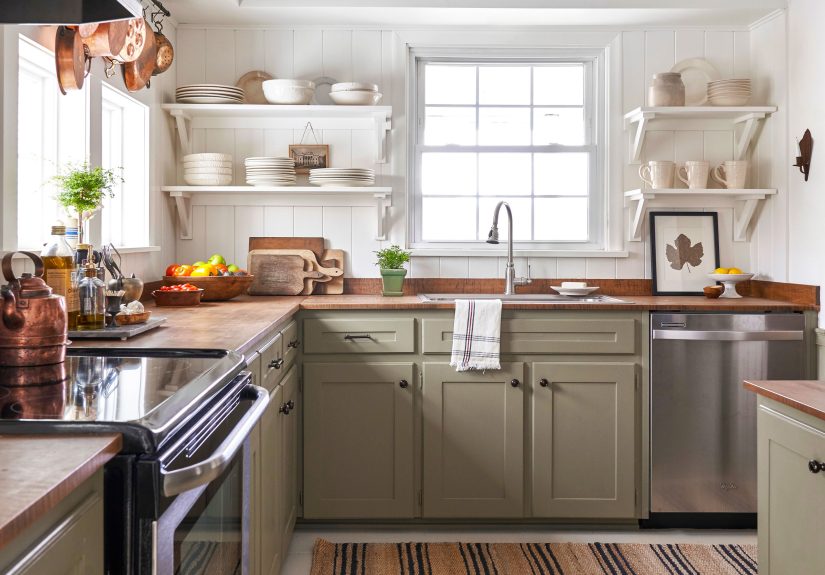
13) Do sage lower cabinets + lighter uppers in the kitchen
This classic layout keeps the room bright while grounding the lower half. Sage lowers hide everyday wear better than pure
white, and they look amazing with warm wood shelves, creamy tile, or a simple white backsplash.
14) Go all-in on sage cabinets for a timeless, “designed” kitchen
Full sage cabinetry can feel both cozy and upscale, especially with brass hardware and warm counters (butcher block or
creamy stone). If you’re worried about darkness, choose a lighter sage or boost lighting under cabinets.
15) Paint just the island sage as the kitchen focal point
A sage island is a low-commitment, high-impact movelike bangs, but less emotionally risky. Keep perimeter cabinets neutral,
then repeat sage in a small way (stool cushions, dish towels, or a vase) so it feels intentional.
16) Use sage tile (backsplash or floor) for color with texture
Sage zellige-style tiles, ceramic subway tile, or a sage geometric floor adds depth without repainting. The slight variation
in tile tone keeps sage from looking flat and adds that “designer did this” finish.
17) Paint a pantry door or built-in hutch sage
If full cabinets are too much, paint one feature piece: a pantry door, a freestanding hutch, or a built-in. Sage looks
especially charming on vintage-style furniture, and it breaks up a wall of white in a kitchen.
18) Choose hardware that steers the style
Want modern? Go matte black or sleek nickel. Want warm and classic? Go brass. Want cozy cottage? Try antique bronze. Sage
is flexibleit’s the hardware that decides whether you’re “modern farmhouse” or “Paris apartment fantasy.”
19) Give the laundry room sage cabinets (and pretend it’s a spa)
Laundry rooms get prettier fast with sage storage and a patterned tile or wallpaper moment. Add wood shelves, glass jars,
and a warm light fixture. Your detergent deserves to live somewhere nice, too.
20) Build a sage mudroom bench or locker wall
Mudrooms are the perfect place for deeper sage because it hides scuffs and dirt. Paint the bench, built-ins, and trim for
a cohesive look, then add black hooks and a washable runner to handle real life.
21) Paint the inside of shelves sage for a subtle “pop”
Try sage on the back of open shelving in a mudroom, pantry, or living room. It highlights your objects (books, pottery,
baskets) without committing to full wallsand it’s an easy weekend project.
22) Paint bedroom walls sage for a calmer wind-down
Sage is a go-to “sleepy” color because it’s soft and nature-inspired. Pair with crisp white bedding, light wood nightstands,
and linen curtains for a clean retreat. Add a small black accent to keep it from feeling too sweet.
23) Use sage on the headboard wall only (for focus without overwhelm)
If you like neutral bedrooms but want personality, paint the wall behind the bed sage and keep the rest warm white. It frames
the bed like a piece of art and makes the whole room feel more styled.
24) Layer sage bedding with blush, cream, or terracotta accents
Sage pairs beautifully with soft pinks and warm clays. Think: sage quilt + blush throw + cream sheets. It’s calm but not bland,
like a latte with cinnamon instead of plain milk.
25) Add sage through drapery for instant softness
Sage curtains filter light in a way that makes rooms feel gentle and cozy. If you’re worried about the room feeling too muted,
choose a textured fabric (linen) and add contrast with black curtain rods or darker art frames.
26) Paint the ceiling sage for a boutique-hotel surprise
A sage ceiling is unexpected and soothing, especially in a bedroom. Keep walls a warm white and repeat sage in small decor pieces.
This works best with a ceiling that isn’t super lowunless you want “cozy cocoon,” which is also valid.
27) Make a nursery sage for a gender-neutral, calming base
Sage is a popular nursery choice because it feels gentle and timeless. Pair it with natural wood furniture, warm white textiles,
and woven baskets. It also grows with the kidno need to repaint when dinosaurs become “uncool.”
28) Use sage storage in a kids’ room to keep chaos looking cute
Sage bookshelves, cubbies, or a toy chest soften the visual noise of bright toys. Add one fun contrasting color (mustard,
coral, or navy) so the room still feels playful, not like a tiny meditation studio.
29) Install a sage vanity for a bathroom that feels spa-like
A sage vanity pairs beautifully with white tile, marble-look counters, and warm metal fixtures. If your bathroom is small,
a vanity is the perfect “one hit” of sageimpactful but contained.
30) Try sage tile in the shower niche or half wall
A sage niche (or a band of sage tile) adds color without committing to full walls. It also looks great with brass fixtures
and creamy grout. Pro tip: keep surrounding surfaces simple so the tile gets to be the star.
31) Color-wash the bathroom in sage for a cohesive, vintage feel
Painting walls (and sometimes trim) in sage can make a bathroom feel intentional and cozy. Add contrast with a crisp white
sink, warm-toned mirrors, and mixed textures like brick tile, stone, or beadboard.
32) Paint a home office sage to create a focused, calm backdrop
Sage works especially well behind a desk because it’s visually restful. Style it with warm woods, matte black accents, and
a few plants for a “productive but not sterile” vibegreat for calls, studying, or pretending to answer emails.
33) Add sage built-ins (or just the back panels) for depth
Built-ins look more custom when the backing is painted sage. Your books and decor pop, and the room gains dimension.
Keep the shelves themselves lighter (white or wood) if you want a brighter feel.
34) Bring sage outdoors with shutters, porch furniture, or textiles
Sage is a natural fit outsideshutters, porch ceilings, patio cushions, and planters all look great in this muted green.
Pair with cream, black, and wood tones so it feels classic, not trendy-for-five-minutes.
Smart Pairings: Colors and Materials That Make Sage Green Shine
- Warm whites & creams: soften sage and keep it airy.
- Natural woods: oak, walnut, rattan, canesage loves them all.
- Metals: brass warms it up; black sharpens it; nickel modernizes it.
- Earthy accents: terracotta, clay, camel leather, and rust add richness.
- Soft contrast: blush, dusty rose, and muted navy pair beautifully with sage.
Common Sage Green Mistakes (and Easy Fixes)
Choosing a sage that’s too gray for the room
If your room is low-light, a very gray sage can feel dull. Fix it by choosing a slightly warmer sage or adding warm lighting,
wood tones, and brass accents to bring it back to life.
Going “all sage” without contrast
Sage looks best with at least one contrast: warm white, black, wood, or metal. If everything is sage-on-sage-on-sage,
the room can feel flat. Add contrast with rugs, art frames, or hardware.
Forgetting texture
Sage is muted, so texture does the heavy lifting. Mix matte paint with glossy tile, linen with velvet, and wood with metal.
Your room will look layered, not washed out.
of Real-World “Experience” Tips (What Design Case Studies Teach Again and Again)
After you look at enough sage green rooms across different stylesfarmhouse kitchens, modern offices, cottage bedrooms, tiny
powder roomsa few patterns show up over and over. First: sage is rarely the whole story. The rooms that feel magazine-level
don’t rely on sage alone; they rely on relationships. Sage works because it connects to other natural cues: wood grain,
stone veining, woven fibers, warm metals, and soft textiles. When those cues are missing, sage can feel oddly “in-between,” like
a beautiful color that doesn’t quite know what job it has.
Second: lighting is the secret boss of sage. In bright rooms, sage can feel crisp and freshalmost like a new neutral. In dim rooms,
it can go smoky. That’s not a problem, but it means you need to decide what you want the room to feel like. If you’re aiming for airy,
keep the sage lighter, use warm whites, and add layered lighting (overhead + lamps + under-cabinet). If you want cozy drama, go deeper
and embrace it: color-drench the trim, add warm-toned bulbs, and bring in texture (linen curtains, wool rugs, velvet cushions).
Third: the “best” sage rooms usually repeat the color three timesjust not in the obvious, matchy way. For example, a kitchen might have
sage cabinets (big), a small sage vase (small), and a sage stripe in a runner (medium). A bedroom might have sage walls (big), a sage throw
pillow (small), and sage art (medium). This repetition makes the color feel intentional, not accidental.
Fourth: hardware and accents decide the style. The same sage cabinets can read totally different depending on what you pair them with.
Brass and creamy counters push classic and warm. Matte black and crisp white push modern. Nickel and marble feel tailored. Antique bronze and
wood feel cottage-y. If you ever feel stuck, don’t repaint firstswap a few “style deciders” (hardware, lighting, mirror frames, curtain rods).
It’s cheaper, faster, and far less likely to make you cry in the middle of a weekend.
Finally: sage green shines when you let it be the calm backgroundnot the loud centerpiece. Even when sage is used boldly (like full cabinetry
or a drenched office), the rooms that feel most livable balance it with breathing room: warm neutrals, simple shapes, and materials that feel good.
If you treat sage like a supporting actor that makes everything else look better, it will absolutely steal the showin the best way.
Conclusion
Sage green is popular for a reason: it’s soothing, flexible, and surprisingly timeless. Whether you use it as paint, cabinetry, tile, textiles,
or a single statement piece, sage can make your home feel more grounded and pulled togetherwithout turning your space into a theme park of color.
Start small if you want, add contrast and texture, and remember: the “perfect” sage is the one that behaves in your light.