Table of Contents >> Show >> Hide
- Trend #1: Texture That You Can Practically Feel
- Trend #2: Sustainable Wallpaper (The “Looks Good, Sleeps Better” Choice)
- Trend #3: Maximalist Patterns (Big Personality, Bigger Energy)
- Trend #4: Murals and Scenic Wallpaper (Walls That Travel for You)
- How to Choose the Right Wallpaper in 2025 (Without Regretting It by Tuesday)
- of Real-World “Experience” Notes: What It’s Like Living With These Trends
- Final Thoughts: Your Walls Are Allowed to Have a Personality
If your walls have been quietly whispering, “We could be doing more,” 2025 is the year they start speaking in full, confident paragraphs.
Designers across the U.S. are leaning into wallpaper that feels intentionalnot just “a pattern,” but a mood, a texture, a little moment.
The big shift? Wallpaper is no longer the supporting actor behind your furniture. It’s the lead, the soundtrack, and sometimes the plot twist.
After years of safe neutrals and “maybe I’ll add art someday,” homeowners are using wallpaper to bring warmth, personality, and even practicality into spaces
that used to be ignored (hello, powder rooms and hallways). Based on what designers are forecasting and specifying most, these are the four wallpaper trends
poised to be everywhere in 2025and how to actually use them without turning your home into a visual shouting match.
Trend #1: Texture That You Can Practically Feel
Texture is the quiet power move of wallpaper trends: it doesn’t need to scream to look expensive. Designers are doubling down on tactile wallcoveringsthink
grasscloth, woven looks, and dimensional finishes that add depth even in a “simple” color palette. This trend fits right into the broader push toward cozy,
layered interiors that feel lived-in (in a good way, not in a “where did that sock come from?” way).
What it looks like in real homes
- Grasscloth and woven textures for warmth and subtle movement.
- Faux grasscloth (often peel-and-stick) when you want the look with less maintenance stress.
- Dimensional patterns that play with lightespecially in entryways and dining rooms.
Why designers love it
Texture acts like a filter for a room: it softens hard lines, makes paint colors feel richer, and gives a space a finished look even if the decor is minimal.
It also photographs beautifullyso yes, your walls are ready for their close-up.
Where to use it
Try textured wallpaper in rooms where you want calm sophistication: bedrooms, offices, living rooms, and hallways. It’s also a smart choice for spaces that
feel flat or “builder-basic.” Texture can add dimension without requiring a bold print.
Pro styling tip
Let texture do the heavy lifting. Pair it with warm woods, matte metals, and simple silhouettes. If you add a loud rug, a statement sofa, and an attention-seeking
wallpaper, someone has to be the adult in the roomand it should be your walls.
Trend #2: Sustainable Wallpaper (The “Looks Good, Sleeps Better” Choice)
Sustainability isn’t a niche preference anymoreit’s becoming a baseline expectation. In 2025, designers predict more demand for wallpaper made with
responsibly sourced materials and printed with lower-impact processes. Homeowners want beauty without the side of guilt, and wallpaper brands are responding
with more eco-minded options that don’t look like they were designed in a beige-only committee meeting.
What “sustainable” can mean (in plain English)
- Materials: paper from responsibly managed forests, natural fibers, and lower-impact substrates.
- Inks: water-based or low-VOC inks and processes designed to reduce harmful emissions.
- Longevity: patterns you’ll love longer than a single social media cycle.
How to shop smart without getting overwhelmed
Don’t feel like you need a PhD in labels. Start by checking what the brand discloses about materials and inks, and ask for samples.
In 2025, “eco-friendly” is increasingly part of the marketing languageso it’s worth reading the details instead of trusting a leaf icon that may or may not be
a graphic design choice.
Where sustainable wallpaper shines
Anywhere you spend a lot of timebedrooms, nurseries, home offices, and family roomsbecause comfort is more than just “soft lighting and a throw blanket.”
If you’re sensitive to odors, you’ll appreciate wallpapers designed to reduce harsh chemical off-gassing.
Pro styling tip
Sustainable doesn’t have to mean subtle. You can go bold with color and pattern while still choosing better materials. Think of it as “maximalism with a conscience.”
Trend #3: Maximalist Patterns (Big Personality, Bigger Energy)
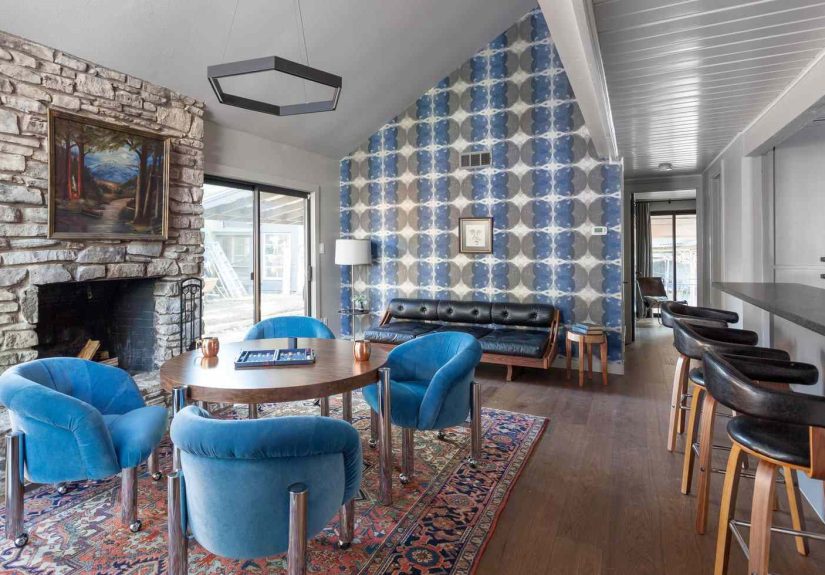
Minimalism isn’t dead, but in 2025 it’s definitely sharing the stage. Designers say “more is more” continues to gain momentumespecially in wallpaper.
Homeowners are using pattern to create character, tell a story, and make rooms feel curated instead of generic. The most common maximalist directions include
oversized florals, expressive abstracts, animal prints, whimsical motifs, and moody color palettes that feel dramatic (not depressing).
What it looks like in 2025
- Oversized botanicals and florals: lush, dramatic, and often less “grandma’s garden” and more “gallery wall, but on wallpaper.”
- Moody palettes: deep greens, inky blues, chocolate browns, and dark, saturated hues that make a room feel enveloping.
- Playful motifs: hand-drawn, whimsical, even “dopamine decor” patterns meant to boost mood.
- Classic patterns, reimagined: stripes, block-print-inspired designs, and heritage motifs with modern colorways.
How to make maximalism look designer, not chaotic
The secret is editing. Pick one hero element (the wallpaper) and let everything else support it. Pull two or three colors from the pattern and repeat them
in textiles, paint, or decor. This creates a cohesive look that feels intentionallike you planned it, not like your room got dressed in the dark.
Best rooms for bold wallpaper
Powder rooms are the undefeated champions of bold wallpaper because they’re small, dramatic, and don’t require you to stare at the pattern for eight hours a day.
Dining rooms and entryways are also perfect for statement walls. Bedrooms can work toojust consider scale and color so your wallpaper doesn’t feel like it’s
watching you sleep.
Pro styling tip
If you’re nervous, start with a “high-impact, low-commitment” zone: a niche, a hallway, the back of built-ins, or an accent wall. And yes, peel-and-stick can be
a gateway wallpaper. Consider it the sample-size candy bar of designstill fun, less risk.
Trend #4: Murals and Scenic Wallpaper (Walls That Travel for You)
Murals are moving from “specialty splurge” to mainstream star. Designers say scenic, panoramic, and mural-style wallpapers will keep rising in 2025partly because
digital printing has made them more accessible, and partly because people love the immersive effect. A mural doesn’t just decorate a wall; it changes the perceived
architecture of a room. Suddenly, your dining room has a landscape. Your bedroom has a dreamy horizon. Your hallway has a storyline.
What counts as a mural trend now
- Panoramic landscapes: forests, mountains, coastal scenes, and painterly vistas.
- Modern trompe l’oeil: architectural illusions, faux paneling, or textured “plaster” looks.
- Custom-feeling murals: large-scale artwork that looks commissioned (even when it isn’t).
Where murals work best
Dining rooms, living rooms, foyers, and bedrooms are classic choices. But designers are also placing murals in smaller rooms where you want instant drama:
a powder room, a reading nook, a stair landing, even a laundry roombecause chores deserve ambiance too.
How to style a mural so it doesn’t fight your furniture
Treat a mural like a giant piece of art: keep surrounding decor simpler and avoid busy competing patterns. If the mural has strong colors, echo them lightlyone or
two accents is enough. Also consider lighting; murals can look completely different under warm evening lamps versus bright daytime sun.
How to Choose the Right Wallpaper in 2025 (Without Regretting It by Tuesday)
1) Start with the “why”
Are you trying to add warmth, height, drama, calm, or personality? Texture is great for warmth. Murals add depth. Maximalist patterns add energy and identity.
Sustainable options help align style with values. When you know the goal, the pattern choices get way less chaotic.
2) Always samplealways
Wallpaper is the ultimate “online shopping lies” category because lighting changes everything. Order samples and tape them up in multiple spots.
Look at them in morning light, afternoon light, and at night. A “soft cream” in a listing photo can become “aggressive banana” under warm bulbs.
3) Think about scale like a designer
Large patterns can actually work beautifully in small rooms (yes, really) because they’re bold and clear instead of busy. Tiny repeating patterns can sometimes
feel more chaotic. The key is choosing a pattern scale that matches the feeling you wantcalm, dramatic, playful, or elegant.
4) Decide how permanent you want this relationship to be
Peel-and-stick wallpaper has become more popular for renters, DIYers, and commitment-phobes (no judgment). Traditional wallpaper can be more durable and seamless.
If you’re wallpapering a high-humidity space, look for materials designed for performance and easy cleaning.
5) Budget for a little extra
Order extra wallpaper for pattern matching, future repairs, and the reality that corners are rarely perfectly straight. Wallpaper math is not a vibeit’s a necessity.
of Real-World “Experience” Notes: What It’s Like Living With These Trends
Here’s the part designers and homeowners tend to learn the hands-on way: wallpaper is both a design choice and a daily experience. Texture, for example, has a
surprisingly emotional effect. People often describe textured wallcoverings as making a room feel “finished” even when nothing else has changedsame furniture,
same layout, but suddenly the space has depth. The best part is that the impact is quiet; you don’t walk in and think “WALLPAPER!” so much as “This feels nice.”
In offices and bedrooms, that subtle warmth can make the room feel calmer and more intentional, especially when paired with soft lighting and natural materials.
Sustainable wallpaper tends to come with a different kind of satisfaction: it feels good to choose something that aligns with your values, but it also nudges you
toward better long-term decisions. Homeowners who prioritize eco-friendlier materials often pick patterns they’ll love for years instead of a “trend-only” look.
In practice, that usually means fewer impulsive choices and more sampling. And sampling, while slightly annoying, is the difference between “this is perfect” and
“why does my dining room look like a melted highlighter at night?”
Maximalist wallpaper is the most funand the easiest to overdo. A common experience: someone falls in love with a bold print online, installs it, and then realizes
their rug, curtains, and throw pillows are all trying to win the same competition. The fix is almost always editing. When homeowners simplify the rest of the room,
the wallpaper becomes art instead of noise. Another real-life lesson: bold wallpaper often looks best when you commit. If you half-commit (one small accent wall in a
giant room) it can feel like the wallpaper is unsure of itself. But in a powder room, a dining room, or a cozy entry? Maximalism shines because the space is meant
to feel like a moment.
Murals have their own learning curve. The “wow” factor is realpeople regularly say a mural makes their home feel more expensive and more personal. But murals also
teach you to think like a photographer: where does the eye land, what gets framed by furniture, and how does the scene flow around doors and windows? Homeowners who
are happiest with murals usually plan the wall like a focal-point compositionchoosing simpler furnishings, letting negative space breathe, and paying attention to
lighting. And one last practical note that comes up again and again: installation day goes better with patience, a level, and at least one extra set of hands.
Wallpaper is totally doable as a DIY (especially peel-and-stick), but it rewards slow, careful alignment far more than “I’ll just eyeball it.”
Final Thoughts: Your Walls Are Allowed to Have a Personality
The biggest wallpaper trend of 2025 might actually be confidence: designers expect homeowners to choose wallcoverings that feel personalwhether that means tactile
grasscloth, eco-friendly materials, bold maximalist prints, or murals that turn a room into a destination. Start small if you need to, sample before you commit,
and remember: if paint is a whisper, wallpaper is a full conversation. Make it a good one.