Table of Contents >> Show >> Hide
Every pet owner knows the look. It starts with innocent eyes, a suspiciously casual stretch near the table, and one slow-motion sniff that says, “I am absolutely not planning a crime.” Then the sandwich disappears. The pizza slice vanishes. The roast chicken loses a leg. And somehow the dog, cat, or tiny fluffy gremlin in your kitchen is suddenly wearing the expression of someone who would like a lawyer.
Food theft is one of the most hilarious, chaotic, and strangely impressive parts of living with pets. It is also one of the most relatable. Dogs counter-surf. Cats launch precision raids from the back of the sofa. Even well-mannered pets can turn into snack outlaws when a plate is left unguarded for three seconds. That is why “pet thieves caught stealing food” remains one of the internet’s most enduring forms of comedy: the evidence is obvious, the suspects are fuzzy, and not one of them feels remorse.
But beneath the laughs, pet food stealing says something real about animal behavior. Pets repeat what works. If one swipe of bacon leads to a jackpot, they remember it. If begging earns table scraps, they upgrade from gentle hope to full-time emotional blackmail. Their noses are better than our security systems, their timing is criminally good, and their confidence is honestly inspiring.
So let’s celebrate the funniest kind of household chaos with an original roundup of 46 pet-thieves caught red-pawed in the act of stealing foodplus a practical look at why pets do it, why some stolen snacks are dangerous, and how to protect both your dinner and your dignity.
Why Pets Turn Into Food Bandits
Pets do not steal food because they are evil masterminds. They steal food because food is rewarding, easy to smell, often left within reach, and occasionally handed over by loving humans who mistake begging for starvation. Dogs in particular are natural opportunists, and cats are experts at combining patience with chaos. Add boredom, inconsistent house rules, or a family member who says “just one little bite,” and suddenly you are living with a repeat offender.
Food stealing can also be accidentally reinforced. When a pet begs and gets a bite of turkey, the lesson is simple: stare harder next time. When a pet leaps onto the counter and finds half a muffin, the counter becomes a treasure map. That does not mean your pet is “bad.” It means your pet has discovered the world’s simplest business model: steal snack, receive reward, repeat.
46 Pet-Thieves That Were Caught Red-Pawed When Stealing Food
Bakery Bandits
- The Bagel Burglar. He waited until the toaster popped, then snatched the bagel with the timing of a seasoned jewel thief and the face of a dog who still believed this was a victimless crime.
- The Croissant Crook. One buttery crescent was cooling on the counter. One cat was pretending to nap. Only one of those statements was honest.
- The Muffin Mugger. She did not even eat the wrapper off first. She just dragged the entire blueberry muffin under the table like a tiny wolf who had just discovered brunch.
- The Biscuit Bandit. Grandma looked away for one second, and the biscuit vanished so cleanly that half the room blamed the other half before noticing the crumbs on the beagle’s chin.
- The Donut Dodger. He stole only the glazed one, which somehow made it worse. Selective taste in a thief is rude.
- The Roll Robber. Dinner rolls were placed in a basket. A golden retriever interpreted that as self-service.
- The Pancake Pilferer. She snatched one flapjack right off the breakfast plate and looked deeply offended that syrup had not been included.
- The Bread Loaf Bandit. A whole loaf disappeared from the grocery bag, leaving behind a trail of plastic, crumbs, and one labrador trying to look spiritually evolved.
Meat and Cheese Mob
- The Rotisserie Renegade. The chicken had barely touched the counter before the family dog performed what can only be described as an unauthorized holiday miracle.
- The Turkey Tactician. He waited for the carving knife, the serving platter, and the exact moment everyone got sentimental. Then he took the drumstick and ran like he paid taxes.
- The Ham Heist Specialist. This cat did not want the whole ham. She wanted one expensive slice stolen with maximum disrespect.
- The Bacon Bandit. You could hear the pan sizzling, smell breakfast in the air, and somehow still fail to stop a dachshund from stealing two strips with cartoon-level confidence.
- The Cheese Slice Criminal. He ignored vegetables, skipped bread, and went directly for the cheddar like a furry little connoisseur of poor choices.
- The Deli Meat Desperado. One stack of turkey on the counter became a full investigative report when no adult wanted to admit they lost to a pug.
- The Meatball Marauder. She stole exactly one meatball from the tray, proving that some crimes are small in scale but huge in emotional impact.
- The Sausage Snatcher. The grill party was going well until the schnauzer rebranded himself as head of sausage distribution.
Breakfast Criminals
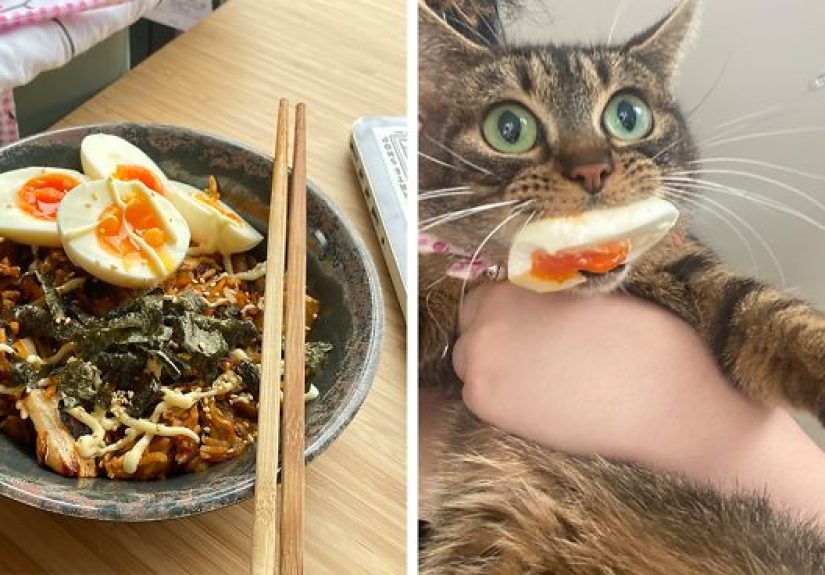
- The Egg Bandit. He delicately picked up a scrambled egg from a plate as if he were helping clean up, which was generous in spirit and terrible in practice.
- The Cereal Raider. This kitten was not interested in the cereal. She was interested in the milk, the bowl, the spoon, and the chance to make breakfast about herself.
- The Waffle Wrestler. She stole one quarter of a waffle and looked thrilled, as though she had just defeated a much larger rival in single combat.
- The Toast Thief. A husky took buttered toast from a child with such clean execution that the child respected the move before crying.
- The Yogurt Licker. He did not steal the container. He stole dignity by sticking his whole face into it.
- The Hash Brown Hijacker. One crunchy potato triangle disappeared and left behind a very suspicious silence from under the kitchen chair.
- The Smoothie Accomplice. She knocked the cup over first, then licked the floor like this had always been the plan.
Dessert Raiders
- The Cupcake Culprit. Frosting on the whiskers. Wrapper on the floor. Zero willingness to cooperate with investigators.
- The Cookie Criminal. He stole a single cookie and somehow managed to look both triumphant and shocked that cookies are apparently not a constitutional right.
- The Ice Cream Intruder. A spoon was left unattended for one second, which is approximately six years in dog timing.
- The Brownie Burglar. She went for the corner piece, which was either excellent taste or advanced villainy.
- The Pie Pirate. One cat walked across the counter, sampled the cooling pie, and left a perfect paw print like a signed confession.
- The Pudding Plunderer. He got his nose into dessert and came out looking like a Victorian child in a very suspicious portrait.
- The Candy Wrapper Crook. The candy was gone, the wrapper was mangled, and the dog suddenly acted like he had never heard of sugar in his life.
- The Cake Corner Catastrophe. She stole only the frosted edge, proving that some animals do not just commit crimesthey edit desserts.
Produce Pirates
- The Apple Slice Outlaw. He heard chopping, appeared from nowhere, and left with a stolen slice like a horse in a family movie.
- The Banana Bandit. This one skipped the fruit and stole the peel from the trash, which was frankly a confusing strategy.
- The Carrot Capper. A rabbit-looking dog stole a carrot and finally lived his truth.
- The Watermelon Wanderer. She dragged an entire wedge across the patio and looked offended that melons are heavier than ambition.
- The Lettuce Looter. Nobody expected the cat to target salad, which somehow made the theft feel more personal.
- The Corn Cob Criminal. He ignored every safe option and went straight for the item that made everyone sprint across the yard yelling his full government name.
Midnight Kitchen Outlaws
- The Pizza Box Phantom. The box was closed. The kitchen was dark. Yet a slice vanished overnight as if summoned by pepperoni destiny.
- The Trash Can Trespasser. She tipped over the bin, rejected the vegetables, and selected chicken bones like a creature with a deeply unhelpful survival instinct.
- The Grocery Bag Ghost. One rustle later, a furry head emerged from the paper bag with stolen crackers and absolutely no shame.
- The Leftover Liberator. He opened nothing, solved nothing, and still found the one takeout container everybody was saving.
- The Popcorn Pickpocket. Family movie night became a live-action suspense film when a dog stationed himself under the couch like a highly motivated vacuum cleaner.
- The Taco Thief. She grabbed the shell, dropped the lettuce, and ran off with the meat. Ruthless efficiency.
- The Fry Felon. One French fry in the car is not a meal, but try explaining that to the back-seat criminal with ketchup on his nose.
- The Noodle Ninja. He took one spaghetti strand, backed away slowly, and somehow turned pasta theft into performance art.
- The Sandwich Swindler. A lunch left on the coffee table disappeared while its owner answered the door. This was not bad luck. This was surveillance.
- The Ultimate Red-Pawed Repeat Offender. Every family has one: the pet who is banned from the kitchen, monitored at holidays, and still somehow steals food with the confidence of a legend.
What These Food Heists Really Tell Us
As funny as these stories are, most pet food theft follows a simple pattern: opportunity plus reward. Pets are brilliant at noticing routines. They know which counter gets groceries first, which child drops popcorn, and which grandparent says, “Oh, let him have a little.” That is why the same pets seem to become serial snack offenders. They are not plotting world domination. They are collecting evidence that your household rules are negotiable.
There is also a real safety issue hiding inside the comedy. Not every stolen snack is harmless. Chocolate, grapes and raisins, foods containing xylitol, onions, garlic, alcohol, raw dough, fatty scraps, macadamia nuts, cooked bones, and discarded snack bags can all create genuine emergencies. A pet who steals food is not just being naughty; sometimes that pet is one stolen bite away from a very expensive and frightening trip to the veterinarian.
That is why the funniest pet-thief stories usually have two endings: first the laugh, then the life lesson. If your pet keeps raiding plates, trash cans, grocery bags, or countertops, the answer is not anger. The answer is management, training, and making sure the whole household stops rewarding the behavior by accident.
How to Outsmart a Pet Food Thief Without Becoming the Kitchen Police
The best way to stop food stealing is to make theft boring. Clear counters. Put groceries away immediately. Use bins with lids. Move cooling food out of reach. Do not leave takeout on the coffee table unless you enjoy gambling with noodles. The less often your pet gets lucky, the less powerful the habit becomes.
Training matters too. “Leave it” and “drop it” are not fancy tricksthey are survival skills for pets who believe every fallen snack is their inheritance. Reward your pet for walking away from food, not for hovering near it like a tiny negotiator. If begging earns eye contact, laughter, or table scraps, begging is being paid. If calm behavior on a mat earns praise or a safe treat, calm behavior starts to win the contract.
Consistency is the real secret weapon. One person refusing scraps helps a little. Everyone refusing scraps helps a lot. Families accidentally create food thieves when one adult enforces rules and another slips the dog turkey under the table like a witness protection deal. Pets do not understand mixed messages. They understand results.
It also helps to look honestly at routine. Some pets steal because they are under-stimulated. A bored dog may go shopping on the counter simply because the kitchen is more exciting than the living room. More walks, sniffing games, puzzle feeders, training sessions, and structured play can reduce the urge to invent illegal hobbies.
And if your pet steals something dangerous, skip the home remedies and call your veterinarian right away. Time matters with toxic foods. The faster you act, the better the outcome is likely to be. “Watch and wait” is a bad plan when the suspect has already eaten dark chocolate and is licking the wrapper for emphasis.
What Living With a Food-Thief Pet Really Feels Like
Living with a food-stealing pet is a strange combination of love, comedy, and low-level tactical awareness. You start out thinking you own a normal dog or cat. Then one day your sandwich disappears off the arm of the couch, and your life divides into two distinct eras: before the theft, and after the theft.
At first, it feels personal. How could this fluffy roommate, who sleeps upside down and follows you to the bathroom, betray you for half a grilled cheese? But after the second or third incident, you begin to understand that the pet is not acting out of spite. The pet is acting out of enthusiasm, instinct, and an absolutely breathtaking belief in opportunity.
There is also something weirdly impressive about their commitment. Food-thief pets study the environment. They know when groceries come home. They know what a foil wrapper sounds like from three rooms away. They know the exact difference between “I am plating dinner” and “I left the room for eight seconds.” Some of them can hear a cheese drawer open with the spiritual focus of a monk. If they applied these gifts to human employment, they would run Fortune 500 companies by Thursday.
Owners of these pets become different people too. They develop reflexes. They carry plates higher. They stop trusting silence. They can identify guilt from across a room based on one slightly shiny nose and a look that says, “This situation contains many unanswered questions.” Visitors do not understand the rules at first. They set a cookie on the side table. They leave pizza on the ottoman. Then they learn. Everyone learns.
And yet, for all the aggravation, these stories become household legends. Families retell the time the dog stole the Thanksgiving roll, the cat sampled the birthday cake, or the puppy somehow extracted deli ham from a sealed grocery bag like a furry escape artist. The details get bigger, the laughter gets louder, and the petwho was definitely guiltybecomes even more beloved.
That is because food theft is rarely just about food. It is about living with animals who are clever, expressive, shameless, and endlessly entertaining. They keep us alert, humble, and slightly defensive around rotisserie chicken. They also remind us that home is not supposed to be perfectly polished. Sometimes home is a little messy. Sometimes it has paw prints on the floor. Sometimes it involves shouting, “Why do you have a waffle?” across the kitchen.
The trick is to keep the fun while reducing the risk. Laugh at the harmless stories. Learn from the dangerous ones. Train the pet, manage the environment, and never assume a closed box means a safe pizza. Loving a pet-thief means accepting that they are part comedian, part opportunist, and part tiny kitchen criminal. It also means understanding that the same boldness that makes them steal a biscuit is often the same boldness that makes them so delightful to live with in the first place.
So yes, protect your counters. Use lids. Practice “leave it.” Guard your fries like they are heirlooms. But keep your sense of humor too. Because one day, years from now, you probably will not remember every normal dinner. You will remember the time your dog stole the breakfast sandwich, your cat licked the pie, and everyone in the room laughed so hard they forgot to be mad.
Conclusion
Pets stealing food is one of those universal household dramas that is equal parts ridiculous and revealing. It is funny because the expressions are priceless, the timing is absurd, and the evidence is usually stuck right to the suspect’s face. But it also teaches an important lesson: our pets learn fast, our routines matter, and some stolen foods are far more dangerous than they look. The smartest response is not punishmentit is prevention, consistency, better training, and a healthy respect for just how determined a hungry-looking pet can be.
In other words, laugh at the harmless muffin heist, learn from the chicken theft, and do not underestimate the cat quietly staring at your plate. The red-pawed bandits are cute, yes. They are also very, very committed.