Table of Contents >> Show >> Hide
- Why “Bad Tourist Behavior” Keeps Going Viral
- 1) The Ancient-Site Engraver
- 2) The Museum Meme-Maker
- 3) The Wildlife Whisperer (Who Is Not, In Fact, a Wildlife Whisperer)
- 4) The “Just a Small Souvenir” Thief
- 5) The Sacred-Site Selfie Star
- The Anti-Worst Tourist Checklist
- Extra: of Real-World “Worst Tourist” Experiences (and What to Do in the Moment)
- Conclusion
Travel is supposed to expand your mind, not your list of criminal charges. And yet, every year, a handful of
visitors show up at famous places and behave like the world is their personal prop closet: scratch their name
into ancient stone, lean on priceless art, harass wildlife for a “once-in-a-lifetime” selfie, or treat a memorial
like it’s a theme park.
Beforei, I know the title sounds harsh. These folks probably aren’t the literal worst people on Earth (we have
spreadsheets for that), but they did manage to turn a vacation into a masterclass in how to be remembered for all
the wrong reasons. The good news: each of these cautionary tales comes with an easy upgrade path. You can enjoy
iconic sites, get great photos, and keep your karma (and your wallet) intact.
Why “Bad Tourist Behavior” Keeps Going Viral
Two forces are working together like a chaotic travel buddy you should have unfriended years ago: overtourism and
social media. When destinations are packed, stress risesfor locals, staff, rangers, and yes, even visitors who
came to relax and instead got shoulder-checked by a selfie stick.
Add the “content” mindsetwhere the trip is less about the experience and more about proving you were thereand
the temptation to bend rules gets louder. The problem is that a small moment of “look at me” can permanently
damage cultural heritage, disrupt ecosystems, or disrespect places tied to real suffering. Sometimes it’s a
thoughtless accident. Sometimes it’s entitlement wearing flip-flops.
Let’s meet five “worst tourist” archetypesbased on real incidents covered in major U.S. outletsand then talk
about how to never become one of them.
1) The Ancient-Site Engraver
The mess
There’s a special kind of confidence required to look at an ancient monument and think, “This would be better
with my handwriting on it.” In the past few years, multiple tourists have been caught carving names or initials
into historic structuresturning irreplaceable public heritage into a personal diary entry.
One widely reported example involved a visitor defacing Rome’s Colosseum by carving letters into the wall. The
backlash was swift, and so was the reminder that “I didn’t know” is not a magic spell that reverses damage to
2,000-year-old stone.
Why it matters
Historic sites are not just pretty backdrops. They’re fragile records of human history. Even small scratches can
accelerate erosion, complicate restoration, and force conservators to spend time and money repairing preventable
damage instead of preserving the site for future generations. It’s also a fairness issue: millions of visitors
behave responsibly, and a few people ruin it for everyone.
Do this instead
- Leave your mark digitally: Take a photo, write a caption, and let the internet be your notebook.
- Find the “legal graffiti”: Many cities have designated walls or public art spaces meant for expression.
- Use the “reverse souvenir” trick: Buy a postcard or a small replicasomething the site actually wants you to take.
If you’re tempted to carve your name into something historic, try carving it into a hotel bar of soap first. If
it feels ridiculous (it will), you’ve just saved yourself from becoming a cautionary headline.
2) The Museum Meme-Maker
The mess
Museums are full of priceless objects and one surprisingly fragile resource: personal space. When visitors get
too close to artworksespecially while trying to recreate a pose or snag a “funny” photobad things happen fast.
Recent reporting highlighted multiple incidents in which visitors damaged artworks while attempting photos. In
one case at Florence’s Uffizi Gallery, a tourist reportedly tripped while posing near a painting and caused a
tear in the canvas. In another high-profile moment, tourists at a museum in Verona damaged a crystal-encrusted
chair artwork when someone actually sat on it instead of pretending for a photo.
Why it matters
Even when a museum can restore a damaged piece, restoration is not a rewind button. Repairs cost money, require
specialized labor, and may leave traces. And when museums respond with stricter rules, everyone loses a little:
fewer photo-friendly moments, more barriers, more “please stand behind the line” announcements delivered with
the exhausted tone of someone who has seen too much.
Do this instead
- Follow the “two-step rule”: If you need to step backward to frame the shot, step sideways instead.
- Use zoom, not inches: Your phone has it. Your knees do not need to be near the frame.
- Respect the vibe: If staff says no flash, no tripods, or no photos, they’re protecting the collectionnot attacking your creativity.
The goal is to leave with a memory, not a police report and a museum gift shop receipt that says “donation toward
repairs.”
3) The Wildlife Whisperer (Who Is Not, In Fact, a Wildlife Whisperer)
The mess
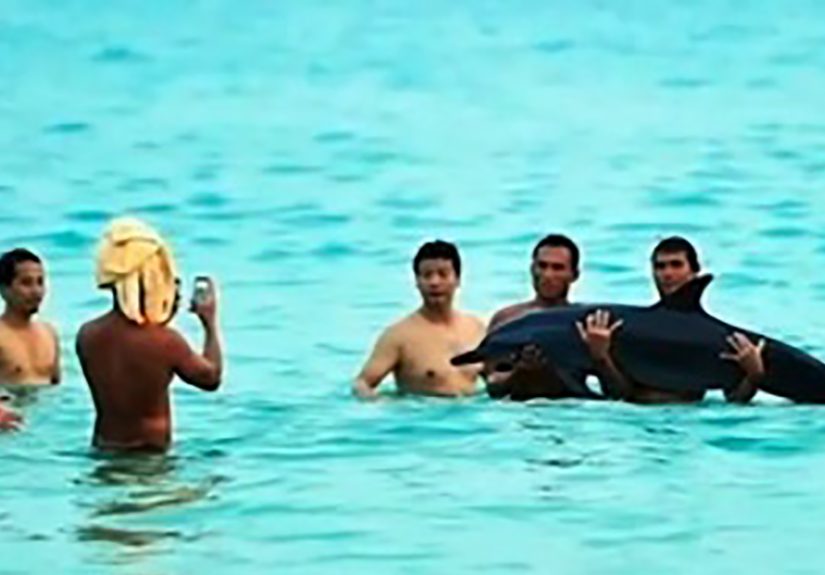
There is an unbeatable irony in getting injured while trying to prove you’re fearless on vacation. National
parksand wildlife tourism hotspotsroutinely warn visitors to keep a safe distance from animals. Yet every year,
people edge closer to bison, elk, and bears like they’re approaching a friendly dog at a backyard barbecue.
Yellowstone alone has a steady stream of incidents involving visitors getting too close to bison. Park officials
repeatedly remind guests that wildlife are unpredictable and can injure people quickly. When you see someone
inching toward a massive animal for a photo, you’re not watching braveryyou’re watching math: speed + weight +
bad decisions.
Why it matters
Wildlife harassment isn’t just dangerous for humans; it stresses animals, disrupts feeding and movement patterns,
and can lead to aggressive encounters. In extreme cases, repeated human interference can result in animals being
relocated or euthanizedmeaning one person’s “epic” moment can harm the very animal they came to admire.
Do this instead
- Keep your distance: Use binoculars or zoom lenses for close-up views.
- Let animals be boring: If you want action, watch a documentary. Wild animals owe you nothing.
- Don’t block the animal’s path: Always leave room for it to move away.
Think of it this way: if your “wildlife photo” requires you to become part of the wildlife’s personal space, you
are doing it wrong.
4) The “Just a Small Souvenir” Thief
The mess
Some tourists steal because they think it’s harmless: a stone from ancient ruins, a chunk of petrified wood from
a national park, a bottle of sand from a protected beach. It’s the vacation equivalent of “I only took one
French fry,” except the French fry is part of a protected ecosystem or cultural heritage site.
Archaeological sites like Pompeii are famous for dealing with stolen fragments that get mailed back years later,
often with apology notes. U.S. outlets have also reported on “conscience piles” at parks like Petrified Forest
National Park, where visitors return stolen pieces because they feel guiltyor because a “curse” legend scared
them straight. Meanwhile, places like Sardinia have fined tourists for removing sand from protected beaches,
emphasizing that these rules exist to protect local environments.
Why it matters
Scale is everything. One person taking “a little piece” seems smalluntil thousands of people do it. Removing
natural materials can contribute to erosion and habitat disruption. Taking artifacts from historic sites strips
context from history. The item you pocketed might look meaningless at home, but it can be meaningful to
researchers, conservators, and the story of the place itself.
Do this instead
- Buy the ethical version: Shop local and choose souvenirs made by local artists or businesses.
- Take photos, not pieces: Build a “souvenir album” instead of a suitcase of contraband.
- Teach your travel group the rule: If it’s not for sale, it’s not for you.
A true travel flex is returning home with stories, not stolen rocks that come with guilt, fines, and the uneasy
feeling you’ve been cursed by an Italian amphora shard.
5) The Sacred-Site Selfie Star
The mess
Some places aren’t “attractions” in the normal sense. They are memorialssites of tragedy, genocide, war, and
profound loss. And yet, there have been repeated controversies over tourists taking playful or performative
photos at Holocaust memorial sites, including Auschwitz, prompting museum officials and educators to plead for
basic respect.
The pattern is painfully consistent: a smiling pose where silence is appropriate, a goofy caption where empathy
is required, a “look at me” moment where the point is to look at historyand remember people who didn’t get to
go home.
Why it matters
At best, disrespectful behavior at memorial sites is ignorance. At worst, it’s a form of dehumanizationturning
real suffering into background scenery. It also creates emotional harm for other visitors, including survivors
and families, who may be there for remembrance rather than tourism.
Do this instead
- Match the tone of the place: If you wouldn’t do it in a funeral home, don’t do it here.
- Take a reflective photo, not a performance: A wide shot of the space can be meaningful without centering yourself.
- Read first, post later: If you share anything online, add context and respect rather than jokes.
The goal is to leave with understandingnot a viral post that makes strangers collectively whisper, “What is
wrong with people?”
The Anti-Worst Tourist Checklist
If you only remember one thing from this article, make it this: being a good tourist is mostly about noticing
that other people existlocals, staff, future visitors, and the place itself.
Before you go
- Learn the rules: Some sites require reservations, have dress codes, or restrict photography.
- Budget for respect: Tip appropriately when relevant, pay fair prices, and avoid “bargaining as sport.”
- Plan for crowds: Visit early or in shoulder seasons when possible.
While you’re there
- Don’t touch what you wouldn’t want strangers touching: Artworks, ruins, wildlife, strangers’ patience.
- Keep your body (and your gear) under control: Backpacks, selfie sticks, tripods, and flailing arms.
- Take up less space: In doorways, on trails, and in the “perfect photo spot” everyone else also wants.
When you mess up
- Own it quickly: Apologize, follow staff instructions, and don’t argue about rules you just learned exist.
- Make it right: Pay fees, accept consequences, and treat it as tuition for being a better traveler.
- Don’t repeat the story like it’s funny: “And then I almost got gored!” is not a charming anecdote. It’s a warning.
Extra: of Real-World “Worst Tourist” Experiences (and What to Do in the Moment)
If you travel enough, you will eventually witness bad tourist behavior in the wildlike spotting a raccoon in a
parking lot, except the raccoon is a grown adult trying to climb a statue for a photo. It’s uncomfortable, and
it puts you in an awkward position: do you say something, walk away, or quietly document the chaos for the group
chat?
One common experience is the “museum domino effect.” You’re standing a respectful distance from a painting,
enjoying the details, and suddenly someone squeezes in front of you, steps backward without looking, and nearly
bumps into the barrier. Everyone around them stiffens like they just heard glass break. In that moment, the best
move is often simple and non-confrontational: a calm, friendly “Carefulthere’s a barrier behind you” can prevent
an accident without turning you into the unofficial security guard.
Another classic is the “wildlife magnet.” You’re on a trail or boardwalk, and someone spots an animal. The crowd
tightens. Phones rise. People creep forward because “everyone else is doing it,” and suddenly the animal is
surrounded. This is where you can protect yourself first: step back early, give the animal space, and avoid
getting trapped in the cluster. If you speak up, keep it factual rather than judgmental: “Rangers recommend more
distancelet’s give it room.” When you make it about safety, not morality, people are more likely to listen.
Then there’s the “sacred place, silly mood” whiplash. You might be in a memorial, a cemetery, or a historic site
tied to tragedy, and someone nearby starts laughing loudly or posing theatrically for photos. It can feel like
your stomach drops, because you didn’t come for that energy. A practical response is to anchor yourself: move to
another area, take a breath, read the exhibits, and reconnect with why you’re there. If the behavior is clearly
disruptive, it’s reasonable to quietly alert staff. They’re trained to handle tone and rules; you shouldn’t have
to negotiate respect with strangers on your vacation.
Finally, there’s the “tiny theft” momentwatching someone pocket a shell, a stone, or a piece of “harmless”
debris from a protected place. This one can be tricky, because you may not be 100% sure what you saw. If you are
sure, the safest option is to report it rather than confront. Many parks and sites have staff specifically tasked
with protection, and a quick heads-up can stop a small action from becoming a repeated pattern.
The big takeaway from these experiences is surprisingly hopeful: most people aren’t trying to be terrible. They
get swept up, they misread the moment, or they copy the crowd. When someone gently redirects behaviorthrough a
sign, a ranger, or a polite commentit often works. Responsible travel isn’t about being perfect; it’s about
being aware enough to choose respect when it counts.