Table of Contents >> Show >> Hide
- How Feet Get Weird (In the Best Way)
- Sticky, Grippy, and “How Are You Upside Down Right Now?”
- Snow, Sand, and Surfaces That Want You to Sink
- Webbing, Lobes, and the Many Ways to Become a Paddle
- Speed, Springs, and Shock Absorption
- Weaponized Feet, Sensory “Hands,” and Feet That Aren’t Quite Feet
- So What Makes These Feet “Unique,” Really?
- of “Feet-First” Experiences to Make This Topic Stick
If you want a crash course in evolution, don’t start with teeth. Start with feet.
Feet are where the animal kingdom shows its work: gripping, sprinting, swimming, digging,
clinging to ceilings like a tiny superhero, or politely refusing to sink into snow like a fluffy snowshoe.
In other words, feet are biology’s “multi-tool” and nature has been upgrading the firmware for hundreds of millions of years.
Below are 50 of the most unique feet (and foot-like structures) you’ll find in animals: paws, claws,
toe pads, webbing, fringes, talons, suction discs, and even hydraulic “tube feet.” Some are built for speed,
some for stealth, some for survival on ice, and some just look like they were designed by a committee that never met.
How Feet Get Weird (In the Best Way)
Animal feet are basically an engineering response to one big question: what do you need to do on the surface you live on?
Sand tries to swallow you. Ice tries to prank you. Trees demand grip. Water demands paddle power.
And prey animals? They’d like their feet to double as “nope, not today” devices.
A foot’s “design” usually balances a few competing goals: traction vs. efficiency, strength vs. weight,
sensitivity vs. protection, and speed vs. stability. Add in habitat, predators, and a little evolutionary improvisation,
and you end up with the wonderfully odd lineup below.
Sticky, Grippy, and “How Are You Upside Down Right Now?”
- Gecko (toe pads with microscopic hairs): Gecko feet rely on countless tiny structures that create close contact with surfaces, letting them cling to walls and ceilings without glue. It’s like having Velcro, but made of physics.
- Tree frog (channeled toe pads): Tree frog pads use a patterned surface and channels that help manage moisture, so they can still grip in wet conditions where most of us would dramatically slip in slow motion.
- Green anole (lamellae for climbing): Anoles use expanded toe pad “shelves” that increase contact area, helping them stick to bark, leaves, and other surfaces that aren’t exactly smooth and cooperative.
- Chameleon (zygodactyl “mittens”): Chameleon feet split toes into opposing bundles that clamp branches like living tongs, pairing beautifully with a prehensile tail for maximum tree confidence.
- Housefly (sticky foot pads): Flies don’t just “land” they adhere using specialized pads (pulvilli) that help them stick to smooth surfaces. Yes, including the window you cleaned five minutes ago.
- Jumping spider (hairy pads for grip): Many hunting spiders have dense hairy pads that boost grip and help them hold prey. Nature’s version of grippy socks, but with more dramatic pouncing.
- Sloth (curved claws for hanging): Sloth “feet” are clawed hooks that lock them onto branches with minimal effort. Their whole lifestyle is basically: hang first, ask questions never.
- Bat (a hand that became a wing): Bat “feet” include strong hind feet for hanging upside down, while the wing itself is a modified hand with elongated fingers supporting flight membranes.
- Mountain goat (rubbery hoof pads): Goats and related climbers combine a hard hoof edge for purchase with a grippy pad that helps them stick to steep, rocky terrain like four-legged rock climbers.
- Woodpecker (two toes forward, two back): Many woodpeckers use a two-forward/two-back arrangement to cling vertically to tree trunks, turning bark into a ladder.
Snow, Sand, and Surfaces That Want You to Sink
- Ruffed grouse (winter toe “fringes”): In cold months, ruffed grouse grow fringe-like projections along their toes, increasing surface area like built-in snowshoes.
- Snowshoe hare (furry, oversized hind feet): The name isn’t a metaphor. Their large, well-furred hind feet help them travel over deep snow with less sinking snow flotation, mammal edition.
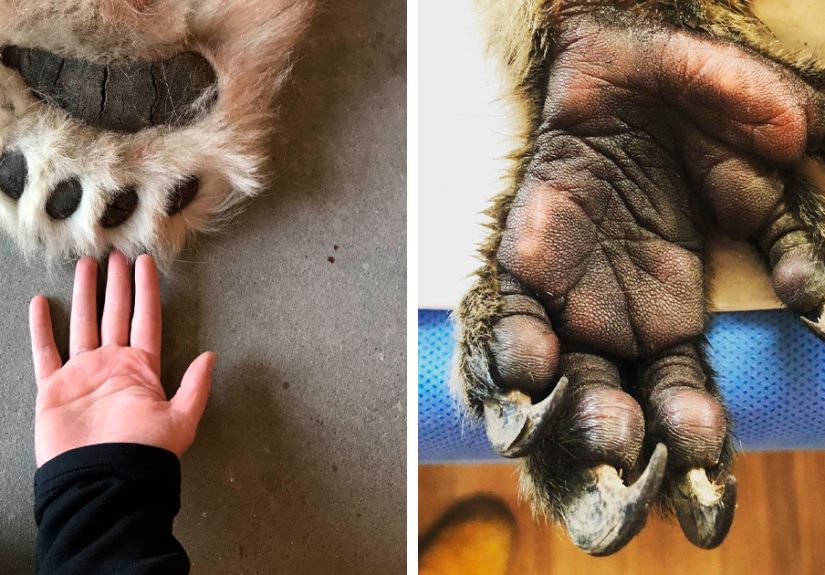
- Canada lynx (wide paws for snow travel): Lynx paws act like snowshoes, spreading weight so they can move efficiently across soft snow while prey animals flail and regret their choices.
- Arctic fox (furred soles): Arctic foxes have fur on the bottoms of their feet, improving insulation and traction on icy terrain.
- Polar bear (fur + textured pads): Polar bears add traction with roughened pad textures and also have fur on their paws for warmth and grip on ice. Basically: winter tires, but alive.
- Fennec fox (foot hair for hot sand): Desert living demands heat management. Fur on the feet helps protect from scorching sand and improves movement on loose terrain.
- Camel (broad, cushioned pads): Camels have wide, padded feet that help distribute weight on sand, reducing sink and improving stability in a place where gravity feels a bit too enthusiastic.
- Elephant (toe-walking + shock-absorbing pad): Elephants walk on their toes and have a thick pad underneath that helps absorb shock and distribute weight. Quiet for something the size of a small bus.
- Moose (splayed hooves for snow and bogs): Moose hooves spread to increase surface area, helping them move through snow and soft ground with less sinking. The forest’s biggest “all-terrain” option.
- Caribou/Reindeer (wide hooves + dewclaws): Broad hooves and additional contact points help on snow and uneven tundra, giving them stability during long migrations in brutal conditions.
Webbing, Lobes, and the Many Ways to Become a Paddle
- Duck (palmate webbing): Ducks and many waterfowl have webbing between the front toes, making an efficient paddle stroke for swimming.
- Goose (palmate webbing): Similar to ducks, geese use webbed feet for swimming, plus sturdy toes for walking on land like they own the park path.
- Cormorant (totipalmate webbing): Cormorants have webbing between all four toes, increasing paddle surface area. It’s maximum “fin” without giving up toes entirely.
- Pelican (totipalmate webbing): Like cormorants, pelicans have fully webbed toes, supporting their water lifestyle even when they look like they’re constantly judging you.
- Grebe (lobed toes): Instead of full webbing, grebes have lobes on their toes that expand on the power stroke and streamline on the recovery stroke a clever solution to the same swimming problem.
- Coot (lobed toes): Coots also use lobed toes, helping them swim while still walking on marshy surfaces without looking like they’re wearing flippers.
- Heron (semi-webbing + long toes): Wading birds that stand on mud often have toe structures that help distribute weight and reduce sinking while they hunt in shallow water.
- Jacana (super-long toes): Nicknamed “lily trotters,” jacanas have extremely long toes that spread their weight over floating vegetation, letting them walk across lily pads like it’s a solid sidewalk.
- Beaver (webbed hind feet + grooming toe): Beavers use webbed hind feet for propulsion, and they even have specialized toes for grooming their dense, waterproof fur.
- River otter (webbed feet for swimming): Otters use webbed feet and strong limbs for fast swimming, turning rivers into their personal playground.
- Platypus (webbed feet + spur): Platypuses have webbed feet for swimming; males also have a spur on the hind leg, making their “foot situation” equal parts aquatic and dramatic.
- Sea turtle (flippers): Sea turtle “feet” are flippers built for powerful strokes and long-distance travel. Great for oceans, less ideal for stairs.
Speed, Springs, and Shock Absorption
- Ostrich (two-toed powerhouse): Ostriches are famous for running speed and have a two-toed foot that supports efficient, high-speed locomotion.
- Emu (three-toed runner): Emus keep three toes, with strong legs built for distance and speed across open land.
- Cheetah (traction-friendly claws): Cheetahs have claws that provide extra grip for sprinting, functioning more like track spikes than fully retractable cat claws.
- Horse (single hoof): Horses run on one enlarged toe per foot a hoof optimized for speed and endurance on firm ground.
- Gazelle/Antelope (light, springy hooves): Many antelopes combine low weight with hoof structures suited to fast running and agile turns in open habitats.
- Giraffe (hooves + dewclaws): Giraffes carry a lot of height on relatively compact hooves, using additional structures for stability on uneven ground.
- Rhinoceros (three-toed feet): Rhinos are massive but supported by three-toed feet that help distribute weight big-body engineering that actually works.
- Kangaroo (spring-loaded hind feet): Kangaroos use long hind feet and strong tendons that store and release energy, making hopping surprisingly efficient for long distances.
- Jerboa (cartoon-long hopping feet): Jerboas have elongated hind feet that act like pogo sticks, letting them bound across desert ground quickly and unpredictably.
- Pronghorn (speed specialist hooves): Pronghorns are built for sustained speed, and their hooves support rapid, efficient travel over open terrain.
Weaponized Feet, Sensory “Hands,” and Feet That Aren’t Quite Feet
- Peregrine falcon (feet like “fists”): Peregrines can strike prey in midair with powerful feet, then catch it as it falls. It’s aerial martial arts with feathers.
- Owl (a toe that can swing for grip): Many owls can shift a toe to improve gripping while perching or grabbing prey, widening their effective hold when it counts.
- Osprey (adjustable grip for fish): Ospreys can shift toe positioning to improve grasp when grabbing slippery prey from water, maximizing control on a wriggly target.
- Secretary bird (stomping striker): Secretary birds use powerful legs and feet to stomp prey, turning “walking” hardware into a hunting weapon.
- Cassowary (dagger-like inner claw): Cassowaries have a prominent inner toe claw that can be several inches long a serious defensive tool attached to a bird that already looks like a dinosaur extra.
- Basilisk lizard (toe fringes for running on water): Basilisks have long toes with fringes that increase surface area; they can sprint across water briefly by slapping and churning fast enough to stay above the surface.
- Water strider (hydrophobic “water-walking” legs): Water striders use long, water-repelling legs and surface tension to stay on top of water basically skating on physics.
- Sea star (hydraulic tube feet): Sea stars use tube feet powered by a water vascular system, allowing them to grip surfaces, move, and handle food with a network of tiny suction-cup-like structures.
- Octopus (arm “walking” with suction cups): Octopuses can locomote by crawling and “walking” on arms, using suckers for grip and control on rocks, reefs, and the seafloor. Not technically feet absolutely a flex.
So What Makes These Feet “Unique,” Really?
The pattern is clear: unique animal feet are rarely about being “weird” for style points. They’re about solving
a specific locomotion problem better than the competition. Lobed toes solve paddling with less drag.
Toe fringes solve running on water or moving on loose surfaces. Textured pads solve traction on ice.
And tube feet solve an entirely different question: “What if your foot ran on hydraulics?”
Next time you see tracks in snow, webbed prints at a muddy shoreline, or a lizard glued to a wall,
you’re looking at a biography written in footprints a record of survival strategies shaped by habitat,
predators, and the hard math of energy and grip.
of “Feet-First” Experiences to Make This Topic Stick
Once you start paying attention to animal feet, you can’t unsee them. It begins innocently maybe you notice
duck tracks like tiny tridents at the edge of a pond and then suddenly you’re the person crouching in the snow
whispering, “Okay, that’s either a hare… or a very small person wearing novelty slippers.” (It’s usually a hare.)
One of the easiest “field experiences” is track-watching. After fresh snow, look for a trail that seems to float
rather than sink: that’s your brain getting a live demo of snowshoe-style feet. Hares and lynx leave prints that
spread weight, and the difference is obvious when you compare them to the deeper puncture marks of heavier animals
without that surface-area advantage. It’s like comparing a snowshoe to a stiletto heel one glides, one regrets.
On wet surfaces, the experience flips: now traction is a water-management problem. Watch a tree frog cling to a
damp leaf and you’ll understand why engineers study toe pad patterns. The “wow” moment isn’t just that it sticks
it’s that it sticks where suction cups fail, because living pads can deform, drain, and maintain contact.
That’s the kind of design that makes you stare at your own shoes and feel personally betrayed.
Coastal tide pools deliver the most delightful “feet aren’t always feet” revelation. Sea stars don’t move like
they’re stepping they move like they’re operating hundreds of tiny hydraulic pistons. When you see one
inch along rock, you’re watching a slow-motion system of tube feet gripping and releasing. It’s oddly mesmerizing,
like a living piece of industrial equipment that decided to become a sea creature.
And then there are the moments that reset your expectations of speed and power. Seeing video of a basilisk
sprinting across water makes you rethink what a “foot” can do in a fraction of a second: slap, spread, trap air,
repeat. Meanwhile, a peregrine falcon turns feet into a midair strike system not just grabbing, but delivering
force with precision. Different animals, different physics, same theme: feet are never just feet.
The most fun part of all this is realizing you don’t need a safari to appreciate the animal kingdom’s wildest
footwear. A pond, a park, a muddy shoreline, a snowy sidewalk, even the occasional fly doing push-ups on your
window they’re all reminders that evolution is the ultimate product designer. It prototypes endlessly, tests
in the harshest environments, and keeps the “features” that survive. And yes, sometimes those features look like
dinosaur claws, suction-cup hydraulics, or nature’s version of duct tape. Honestly? Respect.