Table of Contents >> Show >> Hide
- Trend #1: Texture Takes the Lead (Loop, High-Low, and “Touch-Me” Surfaces)
- Trend #2: Patterned Carpet Is Having a Glow-Up (Subtle Stripes to Bold Geometrics)
- Trend #3: Warm Neutrals and Earthy Colors Replace “Rental Beige”
- Trend #4: Performance Carpets Built for Real Homes (Stain Resistance, Spill Barriers, and Pet-Friendly Tech)
- Trend #5: Sustainability Gets Serious (Wool, Natural Fibers, and Recycled Content)
- Trend #6: Modular Carpet and Carpet Tiles Move Beyond Commercial Spaces
- Quick Reality Check: Why Carpet Still Wins in the Comfort Category
- Conclusion: Carpet Is Backand It’s Not Apologizing
- Real-World Experiences: What People Notice After Choosing Modern Carpet (and What They Wish They’d Known)
Carpet has had a wildly dramatic public journey: beloved, banished, and nowplot twistback in the spotlight.
And it’s not because we all suddenly miss vacuum lines like they’re a form of modern art (although… respect).
Carpet is evolving in ways that make it smarter, cleaner-looking, and more design-forward than the wall-to-wall
beige “starter apartment special” many people still picture.
Today’s carpet is all about texture you can see, patterns that behave like décor,
and materials that keep up with real lifekids, pets, snacks, and the occasional “I’ll just carry
this coffee across the room” moment. If you’ve been team hard-surface-only for years, these trends might make you
reconsider… or at least stop saying “carpet is dead” at parties. (Let carpet live. Carpet is trying.)
Trend #1: Texture Takes the Lead (Loop, High-Low, and “Touch-Me” Surfaces)
The biggest shift in carpet design is that it’s no longer trying to be invisible. Texture is the main character now:
loop piles, multi-level loops, cut-and-loop patterns, and high-low designs that add dimension even in a single color.
This is the carpet equivalent of a great haircutsame person, way more personality.
Why it proves carpet is better than ever
- Visual depth without busy prints: Texture gives a room interest without screaming for attention.
- Better at hiding everyday life: Subtle texture helps camouflage footprints, vacuum marks, and the reality of living indoors.
- Design flexibility: Textured carpets can look coastal, modern, rustic, or tailored depending on fiber and color.
Where it works best
Try textured carpet in living rooms, bedrooms, and stairs. Textural stripe effects (especially with loop pile)
can also help visually guide a spacegreat for long rooms and hallways that need a little “architectural coaching.”
Trend #2: Patterned Carpet Is Having a Glow-Up (Subtle Stripes to Bold Geometrics)
Pattern used to mean one of two things: “formal hotel corridor” or “my aunt’s living room in 1997.”
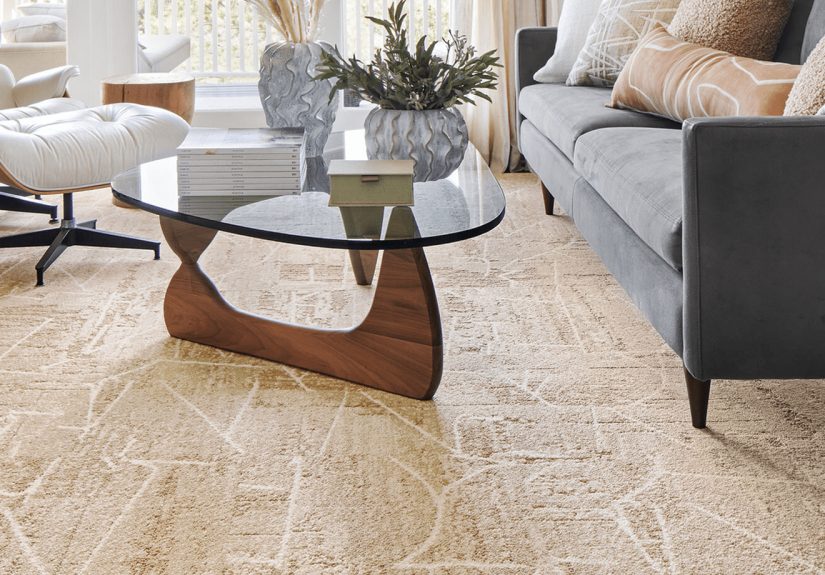
The new approach is cleaner, more intentional, and often more subtletone-on-tone patterns, small-scale geometrics,
and soft linear designs that read sophisticated instead of chaotic.
Why it proves carpet is better than ever
- Carpet becomes décor: A patterned floor can anchor a room the way a statement rug doesonly bigger and quieter.
- Camouflage superpower: Patterns help disguise crumbs, pet hair (hello, light-and-dark mix), and minor wear.
- Staircases finally get style points: Runners and patterned installs turn stairs into a design moment instead of a squeaky inconvenience.
Specific examples to steal
- Textural stripes in a neutral color for modern homes.
- Small geometrics for offices and guest rooms (structured, not loud).
- Bold stair runners to add personality without committing to full-room pattern.
Trend #3: Warm Neutrals and Earthy Colors Replace “Rental Beige”
Carpet colors are trending warmer, richer, and more nature-inspiredthink oatmeal, sand, clay, taupe, caramel,
and soft grays with a brown undertone (the “mushroom” family). Even when carpet stays neutral, it’s less sterile
and more grounded. In other words: neutrals that look like they’ve eaten a vegetable.
Why it proves carpet is better than ever
- More forgiving than cool gray: Warm neutrals hide dust and lint better and feel cozier under most lighting.
- Pairs with modern wood tones: A warmer carpet complements today’s popular oak, walnut, and medium wood finishes.
- Supports “quiet luxury” interiors: It reads elevated without trying too hard.
How to pick a color that won’t haunt you later
Choose a shade that complements your fixed elements (trim, paint, large furniture). Then test it in morning and
evening light. If your carpet sample looks different every time you walk past it, congratulations: you’ve discovered
undertones. (They are sneaky. Proceed with caution.)
Trend #4: Performance Carpets Built for Real Homes (Stain Resistance, Spill Barriers, and Pet-Friendly Tech)
This is the trend that converts skeptics. Modern carpet technology isn’t just marketingmany carpets now use fibers
and backings designed to handle stains, traffic, and chaos more gracefully. You’ll see a lot of talk around solution-dyed
fibers (color built into the fiber), improved stain treatments, and backings that help reduce spill seep-through.
Why it proves carpet is better than ever
- Easier cleanup: Better stain resistance means more “blot and move on,” less “why do we own white rugs?”
- Fade resistance: Many modern fibers are designed to resist sunlight-related color change.
- More confidence in busy rooms: Family rooms, playrooms, and bedrooms benefit from softness without constant worry.
What to look for (without falling for hype)
- Fiber type: Nylon is known for durability; polyester (including recycled PET) is known for softness and stain resistance; newer fibers (like triexta) are marketed for a balance of durability and stain resistance.
- Construction matters: Dense carpet (and the right cushion) often performs better than “extra plush” with low density.
- Backing features: Some product lines emphasize spill barriers and moisture controlespecially helpful for pet owners.
Practical note: no carpet is magic. If you regularly host a spaghetti festival in your living room, choose a carpet
that is low-to-medium pile, textured, and in a color family that doesn’t betray you.
Trend #5: Sustainability Gets Serious (Wool, Natural Fibers, and Recycled Content)
Eco-friendly carpet used to be a niche request. Now it’s a mainstream expectation. Many homeowners want materials that
feel better, last longer, and align with lower-impact manufacturing. That shows up as increased interest in wool,
natural-fiber looks (like sisal and jute-inspired textures), and carpets made with recycled content (like PET from plastic bottles).
Why it proves carpet is better than ever
- More options that look upscale: Wool and natural textures can read high-end and timeless.
- Recycled-content carpets are common now: Especially in polyester categories, where recycled PET is widely used.
- Design meets values: Homeowners can choose softness without feeling like they ignored sustainability entirely.
Where sustainable styles shine
Natural-texture looks are great for bedrooms, home offices, and low-mess areas. If you love the organic look of sisal
but fear stains (a fair fear), consider a carpet with that same woven vibe in a more forgiving performance fiber.
Trend #6: Modular Carpet and Carpet Tiles Move Beyond Commercial Spaces
Carpet tiles aren’t just for offices anymore. Homeowners are using modular carpet for basements, playrooms, craft spaces,
home gyms, and even home officesanywhere you want comfort and sound absorption, plus the option to replace a damaged section
without redoing the whole floor.
Why it proves carpet is better than ever
- Replaceability: One bad spot doesn’t mean replacing the whole room.
- DIY-friendly potential: Many systems are designed for simpler installation than traditional broadloom.
- Custom layouts: Mix colors, create borders, or do a subtle checker effect without committing to a loud pattern.
Best places to use carpet tiles at home
- Basements: Comfortable and often easier to manage if a small area gets damp or dirty.
- Home offices: Softer under chair mats, quieter for calls, and forgiving if you rearrange furniture.
- Kids’ zones: Easier to replace a section after a craft project goes “abstract.”
Quick Reality Check: Why Carpet Still Wins in the Comfort Category
Trends are fun, but carpet’s comeback is also practical. Carpet can help a space feel warmer, quieter, and more comfortableespecially
in bedrooms and upstairs rooms where noise travel is a real issue. And pairing carpet with the right pad improves the feel underfoot and can
extend the life of the carpet. If hard flooring is the sleek minimalist friend, carpet is the cozy one who always has snacks and a blanket.
Pro tip: Don’t cheap out on the cushion
Carpet padding affects comfort, insulation, and wear. The right pad can make a “good” carpet feel premiumand help it look better longer.
Think of it as the mattress under the sheets: you’ll notice the difference every day.
Conclusion: Carpet Is Backand It’s Not Apologizing
The new era of carpet is design-driven and lifestyle-friendly: textured surfaces that add dimension, patterns that look intentional,
warmer neutrals that feel current, performance features that survive everyday messes, sustainability options that aren’t ugly, and modular formats
that make maintenance less dramatic.
If you want a home that feels softer, quieter, and more invitingwithout sacrificing stylemodern carpet is absolutely worth another look.
Just choose the right construction for the room, pick a color that plays nicely with your lighting, and remember: the best carpet trend is the one
that makes you happy to walk barefoot in your own house.
Real-World Experiences: What People Notice After Choosing Modern Carpet (and What They Wish They’d Known)
Homeowners who “go carpet again” often start with one room as a testusually a bedroom, a home office, or an upstairs hallway that echoes like a drum.
The first reaction is almost always physical: the room feels warmer and quieter immediately. People describe it as the difference between talking in a
cozy café versus a tiled subway station. If your house has a lot of hard surfaces, carpet can be the one change that makes the whole home feel less
“bouncy” and more settled.
Another common experience: modern carpet doesn’t have to look like carpet. Textured stylesespecially loop or cut-and-loopread more like fabric than
flooring. People who feared the “flat, fuzzy beige” look are surprised by how tailored a tone-on-tone pattern can feel. It’s also where many learn the
power of lighting: the same warm-neutral carpet sample can look creamy in daylight and slightly taupe at night. The lesson: always test a large sample
in the actual room, because your overhead lights have opinions.
Families with kids and pets tend to report a different kind of relief: fewer worries about falls and fewer “why is the whole house so loud?” moments.
Carpet isn’t a substitute for supervision (obviously), but it can make play spaces feel safer and more comfortable. Pet owners often prioritize texture
and color mix over pure “plush.” A slightly textured carpet with color variation can hide pet hair better than a smooth, single-tone style. People also
notice that newer performance carpets can handle everyday messes betterespecially when they keep a simple routine: quick blotting, regular vacuuming,
and the occasional deep clean before the carpet starts telling secrets.
The biggest “wish I’d known” is almost always about the underlay. Many homeowners focus on the carpet they can see and forget the pad underneath. Then
they walk on a friend’s carpet that feels like a luxury hotel and realize the difference is often the cushion (and the installer quality). A good pad can
make a medium-priced carpet feel dramatically better and can help reduce premature wear in high-traffic paths. People also learn that the softest carpet
isn’t always the best choice for every room. Super plush can look amazing in a bedroom, but a denser, more textured style often performs better in hallways
or family rooms where foot traffic is constant.
Finally, there’s the design experience: patterned carpet or a stair runner becomes a conversation piece. Homeowners who were nervous about “commitment”
often say they wish they’d trusted their taste sooner. The modern approach is to keep walls and big furniture relatively calm, then let the floor add personality.
And if commitment still makes you sweat, carpet tiles are often described as the “gateway carpet”you get comfort and softness, plus the ability to replace
sections later. In short: people don’t just like how modern carpet looksthey like how it makes the home feel. And honestly, that’s the whole point of flooring.