Table of Contents >> Show >> Hide
- The Longevity Logic: Why These Moves Matter
- Before You Start: A 60-Second Safety Check
- Exercise 1: Brisk Walking
- Exercise 2: Interval Walk (A.K.A. “Walking, But With Purpose”)
- Exercise 3: Sit-to-Stand Squats (Chair Squats)
- Exercise 4: Push-Ups (Wall, Counter, or Floor)
- Exercise 5: Plank (Your Spine’s Best Friend)
- Exercise 6: Single-Leg Balance (Plus Heel-to-Toe Walk)
- Put It Together: A No-Gym Weekly Plan
- Progress Without Burning Out
- Real-World Experience (About ): What It’s Like to Actually Do This
- Conclusion
- SEO Tags
If your gym membership has been “active” mostly in a spiritual sense (you think about going… does that count as cardio?),
you’re in luck. The best exercises for healthy aging and longevity are the ones you’ll actually doconsistentlywithout needing
fancy machines, a perfect schedule, or a motivational playlist that sounds like a caffeinated dolphin.
The science is refreshingly unglamorous: regular physical activityespecially a mix of aerobic movement, strength work, and balance
trainingis strongly linked with lower risk of early death and better heart, brain, and metabolic health. You don’t need marathon
ambitions. You need repeatable, low-friction habits. Below are six no-gym exercises that cover the big rocks: stamina, muscle,
core stability, and fall-prevention balance. Do them at home, outside, in a hallway, or next to your kitchen while something
is simmering (you’ll be shocked how productive “waiting for water to boil” can get).
The Longevity Logic: Why These Moves Matter
Longevity isn’t about one magic moveit’s about protecting the systems that tend to break down first: cardiovascular fitness,
muscle mass and strength, and stability/balance. Aerobic activity supports your heart and blood vessels and improves the way your
body uses oxygen. Strength work preserves muscle and supports joints (and makes daily life easierlike carrying groceries without
feeling personally attacked). Balance training lowers fall risk, which matters more with age than most people realize.
A practical target many health organizations agree on is about 150 minutes per week of moderate-intensity aerobic activity
(or the vigorous equivalent), plus muscle-strengthening work at least twice a weekespecially important for older adults, who
also benefit from dedicated balance practice. If those numbers sound intimidating, remember: you don’t have to start there. You
just have to start.
Before You Start: A 60-Second Safety Check
This is general fitness information, not medical advice. If you have chest pain, unexplained shortness of breath, dizziness,
a recent injury, or a condition your clinician has asked you to monitor, check in with a healthcare professional before changing
your routine. Otherwise, use this simple intensity guide:
- Moderate intensity: You can talk, but you can’t sing (sorry, shower-concert people).
- Vigorous intensity: You can say only a few words before needing a breath.
- Pain rule: Muscle effort is fine; sharp pain is not. Stop and modify if something feels “wrong.”
Exercise 1: Brisk Walking
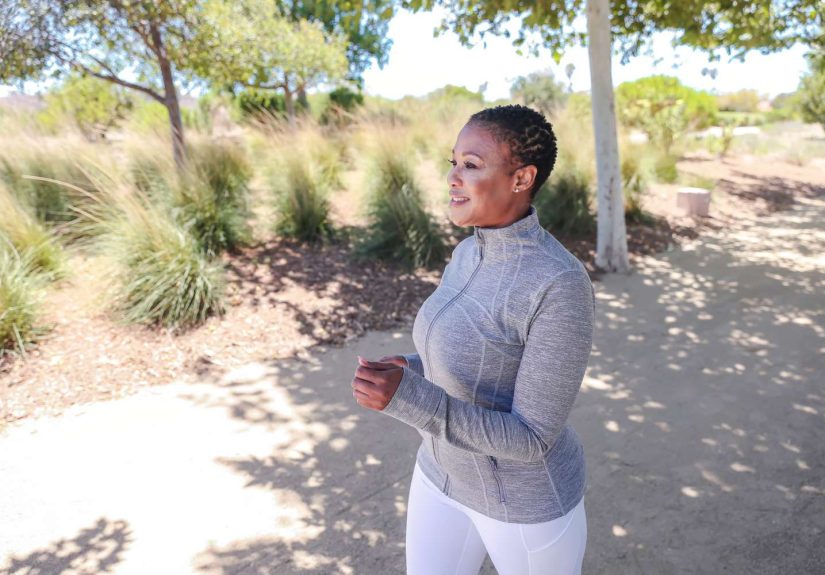
Walking is the most underrated “longevity drug” that doesn’t require a prescription. Done briskly, it’s a true aerobic workout:
heart rate up, breathing faster, sweat optional (depending on weather, genetics, and how dramatic your body is).
How to do it
- Stand tall, shoulders relaxed, eyes forward.
- Walk fast enough that you feel warm and slightly out of breath.
- Let your arms swing naturallyfree core training, included.
Longevity-friendly dose
Start with 10 minutes a day and build toward 30 minutes on most days. If 30 minutes feels like a lot, split it into
three 10-minute walks. Consistency beats perfection.
Make it better without making it complicated
- Progression: Add 2–5 minutes per walk each week.
- Intensity boost: Add short “pickups” (see Exercise 2 for interval structure).
- Joint-friendly: Choose flatter routes and supportive shoes if your knees/hips complain.
Exercise 2: Interval Walk (A.K.A. “Walking, But With Purpose”)
Interval training sounds like something people do while yelling “LET’S GO!” into mirrors. In reality, it’s just alternating
easier and harder effortsand it can be done with walking. Intervals are efficient for improving fitness, and you can scale them
to your ability.
How to do it
- Warm up: 3–5 minutes easy pace.
- Then alternate: 30–60 seconds fast + 60–120 seconds easy.
- Repeat 6–10 rounds.
- Cool down: 3–5 minutes easy pace.
What “fast” means here
“Fast” is relative. For you, it might be power-walking. For someone else, it might be a light jog. The goal is to feel like you’re
workingbreathing noticeably harderwithout feeling like you’re being chased by your email inbox.
Common mistake
Going too hard, too soon. Keep the fast parts challenging but repeatable. You should finish feeling accomplishednot flattened.
Exercise 3: Sit-to-Stand Squats (Chair Squats)
If you do only one strength move, make it this: the sit-to-stand. It trains the pattern you use constantlygetting up from a chair,
the toilet, the couch, and that suspiciously low patio seat your friend swears is “comfortable.” Strong legs are independence.
How to do it
- Sit on a sturdy chair. Feet hip-width, slightly behind knees.
- Lean forward a bit, brace your midsection, stand up.
- Sit back down slowly (the slow part is the secret sauce).
Sets and reps
- Start: 2 sets of 8–10 reps, 2–3 times per week.
- Progress: Work up to 3 sets of 10–15 reps.
Make it easier or harder
- Easier: Use a slightly higher chair or push lightly off your thighs.
- Harder: Lower the chair height, slow the lowering phase to 3 seconds, or pause 1 second at the bottom.
Exercise 4: Push-Ups (Wall, Counter, or Floor)
Push-ups are a “small space, big payoff” move: chest, shoulders, triceps, and core stability. And you don’t have to start on the
floor unless you enjoy unnecessary suffering.
Choose your level
- Wall push-up: Hands on wall, body straight, step feet back.
- Counter/bench push-up: Hands on sturdy counter, more load than wall.
- Floor push-up (modified or full): Knees down to start if needed.
Form checklist
- Hands slightly wider than shoulders.
- Body in a straight line (no “saggy hammock” midsection).
- Lower under control, press back up.
Sets and reps
2–3 sets of 6–12 reps, 2–3 times per week. Stop 1–2 reps before your form collapses. Your joints will thank you.
Exercise 5: Plank (Your Spine’s Best Friend)
The plank is not about proving you can suffer for 4 minutes while questioning your life choices. It’s about building core endurance
that supports posture, back health, and safe strength training. Think: steady, controlled, and repeatable.
How to do it
- Forearm plank: Elbows under shoulders, legs straight, squeeze glutes gently.
- High plank: Hands under shoulders (like the top of a push-up).
- Modified plank: Knees down, hips forward, body straight from head to knees.
How long?
- Start with 3 rounds of 15–25 seconds.
- Build toward 3 rounds of 30–45 seconds.
Make it useful for daily life
Keep breathing and keep your ribs “down” (avoid flaring). If your lower back feels cranky, shorten the hold or use the modified version.
Quality beats duration.
Exercise 6: Single-Leg Balance (Plus Heel-to-Toe Walk)
Balance is a longevity skill because it helps prevent fallsone of the fastest ways for health and independence to go sideways.
The good news: balance improves with practice, and the training is ridiculously accessible.
Single-leg stand
- Stand near a counter or sturdy chair for safety.
- Lift one foot slightly off the floor. Hold 10–30 seconds.
- Switch sides. Repeat 2–4 times per side.
Heel-to-toe walk (tightrope walk)
- Walk forward placing the heel of your front foot directly in front of the toes of your back foot.
- Take 10–20 controlled steps. Turn around and repeat.
Progressions
- Turn your head slowly side-to-side while balancing.
- Try balancing with a slightly bent knee (more real-world useful).
- Reduce hand support gradually (safety first).
Put It Together: A No-Gym Weekly Plan
Here’s a simple structure that hits aerobic fitness, strength, and balancewithout turning your calendar into a training camp.
Adjust the days to fit your life.
Option A: Beginner-friendly (about 20–30 minutes most days)
- Mon: Brisk walk 15–20 min + balance 5 min
- Tue: Strength circuit (sit-to-stand, push-ups, plank) 20 min
- Wed: Brisk walk 20–30 min
- Thu: Balance 5–8 min + easy walk 10–15 min
- Fri: Strength circuit 20 min
- Sat: Interval walk 15–25 min
- Sun: Easy walk or active rest (gardening, errands, a long stroll)
Option B: “I’m busy, but I’m not negotiating with my future self” (3 days + mini-walks)
- 3 days/week: 25–35 minutes total: 10–15 minutes brisk walk + strength circuit + 3 minutes balance
- Most days: One extra 8–12 minute walk (after meals works great)
Progress Without Burning Out
- Add time before intensity: First make walks longer, then make parts faster.
- Use the “2-for-2” rule: If you can do 2 extra reps for 2 workouts in a row, upgrade slightly.
- Make it automatic: Pair walking with a daily cuemorning coffee, lunch break, or an after-dinner loop.
- Track something tiny: Minutes walked, number of chair stands, or plank seconds. Small wins compound.
Real-World Experience (About ): What It’s Like to Actually Do This
The first week is mostly a negotiation with your own expectations. Ten minutes of brisk walking can feel “too easy” until you do it
three days in a row and realize your legs are having a private conversation about it. The sneaky part is how quickly your body starts
cooperating once you stop trying to win the Olympics and start trying to win Tuesday.
A common experience with brisk walking is that the barrier is rarely fitnessit’s friction. Shoes. Weather. Time. The moment you
make it stupid-easy (keep shoes by the door, pick a simple route, set a 12-minute timer), it becomes a repeatable ritual. Many people
notice their mood improves before their waistline changes, which is great because mood is what keeps you showing up. Around week two,
you may also catch yourself walking faster without tryingyour default pace quietly upgrades.
Strength work feels different. Sit-to-stands are humbling in the most useful way: you learn exactly where your legs are today, and you
get a clear “receipt” of progress. People often report that daily tasks get easier firststairs don’t feel like a moral failing, getting
up from low seats feels more stable, and carrying groceries is less of a forearm meltdown. Push-ups follow a similar arc: wall push-ups
become counter push-ups, and suddenly you have an actual ladder to climb instead of a single “I can’t do push-ups” label.
Planks are where you discover the difference between “hard” and “useful.” The useful version isn’t a long hold; it’s a clean hold.
In real life, people feel this as better posture at the end of the day and fewer random “my back feels tired” moments. The win isn’t
getting shreddedit’s getting sturdy.
Balance training is the quiet hero. At first, standing on one leg can feel oddly difficult (which is exactly why it matters). The most
common feedback after a few weeks is a subtle sense of steadinessless wobble while stepping into pants, more confidence on uneven ground,
and fewer “whoa” moments when turning quickly. It’s not flashy, but it’s the kind of training you feel when you trip and don’t fall.
The biggest mindset shift is realizing that longevity training is mostly boredom-proofing. You build a routine that survives bad days.
Some days are full workouts; some days are “I walked 12 minutes and did two sets of chair stands.” That still counts. Over months, this
approach tends to create a new identity: you become someone who moveswithout needing a special place, a special outfit, or a special
mood. And that consistency is where the health benefits live.
Conclusion
If you want a no-gym plan that supports living longer and staying capable, think in three lanes: walk for your heart,
strengthen for your independence, and balance for your safety. Brisk walking and intervals build aerobic fitness.
Sit-to-stands and push-ups protect muscle and function. Planks train core endurance that supports everything else. Single-leg balance and
heel-to-toe walking reduce fall risk and build confidence. Start small, repeat often, and let the boring consistency do the impressive work.