Table of Contents >> Show >> Hide
- Why this moment feels like winning a tiny lottery
- The not-so-fun truth: speeding is a big deal (even when it feels normal)
- So why do speed limits vary so much?
- Why a cop on the shoulder changes driver behavior instantly
- How to create more #797 moments (without white-knuckling your steering wheel)
- The deeper awesomeness: a tiny moment that points to a healthier driving culture
- 500+ words of relatable “#797” experiences
- Conclusion
There are big joysweddings, promotions, that first bite of a warm donut. And then there are micro-joys: the tiny,
everyday wins that make you feel like the universe just gave you a subtle thumbs-up.
#797 (from the “1000 Awesome Things” universe) belongs in the micro-joy hall of fame:
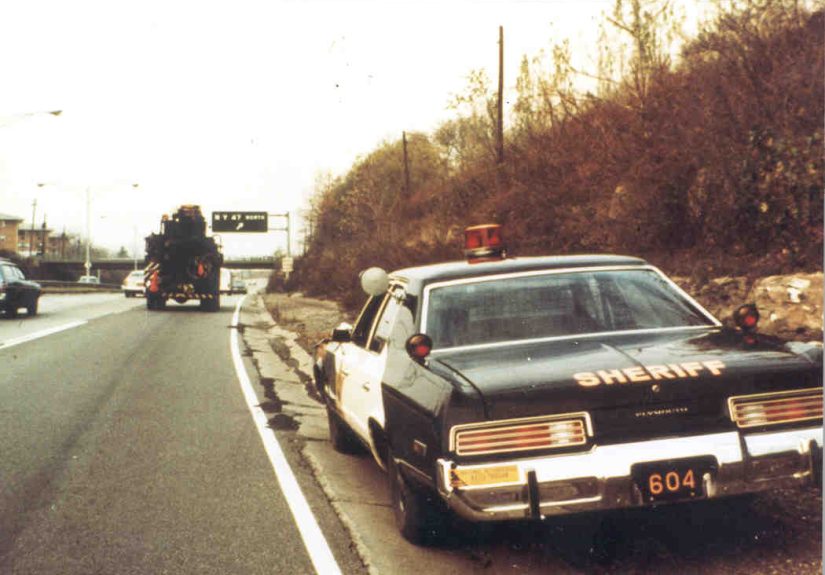
you spot a police car parked on the shoulder and your body does the full internal alarm-system routineonly to
realize you’re already going the speed limit.
The fear spike? Instant. The relief? Immediate. The smug little “I am a responsible citizen” glow? Unreasonably
satisfying. It’s a moment so small you’ll forget it by dinner, yet so powerful it can reset your mood in under
three seconds. Let’s unpack why it feels so goodand how that feeling connects to real traffic safety, speed
psychology, and the everyday choices that keep roads calmer for everyone.
Why this moment feels like winning a tiny lottery
Your brain loves a quick “threat → safety” plot twist
Humans are built for pattern recognition and fast threat assessment. When something looks like “danger,” your body
prepares for action. It doesn’t matter that you’re not wrestling a bearyour nervous system reacts first and asks
questions later.
Seeing a cop triggers uncertainty: “Was I speeding?” “Did I miss a sign?” “Is my brake light out?” Even if you’re
doing everything right, you may still feel that jolt because your brain interprets the situation as
high consequence. That’s the classic stress response: heightened alertness, a surge of adrenaline, and an
urge to correct your behavior instantly (usually by hovering your foot dramatically over the brake).
Then comes the plot twist: you glance down andboomspeed limit. Suddenly the “threat” dissolves, and your system
swings from tension to relief. That rapid shift is satisfying in the same way it’s satisfying to realize you left
your keys in your pocket after you’ve patted every jacket you own. Crisis averted.
Relief feels extra good when the stakes are real
The stakes are real because speeding isn’t just “a little oops.” Speed affects how much time you have to react,
how long it takes to stop, and how severe a crash becomes. Even modest speed increases can substantially increase
crash energy. So when you realize you’re already compliant, your relief isn’t only about avoiding a ticketit’s
also the quiet confirmation that you’re not accidentally making a risky situation worse.
The not-so-fun truth: speeding is a big deal (even when it feels normal)
Speed changes the math of mistakes
Driving is full of tiny decisions: the car ahead brakes, a light changes, a pedestrian steps off the curb, a tire
hits gravel. At lower speeds, you have more time and more distance to handle surprises. At higher speeds, those
buffers shrink. And when the buffer disappears, “minor surprise” can turn into “major problem.”
Speeding has been involved in about a third of U.S. traffic fatalities for decades, and recent data continues to
show a significant share of deaths in speed-related crashes. This doesn’t mean speed is the only factor in every
crashbut it often makes crashes more likely and more severe.
Why speeding feels “normal” anyway
Here’s the tricky part: speeding can feel like the social default. Many drivers think of “speeding” as only
counting if you’re going way over, or if conditions are “perfect,” or if “everyone else is doing it.”
That social norm is powerful. When the norm is “a little over is fine,” the speed limit can start to feel like a
suggestion instead of a boundary.
But physics is famously unimpressed by group consensus.
So why do speed limits vary so much?
Speed limits are supposed to match the road’s purpose and risk
Speed limits aren’t just about “how fast your car can go.” They’re meant to balance mobility (getting people where
they need to go) with safety (reducing the chances that a mistake becomes fatal).
Roads with lots of driveways, crosswalks, parked cars, cyclists, and turning traffic have more conflict points.
On those roads, lower speeds reduce both crash risk and crash severity. On controlled-access highways, where
conflicts are fewer and design features are built for higher speeds, limits are often higher.
The 85th percentile ideaand why it’s being debated
In many places, speed limits have historically been influenced by an “engineering study” that includes measuring
how fast people actually drive under free-flow conditions, then using metrics like the 85th percentile
speed (the speed at or below which 85% of drivers travel).
Supporters argue it reflects real behavior and can reduce risky speed differences between drivers. Critics argue
it can be less appropriate on streets with lots of pedestrians and cyclists, where the “safe speed” isn’t simply
what most drivers chooseit’s what the human body can tolerate in a crash and what the street environment demands.
Newer guidance and safety programs increasingly emphasize context: crash history, land use, and vulnerable road
users, not just driver behavior.
The bigger point: speed limits are not random. They reflect a mix of road design, local conditions, and safety
goalseven if the sign sometimes feels like it was posted by a committee of sleepy squirrels.
Why a cop on the shoulder changes driver behavior instantly
Deterrence is real (and visibility matters)
From a behavior standpoint, visible enforcement works like a reminderan immediate signal that rules are being
actively monitored. Traffic safety programs often use “high visibility enforcement,” pairing enforcement with
public awareness so drivers voluntarily comply more often.
Even without a stop, the simple presence of law enforcement can reduce speeds and tighten up risky behaviors,
especially in higher-risk areas like work zones or transition zones where speed changes quickly.
But the best outcome is… no drama at all
The truly “awesome” part of #797 is that it’s a non-event. Nobody gets pulled over. Nobody has a close call. You
just continue on your way, calm and legal, like the protagonist in a very soothing movie where the main conflict is
choosing a podcast episode.
How to create more #797 moments (without white-knuckling your steering wheel)
1) Make the speed limit your default, not your backup plan
Many people drive like this: “I’ll go with the flow until I see enforcement, then I’ll behave.” The problem is that
enforcement isn’t everywhere, and safety isn’t only about tickets. Flip the script: let the speed limit be your
baseline, and let “going faster” be the rare exception you don’t casually slide into.
2) Use simple tools that reduce “speed creep”
- Cruise control on long, steady roads (when conditions allow).
- Speed alerts on your vehicle or navigation app if available.
- Check your speed after transitions (exits, downhill stretches, fresh pavementclassic speed-creep zones).
3) Treat “too fast for conditions” like speeding (because it is)
One of the most overlooked truths: you can be going the posted limit and still be going too fast for conditions.
Rain, fog, glare, night driving, work zones, and heavy traffic all shrink your reaction window. If your gut says,
“This feels fast,” it probably is.
4) Give yourself time so you don’t drive like every minute is a hostage situation
A huge amount of speeding is emotional math: “I’m late, so I’ll borrow time from the speed limit.” But speeding
often saves less time than people assume, especially in city traffic with stoplights. Leaving a little earlier is
the cheapest stress-reduction strategy you’ll ever buy.
5) Reframe “keeping up with traffic”
Driving safely includes being predictable, but “predictable” doesn’t mean “fast.” If traffic is moving faster than
the limit, you can stay right, keep a safe following distance, and focus on smooth inputs. Calm driving often
influences the environment more than we thinkespecially when one steady driver discourages tailgating and
chain-reaction braking.
The deeper awesomeness: a tiny moment that points to a healthier driving culture
#797 isn’t really about cops. It’s about the rare, refreshing feeling that you’re aligned with the rules, the road,
and your own intentions. It’s a micro-moment of “I’m not part of the problem today.”
On a national scale, traffic safety organizations emphasize speed management because it’s one of the most direct
levers we have for reducing severe injuries and deaths. That includes engineering changes (like better signage and
road design), education, and enforcement working togethernot just hoping everyone wakes up one morning and decides
to be perfect.
For an individual driver, the takeaway is surprisingly simple: when you drive at a reasonable speed for the road
and conditions, you don’t just avoid ticketsyou buy yourself reaction time, protect the people around you, and
make “awesome” moments like #797 more common.
500+ words of relatable “#797” experiences
Most people can picture the scene instantly, even if they don’t remember the last time it happened. You’re driving
along, minding your business, and then you see it: that unmistakable silhouettepatrol car parked at an angle, maybe
a set of headlights, maybe the quiet glow of a light bar. Your body reacts before your brain finishes the sentence.
First comes the reflexive scan: speedometer, mirrors, dashboard. You suddenly become a vehicle inspector, a law
student, and an amateur meteorologist all at once. “Am I drifting over the line?” “Is my registration up to date?”
“Are my headlights on?” “Is my taillight doing that thing where it works… emotionally… but not electrically?”
This is the moment your posture changes. You sit up straighter like the seatbelt just told you it’s disappointed in
you.
Then comes the realization. You’re not going 10 over. You’re not going 5 over. You’re going exactly the limit.
Suddenly, your stress turns into this quiet internal celebrationlike you just passed a pop quiz you didn’t study
for because, plot twist, it was open book and the book was your own basic responsibility.
The best part is how your brain narrates it. You don’t just think, “I’m compliant.” You think, “Look at me, a
model citizen. A pillar of the community. A person who definitely returns shopping carts.”
You might even get a tiny urge to wave, which you wisely suppress because waving at law enforcement from a moving
vehicle can send mixed messages. Instead, you keep your eyes forward and enjoy the warm glow of not doing anything
wrong.
This moment hits different depending on the setting. On a road trip, it feels like your future self just gave you a
high-five for using cruise control. In a new town with unfamiliar signage, it’s a small miraclelike you guessed the
right answer on “Is it 25 here or 35?” without the help of a local. In a school zone, it feels genuinely good in a
deeper way, because the stakes are so obviously human. You’re not just avoiding troubleyou’re protecting someone’s
kid, someone’s neighbor, someone’s morning.
It also reveals how easy “speed creep” is. Many people realize in that instant that they don’t always know their
speed with perfect accuracy. The car feels smooth. The road feels open. The music is good. Before you know it,
you’ve drifted above the limit without a single dramatic decision. #797 is a reminder that “I didn’t mean to” is
not a safety plan. The awesome feeling comes from noticing you’re within the boundaryproof you can drive with
intention, not just momentum.
And sometimes, it’s not even about you. You see the cop, you check your speed, and then you notice the driver behind
you suddenly stops tailgating like you’re towing their entire family’s schedule. The whole traffic ecosystem calms
down for a few seconds. It’s as if the road collectively remembers: “Oh right, we’re all sharing space in two-ton
machines.”
That’s the sneaky beauty of #797. It’s a private moment of relief that also hints at something public: calmer speeds
make calmer roads. You don’t need a dramatic lesson, a scary close call, or a lecture. Sometimes you just need a
quick glance at the speedometer and the comforting knowledge that, for once, you’re already doing the right thing.
Conclusion
#797 is funny because it’s true: we can feel guilty even when we’re innocent, and we can feel proud over something
as basic as following a sign. But it’s also meaningful. When you’re driving the limit (and adjusting for conditions),
you’re choosing reaction time, predictability, and safetyfor yourself and everyone sharing the road.
So the next time you see a cop on the shoulder and realize you’re already doing the right thing, enjoy it. That
little wave of relief isn’t just “no ticket energy.” It’s your brain celebrating a habit that genuinely matters.