Table of Contents >> Show >> Hide
- Table of Contents
- Who Is Réhahn (and Why Do His Photos Feel So Personal)?
- Why This “80 Photos” Set Works So Well
- The People: Portraits That Feel Like Conversations
- The Landscapes: Vietnam’s Natural “Are You Kidding Me?” Moments
- How to Look at These Photos Like a Photography Nerd (In a Good Way)
- A Photo-Led Vietnam Itinerary (If You Want the Real-Life Version)
- Stop 1: Hội An (for lantern nights, river life, and portrait-friendly streets)
- Stop 2: Northern highlands (for mist, terraces, and cultural depth)
- Stop 3: The coast and central region (for variety: beaches, cities, and heritage sites)
- Stop 4: The bays and waterways (for limestone drama and floating perspectives)
- Why These Photos Matter More Than a Pretty Instagram Post
- Extra: of Experiences Inspired by These Photos
- Wrap-Up
- SEO Tags
Some photo collections are like potato chips: you open one, blink twice, and suddenly you’re 47 images deep,
emotionally attached to a stranger’s laugh lines, and Googling “Where is that misty mountain pass?” at 2 a.m.
That’s the vibe with Réhahn’s widely shared set of Vietnam portraits and landscapesan eye-candy-and-heart combo
that makes you want to book a flight, learn how to say “thank you” properly, and maybe stop complaining about
your morning commute.
The headline promisepeople and landscapessounds simple. But Vietnam isn’t a simple country,
and Réhahn isn’t a simple photographer. He’s known for photographing everyday life and Vietnam’s cultural diversity,
often focusing on faces that feel like whole novels and scenery that looks like the world’s most dramatic screensaver
(the kind you assume is fake… until you realize nature is just showing off).
This article breaks down what makes those images so gripping, what they quietly teach you about Vietnam, and how you can
“travel” through the photoseven if you’re currently traveling only between your couch and your fridge.
Who Is Réhahn (and Why Do His Photos Feel So Personal)?
Réhahn is a French photographer based in Hội An, a riverside town that’s famous for lantern-lit nights, historic architecture,
and the kind of golden light photographers describe using poetry and hand gestures. His work in Vietnam is often discussed in
connection with long-running photo projects that combine portraiture, cultural documentation, and (importantly) relationships
not just drive-by snapshots.
Over the years, he’s become especially associated with photographing Vietnam’s many communities, including the country’s
54 officially recognized ethnic groups. That detail matters because Vietnam isn’t a monoculture; it’s a tapestry of languages,
textiles, rituals, and local histories. When you see a portrait of a woman in an embroidered headdress or a man wearing indigo-dyed
fabric, you’re not just looking at fashionyou’re looking at identity, geography, and heritage.
One reason his images circulate so widely is that they’re “easy” to appreciate at first glance (beautiful light, strong composition),
but they reward you when you stay longer. A portrait might make you smile, and then you notice the hands, the fabric, the weathered boat,
the market scene behind the subject. It’s like the photo quietly says, “Sure, you can scroll… but you’re going to want to pause.”
Why This “80 Photos” Set Works So Well
Curated sets like “80 photos” can feel randomlike someone dumped a camera roll onto the internet and called it a day. Not this time.
The selection works because it follows a rhythm that mirrors Vietnam itself: calm, busy, serene, chaotic, ancient, modern, mountain, sea,
and then a sudden motorbike swarm that makes you question how traffic laws work (spoiler: they work… differently).
1) It alternates intimacy and scale
A close-up portrait of a facewrinkles, smile, bright eyesfollowed by a wide landscape: rice fields, limestone peaks, river bends.
That contrast keeps your attention. Your brain gets an emotional “hello” from a person, then a breath of awe from a place.
2) It’s basically a masterclass in light
Vietnam’s light can be soft and misty in the north, sharp and tropical on the coast, or warm and lantern-glowy in central towns.
The collection leans into that variety. If you’ve ever wondered why photographers chase sunrise, this set is your answer (and also your
warning: yes, it requires waking up while it’s still morally nighttime).
3) It feels respectful
The portraits generally don’t feel like “Look at this exotic person” postcards. Instead, they feel like introductionslike the subject
and photographer agreed to share a moment. That tone matters, especially when photographing communities that have historically been
treated as tourist backdrops rather than real people with agency.
The People: Portraits That Feel Like Conversations
If Vietnam’s landscapes are the stage, its people are the story. This photo set leans heavily into portraiture because faces communicate
something travel writing often struggles to capture: mood, resilience, humor, pride, and the kind of warmth that makes you feel welcomed
even through a screen.
The smile that launched a thousand “Waitwho is she?” questions
Réhahn’s most iconic Vietnam portraits often center on older subjectsparticularly womenwhose expressions carry equal parts mischief
and wisdom. There’s a reason: age is visual storytelling. Every line is a chapter. And Vietnam, like many countries with strong family and
community ties, has elders who serve as cultural librariesliving archives of craft, language, and memory.
In these portraits, the humor is rarely forced. It’s a natural, human humor: the kind you see when someone has lived long enough to
stop performing for strangers. When a subject looks directly at the camera with a grin that says “Yes, yes, take your photo,” you’re
not just seeing friendlinessyou’re seeing confidence.
Clothing as a language (and the world’s most colorful history lesson)
Vietnam’s ethnic communities are often recognized for distinct textiles, embroidery, and accessories. A great portrait in this set doesn’t
treat those details like costumebecause they’re not. They’re identity markers, sometimes tied to region, marital status, or local tradition.
When you spot indigo-dyed fabric, intricate beadwork, or bright headscarves, you’re seeing artistry passed down through generations.
One fun way to view the collection: treat it like a “spot the details” game. Look for hands (what work do they suggest?), fabric texture
(handmade or mass-produced?), and background clues (market? river? mountains?). Suddenly the photo becomes interactivelike a visual scavenger hunt
where the prize is understanding.
Everyday work, quietly heroic
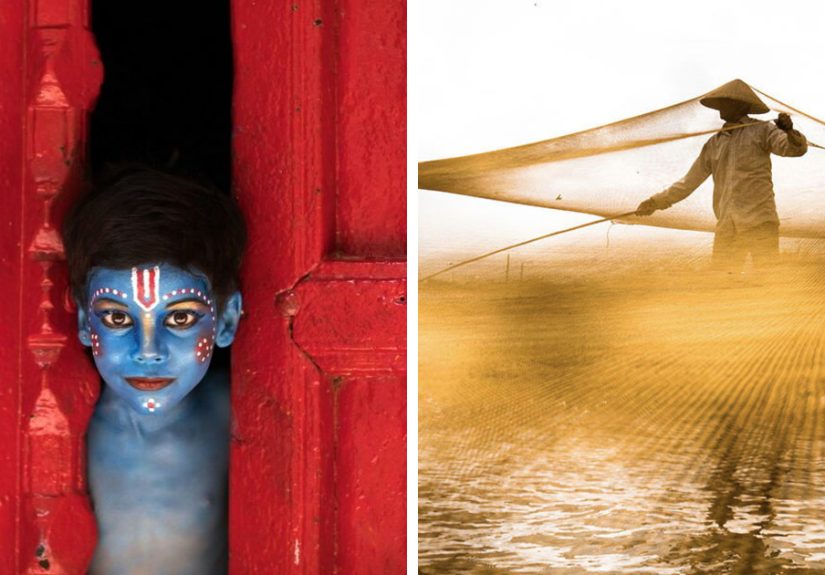
Many portraits in Réhahn-style Vietnam collections highlight everyday laborrowing boats, selling goods, farming, carrying baskets, fixing nets.
The subjects aren’t presented as “poor” or “tragic”; they’re presented as capable. That framing matters because it respects dignity.
The point isn’t to romanticize hardship. It’s to recognize human skill and perseverance.
The Landscapes: Vietnam’s Natural “Are You Kidding Me?” Moments
Vietnam is famously diverse in geography: mountains and terraced fields in the north, dramatic bays with limestone towers, long coastlines,
river deltas, and lush highlands. Réhahn’s landscape picks in collections like this often focus on places that deliver maximum “wow”
without needing a filter named “Tropical Dream #7.”
Misty mountains and terraces that look hand-painted
Northern Vietnam is known for mountain scenery and agricultural terraces shaped by generations of farming. The photo set’s mountain scenes
usually lean into fog, layered ridgelines, and winding pathsimages that feel soft but powerful, like nature whispering “I could crush you,
but today I’m being poetic.”
In areas near Sa Pa or other northern highland regions, trekking routes connect villages and markets, and that movement shows up in photography:
a figure on a trail, a market day moment, or a field scene that turns a landscape into a lived-in place rather than empty scenery.
Water worlds: rivers, bays, and floating life
Vietnam’s relationship with water is everywhere. From river towns like Hội An to the famous limestone bays in the north, water becomes both
mirror and mood. In strong landscape photos, water isn’t just “pretty”it’s composition. It reflects clouds, frames boats, and gives the eye a
path to follow.
When you see limestone formations rising out of green-blue water, you’re likely looking at the same coastal drama that makes places like
Hạ Long Bay globally famous. The best images avoid the “tour brochure” look by adding scale: a small boat, a lone figure, a sliver of shoreline.
Suddenly the scene becomes less postcard and more story.
Lantern light and old-town glow
Central Vietnam’s historic townsespecially Hội Anare a photographer magnet. You get yellow walls, riverside scenes, and lanterns that turn night
into a warm, cinematic set. The photos that stick tend to do one of two things: capture the calm (a quiet street, a reflection) or capture the
festival energy (boats, lanterns, crowds) without turning people into background decoration.
How to Look at These Photos Like a Photography Nerd (In a Good Way)
You don’t need a fancy camera (or a beret) to appreciate great photography. But if you want to squeeze extra meaning out of this collection,
here are a few viewer “upgrades” that take the images from pretty to powerful.
Ask: What’s the photographer’s distancephysically and emotionally?
Distance changes everything. A close portrait suggests trust and time. A wider shot suggests contextwhere the subject lives, works, or moves.
In respectful documentary-style work, distance is rarely accidental; it’s part of the relationship between photographer, subject, and viewer.
Watch for hands
Faces are obvious. Hands are underrated. Hands show work, age, craft, and emotionespecially in cultures where gestures and daily labor are
deeply tied to identity. A hand on a boat oar or a woven basket can tell you more about someone’s life than a paragraph of captions.
Look at the background like it’s part of the cast
Great travel portraits don’t isolate people from their world. They hint at place: a market stall, a riverbank, a mountain road, a temple courtyard.
That background makes the portrait honestit turns a face into a person in a real environment, not a prop in a studio.
Notice whether the photo feels like “taking” or “sharing”
Ethical travel photography is a whole conversation, but here’s the quick version: if an image feels like a shared moment, it tends to age well.
If it feels like a stolen moment, it tends to feel creepy later. The best images in this kind of Vietnam set often land on the “sharing” side:
engaged eyes, relaxed posture, and a sense that the subject chose to be seen.
A Photo-Led Vietnam Itinerary (If You Want the Real-Life Version)
If these photos spark the very normal urge to quit your job and become a person who “just follows the light,” here’s a grounded alternative:
build a Vietnam trip around the kinds of scenes this collection captures. Think: portraits (people-focused experiences) plus landscapes (nature and
atmosphere), not just checklist tourism.
Stop 1: Hội An (for lantern nights, river life, and portrait-friendly streets)
Hội An’s old town is famous for walkable streets, historic buildings, and riverside viewsexactly the kind of setting where you’ll find both human
moments and photogenic backdrops. Daytime gives you warm colors and quiet alley scenes; evenings bring lantern reflections and bustling energy.
- What to photograph: early morning street scenes, river boats, tailors and markets, lanterns after dark.
- How to experience it: walk slowly, sit by the river, and let the scenes come to you instead of hunting them down like Pokémon.
Stop 2: Northern highlands (for mist, terraces, and cultural depth)
Northern Vietnam offers trekking routes, village life, and markets where multiple communities gather. If you want the “mountain portraits + dramatic
landscape” portion of the photo set in real life, this is where you look. Just remember: highlands are not a theme park. Local guides and respectful
behavior aren’t optional accessories; they’re the whole point.
- What to photograph: trails, terraces, market days, fog layers at sunrise.
- How to experience it: choose community-based tours when possible and ask before photographing individuals.
Stop 3: The coast and central region (for variety: beaches, cities, and heritage sites)
Vietnam’s central coast blends urban energy with natural scenery. Places near Đà Nẵng and surrounding areas can be a good base for beaches,
food, and day tripsuseful when you want to balance intense travel days with moments to breathe (and to upload your photos without crying at hotel Wi-Fi).
Stop 4: The bays and waterways (for limestone drama and floating perspectives)
Vietnam’s bays are famous for a reason: limestone towers, calm water, and moody skies. If you love wide compositions and reflections, this is your
“landscape chapter.” Bonus tip: an overnight cruise (when responsibly operated) can shift you from crowded viewpoints to quieter scenes.
Why These Photos Matter More Than a Pretty Instagram Post
A Vietnam photo collection can be beautiful and still shallow. What makes a Réhahn-style set more meaningful is the repeated focus on heritage,
identity, and the pace of change. Vietnam is modernizing quicklynew buildings, new roads, new industrieswhile many communities work to keep
languages, crafts, and customs alive.
Photography can’t “save” culture by itself. But it can document, celebrate, and spark curiosity. It can make someone pause and think,
“I didn’t know Vietnam had so many distinct communities,” or “I’ve never seen textiles like that,” or “That smile looks like my grandmother’s smile,
and now I’m weirdly emotional in the middle of scrolling.”
The best outcome of a photo set like this isn’t simply admiration. It’s respectfollowed by action. Action might be traveling more thoughtfully,
supporting ethical cultural tourism, buying crafts directly from artisans when possible, or simply telling more accurate stories about Vietnam than
“beaches + pho + motorbikes.” (All great, by the way. But the country is bigger than the highlights reel.)
Extra: of Experiences Inspired by These Photos
Think of this photo collection as a “Vietnam experience playlist.” Each image suggests a mood you can chase in real lifewithout trying to recreate
the shot exactly (because nothing screams “tourist” like forcing your friend to stand in a rice field at dawn while you whisper-shout, “Be more poetic!”).
Instead, use the photos as prompts for the kinds of experiences that generate meaning, not just content.
Start with slowness. Portrait-driven photography almost always comes from time: time to say hello, time to smile, time to let curiosity
replace urgency. In Vietnam, slowness can look like sitting near a riverside café in Hội An and noticing the choreography of daily life: vendors setting up,
boats moving, friends greeting each other, lanterns being hung one by one. The “experience” isn’t a single landmarkit’s the rhythm. When you let that
rhythm lead, people-focused moments show up naturally. You might chat with a shop owner about their craft, or watch a tailor measure fabric with the
confidence of someone who’s done it ten thousand times.
Then chase texture. The landscapes in these images often look dramatic because Vietnam is full of texture: limestone cliffs, rippled water,
layered terraces, mossy stone, weathered wood, woven baskets, embroidered fabric, and streets that hold centuries of footsteps. A texture-first approach
changes how you explore. Instead of only photographing “the big view,” you notice smaller details: patterns on clothing, the grain of old doors,
the steam from street food, the way mist softens mountain edges. Those details become your personal Vietnam storyunique, even if you’re in a famous place.
For the mountain scenes, prioritize respectful curiosity. Many travelers are drawn to highland markets and villages because they’re visually
stunningand they are. But the best “experience” isn’t collecting photos of people; it’s learning how people want to be seen. Ask before taking close portraits.
Buy something small if you’re browsing a stall. Hire local guides when appropriate. Treat the moment like an exchange, not a harvest.
Ironically, that respect often leads to better photographs anyway: more relaxed expressions, more genuine smiles, and fewer “Please stop pointing your lens at my soul”
vibes.
Finally, chase contrastthe same contrast that makes the “80 photos” set so addictive. Vietnam is often most memorable when you experience
opposites in close succession: a quiet dawn over water followed by a lively market; a calm lantern-lit street followed by a loud food stall; a misty mountain
view followed by a bright beach afternoon. Build your days with contrast on purpose. You’ll come home with a mental photo album that feels like Vietnam:
warm, intense, tender, hilarious, and impossible to summarize with one caption.
Wrap-Up
“80 Photos That Show The People And Landscapes Of Vietnam” works because it captures what Vietnam feels like when you’re paying attention:
a country of extraordinary diversity, vivid everyday life, and scenery that can humble your camera lens in the best way.
Réhahn’s stylerooted in portrait intimacy and place-based storytellingturns the collection into more than a highlight reel.
It becomes a visual invitation: look closer, travel kinder, and remember that the most powerful photos aren’t just takenthey’re shared.