Table of Contents >> Show >> Hide
Winter has a reputation problem. Somewhere along the way, it got branded as the season of bare branches, muddy boots, and gardens that look like they’ve emotionally checked out until April. But that’s only true if you plant like winter doesn’t exist. The truth is, some of the most charming flowers of the year show up when the thermometer is rude, the daylight is stingy, and the rest of the landscape is still wearing its sleepy-season pajamas.
If you want color, fragrance, and actual visual drama during the coldest months, winter-blooming plants are your secret weapon. Some push flowers through snow. Some bloom on bare stems like they’re showing off. Some perfume the air so well you’ll suddenly find reasons to “accidentally” linger near the front walk in January. The trick is choosing the right plants for your climate, then giving them a spot where their winter performance can really shine.
Below are nine winter-blooming plants worth growing, along with what makes each one special, where it grows best, and how to use it in a winter garden that looks alive instead of abandoned. Because a garden in winter should not look like it ghosted you.
Why Winter-Blooming Plants Matter More Than You Think
Winter flowers do more than brighten a bleak week. They change the entire rhythm of a garden. Instead of waiting for spring to do all the heavy lifting, you create a landscape with layers of interest across the whole year. That matters visually, of course, but it also changes how you experience your yard. A patch of hellebores by the steps, a witch hazel near the sidewalk, or a camellia opening during a cold snap can make the garden feel intentional even in January.
Many winter bloomers are also masters of subtle beauty. They don’t scream for attention the way midsummer annuals do. They invite you closer. You notice the nodding flowers of hellebores, the ribbon-like petals of witch hazel, the little bells of winter aconite, or the jewel-toned petals of hardy cyclamen. In other words, winter flowers reward curiosity. They make gardeners look smart, observant, and possibly just a little smug. Fair enough.
9 Winter-Blooming Plants That Earn Their Keep in the Cold
1. Hellebores
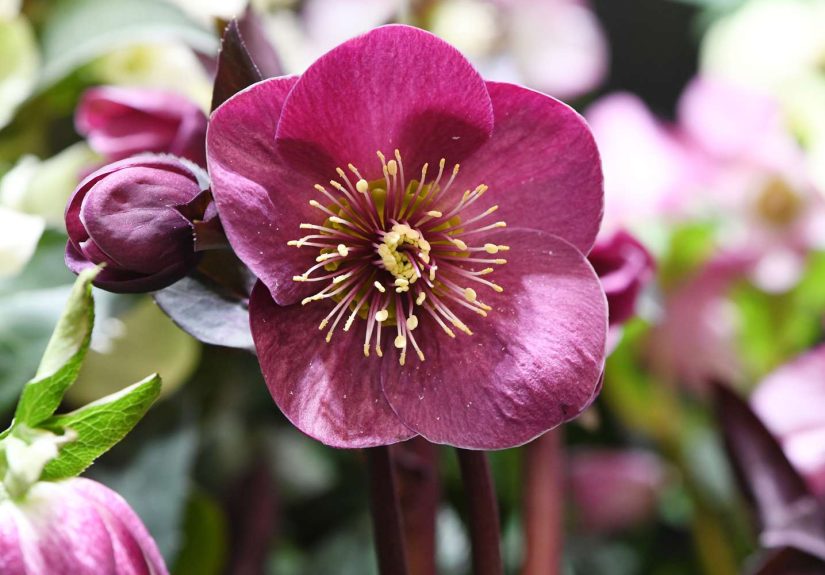
Hellebores are the undisputed royalty of the winter garden. Often called Christmas rose or Lenten rose, these broadleaf evergreens bloom from late winter into early spring, depending on species and climate. Their flowers come in shades of white, cream, green, pink, plum, burgundy, and near-black, and many varieties hold their blooms for weeks. That’s a rare talent in any season, let alone one that includes sleet.
What makes hellebores especially useful is that they look good even when they aren’t flowering. The leathery evergreen foliage gives structure to shady beds, and the flowers rise just when the garden is starved for interest. Plant them in part shade with rich, well-drained soil. They’re ideal along paths, under deciduous trees, or near patios where you can appreciate the blooms up close. If you’ve never crouched in a coat to admire a hellebore face-to-face, congratulations: you have a very wholesome winter activity waiting for you.
2. Camellias
If hellebores are winter royalty, camellias are winter glamour. These evergreen shrubs produce glossy foliage year-round and flowers that look almost too luxurious for the season. Depending on the type, camellias can bloom from fall into winter or from winter into spring. In milder regions, especially across the South and parts of the Pacific Coast, they’re among the best shrubs for carrying color through the cold season.
Sasanqua camellias tend to bloom earlier, while many Japanese camellias extend the show deeper into winter and toward spring. Flower colors range from pure white to blush pink, rose, red, and variegated combinations. Give them acidic, well-drained soil and a site with morning sun and afternoon shade. Camellias are perfect near entrances, evergreen borders, and woodland edges where their flowers can glow against dark foliage. They’re elegant enough to look expensive, even when your budget is more “clearance rack at the garden center.”
3. Witch Hazel
Witch hazel is what happens when a shrub decides winter is no reason to be boring. Its spidery, ribbon-like flowers appear on bare branches in late winter, sometimes even earlier, and they often have a spicy or citrusy fragrance. Colors range from buttery yellow to coppery orange and red, depending on the species and cultivar.
One of witch hazel’s coolest tricks is that the petals curl up in cold weather and unfurl again when temperatures rise. So yes, this plant is basically weather-responsive confetti. It works beautifully as a specimen near a walkway, window, or front door where the unusual flowers and scent can be appreciated. Most types prefer full sun to part shade and evenly moist, well-drained soil. If you want a winter shrub with real personality, witch hazel shows up early and stays memorable.
4. Winter Jasmine
Winter jasmine does not have the perfume of true jasmines, but it absolutely earns its place with cheerful yellow flowers that appear on bare green stems during late winter, and in some milder areas, off and on from early winter onward. When the rest of the garden is gray, that hit of yellow feels almost theatrical.
This plant has a loose, arching habit and works well spilling over walls, softening slopes, or training along a support. It’s especially useful when you need winter color in a hard-working landscape spot rather than a prim little flower bed. Give it full sun to light shade and decent drainage. It’s not fussy, which is refreshing. Winter jasmine is the kind of plant that quietly gets the job done while flashier plants are still asleep.
5. Hardy Cyclamen
Hardy cyclamen, especially Cyclamen coum, brings a completely different texture to winter gardens. Its flowers are small but vivid, usually pink to white, and the foliage is often marbled or silver-patterned, which means the plant earns its real estate twice. Some forms flower in late fall and winter, and in many gardens the leaves carry the show after the flowers, adding decorative interest when larger perennials are still doing absolutely nothing.
Hardy cyclamen performs best in well-drained soil and partial shade, especially beneath deciduous trees and shrubs. It loves the kind of sheltered woodland conditions that many gardeners already have but don’t fully use in winter. Tuck it into pockets where you can see it from indoors, because this is not a plant for grand sweeping drama. It’s for delight, detail, and those moments when you look outside and think, “Wait, something is actually blooming out there?”
6. Snowdrops
Snowdrops are tiny, yes, but they are not timid. These little bulbs are among the earliest bloomers in the garden and often emerge while snow and ice are still hanging around. Their nodding white flowers are delicate-looking, but the plants themselves are admirably tough. In a winter garden, snowdrops are less about size and more about timing. They show up precisely when you need proof that the garden has not, in fact, given up.
Snowdrops look best planted in drifts rather than as lonely individuals. Naturalize them beneath deciduous trees, along woodland paths, or at the front of borders where their flowers can be spotted easily in late winter. They prefer moist, humusy, well-drained soil and are especially charming in informal settings. A mass of snowdrops in bloom has the visual effect of a tiny white whisper saying, “Relax, spring is on the way.”
7. Winter Aconite
If snowdrops are the whisper, winter aconite is the cheerful little trumpet blast. This bulb produces brilliant yellow, buttercup-like flowers low to the ground in late winter. The blooms are framed by a collar of green bracts, giving each flower a tidy, finished look. On sunny days they open wide, which makes them especially useful for brightening dull corners beneath leafless trees.
Winter aconite is excellent for naturalizing and pairs beautifully with snowdrops for a white-and-yellow late-winter display. It prefers fertile, well-drained soil and part sun to part shade. Once established, it can spread into charming colonies. The flowers are small, but because they appear when so little else is happening, they read as surprisingly bold. Think of them as the garden equivalent of turning on a lamp in a dark room.
8. Paperbush
Paperbush, or Edgeworthia chrysantha, is the winter shrub for gardeners who enjoy a little suspense. Its silvery flower buds hang on bare stems for weeks, looking plush and sculptural even before they open. Then, in late winter to early spring, those buds burst into clusters of tubular yellow flowers with a sweet fragrance that feels wildly unfair for February.
This is one of the best plants for adding winter interest at eye level. Even when it isn’t fully open, it’s beautiful. Plant paperbush where you’ll see it often, ideally in part shade with moist, humus-rich, well-drained soil. It appreciates a protected site, especially in colder-edge climates. Paperbush works beautifully near patios, entryways, or woodland borders. It’s a conversation starter, mostly because people will ask what on earth that fabulous thing is blooming when the rest of the neighborhood looks half asleep.
9. Mahonia
Mahonia, sometimes called grape holly, brings both texture and fragrance to the winter landscape. Depending on the species or cultivar, it can bloom from late fall into winter or later in the cold season with clusters of bright yellow flowers held above bold, spiny evergreen foliage. The flowers are often fragrant, and afterward many varieties produce bluish berries that extend the ornamental value.
Mahonia is especially useful in shady or partly shaded gardens that need structure all year. It pairs well with ferns, hellebores, and other woodland-style plants, and the yellow flowers pop dramatically against its dark foliage. Use it as a background anchor, a screening plant, or a statement shrub in a winter border. If your garden needs something architectural that also bothers to bloom when the weather is miserable, mahonia is a very solid answer.
How to Build a Better Winter Garden
The smartest winter gardens are not packed with random “winter-interest” plants dumped together like a seasonal clearance bin. They’re layered. Start with evergreen structure, then add bloomers that take turns stealing the spotlight. Place fragrant plants like witch hazel, paperbush, and mahonia near paths and doors. Use small bulbs such as snowdrops and winter aconite where they can naturalize under deciduous trees. Tuck hellebores and hardy cyclamen into beds you can see from the house.
Also, be honest about your region. Camellias may be stars in the South but a heartbreak in colder northern sites without protection. Snowdrops and winter aconite shine in colder climates but may have shorter performances in warmer ones. Winter gardening works best when you stop trying to force every plant everywhere and instead lean into what thrives in your zone.
Finally, remember that winter flowers deserve prime viewing real estate. Put them where you’ll notice them from the kitchen window, the front steps, the driveway, or the path to the mailbox. In July, you’ll wander the whole yard. In January, you want flowers close enough to admire without negotiating with the wind for twenty minutes first.
Final Thoughts
A gorgeous winter garden is not built with wishful thinking and one lonely evergreen. It comes from choosing plants that know how to perform when conditions are cold, gray, and slightly rude. Hellebores, camellias, witch hazel, winter jasmine, hardy cyclamen, snowdrops, winter aconite, paperbush, and mahonia all prove that winter is not a dead zone. It’s a quieter season, yes, but also one filled with detail, fragrance, texture, and surprising color.
If your landscape tends to disappear between Thanksgiving and the first daffodil, these plants can change that. Start with one or two, place them where you’ll actually see them, and let them turn the coldest months into part of the show instead of an awkward intermission. Your spring garden will still be fabulous. It just won’t have to do all the work alone.
Winter Garden Field Notes: of Real-Life Experience
The first time I truly understood winter-blooming plants, it wasn’t during some perfect magazine moment with a wool blanket and a steaming mug of artisanal tea. It was on a raw, gray morning when the yard looked flat, the sky looked offended, and I was one cold gust away from declaring the entire garden emotionally unavailable until April. Then I noticed a hellebore blooming near the back steps. Not a giant flashy bloom. Just one downward-facing flower, quietly doing its thing as if frost were a minor scheduling inconvenience.
That changed how I looked at winter gardens. Summer gardens are extroverts. They want applause. Winter gardens are introverts. They reward attention. Once I started planting for the cold months on purpose, I began noticing how different the whole yard felt. A witch hazel in bloom near the driveway gave me something to look forward to when I got home late in the afternoon. A clump of snowdrops under a maple tree became the first thing I checked after every cold snap. Hardy cyclamen tucked near a path felt like hidden treasure, especially on days when the leaves looked almost prettier than the flowers.
One of the biggest lessons was placement. Winter bloomers are wasted if you tuck them in the farthest corner of the yard behind a dormant shrub and two sad lawn chairs. I learned to put the best performers where daily life happens: near the mailbox, beside the walkway, outside the kitchen window, or close to the patio door. In winter, convenience matters. If the flowers are visible from indoors, you’ll enjoy them far more often. If they’re fragrant, put them somewhere you actually pass by. Paperbush taught me that one. A shrub that smells amazing in February should not be hidden behind the garage like a secret.
I also learned that winter bloomers create a different kind of gardening joy. They don’t overwhelm you with abundance. They surprise you with persistence. Camellias can make a gloomy morning feel almost polished. Mahonia can make a shady bed look intentional instead of forgotten. Winter aconite can make a patch of ground look suddenly awake. These are not plants that scream. They wink.
And maybe that’s why gardeners get so attached to them. In the coldest months, every flower feels earned. You notice details more. You appreciate fragrance more. You’re more likely to kneel in the mulch wearing a ridiculous coat just to inspect a bloom that would barely register in June. Winter-blooming plants make you a better observer. They slow you down. They remind you that the garden was never truly asleep; it was just speaking more softly.
Now, whenever someone says winter is a boring season in the landscape, I nod politely in the way one nods at a person who has clearly never met a hellebore in January. Then I invite them over for a walk through the garden on the next cold, clear morning. It usually takes about five minutes, one fragrant witch hazel, and a patch of snowdrops poking through the frost before they understand.