Table of Contents >> Show >> Hide
- 1. The Theory of Evolution
- 2. The Big Bang Theory
- 3. The Earth is Flat
- 4. Humans Only Use 10% of Their Brains
- 5. Vaccines Cause Autism
- 6. Evolution and Human Progress Are Linked
- 7. Black Holes are Cosmic Vacuum Cleaners
- 8. Antibiotics Cure All Infections
- 9. The Seasons are Caused by the Earth’s Distance from the Sun
- 10. Humans Evolved from Chimpanzees
Introduction: Science is all around us, shaping our understanding of the world, from the vastness of space to the tiniest particles. However, some scientific concepts remain confusing and misunderstood, even by those with an interest in science. These misconceptions can stem from misunderstandings, misinterpretations, or just plain oversimplifications. In this article, we’ll explore 10 of the most widely misunderstood scientific concepts, shedding light on why they are often misinterpreted and what the real science says. Whether you’re a science enthusiast or a casual learner, these common misconceptions might surprise you.
1. The Theory of Evolution
Misconception: Evolution is “just a theory.”
Reality: One of the most common misconceptions is the idea that the theory of evolution is just a “guess” or unproven idea. In scientific terms, a theory is a well-substantiated explanation of an aspect of the natural world that has been repeatedly tested and confirmed through observation and experimentation. The theory of evolution by natural selection, proposed by Charles Darwin, is supported by a vast amount of evidence from fields like genetics, paleontology, and comparative anatomy. It’s not a mere hypothesisit’s a robust scientific framework that explains the diversity of life on Earth.
2. The Big Bang Theory
Misconception: The Big Bang was an explosion.
Reality: The term “Big Bang” is a bit misleading. It conjures the image of a massive explosion, but in reality, the Big Bang refers to the rapid expansion of space itself from a singularity around 13.8 billion years ago. There was no “bang” as we typically understand it. Instead, space expanded, and it continues to expand to this day. The term “bang” was coined by British scientist Sir Fred Hoyle, who was trying to mock the idea, but it stuck.
3. The Earth is Flat
Misconception: The Earth is flat.
Reality: Despite overwhelming evidence, there are still some who believe the Earth is flat. Centuries of scientific research, from ancient Greek observations to modern satellite imagery, have proven that the Earth is round. The curvature of the Earth can be seen from the horizon, and the way ships disappear bottom-first over the horizon is a simple visual confirmation. Satellite images from space also clearly show Earth as a round sphere.
4. Humans Only Use 10% of Their Brains
Misconception: We only use 10% of our brains.
Reality: This popular myth suggests that there is a vast untapped potential within our brains. However, modern neuroscience shows that nearly all parts of the brain have a known function. Brain imaging studies have shown that even when we are at rest, there is activity occurring throughout the brain. The idea of the 10% myth likely arose from early neurological research, where scientists found that only a small portion of the brain is involved in conscious thought, but that doesn’t mean the rest of it is inactive.
5. Vaccines Cause Autism
Misconception: Vaccines cause autism.
Reality: This myth began with a now-debunked 1998 study by Andrew Wakefield, who falsely claimed a link between the MMR vaccine (measles, mumps, rubella) and autism. Extensive research since then has shown no such connection. In fact, Wakefield’s study was retracted, and he lost his medical license due to ethical violations. Vaccines are safe and essential for preventing deadly diseases.
6. Evolution and Human Progress Are Linked
Misconception: Evolution is always a progressive improvement.
Reality: Evolution is often misunderstood as a process that leads to more advanced or “better” organisms. However, evolution is not directed toward progress. It is simply the process by which species adapt to their environment over time through natural selection. Adaptation is about survival, not improvement. Some traits that appear in species may not necessarily be more “advanced” but are more suited to the environment at that time.
7. Black Holes are Cosmic Vacuum Cleaners
Misconception: Black holes suck up everything around them like vacuum cleaners.
Reality: Black holes are often depicted as cosmic vacuum cleaners that suck up everything in their path. While they have an incredibly strong gravitational pull, they don’t just indiscriminately pull in matter. Objects must be very close to a black hole to fall in, and if you were to pass by a black hole at a safe distance, you wouldn’t be sucked in. Black holes do not “vacuum” the universe; they are merely regions where gravity is extremely intense.
8. Antibiotics Cure All Infections
Misconception: Antibiotics cure all infections.
Reality: Antibiotics are effective against bacterial infections, but they do not work against viral infections like the common cold, flu, or COVID-19. Misusing antibiotics or taking them for viral infections can lead to antibiotic resistance, which makes bacteria harder to treat in the future. It’s important to use antibiotics only when prescribed by a healthcare professional.
9. The Seasons are Caused by the Earth’s Distance from the Sun
Misconception: The seasons are caused by the Earth’s changing distance from the Sun.
Reality: The seasons are actually caused by the tilt of the Earth’s axis, not its distance from the Sun. When the Earth’s axis tilts towards the Sun, the hemisphere experiencing that tilt gets more direct sunlight, resulting in warmer weather (summer). Conversely, when the axis tilts away from the Sun, the opposite hemisphere experiences colder weather (winter).
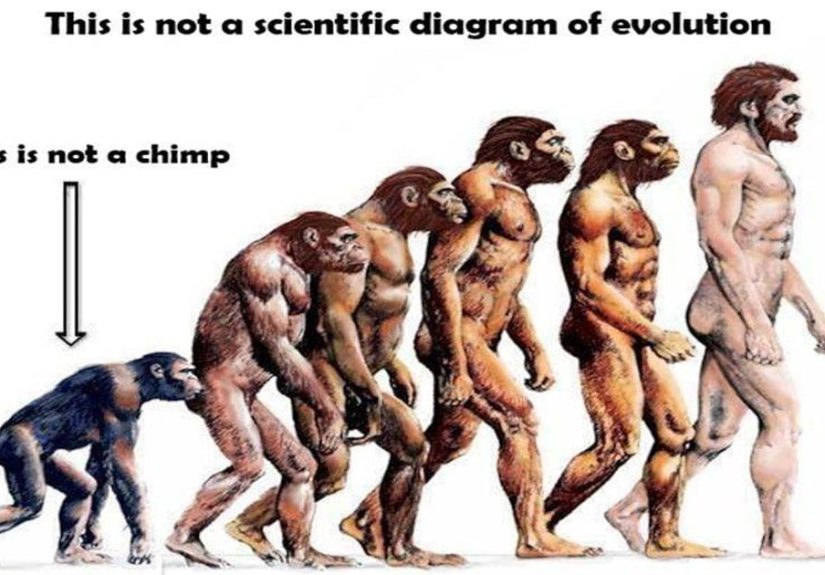
10. Humans Evolved from Chimpanzees
Misconception: Humans evolved directly from chimpanzees.
Reality: Humans and chimpanzees share a common ancestor, but we did not evolve directly from chimpanzees. Our last common ancestor lived about 6-7 million years ago, and both species have evolved separately since then. While we share about 98% of our DNA with chimpanzees, the evolutionary paths diverged long before humans existed as we know them today.
Conclusion
Science is often full of complex ideas, and while misunderstandings are common, they can also be an opportunity to learn. By addressing and correcting these misconceptions, we can develop a deeper understanding of how the world works and appreciate the beauty of the scientific process. From the theory of evolution to the nature of black holes, each of these concepts plays a crucial role in shaping the way we view our universe. Science is ever-evolving, and it’s important to stay curious and open-minded to the discoveries that continue to expand our knowledge.
Personal Experience:
Experience 1: I’ve often encountered people who firmly believe that the Earth is flat, despite all evidence to the contrary. One of my closest friends refused to accept the idea of a spherical Earth even after I showed him various online resources, including satellite images of Earth. The debate sparked my interest in scientific education and how vital it is to correct misunderstandings through clear communication.
Experience 2: Another misconception I’ve faced is related to vaccines. A family member was hesitant about getting vaccinated because of the autism myth. After presenting them with evidence from reputable health organizations, including the CDC, and explaining the scientific process behind vaccine development, they became more open to the idea of vaccination. This experience reinforced my belief in the power of knowledge-sharing in debunking myths.
Experience 3: As a science enthusiast, I’ve spent hours reading about the Big Bang Theory. One of the most surprising things I learned was how often it is confused with the idea of an actual explosion. Watching documentaries and reading peer-reviewed articles has shown me how essential it is to understand the nature of the universe’s expansion. The term “Big Bang” itself can be misleading, which is why I always encourage others to dive deeper into the actual science behind it.