Table of Contents >> Show >> Hide
- What Is a Thermocol Light Ball (and Why Is It Everywhere)?
- Materials and Tools You’ll Need
- Step-by-Step: How to Make a Light Ball Using Thermocol Glasses
- Step 1: Plan Your Size and Light Layout
- Step 2: Make Neat Holes in the Cup Bottoms
- Step 3: Build the First Ring
- Step 4: Add the Middle Layer (Nine Cups)
- Step 5: Cap It with Four Cups
- Step 6: Repeat to Make the Second Hemisphere
- Step 7: Thread the LED Lights
- Step 8: Join the Two Halves
- Step 9: Create a Hanging Point (Optional)
- Styling Ideas for Your Thermocol Light Ball
- Safety Tips and Practical Considerations
- Common Mistakes (and How to Fix Them)
- Extra : Real-Life Experiences and Creative Twists
- Conclusion
If you’ve ever stared at a boring corner of your living room and thought, “You know what this needs? A glowing moon made out of disposable cups,” you are absolutely in the right place. The famous light ball using thermocol glasses that’s been shared all over Hometalk and Pinterest is basically a sparkleball’s cool cousin: budget-friendly, surprisingly sturdy, and far more impressive than the cost of the materials would suggest.
In this guide, we’ll walk through exactly how to make your own DIY light ball from thermocol (foam) cups, how to style it for everything from Diwali to Christmas, and what to watch out for so your decor stays magical and safe. Think of this as your step-by-step, “no craft degree required” road map to the glowing orb of your dreams.
What Is a Thermocol Light Ball (and Why Is It Everywhere)?
“Thermocol” is a common name in many countries for expanded polystyrene foam, the lightweight material used for disposable cups, trays, and packing blocks. When you line up dozens of these cups in overlapping rings, then add mini string lights, you get a glowing sphere of light that looks like a designer lamp but costs less than takeout dinner.
DIY makers have been building similar “sparkleballs” from plastic or foam cups for decades, especially in the U.S. where they appear on porches and campgrounds around the holidays. The method is simple: drill or poke holes in cup bottoms, assemble the cups into two hemispheres, push lights into each cup, then join the halves to form a ball. The same technique works beautifully with thermocol glasses as long as you use cool-running LED lights and gentle heat or small tools for making the holes.
On Hometalk, this project is often shown as a glowing red or warm-white sphere mounted to a wall or hung like a pendant. The best part? Once you learn the basics, you can customize everythingsize, color, texture, and even the pattern of the light.
Materials and Tools You’ll Need
Before you turn your dining table into a mini lamp factory, gather your supplies. For one medium-size light ball (about basketball diameter), you’ll typically need:
- Thermocol cups (foam cups) – About 50 to 60 standard small cups. Uniform size gives the neatest sphere.
- LED string lights – 1 to 2 strings of 50 mini LEDs, preferably on clear wire. Always choose cool-running LEDs rather than old-style incandescent bulbs.
- Fasteners – A plier stapler is classic, but you can also use strong hot glue, cable ties, or a combination, depending on what you’re comfortable with.
- Tool for making holes – A soldering iron, heated metal skewer, or small drill bit. With thermocol, low heat and patience are key so you don’t melt giant craters.
- Hanging hardware – S-hook, chain or sturdy cord, and a ceiling hook if you plan to hang the ball.
- Optional decor – Spray paint safe for foam, glitter tape, ribbon, faux flowers, or sheer fabric for extra diffusion.
- Safety gear – A well-ventilated space, heat-resistant surface, and optionally a mask if you’re sensitive to fumes when melting small holes.
If you’re turning this into a family craft night, let kids handle sorting cups and placing lights while an adult does any drilling or soldering work.
Step-by-Step: How to Make a Light Ball Using Thermocol Glasses
Step 1: Plan Your Size and Light Layout
Most light balls follow a “12–9–4” pattern for each half: 12 cups in the bottom ring, 9 cups in the middle ring, and 4 cups on top. That gives each hemisphere a gentle dome, and when you make two domes and push them together, voilà: a sphere.
Lay 12 cups on a table in a rough circle so the rims touch. Adjust the circle until it looks evenyou’re basically making a wreath out of cups. This ring sets the footprint for your entire light ball, so take a minute to get it right.
Step 2: Make Neat Holes in the Cup Bottoms
Using your soldering iron, heated skewer, or small drill bit, carefully create a hole in the center of each cup bottom. You want the hole just big enough for one or two LED bulbs to pass through snugly.
Tips for success:
- Work in short bursts so the foam doesn’t overheat and warp.
- Use scrap cups for practice until you find the best technique and tool temperature.
- If you’re sensitive to odors, keep a fan running or work near an open window.
Step 3: Build the First Ring
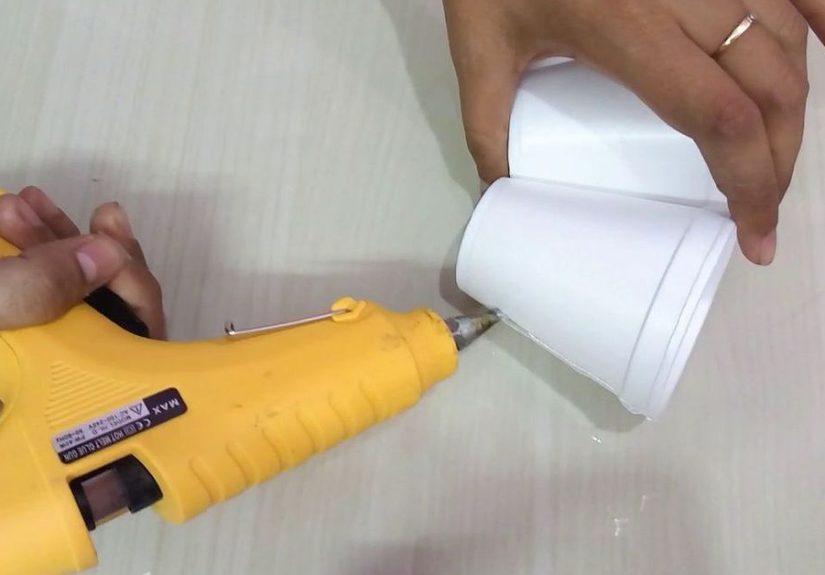
Now it’s time to commit. Arrange the 12 cups back into your circle, rims touching. Starting with two cups at a time, staple (or glue) them together at the rim where they touch. Keep going around the circle until you have a complete ring that holds its shape even when you pick it up gently.
Don’t worry if it flexes a littlefoam cups have opinions. As long as the ring stays roughly circular, you’re fine.
Step 4: Add the Middle Layer (Nine Cups)
Flip the 12-cup ring so cup mouths face outward. Place a cup on top where two cups meet in the first ring, so each new cup overlaps the seam below. Work your way around adding nine cups, attaching each to its neighbors and to the ring beneath.
You’ll see the structure start to climb upward and form a dome. Clothes pins or small clips can help hold cups in place while you staple or while hot glue sets.
Step 5: Cap It with Four Cups
For the third layer, add four cups clustered around the center of the dome. Attach them to each other and to the nine cups below. Once fastened, you should have a stable hemispherehalf a light ball.
Gently press down or up to correct any wobble. Foam is forgiving; you can usually nudge shapes into alignment as long as your connections are secure.
Step 6: Repeat to Make the Second Hemisphere
Repeat Steps 3 to 5 to make a twin hemisphere. Try to keep the tension and spacing similar so the two halves fit together cleanly. If one looks slightly wider, you can adjust cup angles while joining them later.
Step 7: Thread the LED Lights
This step turns “stack of cups” into “instant mood lighting.” Starting with one hemisphere, push one bulb (or two if they’re tiny) through the hole in each cup bottom. Work in a zigzag path from cup to cup so the light strand doesn’t bunch up in one area.
Continue until every cup in the first hemisphere has at least one LED inside. Then flip the second hemisphere and repeat from the opposite end of the light strand. Ideally, you’ll end up with the plug extending out from one edge of the ball so it’s easy to reach.
Check that no bulbs are pinched between cup rims; they should sit comfortably inside the cups where the foam diffuses the glow.
Step 8: Join the Two Halves
Once your lights are in place, gently press the open sides of the hemispheres together so cup rims meet. Staple or glue where cups naturally touch all the way around the “equator.” The more connection points, the sturdier the ball.
At this point, plug in your lights for a quick test. If you see any gaps or misaligned cups, you can still add extra staples or dots of glue before everything fully sets.
Step 9: Create a Hanging Point (Optional)
To hang your light ball, pick two adjacent cups near the top, slightly below their rims. Melt or drill a small hole through both cups, pass an S-hook or sturdy wire loop through, and attach a chain or cord. Tie or clip the other end to a ceiling hook, curtain rod, or sturdy bracket.
If you prefer a wall-mounted look like many Hometalk versions, you can nestle the ball in a corner shelf or use an inconspicuous bracket so it leans against the wall, with the plug leading down behind furniture.
Styling Ideas for Your Thermocol Light Ball
1. Diwali Glow or Festive Lanterns
For Diwali or other festivals of light, choose warm white LEDs and pair your thermocol ball with marigold garlands, rangoli patterns, or metallic candle holders. Add gold or copper foil tape around a few cup rims for a subtle shimmer that picks up candlelight without overpowering the glow of the ball.
2. Christmas Sparkleball
For holiday decor, thermocol cups behave similarly to the classic plastic-cup sparkleball. Use multicolor fairy lights for a retro vibe, or cool white LEDs if your holiday color palette leans modern and minimal. Hang several balls at different heights from a porch ceiling, or place one in a window as a glowing “wreath alternative.”
3. Bedroom or Dorm Accent Light
In a bedroom, pair soft pastel cups or lightly painted foam with warm white LEDs. Mount the ball in a corner near a reading chair or above a desk as a statement piece. Because LEDs draw minimal power, you can run them for hours as an ambient night lightjust be sure to buy certified, high-quality lights with proper insulation.
4. Party Photo Booth Backdrop
Cluster three or more thermocol light balls behind a dessert table or photo booth. Mix sizes (small, medium, and large spheres) and string fairy lights between them to create an Instagram-ready backdrop. Guests will never guess you built the whole setup from foam cups and a couple of light strands.
Safety Tips and Practical Considerations
Even the cutest DIY project needs a little practical thinking. Keep these tips in mind:
- Use LED lights only. Traditional incandescent mini lights can run hot and aren’t ideal around foam. LED strings stay much cooler and are more energy efficient.
- Respect indoor/outdoor ratings. If your light ball will live on a porch or patio, choose lights labeled for outdoor use and keep plugs and extension cords protected from moisture.
- Ventilate when melting holes. Melted thermocol can give off an odor and trace fumes. Work in a ventilated area and keep the heat as low and brief as possible.
- Avoid real candles inside the cups. This project is designed for electric lights only. Open flame plus foam equals a hard no.
- Check connections periodically. Before each season, inspect staples, glue joints, and light cords for wear. Repair or replace as needed.
Common Mistakes (and How to Fix Them)
“My ball looks more like a lumpy potato.”
We’ve all been there. Usually this means cup spacing in your first ring was uneven. You can gently break a few staple points, reposition cups to even out the circle, and re-staple. Small imperfections disappear once the ball is lit.
“I ran out of lights halfway through.”
If you’re using a shorter light string, you can skip every other cup or keep one hemisphere fully lit and treat the other side as the “back” facing the wall. For your next build, count cups and bulbs ahead of timeaim for at least one bulb per cup.
“The cups keep cracking when I staple them.”
Thermocol is more fragile than thick plastic. Try stapling slightly lower on the rim where there’s more material, or switch to hot glue or cable ties threaded through tiny side holes. Test different brands of cups; some foams are denser and hold up better.
Extra : Real-Life Experiences and Creative Twists
Once you make your first thermocol light ball, you quickly understand why people end up making three, then five, then suddenly there’s a small glowing galaxy in the living room. Crafting these spheres has a strangely addictive “just one more layer” satisfaction, like building with blocksbut for adults who now pay their own electric bill.
One common experience people share is that the very first ball always takes the longest. You measure, fuss with cup angles, second-guess whether the lights will be enough, and wonder if you just invented the world’s least practical salad bowl. By the time you’re on your second or third build, you stop overthinking and start enjoying the rhythm: stack, staple, turn, staple, repeat. Many crafters even set up a mini assembly line, with one person making holes, one person stapling, and one person threading the lights.
Another discovery: thermocol light balls are stealth organizers’ best friends. Got a messy corner with too many cords or an awkwardly placed outlet? Hang a light ball right in front of it. The soft glow draws the eye while cords and clutter fade into the shadows. Some DIYers tuck a smart plug behind furniture so the ball can be turned on and off with a voice assistant or timer, making it feel like a custom lighting feature instead of a weekend craft.
Color experiments are also a big part of the fun. Leaving cups pure white gives a clean, modern look, but a light coat of spray paint that’s labeled safe for foam can completely change the mood. A gradient of blush pinks creates a romantic bedroom accent, while deep jewel tones make the ball feel like a hanging lantern from a fantasy movie. Another low-effort trick: line just the inside of each cup mouth with thin colored washi tape. When the lights shine, you get subtle halos of color without any paint at all.
Families often turn this project into a holiday tradition. Kids can “design” the ball by choosing light colors and accessoriesmini bows for Christmas, tiny paper stars for New Year’s Eve, or marigold-colored tassels for Diwali. Each year they tweak the design, swap in a new color scheme, or add a second ball. In photos, those glowing orbs become a kind of visual timestamp: “Oh, that was the year we did the blue-and-silver theme” or “That was our first winter in the new house.”
People who host parties or run small venues report that a cluster of light balls near an entryway is an instant conversation starter. Guests always ask, “Where did you buy those?” and it’s incredibly satisfying to grin and say, “I didn’tI made them out of foam cups.” If you’re a small business ownera café, studio, or salonthe same DIY decor can double as branding. Use cups lightly tinted in your brand colors and suddenly your logo palette is floating over the register in 3D.
Of course, not every experiment works perfectly the first time. Some makers try to go massive and realize that a super-sized ball can get heavy and awkward to hang; others discover that outdoor installations need extra-rugged lights and weatherproof mounting points. But even “failed” attempts usually teach useful lessons, and foam cups are cheap enough that you can afford a test run or two. At worst, you end up with a slightly wonky prototype that still looks magical when the room lights are off.
Probably the most unexpected benefit people mention is how meditative the process feels. There’s something calming about performing the same small actions over and overlining up rims, squeezing the stapler, threading tiny lightswhile watching a recognizable shape slowly emerge. Add some music or a podcast in the background, and you’ve got a stress-relief session that ends with a brand-new decor piece.
So whether you’re decorating for a festival, dressing up a rental apartment on a tight budget, or just craving a little creative win after a long week, a thermocol cup light ball is a surprisingly powerful project. It’s thrifty, customizable, and flexible enough to match almost any stylefrom boho fairy-light chaos to minimalist monochrome. And once you hang that glowing sphere and flip the switch for the first time, you’ll understand why this simple Hometalk-style DIY keeps going viral year after year.
Conclusion
Creating the Best DIY Home Decor : Light Ball Using Thermocol Glasses is less about perfection and more about play. With a stack of foam cups, a string or two of LED lights, and an evening to experiment, you can turn an overlooked corner into a cozy focal point. You get the satisfaction of making something with your own hands, the thrill of flipping on the lights, and the joy of hearing people ask where you bought that “amazing lamp.”
Start with one ball, learn the rhythm, and don’t be surprised if your home slowly fills with glowing spheres in different sizes and colors. Your future self, basking in warm, custom-made light, will be very pleased with your current crafty genius.