Table of Contents >> Show >> Hide
- What “Kathryn One-Piece Compact” actually means
- Why compact toilets are a big deal in small bathrooms
- Key features that make Kathryn stand out
- 1) One-piece design: fewer seams, cleaner look
- 2) Compact elongated bowl: comfort without the bulk
- 3) High-efficiency flush (1.28 gpf): less water, still serious power
- 4) Canister-style flushing (AquaPiston-style approach): strong, consistent, fewer “double flush” moments
- 5) Concealed trapway + low-profile caps: the “easy-clean” combo
- 6) Chair-height / comfort-height seating: easier on knees, friendlier for guests
- 7) Included seat details: slow-close and quick-release convenience
- Specs and sizing: what to measure before you buy
- Performance and real-life use: what you can expect
- Installation notes: DIY-friendly, but not “careless-friendly”
- Cleaning and maintenance: where Kathryn earns its keep
- Cost and value: who should buy Kathryn?
- Frequently asked questions
- Real-world experiences: the “living with it” section (extra)
- Wrap-up
- SEO Tags
If your bathroom is small, your style standards are high, and your patience for scrubbing awkward toilet crevices is low,
you’ve probably stared at a “compact” toilet listing and thought: Is this a real upgrade… or just a fancy way to pay more for less porcelain?
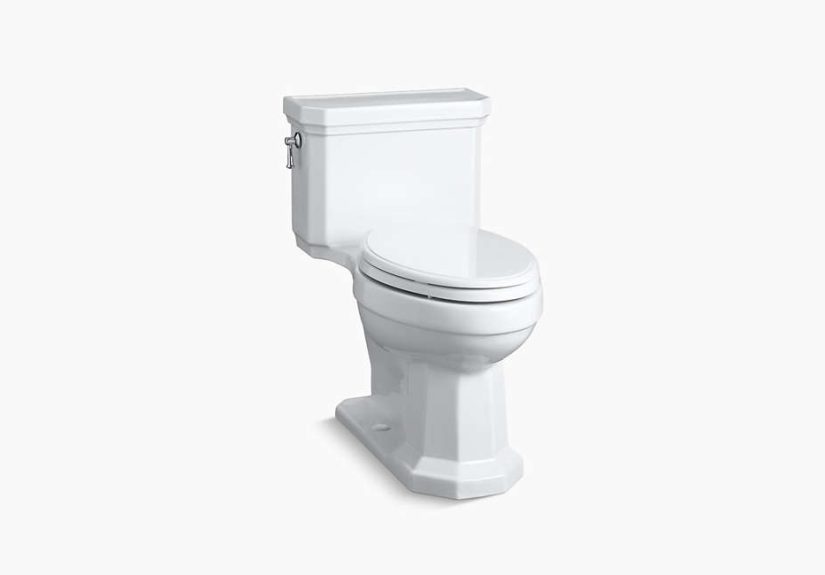
The Kathryn One-Piece Compact Toilet is one of those rare fixtures that’s both a design decision and a practical one.
It aims for that vintage-inspired, tailored lookwhile also being a modern, high-efficiency toilet built to fit where space is tight.
In this guide, we’ll break down what makes it “compact,” how it performs, what to measure before you buy, and who’s most likely to love it long-term.
What “Kathryn One-Piece Compact” actually means
“Kathryn” refers to the collection styling: crisp edges, classic detailing, and a throwback vibe that feels at home in
traditional, transitional, or “historic-but-not-musty” remodels. “One-piece” means the tank and bowl are molded as a single unit,
which usually looks sleeker and has fewer seams to grime-up over time.
“Compact” is the part that matters most for real bathrooms. The Kathryn version commonly sold as “compact elongated” is designed to deliver
elongated-bowl comfort in about the footprint you’d expect from many round-front toilets. Translation: you get a more comfortable bowl shape
without donating your kneecaps to the vanity every morning.
Why compact toilets are a big deal in small bathrooms
Bathrooms have a sneaky way of failing the “paper plan test.” On paper, everything fits. In real life, doors swing, drawers open,
and humanswildlyrequire space to exist. A compact toilet helps when you’re working with:
- Powder rooms where every inch affects whether the door clears your knees.
- Small full baths where a standard elongated bowl pushes you too close to a tub or vanity.
- Older homes where layouts are charming, but not exactly generous.
- Guest baths where you want it to look good, clean easily, and behave reliably.
Compact doesn’t mean “tiny.” It means the toilet is designed to be space-conscious without feeling like you’re sitting on a theme-park fixture.
The goal is simple: keep comfort and performance while trimming the projection into the room.
Key features that make Kathryn stand out
1) One-piece design: fewer seams, cleaner look
One-piece toilets have a reputation for being easier to wipe down because you don’t have the tank-to-bowl seam found on two-piece models.
That seam is basically a five-star resort for dust, hair spray, and “mystery bathroom lint.”
Design-wise, Kathryn’s one-piece silhouette pairs nicely with classic tile, pedestal sinks, console vanities, and vintage-inspired hardware.
It looks intentionallike it belongs, not like it was added during a late-night emergency run to the home center.
2) Compact elongated bowl: comfort without the bulk
Bowl shape matters more than most people admit in polite company. Elongated bowls are typically more comfortable, but they take up more room.
“Compact elongated” is the compromise: it aims to offer the comfort of elongated while staying closer to the footprint of round-front models.
3) High-efficiency flush (1.28 gpf): less water, still serious power
Modern high-efficiency toilets aren’t the weak-flushers your uncle still complains about from a bad experience in 1997.
Today’s 1.28 gallons-per-flush designs are engineered to move waste effectively while using less water than the 1.6 gpf federal standard many people grew up with.
If you’re trying to cut water use (or you just enjoy the idea of saving money while doing absolutely nothing different),
a 1.28 gpf toilet is a practical upgradeespecially if you’re replacing an older 3.5 gpf model.
4) Canister-style flushing (AquaPiston-style approach): strong, consistent, fewer “double flush” moments
Many Kathryn configurations use a canister-style flush system rather than a traditional flapper.
The practical benefit is better water release into the bowl and fewer worn-out flapper issues over time.
It’s still a gravity toilet, but it’s a more modern take on how the tank dumps water into the bowl.
5) Concealed trapway + low-profile caps: the “easy-clean” combo
A concealed (or skirted) trapway hides the zig-zag plumbing path on the side of the bowl.
That’s great for aesthetics and for cleaning because you’re not chasing dust through a maze of porcelain contours.
Low-profile bolt caps help keep the base looking tidy and reduce the “why is grime magnetized to that bolt?” problem.
6) Chair-height / comfort-height seating: easier on knees, friendlier for guests
Kathryn is often sold in a comfort-height configuration, meaning the seat height is taller than older, standard-height toilets.
This can make sitting down and standing up easier for many adultsespecially taller users or anyone who’s over the “deep squat at sunrise” lifestyle.
7) Included seat details: slow-close and quick-release convenience
Many Kathryn packages include a slow-close seat (no slamming) and quick-release functionality (so you can remove the seat for cleaning without
turning your bathroom into a tiny hardware workshop).
Specs and sizing: what to measure before you buy
Toilets are not “one size fits all.” Before committing, measure three things: rough-in, available projection, and clearance.
This is the part where you channel your inner adult and use a tape measure instead of optimism.
Step 1: Confirm your rough-in
The rough-in is the distance from the finished wall behind the toilet to the center of the closet bolts (or the center of the drain).
Most homes are 12 inches, but older homes sometimes have 10 inches, and some layouts use 14 inches.
Buy the wrong rough-in and you’ll discover new emotions.
Step 2: Check projection (depth)
Projection is how far the toilet extends into the room. In tight bathrooms, an extra inch can be the difference between “comfortable”
and “why does my door hit the toilet like it’s mad at me?”
Kathryn’s compact elongated format is designed specifically to keep projection reasonable while still offering elongated comfort.
That makes it a smart candidate for small baths where a standard elongated toilet feels too long.
Step 3: Verify clearances (comfort + code)
Even if your local code differs, a common planning baseline is keeping enough space in front of the toilet and on each side so it’s usable and safe.
If you’re remodeling, check the requirements that apply to your jurisdictionespecially if permits are involved.
- Front clearance: plan for comfortable knee room between the bowl and any door, vanity, or wall.
- Side clearance: make sure your hips (and cleaning tools) have space on both sides.
- Supply line location: confirm where your shutoff valve sits so the connection is clean and accessible.
Performance and real-life use: what you can expect
Most people don’t want to “think about their toilet” beyond a basic expectation: flush works, bowl stays clean-ish, no surprise clogs,
and nothing leaks. Kathryn is built to hit those expectations through a high-efficiency flush design, a modern flush valve approach,
and a trapway sized for dependable waste movement.
The bigger performance takeaway is this: modern 1.28 gpf toilets can perform extremely well when the bowl and flush system are engineered correctly.
If you’re upgrading from an older model that uses more water, you’re not automatically downgrading performanceyou’re often getting the benefit
of decades of design improvements.
That said, performance in your home still depends on installation quality and plumbing conditions. A toilet can be top-tier and still misbehave
if it’s set on a damaged flange, installed on an uneven floor, or paired with a supply line delivering poor pressure.
Installation notes: DIY-friendly, but not “careless-friendly”
A toilet replacement can be a confident DIY project if you’re comfortable lifting a heavy fixture, shutting off water, and following steps carefully.
One-piece toilets often weigh more than two-piece models because they’re a single unitso plan accordingly.
A simple install checklist
- Turn off water and drain the tank.
- Remove the old toilet and scrape away the old wax ring completely.
- Inspect the flange (cracks, rust, height issues) and repair if needed.
- Set new closet bolts, align carefully, and use a new wax ring (or wax-free seal).
- Lower the toilet straight down; avoid rocking that can ruin the seal.
- Tighten bolts evenlysnug, not “gorilla tight.”
- Reconnect supply line, turn water on, and leak-test thoroughly.
If your bathroom floor is uneven, shimming is normal and often necessary. If your flange is damaged or too low/high relative to the finished floor,
that’s when a “simple toilet swap” can turn into a “surprise subfloor adventure.” If you suspect flange issues, a plumber can save you timeand future
water damage.
Cleaning and maintenance: where Kathryn earns its keep
Kathryn’s concealed trapway is one of the most practical “luxury” features because it changes the cleaning routine:
fewer angles, fewer grooves, fewer places for dust and… life… to collect.
To keep it looking sharp:
- Use non-abrasive cleaners to protect the finish.
- Take advantage of quick-release seats if your model includes oneclean under the hinges occasionally.
- Address hard-water buildup early (especially in the rim jets and flush system) to maintain performance.
- If the toilet runs intermittently, check the fill valve and flush seal componentsmany issues are simple wear parts.
Cost and value: who should buy Kathryn?
The Kathryn One-Piece Compact Toilet usually sits in the premium bracket. You’re paying for design, one-piece construction,
compact elongated engineering, and brand-backed components. Whether it’s “worth it” depends on what you value most:
You’ll probably love it if you want…
- A classic look that feels intentional in a finished bathroom.
- A compact footprint without giving up elongated comfort.
- Easy cleaning thanks to a concealed trapway and fewer seams.
- Water efficiency with a modern high-performance flush approach.
- Guest-friendly comfort height that works well for many adults.
You might pick something else if you need…
- The lowest upfront cost (two-piece models often win here).
- The lightest install (one-piece toilets can be heavier to maneuver).
- Ultra-modern styling (Kathryn leans classic, not minimalist).
If your bathroom is tiny and style-forward, Kathryn hits a sweet spot: compact practicality plus elevated design.
If your bathroom is a “utility zone” and you just want the cheapest reliable flush, you can absolutely spend less and still be happy.
Frequently asked questions
Is a 1.28 gpf toilet actually powerful enough?
Yeswhen engineered well. Modern high-efficiency toilets are designed to move waste effectively with less water using improved bowl wash,
trapway geometry, and updated flush valve designs.
Does “compact” mean it’s uncomfortable?
Not necessarily. “Compact elongated” exists specifically to avoid that trade-off. You’re aiming for elongated comfort with a shorter projection.
Always check the dimensional drawing and compare it to what you’re replacing.
One-piece vs. two-piece: which is better?
One-piece toilets are typically easier to clean and look sleeker. Two-piece toilets are often easier to transport and can be less expensive.
“Better” depends on your priorities: aesthetics and cleaning vs. cost and handling.
Do I need a plumber?
If your flange is solid, your shutoff valve works, and you’re comfortable lifting and sealing a toilet correctly, DIY is realistic.
If the floor is damaged, the flange is compromised, or you’re unsure about alignment and sealing, professional help is a smart investment.
Real-world experiences: the “living with it” section (extra)
Specs are great, but the real question is what it feels like once the novelty wears off and the toilet becomes part of daily life.
Homeowners who choose a compact one-piece like Kathryn tend to notice a handful of practical, day-to-day winsand a few “good to know” realities.
First: cleaning routines get faster. The concealed trapway isn’t just a design flex; it removes the side contours that usually trap dust,
mop water, and whatever your bathroom is collecting this week. People who clean their own bathrooms often say the “wipe-down” becomes more of a smooth
sweep and less of a detail job. It’s also easier to see when it’s actually cleanwhich sounds obvious, but many toilets hide grime like it’s playing
hide-and-seek competitively.
Second: compact projection changes how the whole room feels. In a tight bath, a shorter bowl projection can make it easier to open drawers,
swing a door, or simply stand without doing the sideways crab-walk. The benefit isn’t just inches on paperit’s the feeling that the bathroom is less cramped.
If you’ve ever brushed your teeth while trying not to bump into a toilet (a very glamorous human moment), you understand why this matters.
Third: comfort height is surprisingly “universally liked”. Taller toilets are often chosen for accessibility reasons, but many households report
that even guests who never think about toilets notice it feels easier to sit and stand. For taller adults, it can be a “finally” moment. For shorter users,
it’s usually still finethough some prefer a small footstool for a more natural posture. The main takeaway: comfort height tends to reduce complaints,
not create them.
Fourth: one-piece toilets feel sturdy. Because the tank and bowl are integrated, there’s less “assembly feel.” There’s no tank-to-bowl seam to
monitor, and many owners interpret that as fewer potential leak points. It also looks more like a designed object and less like two components bolted together.
That’s not just aesthetic; it’s psychological. A bathroom that looks finished feels cleaner and calmereven before you actually clean it.
Now for the realities: it can be heavier to install. People who DIY a one-piece often mention that carrying it upstairs or maneuvering it into
position is the hardest part. If you’re doing this solo, recruit a second set of hands. Your back is not a renewable resource.
Another reality: premium toilets raise expectations. When someone spends more, they want everything perfect: no wobble, no noise, no mystery
“running” sounds at night. The good news is most of those issuesif they happencome down to installation details (leveling, sealing, supply connections),
or small wear parts (fill valve adjustments, seal replacements). Owners who treat installation like a careful projectmeasure twice, set oncetend to be happiest.
Finally, there’s the quiet joy of a bathroom upgrade that doesn’t scream for attention but improves daily life: the room feels bigger, it’s easier to clean,
the seat doesn’t slam, and the flush works the first time. That’s not flashy. It’s just… nice. And honestly, “nice” is an underrated bathroom goal.