Table of Contents >> Show >> Hide
- What “oral cancer” means (and why location matters)
- How common is itand why early detection is a big deal
- Risk factors: the “big rocks” you can move
- A realistic prevention plan (no perfection required)
- Early symptoms: what to watch for (and the “2-week rule”)
- What an oral cancer screening actually looks like
- If you notice a warning sign: what to do next
- Real-world experiences (the kind you hear again and again)
- Conclusion
Your mouth is basically the front door to your body. It also happens to be where you chew, talk, laugh,
and (let’s be honest) occasionally panic-Google “why is my tongue weird?” at 2 a.m. The good news:
many oral cancers are linked to risk factors you can change. And when oral cancer is found early,
outcomes are often much better. The tricky part is that early symptoms can look annoyingly normal
(hello, “it’s probably just a canker sore”).
This guide breaks down what actually lowers your risk, what early warning signs tend to show up,
and how to get checked without turning your bathroom mirror into a full-time medical drama.
It’s educationalnot a diagnosisso if something feels off, get a professional exam.
What “oral cancer” means (and why location matters)
“Oral cancer” often refers to cancers of the oral cavity (lips, tongue, gums, inner cheeks,
floor of the mouth, and hard palate). Many people also group in oropharyngeal cancer, which
involves the back of the throat (including the tonsils and the base of the tongue). The location matters
because the biggest drivers can differ: for example, tobacco and alcohol are major risks for oral cavity
cancers, while certain HPV infections are strongly linked to many oropharyngeal cancers.
How common is itand why early detection is a big deal
In the United States, oral cavity and oropharyngeal cancers add up to tens of thousands of new cases
each year. That’s not meant to scare youit’s meant to underline a practical point: awareness and
routine exams matter.
Survival rates vary by site and how far the cancer has spread at diagnosis. In general, cancers found
when they’re still localized (before spreading) have better outcomes than cancers found after they’ve
traveled to lymph nodes or distant organs. Translation: noticing something early and getting it checked
can change the whole story.
Risk factors: the “big rocks” you can move
Some risk factors are out of your control (age, biology, certain medical conditions). But many of the
biggest ones are lifestyle-relatedand that’s where prevention really pays off.
1) Tobacco in any form (yes, “smokeless” counts)
Tobacco is one of the strongest risk factors for cancers of the mouth and throat. That includes cigarettes,
cigars, pipes, and smokeless tobacco like chew or snuff. If you needed a single “best bang for your buck”
prevention step, avoiding tobacco is it.
2) Alcoholespecially when paired with tobacco
Alcohol is a major risk factor for oral cavity and pharyngeal cancers. And when alcohol and tobacco team up,
risk goes up more than either one alone. If you’re under 21, the safest choice is to avoid alcohol completely.
If you’re an adult who drinks, keeping intake modest is a practical risk-reduction move.
3) HPV and oropharyngeal cancer
HPV can infect the mouth and throat, and certain types are linked to many oropharyngeal cancers. Two big
prevention levers here are vaccination (most effective before exposure) and safer sex practices
(like consistent condom or dental dam use), which can reduce HPV transmission risk.
4) Sun exposure and lip cancer
Your lips are skin, and skin doesn’t love unprotected UV rays. Chronic sun exposure can increase lip cancer risk,
especially for people who spend a lot of time outdoors. SPF lip balm and shade aren’t just “beach-day extras”
they’re prevention tools.
5) Diet, chronic irritation, and overall oral health
A diet low in fruits and vegetables has been associated with higher risk in some research. Chronic irritation
and inflammation can also contribute to unhealthy tissue changes. That doesn’t mean “a sharp tooth causes cancer,”
but it does mean it’s smart to address ongoing mouth irritation, ill-fitting dentures, and persistent sores.
6) Higher-risk groups (so you can be extra alert)
Oral cancer occurs more often in older adults and is more common in men than women. People with heavy tobacco
and alcohol exposure, certain immune issues, or a history of head and neck cancers typically need more vigilant
monitoring. Also important: some people develop oral or oropharyngeal cancer without classic risk factors, which
is why symptoms should be taken seriously even if you “did everything right.”
A realistic prevention plan (no perfection required)
Prevention doesn’t mean you have to become a wellness monk living on kale and sunshine. It means stacking
the odds in your favor.
Quit tobacco (or don’t start)
- Stop smoking and avoid secondhand smoke when possible.
- Avoid smokeless tobacco (chew, snuff, dip).
- If you’re using nicotine and want to quit, consider getting support from a clinician or a quit program.
Keep alcohol modest (or skip it)
- If you’re under 21: don’t drink.
- If you’re an adult who drinks: aim for moderation and avoid binge patterns.
- Most importantly: don’t combine heavy drinking with tobacco.
Get the HPV vaccine if you’re eligible
- HPV vaccination is routinely recommended around ages 11–12 (it can start as early as age 9).
- Catch-up vaccination is recommended for many people through age 26 if not already vaccinated.
- Adults 27–45: vaccination may be considered based on shared decision-making with a clinician.
Protect your lips from UV damage
- Use SPF lip balm daily if you’re outdoors.
- Wear a hat or seek shade for long outdoor stretches.
Build an “oral health baseline”
- Brush twice daily with fluoride toothpaste and clean between teeth daily.
- Fix chronic irritation: sharp teeth edges, broken fillings, and poorly fitting dentures.
- Keep regular dental visitsdentists often look for suspicious changes during routine exams.
Eat like your mouth is part of your body (wild concept, I know)
You don’t need a perfect diet, but consistently eating fruits and vegetables helps support tissue health and
provides nutrients involved in normal cell repair. If your diet is mostly “beige foods and vibes,” consider
adding color one meal at a time.
Early symptoms: what to watch for (and the “2-week rule”)
Early signs are often subtle, painless, and easy to ignore. The most useful rule of thumb:
if something in your mouth doesn’t heal or clearly improve within about two weeks, get it checked.
Common early warning signs in the mouth
- A sore on the lip or in the mouth that doesn’t heal
- Persistent mouth pain or tenderness
- A lump, thickening, or rough spot in the mouth, cheek, or lip
- White patches (leukoplakia) or red patches (erythroplakia), or mixed red/white areas
- Unexplained bleeding in the mouth
- Numbness of the tongue, lip, or another mouth area
- Loose teeth or dentures suddenly fitting differently (without an obvious reason)
Symptoms that can point to the throat/oropharynx
- A persistent sore throat or the feeling that something is “stuck”
- Trouble swallowing or pain when swallowing
- Persistent hoarseness or voice changes
- Ear pain on one side (especially if it persists)
- A lump in the neck (swollen lymph node) that doesn’t go away
Important reality check: many of these symptoms can come from non-cancer causes (infections, ulcers, dental issues,
reflux, allergies). The goal isn’t panicit’s persistence. If it sticks around, it deserves a look.
What an oral cancer screening actually looks like
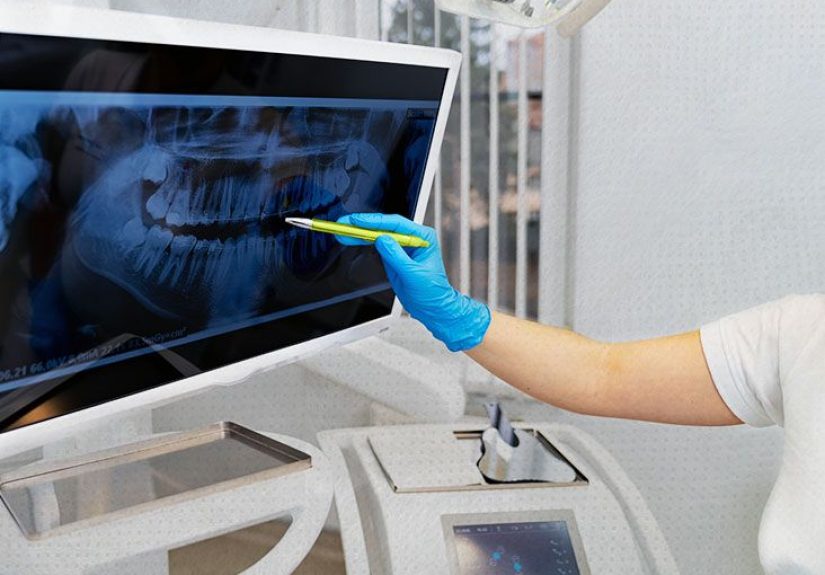
Most screenings are quick and low-drama: a clinician (often a dentist) visually inspects your mouth and may gently
feel areas of the mouth, jaw, and neck for lumps or changes. If something looks suspicious, the next step might be
re-checking it after a short time, imaging, or referral for a biopsy. A biopsy is the only way to confirm cancer.
One nuance: national evidence reviews have found insufficient evidence to recommend routine oral cancer screening
for asymptomatic adults in primary care settings. That doesn’t mean “don’t look.”
It means researchers haven’t proven a universal screening program in primary care improves outcomes enough to
recommend it for everyone. In real life, routine dental exams remain valuable because they can catch visible changes
and prompt timely evaluation.
At-home self-check: helpful, not magical
A monthly self-check can help you notice changes early. Use a bright light and a mirror:
- Look at and feel your lips (front and inside).
- Check gums, inner cheeks, and the roof of your mouth.
- Stick out your tongue and check the top, sides, and underneath.
- Look at the floor of your mouth (under your tongue).
- Feel your neck for lumps that persist.
If you find a spot that’s new, painful, growing, bleeding, or not improving after two weeksschedule an exam.
If you notice a warning sign: what to do next
Start with a dentist or primary care clinician. If the issue is in the throat or involves persistent swallowing
problems, an ENT (ear, nose, and throat specialist) may be involved. Keep track of:
- When it started
- Whether it’s changing in size/color/texture
- Whether it bleeds, hurts, or affects swallowing/speaking
- Photos (yes, it’s weird, but it can be useful)
Getting checked is not “overreacting.” It’s the same logic as replacing a smoke detector battery:
you’d rather do something small now than deal with something huge later.
Real-world experiences (the kind you hear again and again)
The stories below are composite examples based on common patterns clinicians reportnot personal medical advice.
The point is to show how oral cancer concerns often show up in real life: quietly, inconveniently, and at the worst
possible time (because of course).
Experience #1: “It’s just a canker sore… until it isn’t”
A classic scenario: someone notices a sore on the side of the tongue or inside the cheek. It looks like a canker sore,
so they switch toothpaste, avoid spicy foods, and wait it out. A week passes. Then two. It’s still theremaybe a little
bigger, maybe it bleeds when brushing, or maybe it’s just stubborn. The helpful takeaway is the two-week rule.
Canker sores usually improve. If a sore doesn’t, a professional exam is the smart move. Often it turns out to be something
benign or easily treated (like irritation from a tooth edge). But if it’s something more serious, you want that answer early.
Experience #2: The “denture rub” that keeps coming back
Another common experience involves dentures or partials that start rubbing in the same spot. People frequently adapt
they avoid chewing on that side, use adhesive, or file a rough edge at home (please don’t do that). Chronic irritation can
cause repeated ulcers and inflammation, making it harder to tell what’s “just rubbing” and what needs evaluation. The best
approach is boring but effective: get the fit adjusted, treat the sore properly, and re-check anything that doesn’t heal.
Experience #3: “I don’t smoke, so this can’t be oral cancer… right?”
This is a big one, especially with HPV-related oropharyngeal cancers: someone who has never smoked notices a persistent sore throat,
feels like something is stuck, or finds a lump in the neck. Because they don’t match the old stereotype of “heavy smoker,” they delay
getting checked. The takeaway: risk factors help predict risk, but symptoms still matter. If a neck lump or throat symptom
persists, it deserves attention regardless of lifestyle history. Many times the cause is not cancer (infections and swollen nodes are common),
but the only safe way to know is evaluation.
Experience #4: The “my dentist noticed it before I did” moment
A surprisingly frequent experience is the patient who feels totally fineand the dentist points out a small patch that looks unusual.
It might be a harmless change, a treatable irritation, or something that needs closer monitoring or biopsy. People often describe a mix
of emotions: relief that someone noticed, and mild annoyance that their mouth was hosting a secret. This is exactly why routine dental exams
are valuable. You don’t need to stare into your mouth with a flashlight every night like you’re interrogating your tonsils. A regular exam
can catch changes you’d never see.
Across all these experiences, the pattern is consistent: prevention is mostly about reducing big risks (tobacco, heavy alcohol, UV exposure,
HPV), and early detection is mostly about respecting persistence. Your mouth does a lot for you. Paying attention to itwithout spiraling
is a fair trade.
Conclusion
Oral cancer prevention isn’t one magic trick. It’s a set of practical choices: avoid tobacco, keep alcohol modest (or skip it),
get HPV vaccination if you’re eligible, protect your lips from the sun, and keep up with dental exams. Then add one powerful habit:
don’t ignore a persistent mouth or throat change. If something doesn’t heal or improve within about two weeks, get it checked.
That simple timing rule can turn “we’ll see” into “we caught it early.”