Table of Contents >> Show >> Hide
- What Counts as “Real” Macaroni and Cheese?
- A Quick (Delicious) History Lesson
- The Building Blocks of Great Homemade Mac and Cheese
- A Blueprint Recipe You Can Adapt (Stovetop or Baked)
- Troubleshooting: When Mac and Cheese Tries to Ruin Your Day
- Flavor Variations That Still Taste Like Mac and Cheese
- Make-Ahead, Storage, and Reheating Without Regret
- of Mac and Cheese Experiences (Because This Dish Has a Social Life)
- Conclusion
Macaroni and cheese is proof that humanity is capable of great things. We took pasta (already excellent),
wrapped it in a warm blanket of cheese sauce (also excellent), and then argued for centuries about whether it
should be creamy, baked, crusty, stretchy, custardy, or aggressively “extra.” In other words: it’s comfort food
with opinions.
This guide breaks down what makes truly great macaroni and cheesethe kind that tastes like childhood
and victory at the same timewithout turning your kitchen into a science lab (unless you want to, in which case,
oh, we’re going there too). You’ll get the “why” behind the techniques, practical fixes for common disasters,
and plenty of ideas to make the dish your own.
What Counts as “Real” Macaroni and Cheese?
At its core, macaroni and cheese is pasta + cheese + heat + hope. Everything else is optional, but certain
choices dramatically change the outcome:
- Stovetop mac and cheese: faster, creamier, best eaten right away.
- Baked mac and cheese: casserole vibes, crispy top, make-ahead friendly, and excellent for feeding a crowd.
- Custard-style baked mac: often uses eggs and dairy for a sliceable, holiday-table texture.
- Emulsified “modern” cheese sauce: ultra-smooth, never-broken sauce using sodium citrate or related tricks.
A Quick (Delicious) History Lesson
Versions of pasta-and-cheese have existed for a long time, but in the U.S., mac and cheese became a cultural
icon through a mix of influence, adaptation, and accessibility. One frequently repeated story credits Thomas
Jefferson with popularizing macaroni and cheeseyet many historians emphasize the essential role of his enslaved
chef, James Hemings, who learned and refined French-influenced techniques and cooking styles that shaped what
Americans later embraced.
As American food industrialized, so did cheese itself. Processed cheese and shelf-stable innovations made it
easier to produce “cheesy” flavor at scale, and boxed macaroni and cheese became a pantry staple for generations.
Meanwhile, baked mac and cheese became deeply rooted in celebratory cooking traditionsespecially in Black American
communitieswhere it’s often treated less like a side dish and more like a family heirloom with a crunchy top.
The Building Blocks of Great Homemade Mac and Cheese
1) The pasta: pick shapes that hold sauce like they’re paid to do it
Elbows are classic, but they’re not the only option. The best pasta shapes for mac and cheese tend to have
grooves, curves, tubes, or pockets that trap sauce. Think cavatappi (spirals), shells (scoop-y), or ridged elbows.
Whatever you choose, aim for a sturdy dried pasta that can stand up to a thick cheese sauce.
Pro move: cook the pasta just shy of your ideal doneness if you plan to bake it. The oven will keep cooking it,
and nobody wants “macaroni pudding” unless they knowingly signed up for macaroni pudding.
2) The cheese: meltability matters as much as flavor
The “best cheese for mac and cheese” is usually not one cheeseit’s a team. You want a blend that gives you:
- Flavor: sharp cheddar, aged cheddar, Parmesan (as support), smoked cheeses in moderation
- Stretch and melt: Monterey Jack, fontina, mozzarella (low-moisture), young Gouda
- Nutty depth: Gruyère (a little goes a long way)
One reliable combo: sharp cheddar + Gruyère + fontina. It’s balanced, melty, and tastes like you “meant to do that.”
3) Grate your own cheese (yes, this is the part where we become That Person)
Pre-shredded cheese is convenient, but it’s often coated with anti-caking ingredients that can interfere with
smooth melting. If you’ve ever had a sauce turn slightly gritty or refuse to fully emulsify, the bagged shreds
may be part of the plot twist. Grating from a block takes a few extra minutes, but it buys you a silkier sauce.
4) The sauce base: béchamel, evaporated milk, or emulsified “modern” sauce
This is where mac and cheese becomes either effortlessly glorious… or a cautionary tale told in whispers at family
gatherings (“remember the year it broke?”). Here are the three most common paths:
A) Classic béchamel-based sauce (the “French technique, American heart” method)
A béchamel starts with a roux (butter + flour), then milk is whisked in until thickened. Only after the milk
mixture is thick and smooth should you add cheese. If you add cheese too earlyor boil ityou risk separation,
graininess, or an oily puddle that looks like it’s trying to escape.
Flavor boosters that play well with béchamel: mustard powder, a pinch of nutmeg, paprika, garlic powder, and a dash
of hot sauce (not to make it spicy, but to wake up the cheese).
B) Evaporated milk method (stovetop-friendly and shockingly smooth)
Evaporated milk is milk with reduced water content, which means more concentrated milk proteinshelpful for building
a stable, creamy sauce. Pair it with starch (from pasta water and/or a small amount of cornstarch) and you get a
glossy sauce that’s quick, dependable, and ideal for weeknights.
C) Sodium citrate (the “why is it so silky?” modernist trick)
If you want a sauce that stays smooth even when reheatedand melts like the dream version of processed cheesesodium
citrate is the secret handshake. It helps cheese emulsify into a stable sauce without a roux. This is also why a little
American cheese (which contains emulsifying salts) can improve meltability in a blend, even if you’re mostly using
“fancier” cheeses.
A Blueprint Recipe You Can Adapt (Stovetop or Baked)
Instead of one rigid recipe, here’s a flexible framework that works with most kitchens and most schedules.
Adjust cheeses, seasonings, and add-ins to match your mood.
Step 1: Cook the pasta
- Salt the water.
- Cook to al dente for stovetop, or slightly under al dente if baking.
- Drain well. (Skip oiling the pastaoil makes sauce slide off like it’s late for an appointment.)
Step 2: Make the sauce
Option A: Béchamel base
- Melt butter, whisk in flour, and cook briefly to remove raw-flour taste (don’t brown unless you want a nuttier profile).
- Whisk in warm milk gradually, then simmer until lightly thickened.
- Turn heat low. Add cheese in handfuls, stirring until smooth. Avoid boiling once cheese is in.
Option B: Evaporated milk shortcut
- Warm evaporated milk gently.
- Add cheese gradually, stirring until melted and glossy.
- If needed, add a spoonful of pasta water to loosen and help emulsify.
Option C: Sodium citrate sauce
- Simmer a small amount of water or milk; dissolve sodium citrate.
- Whisk in shredded cheese gradually until smooth.
- Adjust thickness with small splashes of hot liquid.
Step 3: Combine and choose your destiny (creamy vs baked)
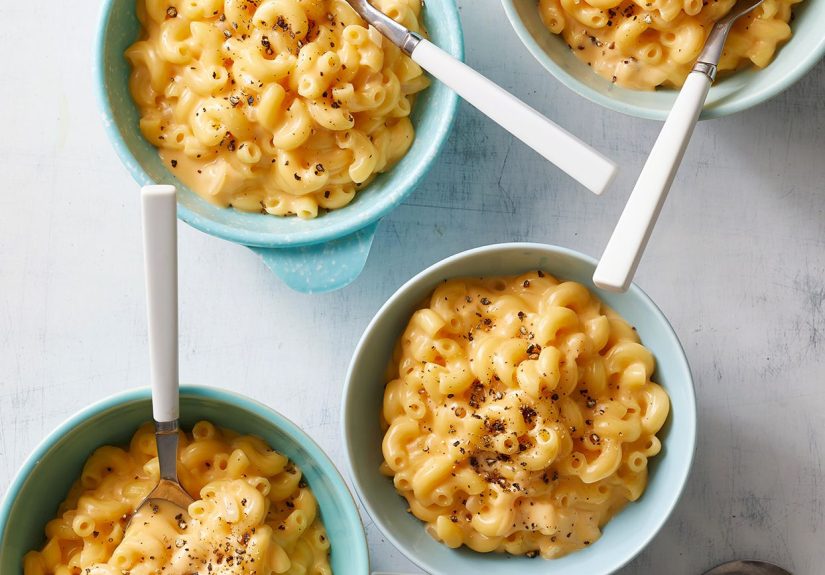
For creamy stovetop mac: toss pasta with sauce, rest 2 minutes, and serve immediately.
For baked mac: pour into a buttered dish, top with cheese and/or buttered breadcrumbs, then bake until bubbly.
Let it rest before serving so it sets slightly and scoops cleanly.
Troubleshooting: When Mac and Cheese Tries to Ruin Your Day
Problem: The sauce is grainy
- Cause: overheating the cheese (boiling is the #1 villain).
- Fix: lower the heat, add a splash of warm milk, and stir gently. In the future, add cheese off-heat or on very low heat.
- Prevention: grate your own cheese and add it gradually.
Problem: The sauce broke (oily, separated)
- Cause: too much heat, too little water, or an unstable emulsion.
- Fix: whisk in warm milk a tablespoon at a time; sometimes a small amount of starch (like cornstarch slurry) can help recover it.
- Prevention: use a béchamel base, evaporated milk + starch method, or sodium citrate for extra insurance.
Problem: It’s dry after baking
- Cause: not enough sauce, overbaking, or pasta absorbing moisture during hold time.
- Fix: stir in a little warm milk before serving, or serve with a drizzle of warm cheese sauce on top (nobody will complain).
- Prevention: make more sauce than you think you need, and bake just until bubbly.
Problem: The top is bland or soggy
- Fix: toast breadcrumbs in butter before topping, season them, and bake uncovered.
- Upgrade: mix breadcrumbs with Parmesan for extra punch.
Flavor Variations That Still Taste Like Mac and Cheese
Mac and cheese is basically a delicious blank canvas that politely asks for customization. Here are ideas that
don’t overwhelm the cheese:
- Classic comfort: cheddar + Gruyère, mustard powder, pinch of nutmeg
- Buffalo-style: add hot sauce to the sauce and fold in shredded chicken
- BBQ brisket mac: smoky cheddar, a spoon of barbecue sauce, brisket on top
- Veggie-forward: roasted broccoli, peas, sautéed mushrooms, or caramelized onions
- Grown-up crunch: panko + butter + Parmesan + cracked pepper
- Spicy: pepper jack + jalapeños (fresh or pickled), plus a squeeze of lime at the end
Make-Ahead, Storage, and Reheating Without Regret
Baked mac and cheese is famously make-ahead friendly. Assemble it, cover, refrigerate, and bake when needed.
Just remember: pasta keeps absorbing sauce over time, so a make-ahead dish benefits from extra sauce.
How to store leftovers
- Cool quickly, refrigerate promptly, and keep in an airtight container.
- For best food safety, aim to eat refrigerated leftovers within a few days.
How to reheat so it stays creamy
- Microwave: add a splash of milk, cover, heat in short bursts, and stir.
- Oven: cover with foil, add a little milk, warm gently, then uncover briefly to revive the top.
- Reheat only what you’ll eatreheating the whole batch repeatedly is hard on texture (and your patience).
of Mac and Cheese Experiences (Because This Dish Has a Social Life)
Macaroni and cheese doesn’t just live in kitchensit lives in memories. It’s the dish that shows up when someone
doesn’t know what to bring, when someone knows exactly what to bring, and when the group text says, “No, seriously,
we need something that everyone will eat.” Mac and cheese is the friend who never flakes. It arrives hot, it
comforts quietly, and it somehow disappears faster than the “fun appetizer” that took two hours and three emotional
breakdowns to assemble.
For a lot of people, the first mac and cheese experience is boxed: the iconic neon-orange comfort that tastes like
after-school TV and not having to do taxes yet. It’s quick, it’s salty, it’s reliable, and it’s the reason many of
us grew up believing “cheese sauce” is a food group. Then comes the first homemade versionoften at a potluck, a
holiday dinner, or a friend’s house where somebody’s aunt is guarding the casserole dish like it’s classified
information. Homemade mac has weight. It has drama. It has a browned top that crackles when the spoon breaks
through, like the dish is applauding itself.
And then there’s the great debate: creamy vs. baked. Creamy stovetop mac feels like a cozy sweatersoft, rich,
and best enjoyed immediately. Baked mac feels like an event. It sits in the middle of the table, steaming, asking
for attention. It gives you edgesthose caramelized, extra-browned corners that people quietly angle for on their
second scoop. It also gives you that “sliceable” moment when the dish has rested just long enough to hold together,
which makes everyone feel like something important is happening, even if it’s just noodles and cheese.
Mac and cheese is also a confidence-builderright up until it isn’t. Most cooks have at least one story where the
sauce went grainy, the top went too dark, or the whole thing looked fine until it hit the table and separated into
“pasta” and “mysterious oil sheen.” The funny part is that mac and cheese is forgiving in the way good friends are
forgiving: add a splash of milk, stir gently, and it usually comes back. Even the “oops” versions still taste like
something you want to eat on the couch with a blanket. You might not brag about it, but you’ll absolutely finish it.
Over time, mac and cheese becomes a personal signature. Some people swear by mustard powder. Some insist on Gruyère.
Some add jalapeños and call it personality. Some treat the breadcrumb topping as the main event, toasting it first
and seasoning it like it’s a steak. And on holidaysespecially in families where baked mac and cheese is tradition
the dish becomes more than food. It’s a marker of who made it, how it’s supposed to look, and what it means when it
finally lands on the table. That’s the magic: mac and cheese is simple enough to be everyday comfort and meaningful
enough to be a centerpiece. Not bad for noodles in a cheese bath.
Conclusion
Great macaroni and cheese isn’t about being fancyit’s about being intentional. Choose a pasta shape that grabs sauce,
build a stable cheese sauce (béchamel, evaporated milk, or sodium citrate), keep the heat gentle, and balance flavor
with meltability. Whether you’re making creamy stovetop mac for a Tuesday or baked mac and cheese for a holiday table,
the goal is the same: a dish that tastes like comfort, confidence, and “yes, I’m taking leftovers.”