Table of Contents >> Show >> Hide
Somewhere between “I’m just going to leave this here” and “someone else will deal with it,” a tiny crack appears in the
social contract. Multiply that crack by a few million daily interactions, andcongratswe’ve built a whole vibe:
the American laziness epidemic (also known as Everyday Selfishness: The Extended Cut).
To be clear: this isn’t a pitchfork-and-torches article about “people these days.” Most folks are trying their best.
But modern life is a buffet of convenience, and it’s easy to slip into habits that are “minor” for us and a complete
pain for everyone else. The result? A thousand tiny frictionsmess, noise, delays, danger, and stressthat add up.
This guide is a funny-but-serious look at common decency fails you’ve probably witnessed (orno judgmentaccidentally committed),
plus why they happen and how to push back. Think of it as public etiquette with a side of “please don’t be the main character in aisle five.”
What People Mean by “The American Laziness Epidemic”
When people say “laziness,” they’re usually not talking about medical fatigue, burnout, disability, or depression.
They’re talking about a specific pattern: choosing the easiest option even when it dumps time, cost, or risk on strangers.
It’s less “I’m tired” and more “I can’t be bothered.”
In everyday life, the “epidemic” shows up as incivility (small rude behaviors), entitlement (“rules are for other people”),
and diffusion of responsibility (“someone else will fix it”). None of these require a villain.
They only require a moment where empathy loses to convenience.
50 Times Selfish People Lost Common Decency
Here are 50 real-world “common decency” breakdownsgrouped by where they happenso you can spot the pattern (and avoid becoming the pattern).
Parking Lots, Stores, and Other Places Where Hope Goes to Die
- Leaving the shopping cart in a parking spot like it’s a modern art installation called “Not My Problem.”
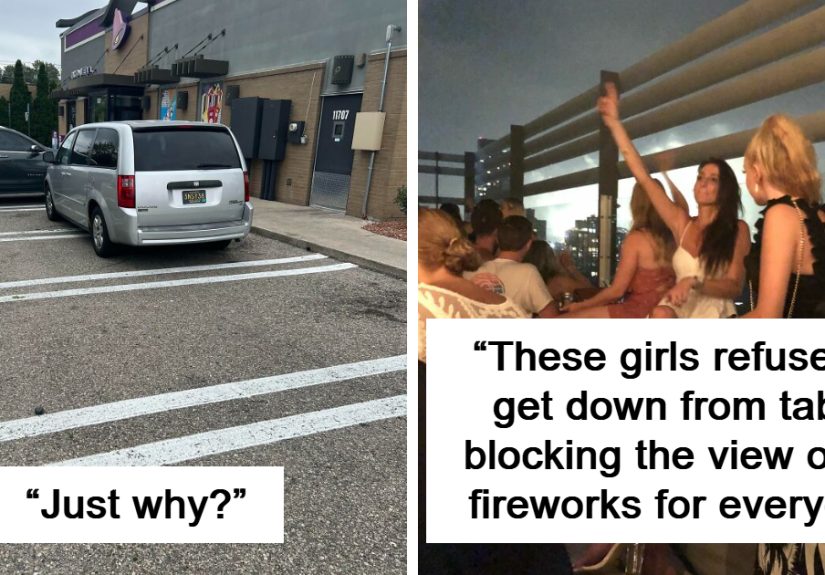
- Parking across two spaces to “protect the paint,” as if your car is a rare museum piece on loan.
- Stopping your cart sideways in the aisle and then wandering awayblocking traffic like an unpaid construction crew.
- Putting frozen food on a random shelf because walking back to the freezer is apparently a mountain expedition.
- Leaving trash in the cart or basket for an employee to find like a surprise party nobody wanted.
- Letting your kid open snacks and abandon the evidence like a tiny raccoon with a credit line.
- Testing products and leaving a mess (makeup smears, torn packaging) as if “sampling” means “vandalizing politely.”
- Cutting in line with the classic excuse: “I’m in a hurry”yes, so is everyone, including time itself.
- Blocking the self-checkout area while you reorganize your entire life philosophy and maybe your taxes.
- Returning items used and gross because “the return policy exists,” not because “morals exist.”
Roads and Sidewalks: Where Seconds Become Everyone’s Problem
- Texting while driving because risking strangers’ lives feels like a reasonable price for sending “lol.”
- Not using turn signals as if communicating is a premium subscription feature.
- Blocking an intersection when traffic stops, trapping cross traffic like a puzzle nobody chose.
- Tailgating to intimidate physics into making more room.
- Using the shoulder as your personal express lanea move that says, “I’m the main character and you are NPCs.”
- Parking in a fire lane “for just a second”which is always longer than a second and always during the busiest time.
- Stopping at the top of an escalator to check your phone like you’ve just discovered gravity.
- Walking four-across on a sidewalk at a pace best described as “museum tour of air.”
- Blasting audio in public because headphones are apparently a government conspiracy.
- Dropping litter like the ground is a magical trash-eating creature (it isn’t).
Apartment Buildings and Neighborhood Life
- Leaving garbage next to the bin instead of inside it, creating a “trash buffet” for animals and ants.
- Not picking up after your dog and letting the sidewalk become a surprise obstacle course.
- Parking in front of someone’s driveway or mailbox access because your convenience outranks their day.
- Playing loud music late at night and acting shocked that other humans also exist.
- Letting cigarette butts fly because the world is your ashtray, apparently.
- Ignoring shared laundry rules (hogging machines, leaving clothes for hours) like the washer is your personal storage unit.
- Dumping furniture illegally with the optimistic plan: “Eventually, it becomes someone else’s problem.”
- Not returning borrowed tools and then saying “I forgot” with the confidence of a sitcom character.
- Stealing deliveries or “accidentally” keeping misdelivered packagesconvenience with a criminal aftertaste.
- Being loudly rude to neighbors and service workers and calling it “just being honest.”
Work, School, and Anywhere “Team” Is Supposed to Mean Something
- Leaving the office kitchen a mess like the cleaning fairy runs on salary and hope.
- Taking the last of something (coffee, paper towels, printer paper) and not replacing itclassic “future people can suffer.”
- Scheduling meetings without an agendaa time-sink disguised as productivity.
- Showing up unprepared and then making the group re-explain everything like a live reboot of yesterday.
- “Reply all” storms that turn one email into a digital traffic pileup.
- Taking credit for someone else’s work because honesty was inconvenient today.
- Ignoring basic hygiene norms (not washing hands, coughing openly) like germs are a personal brand.
- Being harsh to frontline workers for policies they didn’t invent, like yelling at a thermometer for a fever.
- Weaponized incompetence: pretending not to know how to do basic tasks so someone else will do them forever.
- Ghosting commitmentsnot replying, not showing, not cancelingleaving other people holding the bag and the schedule.
Gyms, Planes, Parks, and Other Shared Spaces
- Not wiping gym equipment after usesharing sweat like it’s a gift.
- Leaving weights everywhere because re-racking is apparently the final boss of fitness.
- Hogging machines while scrollinga workout for your thumbs, not your body.
- Leaving trash in parks and calling yourself “an outdoorsy person.” (Nature is not your janitor.)
- Ignoring “leave no trace” basics like packing out what you packed inbecause responsibility didn’t fit in the backpack.
- Unruly airplane behaviorrefusing crew instructions, escalating conflictsturning a flight into a group punishment.
- Boarding chaos with giant carry-ons that don’t fit, delaying everyone like a slow-motion suitcase tragedy.
- Reclining aggressively without checking behind youa tiny move that can ruin someone’s meal, laptop, or knees.
- Public restroom destruction (paper everywhere, unflushed toilets) like cleanliness is a hobby for other people.
- Turning everything into a scam (robocalls, spoofing, shady tactics): selfishness professionalized into an industry.
Why This Keeps Happening
Convenience culture trains “minimum effort” as the default
When apps deliver food, cars, entertainment, and answers instantly, “a little inconvenience” can feel offensive.
That mindset can spill into public life: returning a cart feels like extra work, waiting your turn feels like injustice,
and cleaning up after yourself feels optional.
We’re overstimulated, impatient, and always “behind”
People are juggling schedules, money stress, notifications, and exhaustion. Under pressure, brains shortcut.
The problem is when the shortcut becomes a lifestyleand the bill gets handed to strangers.
Low trust makes people act like everyone’s out for themselves
When you believe “no one else cares,” you’re less motivated to care. That creates a loop: the messier the world feels,
the more people treat it like a lost cause, and the mess gets messier.
Small disorder spreads
A trashed aisle, a littered sidewalk, or a rude interaction can signal, “Norms don’t apply here.”
Once that signal is loud enough, decency becomes the exception instead of the expectation.
How to Fight Back Without Turning Into the “Hall Monitor From Hell”
You can’t fix society in one afternoon. But you can reduce the everyday drag by practicing “high-impact courtesy”:
small actions that prevent a chain reaction of inconvenience.
Do the tiny thing that saves ten tiny things
- Return the cart. You just prevented a dent, an argument, and a parking-lot obstacle course.
- Throw trash away even if it’s not yours. It’s not “fair,” but it’s effective.
- Put the item back where it belongs. Employees are not your personal cleanup crew.
- Pause before you blast audio. Public space is shared space.
Use low-drama phrases when you must speak up
- Line cutter: “Ohthere’s actually a line back here.”
- Blocking aisle: “Excuse mecould I squeeze by?” (said like a human, not a courtroom attorney)
- Public speakerphone: “Hey, would you mind using headphones? It’s a bit loud in here.”
- Parking chaos: “I think you’re in the fire lanejust a heads up.”
Model the norm you want to live in
This sounds cheesy until you realize norms are basically peer pressure with better branding.
When people regularly see courtesyletting others merge, keeping shared spaces clean, treating workers like humans
the “default setting” shifts. Slowly. Annoyingly. But it shifts.
Conclusion: Decency Is a Shortcut Too
The funny twist is that common decency is efficient. It reduces conflict, mess, delays, accidents, and stress.
A culture of “someone else will handle it” is exhausting for everyoneincluding the people doing it.
So if you’re tired of the American laziness epidemic, you don’t need a grand gesture. You need a series of tiny choices:
clean up your slice of the world, respect the shared spaces, and treat other humans like they’re real (because they are).
That’s not “being perfect.” That’s just being house-trained in public.
Experiences That Feel Way Too Familiar (And Why They Matter)
Imagine a normal Tuesday. Not a dramatic Tuesdayjust a regular, mildly chaotic one where everybody’s busy and nobody has time.
You leave the house and the sidewalk is peppered with little reminders that someone, somewhere, chose convenience over courtesy:
a crushed cup by the curb, a dog mess nobody picked up, a scooter parked sideways like it fainted mid-journey.
None of these things will make the news. They’ll just make your day a little more annoying than it needed to be.
You get to the parking lot and it’s the usual scavenger hunt: not for a spot, but for a spot that isn’t guarded by an abandoned cart.
Someone parked across two spaces “to be safe,” which forces another driver to squeeze into a tight corner, which means their door
brushes your car, which means two strangers now have a staring contest over paint that probably wasn’t flawless to begin with.
The original two-space parker is already inside, blissfully unaware they started a tiny domino chain of frustration.
In the store, you watch a person stop their cart right in the aisle’s center, scroll their phone, and treat the aisle like a private living room.
Another customer tries to pass, hesitates, then squeezes by. A third person, now blocked, sighs loudlybecause in America, sighing is
our official conflict resolution strategy. Ten seconds later, you reach the freezer section and see a tub of ice cream sitting on a shelf
next to pasta sauce. Someone decided they didn’t want it, but also didn’t want to walk 30 feet. That choice turns into waste.
Waste turns into higher costs. Higher costs turn into more stress. All from one “meh, whatever.”
Later, you pass through a shared restroom and it’s a mystery novel written by chaos: paper towels everywhere, a sink splashed like a water park,
and a toilet that looks like someone tried to negotiate with it instead of using the handle. The frustrating part isn’t just the messit’s what
it signals: “I’m not cleaning this, so you can.” That message lands on the next person, and the next person, until everyone feels a little less
responsible and a little more cynical.
On the drive home, you get cut off by a driver who seems personally offended by the concept of waiting. You glance over andof coursetheir phone
is in their hand like it’s steering the car. You don’t need to know them to know the mindset: “My message matters more than your safety.”
That’s what everyday selfishness looks like at 40 miles per hour. Not dramatic. Just dangerous.
And then there’s the digital layer: the robocalls, the spam texts, the shady “limited-time offers” that exist solely because someone decided
exploiting strangers was a valid career path. Even if you never fall for the scam, you still pay in attention, interruptions, and stress.
It’s the same pattern in a new outfit: offloading your costs onto other people.
These experiences matter because they shape how we treat each other. If your day is full of small disrespect, it becomes easier to justify
small disrespect of your own. But the opposite is also true: courtesy is contagious. When someone returns a cart, holds the door, keeps the aisle clear,
or treats workers with patience, it creates a small moment of relief. Enough relief, repeated often, starts to feel like a culture again.