Table of Contents >> Show >> Hide
- What Is Avascular Necrosis in Sickle Cell Disease?
- Symptoms of Avascular Necrosis in Sickle Cell Disease
- How Doctors Diagnose Avascular Necrosis
- Treatment Options for AVN in Sickle Cell Disease
- Living With AVN and Sickle Cell Disease
- When to Talk to Your Care Team
- Real-Life Experiences with AVN in Sickle Cell Disease
If you live with sickle cell disease, you probably already feel like you have a PhD in medical complications.
Unfortunately, one of the sneakier ones is avascular necrosis (AVN), also called
osteonecrosis – a condition where bone tissue dies because it isn’t getting enough blood.
In sickle cell disease, those rigid, sickled red blood cells can clog tiny blood vessels in the bones, cutting off
circulation and slowly damaging joints over time.
The hips and shoulders are the usual troublemakers, but other joints can be involved too. AVN can start quietly,
but if it isn’t caught early, it can progress to joint collapse, severe pain, and disability. Studies suggest that
avascular necrosis affects roughly 10–30% of people with sickle cell disease, and in some adult
groups, up to half of patients show signs of AVN by their mid-30s.
The good news? With earlier diagnosis, better pain control, and improving surgical options, people are living more
active lives even with AVN. This guide walks you through symptoms, diagnosis, treatment options, and real-life
experiences so you can better understand what’s happening inside your joints – and how to advocate for the
care you deserve.
What Is Avascular Necrosis in Sickle Cell Disease?
Avascular necrosis literally means “death from lack of blood.” In AVN, the blood supply to part of a
bone is reduced or completely blocked. Without oxygen and nutrients, bone cells begin to die, the bone weakens, and
the smooth joint surface can eventually crack and collapse.
Why sickle cell disease causes AVN
In sickle cell disease (SCD), red blood cells can become stiff and crescent-shaped. These sickled cells:
- Get stuck in small blood vessels (vaso-occlusion)
- Reduce blood flow to the bone (ischemia)
- Trigger cycles of injury and inflammation
Bones at the ends of long bones – especially the femoral head (hip) and
humeral head (shoulder) – rely on tiny, delicate vessels that are very vulnerable to blockages. Over
time, repeated episodes of reduced blood flow can damage the bone, even in people who feel relatively “okay” day to
day.
How common is AVN in sickle cell disease?
AVN is considered one of the most important musculoskeletal complications of SCD:
- Studies report AVN in about 10–30% of people with SCD overall.
- Some cohorts of adults with SCD show hip or shoulder AVN in up to 50% of patients by age 35.
- AVN often affects both hips, and can also involve shoulders and, less commonly, other bones.
Because joint pain is so common in sickle cell disease, early AVN can be mistaken for a “typical pain crisis” and go
undiagnosed for months or years. That’s why understanding the symptoms and patterns really matters.
Symptoms of Avascular Necrosis in Sickle Cell Disease
AVN doesn’t usually show up with a big dramatic moment. It tends to creep in, starting subtly and getting more obvious
over time. Early on, more than half of patients may have no symptoms, even though changes are already
visible on MRI.
Early warning signs
In people with sickle cell disease, early symptoms of AVN often include:
- Dull, aching pain in the hip, groin, buttock, or shoulder
- Pain that worsens with weight-bearing or activity (walking, climbing stairs)
- Stiffness or feeling “tight” in the joint first thing in the morning
- A slight limp or favoring one leg if the hip is involved
Unlike a sudden vaso-occlusive crisis, AVN pain may:
- Be more persistent and localized to one joint
- Flare with activity and ease with rest, especially in earlier stages
- Gradually get worse over months rather than appearing overnight
Progressive symptoms
As AVN advances and more of the bone collapses, symptoms typically escalate:
- Constant pain, including at rest and at night
- More obvious limping and difficulty walking long distances
- Reduced range of motion – trouble bending the hip or lifting the arm overhead
- Clicking, grinding, or a feeling that the joint might “give out”
Eventually, the damaged bone surface can lead to secondary osteoarthritis, where both the bone and
cartilage are worn, causing long-term pain and stiffness.
Children, teens, and adults
AVN can occur at any age in people with SCD, but:
- In children and teens, AVN often presents as a limp, hip pain, or “growing pains” that don’t quite make sense.
- In young adults, chronic hip pain may be blamed on activity or work until imaging reveals AVN.
- In older adults with SCD, AVN can be part of a broader picture of chronic pain and mobility issues.
How Doctors Diagnose Avascular Necrosis
Diagnosing AVN is part detective work, part imaging. Your healthcare team will start with a detailed history and exam,
then use tests to confirm what’s going on.
Physical exam
During an exam, a clinician may:
- Check how far the joint moves in different directions
- Look for pain with specific movements (like rotating the hip)
- Watch how you walk and stand
These findings can suggest AVN, but imaging is needed to be sure and to stage the disease.
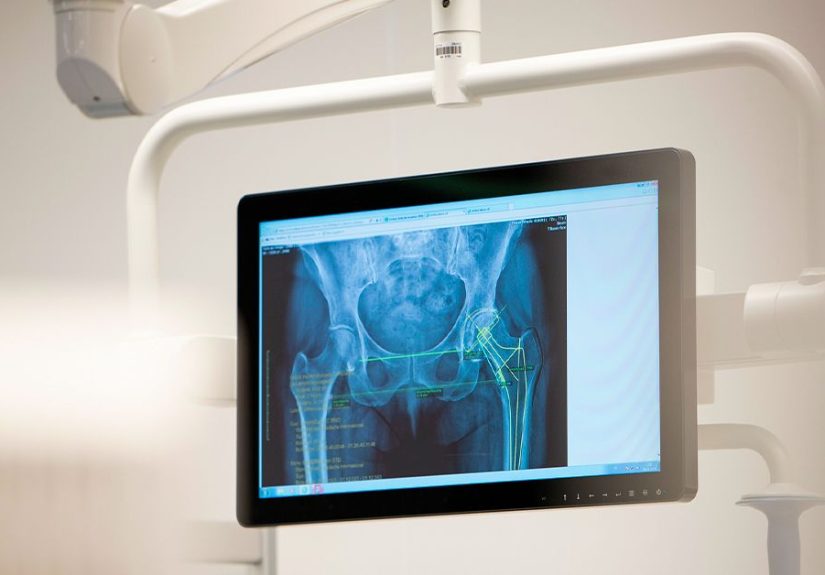
Imaging tests
-
X-rays: Often the first step. Early on, X-rays can look normal, but as AVN progresses, they may show
bone collapse, joint space narrowing, or arthritis. -
MRI: The gold standard for early diagnosis. MRI can detect AVN
before changes appear on X-ray, when joint-preserving treatments have the best chance to help. - CT scans: Sometimes used to look more closely at bone structure and collapse.
Several staging systems (like Ficat–Arlet) help categorize AVN from early “pre-collapse” stages to advanced collapse
and arthritis. Staging helps guide treatment decisions – for example, whether joint-preserving surgery is still
realistic or if joint replacement is more appropriate.
Treatment Options for AVN in Sickle Cell Disease
There isn’t a one-size-fits-all treatment. Management depends on:
- Which joint is involved
- How advanced the AVN is
- Your age, activity level, and overall health
- How well your sickle cell disease is controlled
Treatment usually combines managing sickle cell disease itself, supporting the joint, and using
orthopedic procedures when needed.
Medical and non-surgical treatment
-
Pain management: This can include acetaminophen, NSAIDs (if safe for you), and sometimes
carefully monitored opioids for severe pain. Chronic pain programs may help when pain is long-lasting and complex. -
Activity modification: Using a cane, crutches, or walker temporarily to reduce weight-bearing on the
affected hip can ease symptoms and may slow progression in early stages. -
Physical therapy: Strengthening supporting muscles, improving flexibility, and working on balance can
improve function and reduce stress on the joint. -
Optimizing SCD care: Treatments like hydroxyurea or chronic transfusion programs can
reduce vaso-occlusive crises and may indirectly help protect bones by improving overall blood flow and reducing
inflammation.
Some medications (like bisphosphonates or bone-targeted therapies) have been studied in AVN, but evidence in sickle cell
patients is still evolving, and they’re not standard-of-care for everyone.
Joint-preserving surgery
In earlier stages – before the bone collapses – surgeons may try to save the joint with procedures such
as:
-
Core decompression: A surgeon drills one or more channels into the femoral or humeral head to reduce
pressure, promote new blood vessel growth, and relieve pain. In SCD-related AVN of the hip, core decompression
has been shown to improve pain and delay the need for total hip replacement, especially when done before major
collapse. -
Bone grafting or biologic augmentation: Sometimes core decompression is combined with bone grafts or
stem cell–based treatments in an attempt to support bone healing and regeneration. -
Osteotomy: In selected young patients, reshaping the bone to shift weight away from the necrotic area
can sometimes preserve the joint longer.
These procedures work best when AVN is caught early – another reason not to ignore persistent joint pain.
Joint replacement surgery
When the joint surface has collapsed or arthritis is advanced, total hip arthroplasty (THA) or
shoulder replacement may be the best option to restore function and relieve pain.
-
In SCD, hip replacement is more complex due to fragile bone, higher infection risk, and the need for meticulous
perioperative care – but outcomes have improved significantly over time. - Multidisciplinary planning with hematology, anesthesia, and orthopedics is critical to reduce surgical complications.
For many people, joint replacement can be life-changing: less pain, more movement, better sleep, and a return to
activities that had slowly slipped away.
Living With AVN and Sickle Cell Disease
AVN doesn’t just affect bones; it affects daily life: your ability to work, care for family, walk,
exercise, or even enjoy a simple grocery run without planning every step.
Practical strategies
-
Plan your energy: Combine errands, use delivery when possible, and build in rest breaks on days with a
lot of walking. -
Supportive devices are tools, not “failures”: Canes, crutches, or braces can reduce pain and protect
joints during flares or while recovering from surgery. -
Home hacks: Raised toilet seats, shower chairs, grab bars, and chairs with armrests make standing up
and sitting down far less painful. -
Stay as active as you safely can: Low-impact movement (like swimming or gentle cycling) helps keep
muscles strong without pounding your joints.
Emotional and mental health
Chronic pain and mobility limits can take a toll on mood, relationships, and identity. Many people with AVN and SCD
describe:
- Feeling frustrated when their pain is dismissed as “just another crisis”
- Worrying about long-term independence or needing surgery at a young age
- Struggling with work, school, or parenting while in pain
Counseling, support groups, and peer communities (online or in-person) can make a big difference in coping,
decision-making, and feeling less alone.
And as always: this information is educational and not a substitute for medical care. If you suspect
AVN or have persistent joint pain, bring it up with your hematologist or primary care provider.
When to Talk to Your Care Team
Consider contacting your healthcare team if:
- You have ongoing hip, groin, shoulder, or knee pain that doesn’t match your usual crisis pattern.
- You notice a new limp, difficulty walking, or trouble lifting your arm.
- Pain in one joint keeps returning to the same spot or worsens over time.
- You’ve already been told you have early AVN and symptoms are changing or intensifying.
Ask specifically whether AVN should be ruled out, and whether MRI is appropriate. The earlier AVN is
identified, the more options you have to protect your joints.
Real-Life Experiences with AVN in Sickle Cell Disease
Statistics are helpful, but they don’t tell you what it’s like to live in a body where bones and blood cells are
constantly negotiating. The stories below are based on common experiences many patients and caregivers describe.
“I thought it was just another hip crisis”
Imagine a 22-year-old college student with sickle cell disease who’s used to vaso-occlusive pain in the legs and back.
When a new deep ache shows up in one hip, they chalk it up to stress, too much walking on campus, and not enough water.
The pain flares during finals, settles a bit during break, and then slowly becomes a recurring guest star in their life.
At first, they can push through it – shorter walks, more elevator, fewer stairs. Over time, the limp becomes noticeable.
Friends ask if they “pulled something at the gym.” A doctor eventually orders an X-ray, which looks normal. Another year
passes before an MRI finally reveals early AVN of the femoral head.
With that clarity, the care team springs into action: a tailored physical therapy plan, instructions to avoid high-impact
activities, and a referral to orthopedics to discuss options like core decompression while the joint is still salvageable.
The student describes the diagnosis as “scary but also a relief” – at least now, the pain has a name and a plan.
Balancing surgery decisions and everyday life
Another common scenario is someone in their 30s who’s already living with chronic SCD complications. Walking from the
parking lot to work feels like a marathon. They lean heavily on a cane and measure events not by distance, but by how many
chairs will be available.
Imaging shows advanced AVN with partial collapse of the hip joint. At this point, joint-preserving options are limited,
and total hip replacement is on the table. The idea of major surgery is intimidating – especially for
someone who’s already spent a lot of time in hospitals – but so is the prospect of years of severe pain.
People in this situation often talk about:
- Weighing the potential benefits of surgery (less pain, more mobility) against the risks and recovery time
- Needing clear communication between their hematologist, surgeon, and anesthesiologist
- Planning time off work or school and organizing family support for the post-op period
Many who go ahead with hip replacement report that, after the initial recovery, they experience a level of comfort they
hadn’t felt in years – being able to walk farther, sleep better, and enjoy social activities with less fear of triggering
severe joint pain.
Coping as a caregiver
Caregivers – parents, partners, siblings, friends – often face their own emotional challenges. A parent watching a child
limp from AVN may feel guilty or helpless. A partner may quietly adjust their life to handle more physical tasks – lifting
groceries, walking the dog, doing more household work – without fully sharing how tired they feel.
Successful caregiver strategies often include:
- Sharing information – learning about AVN and SCD together to make informed decisions
- Setting boundaries – being supportive without burning out completely
- Seeking help – from extended family, social workers, or community resources
Many caregivers say that once they understand AVN is a structural bone problem – not just “more pain crises” – they’re
better able to advocate for imaging, specialist referrals, and accommodations at school or work.
Finding your “new normal”
Living with AVN and sickle cell disease often means redefining what “normal” looks like. That might include:
- New routines (stretching before getting out of bed, planning rest breaks into outings)
- New tools (mobility aids, braces, supportive shoes)
- New priorities (saying no to activities that will cost you three days of pain)
People who adapt best often describe three key themes:
- Honesty – with themselves and others about limitations and pain
- Flexibility – being willing to change strategies as their condition changes
- Partnership – working with their healthcare team as collaborators rather than passive recipients of care
AVN in sickle cell disease is serious, but it is not the end of movement or independence. With early
detection, thoughtful treatment, and realistic lifestyle adjustments, many people continue to study, work, parent, and
pursue goals that matter deeply to them – even if they now plan those goals with their joints in mind.