Table of Contents >> Show >> Hide
- The ER Runs on Limits Before It Runs on Coffee
- Where Creativity Actually Shows Up in the ER
- What the Journey Teaches a Doctor Over Time
- The Emotional Math of Emergency Medicine
- A Smarter ER Is Also a More Creative One
- Conclusion: Constraints Are the Canvas
- Extended Reflection: Experiences From the Front Edge of the Shift
If you have never spent time inside a busy emergency room, it is easy to imagine the ER as a place powered by dramatic music, heroic monologues, and one perfectly timed defibrillator shock. Real emergency medicine is less cinematic and far more impressive. It runs on fluorescent lights, stubborn printers, half-finished coffees, rapid judgment, and the strange miracle of a team that keeps moving even when the system around it is wheezing like an old accordion.
In the United States, emergency departments handle more than 155 million visits a year. That number alone explains why the ER often feels less like a room and more like a living weather system. Patients keep arriving. Needs keep changing. Beds do not magically reproduce. Admitted patients wait for inpatient rooms. Documentation piles up. Families want answers now, which is understandable because nobody visits the ER for the ambiance.
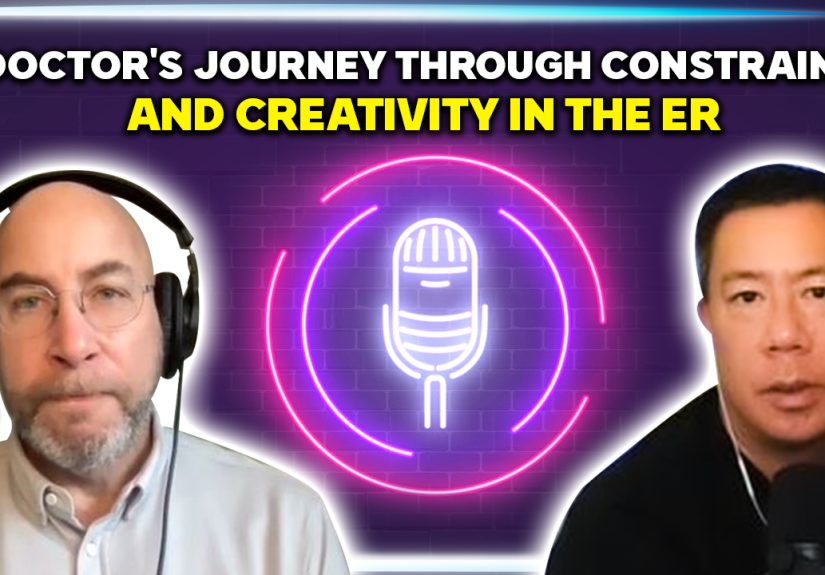
That is why a doctor’s journey through constraints and creativity in the ER is not a side story. It is the story. Emergency physicians work inside limits that are operational, emotional, ethical, and deeply human. The best ones learn that creativity in the ER is not about improvising recklessly. It is about making care safer, faster, clearer, and more humane when the environment keeps trying to turn all of those goals into a group project with no deadline and three missing chairs.
The ER Runs on Limits Before It Runs on Coffee
Every ER doctor enters the specialty knowing the basics: people will arrive sick, scared, injured, confused, intoxicated, unstable, or all of the above. What many discover more fully on the job is that clinical skill alone is never enough. The ER is a place where medicine collides with operations, public health, staffing models, insurance realities, hospital bed shortages, and the stubborn fact that time moves at the same speed no matter how many patients are in the waiting room.
Constraint #1: The Patient Board Does Not Believe in Moderation
Emergency medicine is a specialty of unpredictability. On one shift, the physician may see a child with a fever, an older adult with sepsis, a construction worker with a crush injury, a college student with a panic attack, and a patient with chest pain that turns out to be either heartburn or a life-changing cardiac emergency. The doctor does not get a neat sorting hat. Everyone arrives undifferentiated, which is a fancy way of saying, “Good luck, figure it out fast.”
That pressure becomes even more intense when the department is crowded. Crowding is not just an inconvenience. It changes the texture of care. Delays increase. Reassessments become harder. Conversations get interrupted. Boarding, when admitted patients remain in the ED waiting for inpatient beds, can consume space, staffing attention, and mental bandwidth that the ER needs for new arrivals. So the emergency physician is not only diagnosing illness. They are practicing medicine inside a moving bottleneck.
Constraint #2: The Chart Is Always Hungry
Then there is the electronic health record, the digital companion nobody invited to the party but everyone is somehow responsible for feeding. Documentation matters. It protects patients, coordinates care, supports billing, records decision-making, and allows handoffs to happen with less guesswork. But documentation also takes time, clicks, attention, and emotional energy.
For an ER doctor, that creates a maddening split screen. One half of the brain is focused on the patient in front of them. The other half is negotiating alerts, templates, handoff notes, medication reconciliation, discharge instructions, and that one field the system absolutely refuses to let you skip even though everyone in the room knows it is nonsense. A doctor can save a life at 2:07 and still have the chart whispering at 2:08, “Wonderful. Now please select a smart phrase.”
Constraint #3: The Clock Is Loud, Even When Nobody Mentions It
The emergency physician also works under a specific kind of time pressure. Some illnesses punish delay. Stroke, sepsis, trauma, airway compromise, and heart attack do not care that the department is short-staffed or that radiology is backed up. Timeliness in the ER is not merely about customer service. It is a safety issue.
That means the ER doctor develops an unusual relationship with time. Minutes matter, but so does sequencing. Which patient gets reassessed first? Which result changes management? Which discharge can safely happen now? Which consultant needs a call immediately, and which one can wait three minutes while the doctor confirms that the patient in room nine is not quietly getting worse? In the ER, prioritization is not abstract leadership jargon. It is survival with a stethoscope.
Where Creativity Actually Shows Up in the ER
When outsiders hear the word “creativity,” they may picture wild improvisation. In emergency medicine, the better word is adaptation. Safe adaptation. Structured adaptation. Evidence-aware adaptation. The good ER doctor is not a cowboy. They are more like an engineer of calm working in a building where the fire alarm occasionally goes off for reasons both medical and administrative.
Creativity in Flow, Not Just in Heroics
Some of the most meaningful creativity in the ER has nothing to do with dramatic bedside procedures. It happens in how patients move through the department. Fast-track areas, observation units, standardized triage protocols, team huddles, and real-time tracking of bottlenecks all represent creative responses to a simple truth: you cannot treat patients well if they are stuck in the wrong place at the wrong time for too long.
That kind of innovation is less glamorous than television medicine, but it is often more important. A daily huddle can surface broken equipment, staffing gaps, or room turnover problems before they become patient safety events. A written triage protocol can reduce variability when the waiting room is swelling. A better handoff process can prevent a subtle but dangerous detail from being lost between shifts. None of this makes for a blockbuster trailer, but it keeps real people safer, which is a pretty strong plot twist.
Creativity at the Bedside
The bedside is where emergency physicians become masters of practical invention. Consider point-of-care ultrasound. In the hands of a trained physician, a small machine at the bedside can answer urgent questions in real time. Is there fluid around the heart? Is there a collapsed lung? Is the early pregnancy where it should be? Is the patient in heart failure? Bedside ultrasound does not replace every formal test, but it can accelerate decisions when minutes matter and resources are limited.
Creativity also appears in language. A seasoned ER doctor learns how to explain complex, frightening situations in plain English without sounding dismissive or robotic. That is harder than it looks. “Your tests are reassuring” lands differently than “Nothing is wrong,” especially for the patient whose chest pain felt very real at 1:15 a.m. A good ER physician knows that precision and empathy are not enemies. They are teammates.
Creativity in Teamwork
Emergency medicine is profoundly collaborative. Nurses, techs, pharmacists, registration staff, interpreters, consultants, EMS crews, respiratory therapists, social workers, and environmental services all shape what happens in the department. A doctor who acts like the smartest person in the room often ends up being the least useful person in the room.
The most effective ER physicians learn to use teamwork as a creative force. They huddle. They ask the nurse what changed. They close the communication loop. They invite the pharmacist into medication decisions. They recognize that the tech who says, “This patient just looks different,” may have given them the most important clinical clue of the hour.
And yes, humor sometimes appears too. Not cruel humor. Not careless humor. But the kind that keeps human beings human when the shift feels like it has been going on since the invention of fluorescent lighting. A well-timed joke can release tension, restore focus, and remind a team that exhaustion has not yet stolen its soul.
What the Journey Teaches a Doctor Over Time
Lesson One: You Cannot Control Volume, But You Can Control Clarity
One of the hardest lessons in the ER is that no physician, no matter how skilled, can single-handedly solve structural crowding. A brilliant doctor cannot personally create inpatient beds, fix national workforce shortages, or make every consult respond instantly. What they can do is think clearly inside the storm.
That means recognizing sick versus not sick. It means making safe decisions under uncertainty. It means communicating a plan cleanly enough that the rest of the team can move with confidence. In emergency medicine, clarity is compassion with operational value.
Lesson Two: Speed Without Structure Is Just Fancy Panic
Young doctors sometimes think great emergency physicians are simply fast. Experienced physicians know better. The best ER doctors are fast because they are structured. They rely on patterns, checklists, reassessment habits, mental models, and team rituals that reduce cognitive overload. Structure prevents panic from wearing a lab coat and introducing itself as efficiency.
That is especially true when the department is strained. Overcrowding increases the risk of missed details, medication errors, communication breakdowns, and dangerous delays. When the environment becomes chaotic, standardization is not the enemy of creativity. It is what makes thoughtful creativity possible.
Lesson Three: Humanity Is Not Extra Credit
Emergency doctors eventually realize that being clinically correct is not enough. A patient can receive the right diagnosis and still experience the shift as frightening, disorienting, and lonely. A family can hear accurate information and still feel abandoned if nobody translates the medical logic into human terms.
So the experienced ER physician learns tiny, high-value behaviors: sit down when delivering hard news, even briefly; say what you are worried about and what you are not worried about; update the family before they ask for the third time; acknowledge uncertainty without sounding lost; explain what happens next before leaving the room. These are small acts, but in emergency medicine small acts are often the difference between chaos and trust.
The Emotional Math of Emergency Medicine
Any honest article about a doctor’s journey through constraints and creativity in the ER has to talk about burnout. Emergency medicine asks clinicians to move quickly, make high-stakes decisions, absorb grief, manage aggression, document relentlessly, and keep going. Studies have found a heavy burden of burnout in emergency physicians, and that should surprise exactly no one who has ever watched an ED board turn solid red before lunch.
But burnout is not just about fatigue. It is also about mismatch: between what the work requires and what the system supports, between the care patients deserve and the resources available, between the emotional intensity of the job and the time allowed to process it. Boarding can worsen that mismatch. So can broken workflows, excessive clicks, poor staffing, and the creeping feeling that the doctor is spending more time proving care happened than delivering it.
And yet many ER physicians stay in the field because emergency medicine still offers something rare. It offers immediacy, purpose, variety, teamwork, and moments of unmistakable meaning. You can help a terrified patient breathe easier, reassure a family, catch a subtle diagnosis in time, or guide a crisis toward stability within a single shift. The work is brutally hard. It is also, in the best moments, deeply clarifying.
A Smarter ER Is Also a More Creative One
If the ER is going to remain functional, creativity cannot be left to individual heroics. It has to become part of the system. Hospitals need better inpatient flow so boarded patients do not clog emergency care. Departments need thoughtful staffing, better handoff design, safer communication practices, and realistic approaches to documentation. Technology should reduce burden, not cosplay as progress while adding ten new clicks.
This is where emerging tools may matter. AI-assisted documentation, smarter triage support, early warning systems, and workflow optimization tools are drawing serious attention in emergency medicine. Used carefully, with guardrails for bias, validation, and clinician oversight, these tools may help doctors reclaim time for patients instead of donating their souls to the keyboard. Technology will not fix a broken system by itself, but it can become useful when it serves the work rather than interrupting it.
Conclusion: Constraints Are the Canvas
A doctor’s journey through constraints and creativity in the ER is really a journey toward disciplined adaptability. The physician begins by thinking the job is about knowing what to do. Over time, they learn it is also about knowing how to think, how to prioritize, how to communicate, how to trust a team, and how to keep humanity alive in an environment that constantly tests it.
The ER will probably never be a place of unlimited time, unlimited beds, unlimited patience, or unlimited printer functionality. But that is exactly why creativity matters. Not the flashy kind. The useful kind. The kind that turns a huddle into safer care, a bedside ultrasound into a faster answer, a better handoff into a missed-error prevention strategy, and a clear sentence into calm for a frightened patient.
That is the real artistry of emergency medicine. Under pressure, within limits, surrounded by noise, the doctor keeps building order. One decision. One reassessment. One conversation. One shift at a time.
Extended Reflection: Experiences From the Front Edge of the Shift
To understand the ER, imagine a doctor halfway through a shift that already feels a little too full. A patient with chest pain is waiting on a repeat troponin. An elderly woman with delirium needs admission but there is no upstairs bed yet. A teenager with abdominal pain is trying not to cry because everyone around her looks sicker. A psychiatric patient has been in the department far too long because placement is delayed. The board keeps updating like a slot machine designed by someone with a grudge.
This is the moment when constraints become personal. The doctor is not merely treating disease. The doctor is deciding where attention goes next, who cannot wait, which conversation must happen now, which test changes management, and which patient needs one more look because something about the room feels off. Emergency medicine is filled with these tiny judgment calls. They are easy to miss from the outside because they do not look dramatic. Often they look like a pause in a doorway, a second question, a nurse’s concern taken seriously, or a doctor choosing to recheck a patient before signing up for the next chart.
Creativity in that moment does not announce itself with fireworks. It shows up as practical intelligence. The physician uses bedside ultrasound to answer a question before radiology is ready. They ask for a huddle because three patients are competing for one critical care bed and everyone needs the same mental map. They simplify a discharge explanation because a patient who does not understand the plan is not actually safe to go home. They use the interpreter line instead of guessing. They call the consultant with a crisp, organized story because vague communication is how hours disappear.
And then there are the emotional decisions. The doctor has to tell one family that the workup looks reassuring while telling another that things are more serious than expected. They have to stay calm with the angry patient who has been waiting too long, even when the frustration is really aimed at a system that has stretched past good sense. They have to absorb suffering without becoming made of stone. This is where many emergency physicians develop the quiet habits that keep them steady: a breath before entering the room, a moment of eye contact before opening the laptop, a check-in with the nurse after a hard case, a joke at the desk that says, in effect, “We are tired, but we are still here.”
By the end of the shift, the victories rarely look neat. One patient goes home safely because the doctor caught the one clue that mattered. Another gets admitted faster because somebody escalated bed placement at the right moment. A third avoids an unnecessary test because the physician used experience, evidence, and conversation instead of reflex. None of these moments are flashy enough for television. All of them are real. That is what the journey teaches: the ER is not sustained by perfection. It is sustained by disciplined thinking, team trust, emotional control, and the kind of creativity that makes care better without making it theatrical. In a place defined by limits, that is more than problem-solving. It is a form of craft.