Table of Contents >> Show >> Hide
- What we know (and what we don’t) about the livestream death
- How livestreams turn into pressure cookers
- His family breaks silence: what that usually means in real life
- Why “death live on-air” changes everything
- Platform accountability: what “responsibility” looks like when it’s not just a slogan
- Livestream safety: practical guardrails creators can use
- What viewers can do (yes, viewers matter here)
- Why the “family breaks silence” moment hits so hard
- The bigger lesson: don’t confuse visibility with safety
- Real-world experiences related to livestream tragedies (what people describe afterward)
Content note: This article discusses a streamer’s death and alleged on-camera abuse in non-graphic terms, focusing on safety, accountability, and what families and platforms can learn.
Headlines like the one above hit like a jump-scare: “horrifying,” “live on-air,” “10 days of torture,” and then the gut-punch“his family breaks silence.”
It reads like the internet’s worst habit: turning real human suffering into a clickable sentence.
But behind the sensational phrasing is a real case that sparked serious questions about livestream culture, platform responsibility, and what happens when “content” starts calling the shots.
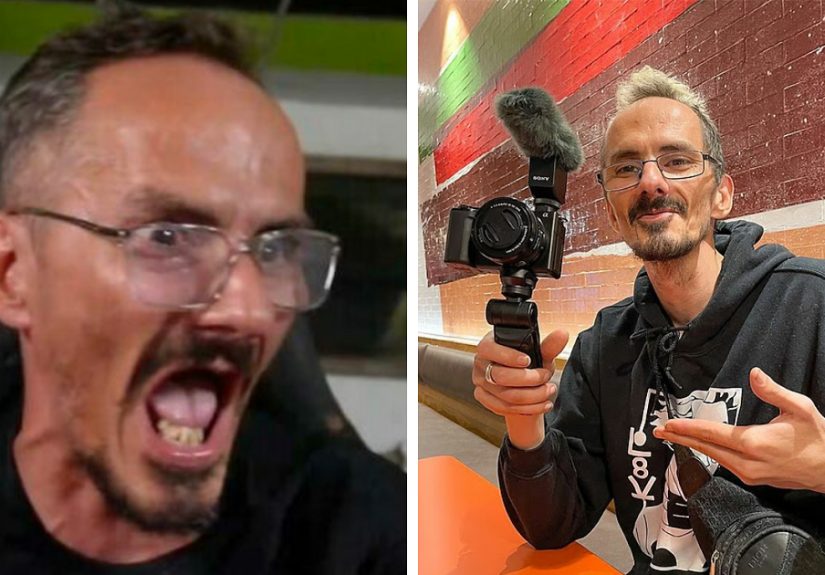
The story most often tied to this headline involves French streamer Raphaël Graven, known online as Jean Pormanove (or “JP”).
He died during a marathon livestream on the platform Kick in August 2025, after months of broadcasts where he was publicly humiliated and allegedly subjected to escalating abuse.
Investigators later said an autopsy found no signs that he died from traumatic injuries, pointing instead toward a medical or toxicological causean important detail that complicates the “torture” framing while changing none of the ethical alarm bells.
What we know (and what we don’t) about the livestream death
According to reporting by major outlets, Graven died during an extended livestream that ran for roughly 12 days (nearly 300 hours).
French authorities opened investigations into the circumstances surrounding his death and into the broader pattern of violent or abusive content shown on the channel.
In the days after, officials described the case as an example of online spaces becoming a “digital wild west,” where humiliating spectacles can flourish until something irreversible happens.
Here’s the part many headlines skip: prosecutors said the initial postmortem findings indicated the death was not caused by trauma or the intervention of another person, and that further analysis was needed.
Other reporting noted pre-existing health issues were part of what investigators considered.
That doesn’t erase the disturbing environment viewers sawit just means the legal and medical story is more complex than the most dramatic version of the headline.
In other words: “10 days of torture” is a powerful phrase, but it’s also a loaded one.
“Torture” has a specific meaning in law and in medicine.
What appears more consistently in credible reporting is language like abuse, humiliation, violence, coercion, and endangerment.
Those words are still chilling. They’re also more precise.
How livestreams turn into pressure cookers
Livestreaming is built for immediacy: you’re not watching a polished episodeyou’re watching a person’s real time, real face, real reactions.
That’s why audiences love it.
It’s also why it can go wrong faster than a group chat rumor.
1) The escalation problem
Many creators start with harmless stakes: “I’ll stay live until I win,” “I’ll do one more match,” “I’ll answer anything.”
Then the audience learns a dangerous lesson: the more extreme the moment, the bigger the reaction, the higher the donations, the louder the clip goes on social media.
The stream becomes a ladder where the only way to climb is to make the next rung wilder than the last.
2) The “it’s just a bit” trap
Groups often defend harmful behavior as a joke, a skit, a character, a prank“everyone consented.”
But livestreams don’t behave like rehearsed comedy.
When you’re exhausted, pressured, and surrounded, consent can get blurry.
“Stop” can turn into “don’t be dramatic,” and “I’m fine” can turn into “I don’t want to disappoint everyone watching.”
3) Monetization that rewards the worst moment
Livestream platforms usually have some combination of: donations, subscriptions, paid messages, and viewer challenges.
Those tools aren’t evil by default.
But they can become a vending machine for cruelty when viewers learn they can pay to steer a situation toward humiliation.
If the only “friction” is a credit card checkout, the system is basically saying: “Yes, you can buy control.”
His family breaks silence: what that usually means in real life
When a family “breaks silence,” people expect a dramatic interview and a clean storyline.
What families actually do is messierand more human.
They try to mourn while the internet runs a 24/7 highlight reel.
They try to protect their loved one’s dignity while strangers argue in comments like they’re reviewing a TV finale.
In this case, reporting described family members speaking publicly about who Graven was off-camerasomeone they loved, someone they were proud ofand how unacceptable they felt the situation had become.
Other reporting described messages linked to Graven expressing that the situation had gone too far and that he wanted out.
Whether shared through media coverage or repeated in the public conversation, these moments pulled attention away from “internet spectacle” and back toward a basic truth: a real person died.
Families in these situations tend to emphasize three things:
- Dignity: “Please stop sharing clips.” (Because grief doesn’t need a remix.)
- Truth: “Don’t invent details.” (Because misinformation spreads faster than condolences.)
- Accountability: “This didn’t come from nowhere.” (Because patterns matter.)
And here’s the hardest part: families can’t “win” online.
If they speak, people accuse them of chasing attention.
If they stay quiet, people fill the silence with rumors.
“Breaking silence” is often less about publicity and more about reclaiming controlone small boundary at a time.
Why “death live on-air” changes everything
A death associated with a livestream isn’t just a tragedyit’s a stress test of the entire creator economy.
It forces uncomfortable questions:
- Why was this content accessible for so long?
- Who had the power to stop itparticipants, moderators, the platform, viewers?
- What safeguards failed, and which ones didn’t exist in the first place?
- Why did the system make it profitable to keep going?
In reporting on the Graven case, French officials criticized the platform and emphasized the legal responsibility to remove illegal content when aware of it.
Kick also stated it was cooperating with authorities and banned co-streamers involved in the final broadcast while investigations continued.
Those are reactive steps.
The deeper question is whether livestreaming needs more proactive designguardrails that activate before the worst moment becomes the most profitable moment.
Platform accountability: what “responsibility” looks like when it’s not just a slogan
Platforms love safety language the way fast-food ads love lettuce: it’s always present, rarely the main ingredient.
But livestreaming is uniquely high-risk because harm happens in real time.
So “we’ll review later” is not a full solution.
What stronger safeguards could include
- Real-time interruption tools: faster escalation paths for credible reports of violence, coercion, or medical distress.
- Limits on “challenge monetization”: extra friction when donations are paired with humiliating dares.
- Creator safety check-ins: prompts or cooldowns during ultra-long streams, plus enforced breaks.
- Better enforcement transparency: clear explanations of why a stream was removed or why it stayed up.
- Stronger protections for vulnerable adults: policies that recognize coercion and dependency dynamics.
None of these remove risk entirely.
But they reduce the “free fall” feeling where a stream can spiral for hours while everyone assumes someone else will hit the brakes.
Livestream safety: practical guardrails creators can use
If you’re a creator, you can’t control every vieweror every platform decision.
But you can design your stream so that safety isn’t an afterthought.
Before you go live
- Create a no-go list: anything involving violence, humiliation, sleep deprivation, dangerous substances, or coercive “pranks.”
- Use a safety buddy: someone off-camera who can end the stream and call for help if needed.
- Set hard time limits: long marathons are not a flex if your body is paying the bill.
- Plan your “stop” script: a simple line you’ll say when ending early, so you don’t negotiate with chat in the moment.
During the stream
- Take regular breaks off-camera: not “I’m still live but I’m silent,” actual breaks.
- Moderate aggressively: ban viewers who encourage harm. Don’t reward cruelty with attention.
- Watch for escalation: if the vibe shifts from funny to mean, treat that as an alarm, not a challenge.
After the stream
- Review clips with a cold eye: if something looks unsafe in replay, it was unsafe live.
- Adjust your format: the goal is sustainability, not “most unhinged moment of the week.”
What viewers can do (yes, viewers matter here)
The most uncomfortable truth is also the simplest: harmful livestream culture needs an audience.
Viewers don’t cause everything, but viewers can shift incentives.
- Don’t share harmful clips: outrage-sharing is still sharing.
- Report fast, report often: if something looks coercive or dangerous, treat it like an emergency.
- Refuse to “pay for chaos”: don’t donate to push humiliation further.
- Support creators who set boundaries: reward safe, sustainable content with your attention.
Why the “family breaks silence” moment hits so hard
In internet culture, a creator can become a character.
Families remind the world that the character had a childhood, inside jokes, a favorite snack, a laugh that didn’t need a microphone.
When loved ones speak, it exposes how strange it is that strangers feel entitled to a person’s final moments.
It also reframes the conversation:
not “why didn’t he stop?” but “why was this allowed to continue?”
not “why did people watch?” but “why did the system reward watching?”
not “who is to blame?” but “what prevents this from happening again?”
The bigger lesson: don’t confuse visibility with safety
A livestream is public.
That does not mean it’s protected.
In fact, public harm often lasts longer because it’s recorded, clipped, reposted, and debated.
The internet doesn’t just witness traumait can preserve it like it’s a collectible.
If anything good can come from tragedies tied to livestreaming, it’s a sharper commitment to safety:
by creators setting boundaries, by viewers refusing to reward cruelty, and by platforms acting like “real-time” doesn’t only apply to revenue.
Real-world experiences related to livestream tragedies (what people describe afterward)
I can’t speak from personal experience, but there are patterns that creators, moderators, journalists, and families consistently describe after a livestream-linked tragedy becomes public.
These aren’t rumors or “tea.” They’re the human aftershockshow life feels when grief collides with algorithms.
1) The whiplash of public mourning
Communities often respond with genuine grief: tribute posts, fundraiser links, “we miss you” comments, and long threads about how the creator helped someone through a hard time.
That part is realand it can be comforting for families to see love.
But it also comes with a strange pressure: the creator’s life gets summarized into a few viral moments, and the tragedy becomes the headline that replaces everything else they ever did.
2) The “clip economy” turns pain into content
Within hours, people start reuploading segments, adding captions, or making reaction videos.
Some claim they’re raising awareness.
Some are just chasing views.
Families often describe this as a second violation: not only did something terrible happen, but it keeps happening every time the clip resurfaces.
Even when platforms remove original footage, copies can spread across accounts and sites like dandelion seeds in the wind.
3) Harassment, conspiracy theories, and blame storms
When the public doesn’t have immediate answerslike a confirmed cause of deathspeculation can explode.
Friends, collaborators, and even relatives may be targeted by strangers demanding explanations.
People pick villains and heroes before investigators finish their work.
The result is a loud, chaotic courtroom with no judge, no evidence rules, and infinite megaphones.
4) Creators quietly change how they stream
After a high-profile incident, many creators report making behind-the-scenes changes:
adding an off-camera safety person, shortening marathon streams, tightening moderation, or banning “challenge donation” prompts.
Some stop doing prank content entirely because they realize how quickly it can slide from funny to cruel when fatigue and money enter the room.
The healthiest creators often say the same thing in different words: “If I need to risk my body or dignity to keep attention, my format is broken.”
5) Families become accidental advocates
Many families don’t want to be public figures.
But after a tragedy, they may feel pushed into advocacycalling for stronger moderation, age protections, or better enforcement.
They often talk about wanting one core thing: that nobody else’s loved one becomes a viral “lesson.”
In cases connected to online abuse, families also describe learning, painfully, how platform systems work: how reports are processed, how quickly content spreads, and how difficult it can be to get harmful copies removed.
6) The uncomfortable growth moment for everyone watching
Viewers who followed the creator may wrestle with guilt: “Why did I keep watching?” “Did my view count contribute?”
That discomfort can be productive if it leads to better choicesreporting harmful content, refusing to donate to cruelty, supporting creators who set boundaries, and pushing platforms to treat safety as a core feature, not a PR response.
If this topic sticks with you, that’s not you being “too sensitive.”
It’s your brain recognizing something important: when entertainment relies on humiliation or harm, it’s not entertainmentit’s a warning sign.