Table of Contents >> Show >> Hide
- What Allergy Testing Is Actually Looking For
- When Allergy Testing Makes Sense
- Method 1: Skin Prick Testing (SPT)
- Method 2: Intradermal Skin Testing
- Method 3: Patch Testing (for Contact Dermatitis)
- Method 4: Blood Tests (Specific IgE)
- Method 5: Oral Food Challenge (the Gold Standard)
- Method 6: Medication and Venom Testing (Special Situations)
- How to Prepare for Allergy Testing
- Understanding Allergy Test Results (Without Losing Your Mind)
- Common Pitfalls (a.k.a. How Confusion Happens)
- What Happens After Testing
- Quick Examples: What “Results” Can Look Like in Real Life
- Experiences: The Human Side of Allergy Testing (About )
- Conclusion
If your nose runs like it’s training for a marathon every spring, or your skin breaks out the moment you meet a friend’s cat, you’ve probably wondered:
“Can I just get tested and be done with this?” Allergy testing can absolutely helpbut it’s not a magical “yes/no” vending machine.
Think of it more like a detective toolkit: great when used with a solid history, occasionally confusing when used alone, and always better when interpreted by someone
who speaks fluent “immune system.”
This guide breaks down the most common allergy testing methods, what the procedures feel like, what results really mean (and don’t mean),
and how clinicians put it all together to make a practical plan.
What Allergy Testing Is Actually Looking For
Most “classic” allergy tests are designed to detect IgE-mediated sensitizationyour immune system’s tendency to react to a specific allergen
(like pollen, peanut, or pet dander) by making IgE antibodies. That matters because IgE can trigger fast reactions: hives, sneezing, wheezing, swelling, and in
rare cases, anaphylaxis.
But here’s the plot twist: sensitization isn’t the same as a clinical allergy. You can have a positive test and never react in real life.
And you can have symptoms that look “allergic” but are caused by something else (irritants, infections, reflux, intolerances, eczema flares, or non-IgE immune pathways).
So testing works best when it answers a specific questionlike “Is my spring asthma linked to tree pollen?” or “Is peanut actually the culprit?”
When Allergy Testing Makes Sense
Allergy testing is most useful when you and your clinician can connect timing + exposure + symptoms. Common reasons include:
- Seasonal or year-round nasal symptoms (allergic rhinitis) and sinus trouble
- Asthma that flares with pets, dust, mold, or pollen seasons
- Hives, swelling, or suspected food reactions (especially rapid-onset symptoms)
- Drug allergy questions (e.g., penicillin “allergy” labels)
- Stinging insect reactions (bee/wasp/ant venom concerns)
- Contact dermatitis (rash from metals, fragrances, cosmetics, adhesivesoften patch-test territory)
Method 1: Skin Prick Testing (SPT)
What it tests
The skin prick test checks for IgE-type sensitivity to specific allergenscommonly pollens, dust mites, molds, animal dander, and many foods.
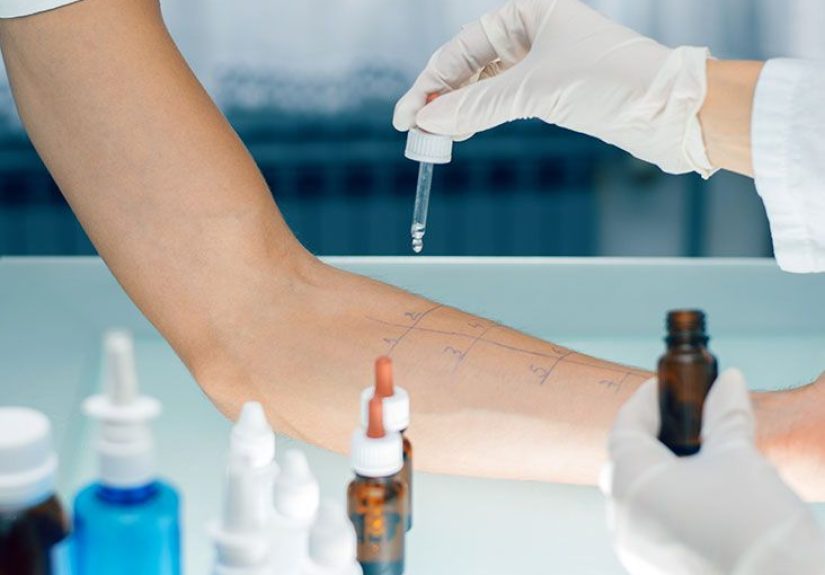
Tiny drops of allergen extract are placed on the skin (often the forearm or back), and the skin is gently pricked so the allergen enters the surface layer.
What it’s like
The “prick” is usually more “mildly annoying” than painful. If you’re sensitive, the spot can itch like a mosquito bite that’s trying a little too hard.
Results are typically read in about 15–20 minutes, which is refreshingly fast in modern healthcare time.
How results are read
A positive reaction usually forms a wheal (raised bump) with surrounding redness. Clinicians compare it to controls (a positive histamine control
and a negative saline/glycerin control). A common threshold for “positive” is a wheal that’s a few millimeters larger than the negative controlbut interpretation
depends on the clinical context and testing standards.
Strengths and limitations
- Pros: Quick results, sensitive for many allergies, usually inexpensive compared with some blood panels.
- Cons: Can yield false positives, especially for foods; results show sensitization, not guaranteed real-world reactions.
- Reality check: Bigger wheals can correlate with higher likelihood of allergy for some allergens, but they don’t reliably predict reaction severity.
Method 2: Intradermal Skin Testing
What it tests
Intradermal testing uses a tiny needle to inject a small amount of allergen just under the top layer of skin.
It’s generally more sensitive than prick testing, so it may be used when prick tests are negative but suspicion remainsespecially for certain
airborne allergens, venom, or medication allergy evaluations.
What it’s like
You’ll feel a small injection and possibly more itching than a prick test if you react. Because it’s more sensitive, it can also be more prone to
“overreacting” (showing a positive result that doesn’t match real-world symptoms), so clinicians use it thoughtfully rather than as a first move.
Method 3: Patch Testing (for Contact Dermatitis)
What it tests
Patch testing is a different beast. It’s designed for delayed hypersensitivity reactionsthe kind that cause eczema-like rashes
hours to days after skin contact with a trigger (nickel, fragrance mixes, preservatives, rubber accelerators, hair dye chemicals, adhesives, and more).
This is not an IgE “instant reaction” test.
What it’s like
Small allergen patches are applied (often on your back). You keep them in place and return for readings over the next few days (commonly around 48–96 hours).
The hardest part may be the lifestyle adjustments: avoiding sweaty workouts, long hot showers, and the urge to scratch like you’re trying to win an Olympic event.
How results are read
A clinician checks for localized skin reactions under specific patches, grading the intensity. Patch tests help pinpoint which chemicals you should avoid in
productsoften turning a mysterious “my skin hates everything” situation into a focused shopping strategy.
Method 4: Blood Tests (Specific IgE)
What it tests
Allergy blood tests measure allergen-specific IgE in your blood. You may hear names like “specific IgE testing” or brand-specific
lab methods. Unlike skin testing, blood testing isn’t affected by skin conditions and is often used when:
- You can’t safely stop antihistamines or other interfering medicines
- You have extensive eczema or skin disease where skin testing is difficult
- You have a history suggesting higher risk from skin testing
What it’s like
It’s a blood drawquick, mildly unpleasant, and over before your brain finishes composing its complaint. Results can take days rather than minutes.
How to interpret blood test results
Blood tests can also produce false positives and false negatives. A positive specific IgE result suggests sensitization,
but does not confirm you’ll have symptoms when exposed. The level may correlate with likelihood of reaction for certain foods in certain contexts,
but it does not reliably predict how severe a reaction would be.
Some labs also offer component testing for certain foods (for example, “peanut components”). Component testing can help refine risk assessment
in select cases, but it still must be interpreted alongside clinical history.
Method 5: Oral Food Challenge (the Gold Standard)
What it tests
When the history and tests don’t line upor when it’s important to confirm whether someone truly reactsclinicians may recommend an
oral food challenge. Under medical supervision, a patient consumes increasing doses of a suspected food allergen while being monitored for symptoms.
What it’s like
This is the most definitive test, and also the most time-consuming. Expect a multi-hour appointment with careful monitoring. It can be stressful,
but it’s also the test most likely to deliver a clear answerespecially for kids who may have outgrown an allergy.
Method 6: Medication and Venom Testing (Special Situations)
Drug allergy testing
“I’m allergic to penicillin” is a famously common labeland also famously complicated. Some people were labeled in childhood due to a rash that may not have been
a true IgE allergy. In appropriate patients, allergists may use a combination of history, skin testing (including prick/intradermal), and supervised challenges
to clarify whether a true allergy exists.
Venom allergy testing
If you’ve had a systemic reaction to a sting, venom testing (skin and/or blood) can help determine whether venom immunotherapy might reduce the risk of
future severe reactions.
How to Prepare for Allergy Testing
Prep can make or break accuracyespecially for skin tests. Many medications can reduce skin reactivity, including:
antihistamines, some antidepressants, and certain heartburn medicines.
Your clinician will advise what to stop and when. Some practices recommend avoiding most antihistamines for several days, and in some cases up to a week,
because lingering effects can blunt skin responses.
Also: don’t try to “game” the system by exposing yourself to an allergen right before the test. Your immune system is not a pop quiz you can cram for.
The safest approach is simply following the prep instructions you’re given.
Understanding Allergy Test Results (Without Losing Your Mind)
Allergy test results are best interpreted as probability clues, not courtroom verdicts. Here’s how clinicians commonly think about them:
1) Positive doesn’t always mean “allergic in real life”
A positive result often means your immune system recognizes the allergen (sensitization). Whether that translates into symptoms depends on exposure level,
your underlying conditions (like asthma), and whether the symptoms match the timing and pattern of that allergen.
2) Negative is reassuringbut not always perfect
A negative test can lower the likelihood of IgE-mediated allergy, but it doesn’t rule out every possibility. Non-IgE reactions, irritant responses,
evolving allergies, and testing limitations can still leave room for uncertainty. This is one reason clinicians sometimes use food challenges or repeat evaluation.
3) Test size or IgE level doesn’t equal severity
It’s tempting to treat numbers like a scoreboard. But bigger wheals or higher IgE levels don’t reliably predict how intense a reaction will be.
Severity depends on multiple factors, including asthma control, dose, co-factors (exercise, infection, alcohol in adults), and individual biology.
4) The “story” matters as much as the test
The most useful allergy diagnosis usually combines:
(a) a detailed symptom history,
(b) targeted testing (not a random buffet of 200 allergens),
and (c) a practical plan that matches your actual life.
Common Pitfalls (a.k.a. How Confusion Happens)
- Over-testing: Huge panels can uncover “positives” that don’t matter. This can lead to unnecessary avoidance, anxiety, and confusing diet restrictions.
- Testing without a matching history: If you eat shrimp weekly with zero symptoms, a mild positive test alone usually shouldn’t banish shrimp forever.
- Mixing up intolerance and allergy: Lactose intolerance is not an IgE milk allergy. Neither is “I feel sleepy after bread” automatically a wheat allergy.
- Forgetting cross-reactivity: Some pollens and foods share similar proteins. This can cause positive tests that reflect cross-reactivity rather than a true, dangerous food allergy.
What Happens After Testing
Good allergy testing doesn’t end with “Here are your positives.” It ends with next steps you can use:
- Environmental controls: dust mite covers, humidity adjustments, pet strategies, pollen-season routines
- Medication plans: targeted nasal sprays, antihistamines, asthma controller optimization
- Emergency readiness: when an epinephrine auto-injector is appropriate and how to use it
- Immunotherapy: allergy shots (or other clinician-directed approaches) for certain inhalant allergies
- Food plan clarity: deciding what truly needs avoidance vs what can stay in the diet
Quick Examples: What “Results” Can Look Like in Real Life
Example A: The springtime sneezer
Someone has predictable March–May symptoms: itchy eyes, sneezing, congestion, worse outdoors. Skin testing shows strong positivity to tree pollens.
That match (season + exposure + symptoms + test) supports allergic rhinitis. Next steps might include a pollen-season plan, nasal steroid timing, and possibly immunotherapy if symptoms are significant.
Example B: The confusing food panel
A person gets a broad food IgE panel “just to see.” Several foods come back positive, but the person eats most of them without symptoms.
In this scenario, those positives may reflect sensitization without clinical allergy. A clinician would refocus on foods that actually cause symptoms and may consider targeted testing or a supervised challenge when needed.
Example C: The “penicillin allergy” label
Someone was labeled allergic at age six after a rash during an infection. Now they avoid many antibiotics.
An allergist may use careful history and specialized testing to determine whether a true IgE allergy is present, which can help “de-label” in appropriate cases and expand safe medication options.
Experiences: The Human Side of Allergy Testing (About )
Even when you know allergy testing is routine, the experience can feel oddly personallike your immune system is being asked to perform on command.
Many people show up with a mix of hope (“Please give me answers”) and suspicion (“What if the answer is… everything?”).
The waiting room energy is often a familiar cocktail: tissues, sniffles, and the quiet confidence of someone who has already memorized every tree in their neighborhood.
For skin prick testing, a common first impression is surprise at how quick it is. The clinician marks the skin, places drops, does the pricks,
and suddenly you’re in the “15-minute suspense window.” People often describe a slow-building itch that feels like a prank in progress.
Some spots stay calm while others puff up dramatically, and it’s not unusual to think, “So that’s why I’m miserable every April.”
The itch can be annoying, but it typically fades fairly fastespecially once the area is cleaned and the visit moves on.
Patch testing can feel more like a mini lifestyle challenge than a medical test. People sometimes report feeling “fine” until the second or third day,
when certain patches become intensely itchy or irritated. Because you’re often asked to keep the area dry and avoid heavy sweating,
patch testing can be inconvenientparticularly for anyone who exercises daily or has a job that involves physical work.
Still, patients with chronic, unexplained rashes often describe patch testing as a turning point: it can connect the dots between symptoms and a specific ingredient
hiding in soaps, cosmetics, gloves, jewelry, or adhesives.
For blood testing, the experience is usually straightforwardquick draw, then the longer wait for results.
The emotional part often happens later, when numbers arrive in a portal without much context.
People may see a list of “positives” and feel alarmed, especially if foods appear that they’ve eaten for years.
That’s a common moment of misunderstanding: lab sensitization can look scary on paper, but it doesn’t automatically mean a real-life allergy.
Many people feel relief after a clinician explains what matters mostsymptoms with exposureand what doesn’t.
The most intense experiences are often tied to oral food challenges. Even when carefully supervised, they can be stressful.
Patients frequently describe a weird sense of pressure with each dose: you’re paying close attention to every sensationan itch, a throat “feeling different,” a stomach flutter
and wondering whether it’s anxiety, normal variation, or the start of a reaction.
When a challenge is negative, relief can be huge (and sometimes emotional), especially for families who’ve avoided a food for years.
When a challenge is positive, people often still feel grateful for clarity because it replaces uncertainty with a concrete, safer plan.
Across all methods, one theme shows up again and again: the best testing experiences happen when patients feel heard.
When the clinician explains the “why” behind each test, sets expectations for false positives/negatives, and translates results into practical steps,
people leave not just with databut with confidence.
Conclusion
Allergy testing can be a powerful way to identify triggers, reduce guesswork, and guide treatmentespecially when it’s targeted and interpreted in context.
Skin prick and intradermal tests provide fast, sensitive clues for IgE-mediated allergies; blood tests offer an alternative when skin testing isn’t ideal;
patch tests shine for delayed contact reactions; and oral food challenges remain the most definitive tool when the picture is unclear.
The real win isn’t collecting “positives.” It’s translating results into a plan that helps you breathe easier, itch less, eat safely, and live with fewer
“Is it allergies or…?” mysteries. If your results feel confusing, that’s not you failing a testit’s a reminder that allergy diagnosis is a puzzle,
and the test is only one piece.