Table of Contents >> Show >> Hide
- Quick Definition: ALS Isn’t “Acquired” Like an Infection
- Why ALS Is Not Contagious (And Why That Matters)
- So How Does ALS Happen? The Two Big Categories
- Familial ALS: When Genetics Plays a Clear Role
- Sporadic ALS: The Most Common Kind, and the Most Mysterious
- Risk Factors: What Research Suggests (Without Overpromising)
- What ALS Is NOT “Acquired” From
- Can ALS Be Prevented?
- When to Talk to a Doctor
- Bottom Line: ALS Isn’t CaughtIt Develops
- Experiences Related to “ALS Is Not Contagious, But How Is ALS Acquired?” (Extended)
- Conclusion
Let’s clear up the big, awkward, dinner-table question first: ALS is not contagious. You can’t catch it from a hug, a handshake, sharing a cup, sitting too close on the couch, or being the designated “hold the elevator” hero. ALS doesn’t spread like a cold. It doesn’t “jump” from person to person. It’s not an infection, and it’s not something you can transmit through contact.
So why do so many people still ask, “How is ALS acquired?” Because our brains love a neat cause-and-effect story. If something is serious, we want to know what “caused” itwhat to blame, what to avoid, what to fix. ALS (amyotrophic lateral sclerosis), also called Lou Gehrig’s disease, is frustrating because it doesn’t hand us a single villain. Instead, ALS is best understood as a disease that developsoften from a complex mix of genetics, biology, and (possibly) environmental factors that researchers are still working to untangle.
In this article, we’ll answer the question behind the question: if ALS isn’t contagious, how do people end up with it? We’ll break down what scientists know (and what they don’t), what “sporadic” vs. “familial” ALS really means, and which risk factors have the strongest evidencewithout turning your brain into a bowl of alphabet-soup acronyms.
Quick Definition: ALS Isn’t “Acquired” Like an Infection
The word “acquired” makes it sound like ALS is something you pick uplike a virus, a bad habit, or that one annoying app you didn’t mean to download. In reality, ALS is a progressive neurodegenerative disease that affects motor neurons (the nerve cells that control voluntary muscle movement). Over time, those neurons become damaged and die, leading to worsening muscle weakness and loss of muscle control.
Many major health organizations describe ALS as a noncommunicable disease. That means it doesn’t spread from person to person. But it can appear in people with certain genetic mutations, and it may be influenced by age, biology, and exposures over a lifetime. In other words: ALS isn’t “caught.” It’s “developed.”
Why ALS Is Not Contagious (And Why That Matters)
Contagious diseases are caused by infectious agents like viruses, bacteria, fungi, or parasites. ALS is not caused by an infectious agent, and there’s no evidence that close contactcaregiving includedputs someone at risk of “catching” ALS.
This isn’t just a science note; it’s a human one. People living with ALS sometimes face unnecessary fear, social distancing, or stigma from others who misunderstand what it is. Knowing the facts helps families and friends show up with the support that actually matters: rides, meals, company, laughter, and help with the day-to-day.
So How Does ALS Happen? The Two Big Categories
Most medical sources group ALS into two main categories based on whether it’s inherited or not:
- Sporadic ALS: The most common typetypically about 90–95% of cases. It occurs in people with no obvious family history.
- Familial ALS: A smaller percentageoften estimated around 5–10%linked to inherited genetic mutations in a family line.
Here’s the twist: “sporadic” doesn’t necessarily mean “no genetics involved.” It often means “no known family history,” which can happen for several reasons (we’ll get into that). Meanwhile, “familial” usually means a clear family pattern, but even then, genetics can be complicated.
Familial ALS: When Genetics Plays a Clear Role
Familial ALS is the form most people think of when they hear “genetic ALS.” If multiple relatives across generations have ALS (or a related condition), doctors may suspect an inherited mutation.
Common Genes Linked to ALS
Research has identified multiple genes that can cause or raise the risk of ALS. Some of the most frequently discussed include:
- C9orf72: A major contributor to familial ALS in the U.S. and Europe.
- SOD1: One of the best-known ALS genes; certain mutations are strongly linked to familial ALS.
- TARDBP and FUS: Also associated with familial ALS in a smaller percentage of cases.
Even in families with a known mutation, genetics doesn’t always behave like a light switch. Some people inherit a mutation and never develop ALS. This is called reduced penetrance, and it’s one reason ALS can appear to “skip” people or seem to pop up unexpectedly.
What Familial ALS Can Look Like in Real Life
Imagine two siblings. One develops symptoms in their late 40s, the other in their 50s, and a parent had unexplained weakness years earlier. A neurologist might recommend genetic counseling and testing, not to assign blame, but to:
- clarify what type of ALS may be present,
- help relatives understand their risks, and
- guide eligibility for certain research studies or clinical trials.
Genetic information can be empoweringbut it can also be emotionally heavy. That’s why many clinics emphasize counseling alongside testing.
Sporadic ALS: The Most Common Kind, and the Most Mysterious
Sporadic ALS accounts for the vast majority of cases. In these situations, there’s no clear family history, and no single cause can be pinned down.
Scientists increasingly view sporadic ALS as the result of multiple contributing factorsa combination of genetic susceptibility plus other triggers over time. Think of it less like a single lightning strike and more like a long build-up of conditions that make a lightning strike possible.
How Can ALS Be “Sporadic” If Genetics Still Matters?
Great questionand it’s one of the reasons people feel confused. Here are a few ways genetics can still be involved:
- Hidden family history: Families may be small, estranged, or have incomplete medical records.
- Reduced penetrance: A parent may carry a mutation but never show symptoms.
- New (de novo) mutations: Rarely, a mutation can occur for the first time in a person rather than being inherited.
This is why modern ALS care increasingly treats genetics as relevant even when the case looks “sporadic” on the surface.
Risk Factors: What Research Suggests (Without Overpromising)
A risk factor is not the same thing as a cause. Risk factors are associated with higher odds of developing a condition, but they do not guarantee anything. Many people with risk factors never develop ALS, and many people with ALS had no obvious risk factors.
Age and Sex
ALS is uncommon in young adults and becomes more likely with age. Many sources note that ALS often affects people between about 40 and 70, and population data show higher prevalence in older age groups. Some U.S. surveillance reports also show higher prevalence in males than females.
Family History
A family history of ALS (or certain related neurodegenerative conditions) increases risk, especially in families with known mutations.
Military Service
Multiple sources have reported an association between military service and ALS risk. The exact reason is unclear. Researchers have explored possible explanations such as exposure to certain metals or chemicals, occupational hazards, trauma, or other service-related factors. Importantly, this does not mean military service “causes” ALSonly that it has been observed as a risk factor in some studies and is a focus of ongoing research.
Smoking
Cigarette smoking has been studied as a potential risk factor and is included in several research efforts examining ALS risk. As with other factors, it’s not a simple one-to-one relationshipbut it’s one of the more consistently discussed associations.
Environmental and Occupational Exposures
Researchers continue to investigate whether certain exposures may increase ALS risk, including:
- Heavy metals (such as lead) in specific occupational contexts
- Chemicals (including some solvents or pesticides)
- Other workplace factors that vary by industry and role
It’s crucial to be honest here: evidence can be mixed, and causality is difficult to prove. Exposure research is complicated because people are exposed to many things over a lifetime, often at low levels, and different people have different genetic “background risk.”
What ALS Is NOT “Acquired” From
When something is scary, myths multiply. Let’s deflate a few common ones:
- From another person: NoALS is not contagious.
- From casual contact: Notouching, kissing, hugging, sharing a home, or caregiving does not spread ALS.
- From “one bad meal” or a single exposure: ALS is not known to result from a single, simple trigger.
- From a “toxic personality” or stress: Stress affects health in many ways, but it is not considered a direct cause of ALS.
If you’re looking for certainty, ALS research can feel like a slow detective story with missing pages. But the lack of a single cause does not mean “anything causes ALS.” It means the scientific community is carefully narrowing down what matters most.
Can ALS Be Prevented?
Because ALS often has no clear single cause, there is no guaranteed prevention strategy. However, some general health steps are still worthwhile because they reduce risk for many diseases and support overall neurological health:
- Avoid smoking (or get help quitting).
- Use appropriate protective equipment in high-exposure workplaces.
- Follow safety guidelines for handling chemicals and metals.
- Maintain regular medical care, especially as you age.
If you have a strong family history of ALS or related conditions, consider discussing genetic counseling with a clinician who specializes in neuromuscular diseases.
When to Talk to a Doctor
Early ALS symptoms can be subtle and overlap with many other conditions. If you notice persistent, progressive muscle weakness, frequent tripping, unexplained hand clumsiness, slurred speech, or trouble swallowing, it’s worth seeking medical evaluationespecially if symptoms are getting worse over time.
Important: This article is for education and is not medical advice. A licensed clinician can evaluate symptoms, rule out more common causes, and guide next steps.
Bottom Line: ALS Isn’t CaughtIt Develops
ALS is not contagious, and people do not “acquire” it from other people. Instead, ALS appears to develop through a complex mix of factors:
- Genetics (clear in familial ALS, sometimes present in sporadic ALS)
- Age and biology (risk increases with age; population patterns differ by sex)
- Possible environmental and lifestyle influences (associations under active research)
If that feels unsatisfying, you’re not alone. But “complex” isn’t the same as “random.” Every year, researchers learn more about genes, mechanisms, biomarkers, and potential interventions. The science is movingsometimes faster than it feels when you’re searching for answers at 2 a.m.
Experiences Related to “ALS Is Not Contagious, But How Is ALS Acquired?” (Extended)
The facts matter, but so do the lived experiences behind the facts. Below are common themes reported by people living with ALS and their families, written as composite examples (not individual medical stories). They reflect what many describe in clinic visits, support groups, and caregiving conversations: confusion about “catching” ALS, frustration with uncertainty, and the surprising ways community can show up.
1) The “Wait… Can I Catch It?” Moment
One of the first emotional curveballs families describe isn’t physicalit’s social. A friend hesitates before hugging. A coworker stops visiting. Someone asks, in a whisper, whether they should avoid sharing utensils. People living with ALS often say the hardest part is realizing that fear spreads faster than facts. When the family finally says, “ALS isn’t contagious,” there’s relieffollowed by the next question: “Then how did this happen?”
2) The Search for a Single Cause (And the Exhaustion That Follows)
Many families go into detective mode. They review old jobs (“Was it the factory?”), hobbies (“Was it the garage solvents?”), injuries (“What about that accident?”), lifestyle (“Was it smoking?”), and genetics (“Did anyone else have something like this?”). The uncertainty can feel personallike the universe owes you a receipt. Over time, people often find that shifting from “What caused it?” to “What helps now?” reduces stress and brings back a sense of control.
3) Genetics: The Family Conversation Nobody Trains You For
When genetics comes up, families describe two competing emotions: clarity and anxiety. Knowing there may be a mutation can answer questions, but it also raises new onesespecially for adult children, siblings, and extended relatives. People often talk about the importance of having these conversations with professionals who understand ALS genetics, because the emotional impact can be as real as the lab result. Families also describe a strange kind of guilt that can appeardespite the fact that no one “chooses” genes.
4) Caregiving: Love, Logistics, and Learning New Languages
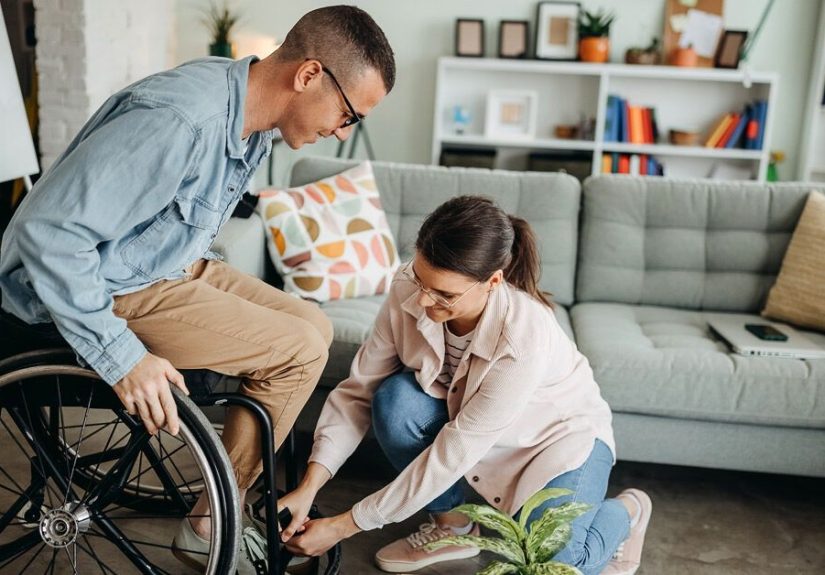
Caregiving stories frequently include a crash course in equipment and acronymswalkers, wheelchairs, speech devices, feeding tubes, respiratory support, home modifications. Many caregivers say they didn’t realize how much ALS would become a “project management” role: scheduling appointments, coordinating insurance paperwork, tracking symptoms, and finding reliable help. At the same time, they describe unexpected tenderness: learning a partner’s new ways of communicating, celebrating small wins, and finding humor in everyday moments. (Example: “We can’t control ALS, but we can control how aggressively we label the kitchen drawers.”)
5) Community Support: The Difference Between Sympathy and Help
People affected by ALS often say they can feel the difference between someone who feels bad for them and someone who shows up. “Let me know if you need anything” sounds kind, but “I’m bringing dinner Tuesday” is life-changing. Families also describe how support groups normalize the weird stufflike laughing at the absurdity of trying to schedule three specialists in one weekwithout minimizing the hard parts.
If you’re reading this because ALS is close to your life, here’s the takeaway many families wish they heard earlier: you don’t need to solve the mystery of “how it was acquired” to offer meaningful support. ALS isn’t contagious, but compassion isand it spreads beautifully when people lead with facts, patience, and practical help.
Conclusion
ALS is not contagious, and it isn’t “acquired” through contact with another person. The most accurate way to think about ALS is that it develops over timeoften with no single identifiable cause. Some cases are linked to inherited genetic mutations (familial ALS), while most occur without a clear family history (sporadic ALS). Ongoing research continues to explore how genetics, aging, biology, and environmental or occupational factors may interact to increase risk.
While the science can feel frustratingly complex, the direction is hopeful: improved surveillance, deeper genetic understanding, and better tools for earlier detection and support. In the meantime, sharing accurate informationespecially that ALS is not contagioushelps reduce stigma and builds the kind of community people living with ALS deserve.