Table of Contents >> Show >> Hide
- Why This Amelia Earhart Declassification Matters
- What We Already Know About the FBI File
- These Are the “Secrets” Most Likely Hiding in Plain Sight
- What the Records Probably Will Not Reveal
- The Leading Theories, Revisited
- Why Americans Still Care So Much
- What Historians, Readers, and Armchair Detectives May Gain
- Experiences the Earhart Story Still Creates Today
- Conclusion
Some mysteries age like fine wine. Others age like a diner coffee that’s been on the burner since 1937: dark, bitter, and somehow still impossible to ignore. Amelia Earhart’s disappearance belongs in the first category. Nearly nine decades after the pioneering aviator vanished over the Pacific, a new wave of declassified records is pulling one of America’s favorite unsolved stories back into the spotlight.
That is why the latest attention around Amelia Earhart’s FBI file feels so irresistible. The phrase alone sounds cinematic. It practically begs for dramatic music, a dusty box, and a government stamp that says SECRET in angry red ink. But the real story is more interesting than the movie version. Declassified Earhart records are less likely to contain a single jaw-dropping confession and more likely to reveal something historians love even more: how governments searched, how rumors spread, how agencies compared notes, and how a national obsession turned into a paper trail miles long.
So what might actually be inside these files? Probably not a final sentence that says, “Case closed, mystery solved, everyone go home.” More likely, the Amelia Earhart declassified records will contain the kinds of clues that make old mysteries feel suddenly alive again: radio logs, search memoranda, public tips, intelligence dead ends, dismissed theories, and perhaps a few forgotten details that show how chaotic the search really was.
In other words, maybe not a smoking gun. But possibly a very noisy filing cabinet.
Why This Amelia Earhart Declassification Matters
Earhart was not just a celebrity pilot. She was one of the defining American icons of aviation, modern womanhood, risk-taking, and technological confidence. By the time she disappeared in July 1937 while attempting to fly around the world with navigator Fred Noonan, she had already become something bigger than a pilot. She was a symbol. And symbols generate paperwork the way campfires generate smoke.
That matters because when a figure this famous vanishes, the official record becomes more than administration. It becomes a map of national anxiety. Search reports, diplomatic messages, radio logs, agency memos, and letters from the public can reveal how the United States reacted in real time. They can also show how quickly a tragedy turned into a mythology machine.
The renewed release of Earhart-related government records is especially intriguing because it pulls together material from multiple corners of the federal archive. Some records concern her final flight and the vast search that followed. Others capture decades of speculation afterward. And that second category is where the story gets wonderfully human. Once a mystery enters the American imagination, people start sending theories. Lots of theories. Some careful. Some heartfelt. Some completely bonkers. It’s democracy at full volume.
What We Already Know About the FBI File
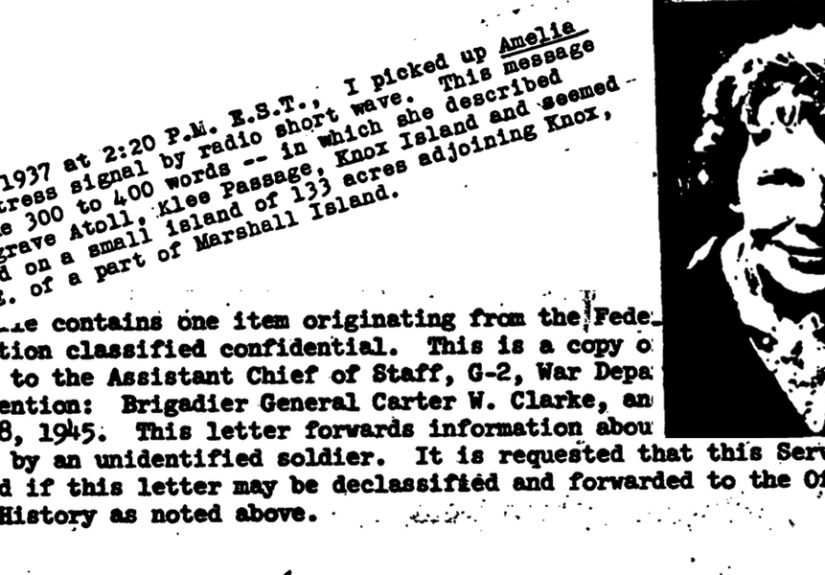
Before anyone imagines a hidden dossier proving Earhart landed on Mars, it helps to know what the FBI has already said about its own Amelia Earhart material. Public descriptions of the Bureau’s Earhart file make clear that at least part of it consists of reports and letters from concerned citizens asking the FBI to help find her or offering suggestions about where she might be. That does not make the file boring. It makes it revealing.
Why? Because public tips tell you what people believed, feared, and repeated. They preserve the early spread of theories long before internet rabbit holes had names. They also show how law enforcement handled rumors, improbable sightings, patriotic panic, and the occasional message that sounds like it came from a very confident uncle at Thanksgiving.
If more FBI-related material is surfaced, scholars may learn less about a hidden conspiracy and more about the Bureau’s role in processing hearsay, tracking reports, communicating with other agencies, and deciding what deserved follow-up. In historical terms, that is gold. In internet terms, it may be slightly less exciting than aliens. But only slightly.
These Are the “Secrets” Most Likely Hiding in Plain Sight
1. The mechanics of the search
One of the most valuable things declassified Earhart records can reveal is how the search actually functioned. We know the hunt for Earhart became one of the largest air-and-sea searches of its time. What records can add is texture: who transmitted what, when reports were delayed, how possible sightings were prioritized, and which search locations seemed plausible in the moment.
That kind of detail matters because the Earhart mystery is often retold as a legend. Records bring it back down to earth. They show exhausted crews, incomplete information, weather uncertainty, navigation pressure, and the limits of 1930s communication technology. The difference between myth and history often comes down to paperwork.
2. Her last communications, with more context
Some of the newly released Earhart material has drawn attention because it includes records tied to her final radio communications, including logs connected to the Coast Guard cutter Itasca. Earhart’s final “line 157 337” transmission has long been central to understanding her likely path after failing to locate Howland Island. But old mysteries often hinge not just on a famous line, but on everything around it: signal strength, missed handshakes, timing, assumptions, and confusion between ship and aircraft.
That means one of the most useful “secrets” inside the file may not be a new sentence at all. It may be context. Historians obsess over context because context is where certainty either gains muscle or falls apart.
3. Dismissed leads and dead-end theories
No serious article about Amelia Earhart can avoid the carnival of theories that followed her disappearance. Crash-and-sink near Howland. Landing on Nikumaroro. Capture by the Japanese. Survival stories. Distress calls. Graves, bones, fragments, maps, whispers, legends, and enough “proof” to stock a dozen documentaries and a very tense family road trip.
What the records may show is how many of those claims were weighed and rejected by officials. That is not disappointing. It is incredibly useful. Declassified files often become most valuable when they show how bad information was sorted from possibly meaningful information. Government memos that dismiss rumors can tell us which stories had traction at the time and why officials found them weak.
In other words, the file may not confirm the wilder theories. It may explain why those theories refused to die.
4. The public obsession in real time
There is also a softer kind of secret hidden in historic files: emotion. Letters, clippings, and speculative correspondence can show how the public processed Earhart’s disappearance. Some people were convinced she survived. Others wanted the government to search harder, search elsewhere, or search smarter. That emotional response is part of the story. Earhart was famous enough that people did not merely follow the case. They entered it.
The FBI file, then, may be less a detective novel and more a national scrapbook of suspicion, grief, hope, and uninvited advice. Which, to be fair, is still a very American genre.
5. Interagency confusion, bureaucracy, and blind spots
Here is a truth every historian knows and every thriller avoids: institutions are messy. Files can reveal duplication, uncertainty, crossed wires, and long delays between action and understanding. That may be especially important in a case like Earhart’s, where military, diplomatic, maritime, and intelligence-related records all intersected with public pressure.
Sometimes the secret inside a declassified file is not scandal. It is bureaucracy. And bureaucracy, while less glamorous than conspiracy, has an annoying habit of being real.
What the Records Probably Will Not Reveal
Let’s put the brakes on the runaway mystery bus for a second. Several experts have already suggested that truly explosive classified Earhart material may not exist in the way some people imagine. That skepticism makes sense. Many Earhart records have already circulated through archives, previous releases, research collections, and public discussions. The newest release cycle may deepen the archive more than it overturns it.
That means readers should not expect a final memo saying Earhart was secretly on an intelligence mission, or that officials definitively located the aircraft and hid the truth for decades. Could the records contain a surprise? Absolutely. Historical research lives for surprises. But the likelier outcome is narrower and more honest: richer context, better documentation, clearer timelines, and more evidence about what people believed in the aftermath.
That still matters. A mystery does not need to be solved to be illuminated.
The Leading Theories, Revisited
Crash-and-sink near Howland Island
This remains the simplest and, for many historians, the strongest explanation. Earhart and Noonan likely struggled to find tiny Howland Island, ran low on fuel, and went down in the ocean. It is straightforward, mechanically plausible, and painfully ordinary. Which may be exactly why it remains persuasive.
Nikumaroro castaway theory
This theory argues that Earhart and Noonan reached Nikumaroro, then known as Gardner Island, after missing Howland. Supporters point to the “line 157 337” transmission, alleged post-loss distress calls, and artifacts later found on or near the island. Recent renewed interest in the so-called “Taraia Object” has put Nikumaroro back in headlines. The declassified records may not settle the theory, but they could sharpen the historical timeline around search routes, radio reports, and why the island either was or was not considered aggressively enough at the time.
Japanese capture theory
Few theories have had longer legs in popular culture than the idea that Earhart landed in or near Japanese-controlled territory and was captured. Records are especially useful here because they may preserve the chain of rumor itself. Government dismissal of such stories, especially in contemporary or near-contemporary documents, can help distinguish folklore from evidence.
And that may be one of the great lessons of the Earhart file: historical mystery is not just about what happened. It is also about how stories attach themselves to what happened.
Why Americans Still Care So Much
Because Amelia Earhart represents unfinished business. She was bold, modern, and famous in a way that made her disappearance feel impossible to accept. If she had been found quickly, she might still be legendary. But because she vanished, she became myth-sized.
There is also something emotionally irresistible about aviation mysteries. They combine technology, geography, weather, courage, and timing into one brutal equation. A person can do almost everything right and still disappear because the Pacific is enormous, fuel is finite, radio communication is imperfect, and the world in 1937 was much larger than it looked on a map.
That is why every new Earhart document gets attention. Not because each page will solve the case, but because each page offers a chance to stand a little closer to the moment history lost sight of her.
What Historians, Readers, and Armchair Detectives May Gain
Even if the Amelia Earhart FBI file contains no blockbuster revelation, it can still be enormously valuable. Researchers may be able to compare agency records more precisely. Writers may trace how specific rumors first entered circulation. Aviation historians may reassess search assumptions. And ordinary readers may finally see the case not as a pile of disconnected theories, but as a living archive of real decisions made under pressure.
That is often how declassification works in practice. It rarely hands over one magic answer wrapped in a bow. Instead, it adds texture. A weather note here. A dismissed tip there. A radio log that sounds slightly different when read beside a telegram. A citizen letter that seems absurd until it matches a pattern in three other letters. History advances not only through revelation, but through accumulation.
So yes, there may be secrets inside Amelia Earhart’s FBI file. But they are probably the kind of secrets historians trust most: small, stubborn, document-shaped secrets that do not shout. They whisper.
Experiences the Earhart Story Still Creates Today
One reason the Amelia Earhart mystery continues to feel fresh is that the experience of following it has changed, even if the disappearance itself has not. In 1937, people waited for radio updates, newspaper extras, and official statements. Today, readers sit with coffee, open digitized government files on a laptop, zoom in on faded telegrams, and try to piece together a trans-Pacific disappearance from scanned paper that once lived in gray storage boxes. It is history, but it feels weirdly interactive.
That experience can be strangely emotional. You begin by looking for facts and end up feeling the atmosphere around them. A clipped memo is not just a memo. It is evidence that someone, somewhere, was trying to make sense of missing signals, uncertain coordinates, and a vanishing aircraft before the world had settled on a legend. A radio log is not merely technical language. It is tension on paper.
For aviation fans, Earhart’s story can feel personal in another way. Her final flight is a reminder of how fragile navigation once was, especially over open ocean. Modern readers who fly with GPS, real-time weather, digital mapping, and layers of backup can still sense the loneliness of that 1937 route. The Pacific remains immense. Howland Island remains tiny. Suddenly the mystery stops feeling like a riddle and starts feeling like a human problem with terrifying stakes.
There is also the experience of watching new generations meet the case for the first time. Someone reads about the “line 157 337” message and falls down a research rabbit hole. Someone else discovers the Nikumaroro theory and spends an evening comparing old maps. Another person reads the Japanese capture claims, then learns how myths become sticky when fame, war, and national pride get mixed together. The case keeps renewing itself because every generation arrives with new tools and the same old question: what happened out there?
Museums, archives, documentaries, and declassified files all shape that experience. When people see Earhart’s photos, letters, or flight-related materials, the story sharpens. She stops being a distant icon and becomes a working pilot with plans, responsibilities, deadlines, sponsors, mechanical limitations, and very real risk. That is one of the biggest emotional shifts the records can create. They shrink the myth just enough for the person inside it to reappear.
And maybe that is why these file releases matter even when they do not solve the mystery. They let readers experience Earhart not only as a disappearance, but as a life in motion. They restore the sounds around the legend: engines, static, telegrams, newspaper headlines, worried officials, hopeful strangers, and decades of people refusing to let the trail go cold. The enduring experience of the Earhart story is not simply suspense. It is proximity. Every new record moves us a fraction closer, and somehow that fraction is enough to keep the world looking.
Conclusion
The declassification of Amelia Earhart-related records is unlikely to deliver a tidy Hollywood ending. But that does not make it small news. On the contrary, it makes the moment more valuable. Instead of one grand twist, we may get something better: a fuller, messier, more honest record of how a modern myth was built out of flight plans, signal loss, bureaucratic reaction, rumor, and hope.
If the Amelia Earhart FBI file contains secrets, they are likely to be the sort historians adore and mystery fans underestimate. Not necessarily a final answer, but a sharper understanding. Not necessarily the location of the plane, but a deeper look at how the search unfolded and how the legend grew. For a mystery this enduring, that may be the most satisfying revelation of all.