Table of Contents >> Show >> Hide
- The Logikcull backdrop: why a services origin is secretly a cheat code
- 1) First, prove you’re “SaaS-y” enough
- 2) Find friction like it’s your job (because it is)
- 3) Learn everything… then stop reading and start driving
- 4) Stop saying “client.” Start saying “customer.”
- 5) Don’t sell SaaS to your old services customers first
- 6) Build a product-focused teamand celebrate tiny wins
- 7) Price like a product, not like a service
- 8) Switch teams, cannibalize yourself, and don’t give up
- Conclusion: the real upgrade is not SaaSit’s leverage
- Bonus: of real-world services-to-SaaS experience (the part nobody puts on the homepage)
Switching from services to SaaS sounds like a simple glow-up: trade late-night project work for recurring revenue, predictable margins, and the ability to
“ship once, sell forever.” In real life, it’s closer to moving from cooking custom dinners for each guest… to running a restaurant where every menu item
has to taste great at scale, every night, with a line out the door.
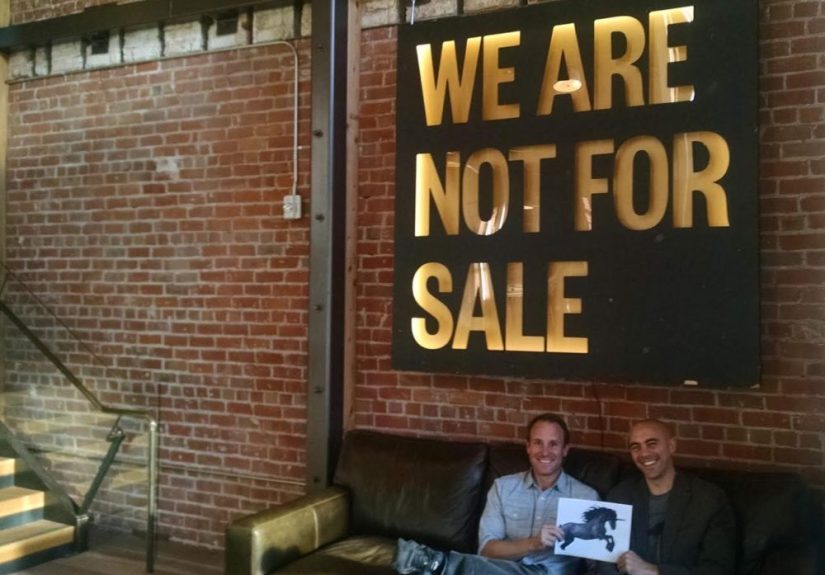
Andy Wilsoncofounder and longtime CEO of Logikcullhas lived that migration the hard way. Logikcull became known for making eDiscovery dramatically more
self-serve with a simple promise: upload, search, download. That simplicity didn’t happen by accident. It happened because a services business
taught the team exactly where customers were getting cut, confused, overcharged, and slowed down.
This article synthesizes Wilson’s “eight things learned” framework with broader SaaS best practices from U.S.-based operator and investor playbooks
(product-led growth, retention math, SaaS pricing strategy, and the cultural shift from “client work” to “product work”). The goal isn’t to romanticize
the pivotit’s to help you avoid the most expensive mistakes while keeping your sense of humor intact. Because yes: you can become SaaS. No: you can’t
simply declare yourself SaaS on LinkedIn and expect your gross margin to magically improve overnight.
The Logikcull backdrop: why a services origin is secretly a cheat code
Many SaaS founders start with an idea and then go looking for pain. Services founders start with pain and then go looking for repeatability. That’s a
huge advantageif you use it right. In services, you’re forced to watch customers struggle in real time. You see where they hesitate. You see where
they email you at 11:47 p.m. with “quick question” (famous last words). You learn what they’ll pay for, what they’ll resent paying for, and what they
will gladly pay extra for if it saves them time and risk.
Wilson’s big idea was not just “move to SaaS,” but “make the process stupidly simple.” When a workflow can be reduced to something a non-expert can
complete without begging a vendor for help, you aren’t merely selling softwareyou’re selling independence. And in industries like legal discovery,
independence is a feature with a price tag.
Now, let’s get into the eight lessonstranslated into practical, modern-day advice for anyone trying to productize a service.
1) First, prove you’re “SaaS-y” enough
Not every services business deserves a SaaS halo. Some work is inherently custom. Some customers don’t want a platform; they want a partner. Wilson’s
first lesson is a reality check: does your problem repeat enoughwith enough similarityso software can deliver consistent value?
What “SaaS-y enough” looks like
- Repeatable workflow: The same few steps show up again and again across customers.
- Clear “value moment”: Users can experience a win quickly (minutes/hours, not weeks).
- Self-serve potential: The product can drive acquisition and activationnot just sales calls.
- Support doesn’t scale linearly: You can help 10x users without hiring 10x humans.
If your “SaaS plan” still requires you to hand-hold every account like it’s a delicate houseplant, you may be building a services business with a login
screen. That can be a valid modelbut it’s not the same thing as a scalable SaaS engine.
2) Find friction like it’s your job (because it is)
Services hides friction behind heroics. Someone on your team “just handles it,” and the customer never sees how messy the kitchen is. SaaS can’t do
that. SaaS needs the kitchen to be clean.
Wilson’s team became obsessed with locating frictionevery click, every handoff, every “wait, what does this mean?” moment. The services era gave them
a front-row seat to the worst parts of the customer journey, so they could systematically delete the pain instead of repeatedly apologizing for it.
Practical friction-hunting tactics
- Instrument the journey: Track time-to-value, drop-off points, and common “rage clicks.”
- Count steps: If it takes 30 actions to do a common task, your UI is basically a toll road.
- Write the “defensible simplicity” spec: Especially in regulated industries, simplicity must still be auditable and reliable.
The punchline: friction is expensive. In services, you pay for it in labor. In SaaS, you pay for it in churn.
3) Learn everything… then stop reading and start driving
The internet contains infinite SaaS wisdom and at least three million hot takes about pricing. Wilson’s third lesson is about balance:
consume knowledge, but don’t outsource judgment. Reading gives you patterns; customers give you truth.
If you’re transitioning from services, you’ll be tempted to “research your way” into SaaS. But you can’t Google your way into product-market fit.
You earn it by shipping, measuring, and iteratingeven when the first version is slightly embarrassing.
A simple operating rule
For every hour you spend consuming SaaS content, spend at least two hours running experiments: onboarding improvements, feature flags, pricing tests,
activation nudges, and support deflection (without being rudedeflection is not a license to ghost users).
4) Stop saying “client.” Start saying “customer.”
Words shape behavior. “Client” implies bespoke work, relationship-led delivery, and a human doing the magic. “Customer” implies a product experience
that delivers value consistentlyeven when no one from your team is awake.
This language swap forces hard decisions. In services, a “special request” becomes a custom deliverable. In SaaS, a special request becomes a product
question: Is this a one-off, or a pattern worth building?
How this changes your internal instincts
- Sales: From “we can do anything” to “here’s what the product does incredibly well.”
- Delivery: From “project complete” to “outcome achieved and repeatable.”
- Support: From “solve this case” to “solve this class of cases.”
If your team keeps acting like every account is a mini consulting engagement, you’ll struggle to build the muscle SaaS demands: product discipline.
5) Don’t sell SaaS to your old services customers first
This one surprises peopleand it’s one of the most useful. Your existing services customers often love you for the very thing SaaS removes:
customization and white-glove attention. If you pitch them your early SaaS product, they may try to reshape it into the old model.
Wilson’s point is strategic: find new customers who are buying the product you’re becomingnot the service you used to be. New
customers are more likely to judge the product on its own merits. They don’t have a memory of “how you used to do it.”
A practical segmentation approach
- Keep a subset of legacy accounts: Use them for feedback, not for defining your roadmap.
- Target “self-serve hungry” buyers: Teams that prefer control, speed, and transparency over vendor dependency.
- Protect the product: Say “no” to requests that turn your SaaS into a custom project factory.
6) Build a product-focused teamand celebrate tiny wins
Services teams get energy from heroic saves: pulling an all-nighter, rescuing a deadline, charming a difficult stakeholder. SaaS teams need a different
dopamine source: steady improvements that compound.
The shift isn’t only “hire engineers.” It’s “adopt product rhythms”: small releases, measurable outcomes, and a culture that treats usability as a
first-class feature. Celebrating tiny wins sounds corny until you realize SaaS success is mostly a pile of small wins wearing a trench coat.
What to celebrate in SaaS (especially early)
- Time-to-first-value drops from days to hours.
- Support tickets for a common issue fall 30% after a UX fix.
- Activation improves because onboarding got shorter, clearer, and less “terms-and-conditions-y.”
- Retention cohorts flatten (the product keeps delivering value after the honeymoon).
7) Price like a product, not like a service
Services pricing is often tied to effort: hours, projects, deliverables. SaaS pricing should be tied to value and a predictable subscription model.
That sounds obviousuntil you actually try to do it.
Wilson’s lesson here is not “pick a pricing page design.” It’s deeper: your pricing has to match how customers experience value.
If pricing feels arbitrary, scary, or unpredictable, buyers won’t feel “self-serve.” They’ll feel “trap door.”
Three pricing principles that survive contact with reality
- Predictability: Customers should be able to estimate cost without a spreadsheet meltdown.
- Alignment: The pricing metric should map to a value driver (usage, seats, matters, features).
- Expansion: As customers get more value, it should be natural (not painful) to pay more.
A common trap in services-to-SaaS transitions is underpricing because you’re still thinking in labor cost terms. SaaS needs room for product
investment, support, security, and the long game of retention.
8) Switch teams, cannibalize yourself, and don’t give up
The hardest part of going from services to SaaS is that you’re competing with your own cash flow. Services pays now. SaaS pays later. Services makes
you feel useful today. SaaS makes you feel behind schedule for months because product takes time to mature.
Wilson’s final lesson is gritty: you must be willing to cannibalize the old model, reorganize teams, and keep going through the awkward middle.
That may include running a hybrid phaseservices for survival, SaaS for the futurewhile you methodically shift revenue and identity.
The awkward middle (and why it’s normal)
- Cash flow tension: Services can fund product, but it can also distract you from product.
- Culture shock: The “deliverables mindset” fights the “roadmap mindset.”
- Customer confusion: Some buyers want the old thing. Some want the new thing. You must choose.
The “don’t give up” part isn’t motivational poster fluff. It’s an operational warning: the pivot will feel wrong right before it starts to feel right.
That’s often the moment founders retreat back to the comfort of custom work. The ones who make it through are the ones who treat SaaS as a long-term
craftnot a quick rebrand.
Conclusion: the real upgrade is not SaaSit’s leverage
Andy Wilson’s eight lessons boil down to one idea: leverage comes from removing friction and standardizing value. Services can be a
great business, but it scales mainly by adding people. SaaS scales by improving the product so one improvement helps every future customer.
If you’re sitting on a services business today, you’re not “behind” SaaS founders. You have a living dataset of customer pain. Use it. Map the
workflow. Identify repeatability. Delete friction aggressively. Price for value. Build a product team that measures wins in outcomes, not heroics.
And when the pivot feels uncomfortable, remember: that discomfort is often the sound of your business model gaining leverage.
Bonus: of real-world services-to-SaaS experience (the part nobody puts on the homepage)
Founders who move from services to SaaS often describe the transition as a “timeline swap.” In services, you do the work first and get paid right away.
In SaaS, you do the work first and then get paid graduallysometimes painfully graduallywhile customers decide whether you’ve earned a permanent spot
in their stack. That delay changes everything about how you plan, hire, and sleep.
One common experience is the identity hangover. Services teams pride themselves on responsiveness and flexibility. When you pivot, the
same instincts that made you successful can sabotage you. A big client asks for a custom workflow, and your reflex is to say yesbecause “yes” used to
be the path to revenue. In SaaS, too many yeses become a product that feels like a junk drawer: technically full of useful things, but nobody can find
anything when they need it.
Another frequent experience is discovering that support is a product surface. Services can hide complexity behind experts. SaaS
exposes complexity instantly. If onboarding requires a live call to “set things up,” you’ve recreated services with extra steps. Teams that succeed
tend to treat documentation, in-app guidance, and smart defaults as featuresbecause they are. The “help” button isn’t a cost center; it’s a trust
builder, especially in high-stakes workflows where mistakes feel risky.
Pricing also becomes emotional in ways services founders don’t expect. In services, a quote can be negotiated and justified by hours. In SaaS, the
pricing page sits there like a silent judge, and customers make snap decisions about fairness. Many teams learn (sometimes the hard way) that
“metered” pricing can create anxiety if customers can’t predict the bill. When customers feel financially unsafe, they won’t explore features. They’ll
ration usageexactly the opposite of what you want when adoption drives growth.
Then there’s the “build vs. sell” whiplash. Services businesses sell trust in people; SaaS businesses sell trust in systems. That
means sales conversations shift from “we’ll take care of it” to “the product will take care of it.” The proof changes too: instead of case studies
about heroic outcomes, you need product prooffast time-to-value, clear workflows, reliable performance, and security posture that doesn’t sound like a
hand-wave.
Finally, almost every successful transition includes a period where founders feel like they’re running two companies at once. One pays the bills. One
is the future. The teams that make it through tend to set explicit rules: which customers belong in which model, what kinds of requests are allowed,
and how to protect product time from the gravitational pull of custom work. Over time, the SaaS side starts to compound: fewer repeat questions, fewer
bespoke deliverables, and a growing base of customers who succeed without needing a human to “make it work.” That’s the moment the pivot stops feeling
like sacrifice and starts feeling like strategy.