Table of Contents >> Show >> Hide
- Why Fratelli Onofri Stood Out in the First Place
- The Design Language: Italian, Yes, but Not Precious
- What the U.S. Listings Suggested About Performance
- All-Gas vs. Dual-Fuel: Where Fratelli Onofri Fits the American Debate
- The Price Position: Luxury Look, Less Intimidating Entry
- Things Smart Buyers Should Think About Before Falling in Love
- Why Fratelli Onofri Still Feels Relevant
- Experience Section: What Living With a Fratelli Onofri Range Really Feels Like
- Final Thoughts
Some kitchen appliances are built to disappear. Fratelli Onofri ranges were never trying to be those appliances. These Italian-made ranges arrived in the American conversation with the kind of energy usually reserved for movie stars, vintage sports cars, and that one neighbor who somehow grills in loafers and still looks cool doing it. They were handsome, a little dramatic, noticeably European, and refreshingly different from the usual wall of stainless-steel seriousness.
For American shoppers who wanted a pro-style range without going full “sell a kidney and call it a design decision,” Fratelli Onofri had real appeal. The brand’s ranges brought together old-world Italian charm, bold color options, substantial cast-iron grates, and serious cooking ambition. In other words, they looked like they belonged in a kitchen where someone might braise short ribs on Sunday, bake focaccia on Tuesday, and dramatically announce dinner on Friday as if hosting a cooking show with no commercials.
That is exactly why Fratelli Onofri still deserves attention. Even if the brand is more likely to be encountered today through archived inspiration, secondhand searches, or conversations among appliance obsessives, it remains a fascinating case study in what makes an Italian range memorable. It is not just about heat output or oven modes. It is about how performance, personality, and design can live in the same big metal box.
Why Fratelli Onofri Stood Out in the First Place
In the American market, pro-style ranges often fall into one of two camps. The first is unapologetically commercial-looking: heavy stainless steel, chunky knobs, and a “yes, I know what mise en place means” attitude. The second leans decorative: elegant enamel finishes, softened lines, and a more furniture-like presence in the kitchen.
Fratelli Onofri managed to sit right between those two worlds. That balance was the trick. It had the visual romance people associate with European cooking appliances, but it did not feel like a fragile design prop that panicked when asked to roast a chicken and bake a tart on the same weekend. It had presence without becoming cartoonish. It had charm without becoming fussy.
Archived U.S. coverage highlighted models such as the Pinnacle and the wonderfully named Royal Chiantishire Giant Oven. That name alone deserves a small round of applause. It sounds less like an appliance and more like a benevolent Italian duke who happens to make lasagna for 12. But behind the theatrical naming was a serious selling point: these ranges combined style with practical home-cooking features people actually wanted.
The Design Language: Italian, Yes, but Not Precious
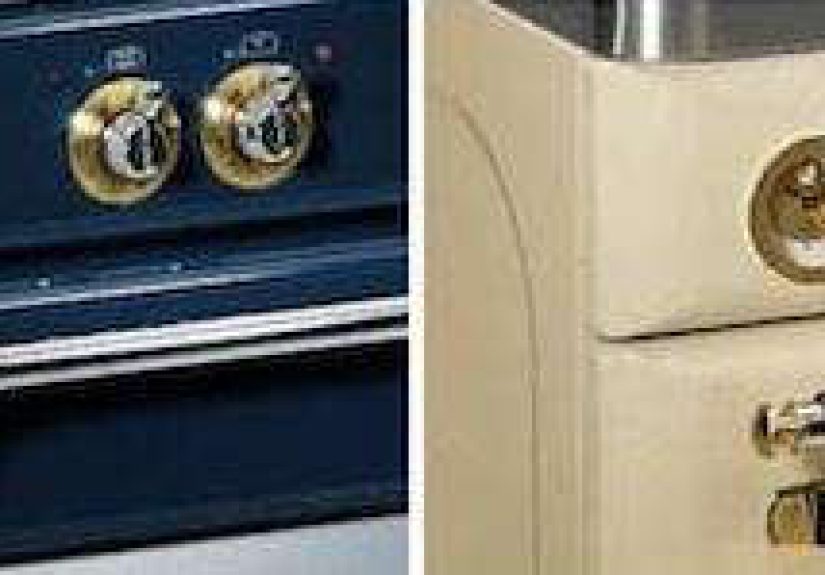
The most obvious thing about a Fratelli Onofri range is that it looks good. Really good. The lines are softer than many industrial-style American ranges, and the detailing feels more curated than purely utilitarian. Some models came in stainless steel for buyers who wanted a safe choice, while others leaned into anthracite or richer color stories that made the range the centerpiece of the room.
That design strategy feels even more relevant now than it did when these ranges first appeared in U.S. design coverage. Kitchens have become more expressive, and the range is no longer expected to blend quietly into the background. More homeowners want a statement appliance, not just a functional one. Fratelli Onofri was ahead of that conversation. Long before bold color ranges and brass-trim showpieces became social-media darlings, the brand was already offering a version of the “statement stove” idea: an appliance that could cook well and still contribute to the room’s personality.
That matters because kitchens are emotional spaces. We do not just use them. We live around them. A beautiful range changes how a kitchen feels at 7 a.m. when you are making coffee, at 6 p.m. when pasta water is boiling, and at 10 p.m. when you are pretending reheated leftovers are a curated late-night tasting menu. Fratelli Onofri understood that appliances are part performance, part architecture, and part everyday ritual.
What the U.S. Listings Suggested About Performance
Fratelli Onofri’s charm would not have mattered much if the cooking performance had been weak. The good news is that the archived product descriptions pointed to a range built for actual use, not just admiring glances. American listings described 36-inch pro-style configurations with five sealed burners, heavy-duty recessed cast-iron grates, flame-failure safety, electronic ignition, a multifunction convection oven, a three-glass oven door, and a digital clock and timer.
That is a pretty respectable feature list, especially for a range that also prioritized appearance. A sealed-burner layout tends to appeal to buyers who want easier cleanup and a slightly more contained cooking surface than an open-burner design. Heavy cast-iron grates signal durability and stability for larger cookware. A convection oven suggests more even circulation for baking and roasting. Flame-failure safety is the kind of practical feature nobody brags about at a dinner party, but everybody should want.
One archived owner comment in U.S. design coverage praised the range’s heavy cast iron, a 12,000-BTU center triple-ring burner, and an oven that made dinners noticeably better. That combination helps explain the brand’s reputation. Fratelli Onofri was not trying to win by sheer aggression. It was trying to feel satisfying in use: sturdy grates, responsive burners, and an oven that rewarded the person cooking instead of punishing them with hot spots and culinary mood swings.
All-Gas vs. Dual-Fuel: Where Fratelli Onofri Fits the American Debate
Any discussion of a European range in the U.S. eventually runs into the same question: should you choose all-gas or dual-fuel? Fratelli Onofri sat right in the middle of that debate, which is one reason the brand stayed interesting.
American appliance guides consistently point out that gas cooktops are loved for quick response and visible flame control, while electric ovens are often favored for more even baking. That is why dual-fuel ranges remain so appealing to home cooks who want lively burner control on top and steadier oven performance below. At the same time, gas ovens still have fans, especially among cooks who prefer the roasting character and straightforward simplicity of an all-gas setup.
Fratelli Onofri made sense in both conversations. If you were the kind of cook who sautés, sears, and simmers constantly, an all-gas configuration likely felt natural. If you loved the romance of a European range but still wanted more precise baking behavior, dual-fuel was the smarter play. The brand’s appeal was never just “Italian range equals fancy.” It was “Italian range, but choose the version that fits how you actually cook.”
That is an underrated point. Too many people buy pro-style ranges for the fantasy rather than the function. They fall in love with the knobs, then realize they mostly reheat pizza and toast nuts twice a month. Fratelli Onofri makes more sense when bought honestly. The person who will enjoy it most is someone who cares about both cooking and design, not someone who just wants a giant metal trophy in the kitchen.
The Price Position: Luxury Look, Less Intimidating Entry
Another reason Fratelli Onofri turned heads in the U.S. was value. Archived pricing put some models in a zone that felt premium but not absurd. That is important because European heritage-style ranges often sprint toward eye-watering price tags. Fratelli Onofri, by contrast, created the impression of getting a lot of visual drama and respectable function without leaping immediately into the most punishing tier of the luxury appliance market.
In practical terms, that positioned the brand nicely for remodelers who wanted a kitchen focal point but still had cabinets, countertops, ventilation, tile, lighting, and a thousand other budget goblins competing for the same pool of money. A beautiful range at a slightly less terrifying price can be the difference between “dream kitchen” and “we ran out of budget and now everyone is eating cereal in the dark.”
This also helps explain why Fratelli Onofri resonated with design-minded shoppers. It gave them access to the theater of an Italian statement range without requiring the full couture-appliance budget of more rarefied European brands.
Things Smart Buyers Should Think About Before Falling in Love
Now for the part that every adult renovation project eventually reaches: the practical questions. Because yes, beauty matters. So does whether someone can service the thing.
1. Ventilation is not optional
If you are considering any pro-style or performance-oriented range, treat ventilation like part of the purchase, not an afterthought. A serious range produces heat, smoke, steam, and cooking odors that need to go somewhere other than your face. A handsome Italian range without a capable hood is like buying opera tickets and then standing in the parking lot.
2. Installation matters more than people expect
Fuel type changes the logistics. Dual-fuel ranges typically need both a gas connection and substantial electrical support. Even if the range itself is the star, the supporting cast matters: outlet type, amperage, gas line placement, clearances, and cabinet fit. The glamorous part of appliance shopping ends very quickly when the installer says, “That won’t work here.”
3. Service access matters, especially for niche brands
This is the least romantic but most responsible sentence in the article: before buying any imported or less-common range, confirm parts and service. Big-name brands usually have broader support networks. More niche brands can be wonderful, but ownership is easier when you know who fixes them, how parts are sourced, and how long you may be waiting if something fails.
4. Decide whether you want a chef’s tool, a design icon, or both
Fratelli Onofri is most compelling when the answer is “both.” If you only care about raw specs, there may be more obvious choices. If you only care about appearance, there are more decorative routes. The brand’s sweet spot is the buyer who wants a range that genuinely performs but also makes the kitchen feel more alive.
Why Fratelli Onofri Still Feels Relevant
The appliance world changes constantly. Features evolve. Fuel preferences shift. Induction gains ground. Regulations and ventilation conversations become more important. Yet Fratelli Onofri still feels relevant because it anticipated a broader truth about kitchens: people want appliances with character.
We are living in a moment where ranges are increasingly treated as visual anchors. Color matters. Hardware matters. Proportions matter. The appliance is no longer hiding behind the cabinetry, hoping nobody notices it. It is participating in the room. Fratelli Onofri helped normalize the idea that a range could be practical and expressive at the same time.
That is why the brand still pops up in conversations among renovators, design fans, and appliance hunters. It represents a very specific promise: that a kitchen can be hardworking without feeling cold, and stylish without becoming useless. Not every range pulls that off. Fratelli Onofri came surprisingly close.
Experience Section: What Living With a Fratelli Onofri Range Really Feels Like
The experience of owning a Fratelli Onofri range is less about flashy bragging rights and more about the daily pleasure of using something that feels deliberate. When you walk into the kitchen, the range does not disappear into the background. It quietly announces itself. The proportions, the finish, the heavier-looking grates, the more sculpted details, and the slightly old-world attitude all create the sense that this appliance was chosen, not merely purchased.
In day-to-day cooking, that matters more than people think. The stove is one of the few appliances you interact with using sight, sound, touch, and timing all at once. You turn a knob, hear ignition, watch flame, move pans, open the oven, and judge heat by instinct and habit. A range that feels substantial in the hand tends to inspire more confidence. That is one of the most appealing things about the Fratelli Onofri idea. It offers an ownership experience built around tactile cues: sturdy grates, a confident cooktop layout, and an oven that feels like it wants to be used often.
There is also a design satisfaction that never really goes away. Many appliances fade into visual wallpaper after a few weeks. Statement ranges do not. A Fratelli Onofri can still feel special months later because it changes the atmosphere of the room. It makes an ordinary kitchen feel slightly more curated and a well-designed kitchen feel complete. Even making scrambled eggs somehow carries a tiny hint of culinary self-respect. You may still be in sweatpants, but the range believes in you.
At the same time, the ownership experience is not all romance and roasted vegetables. A niche or less-common imported range asks more from its owner. You need to care about maintenance. You need to be realistic about service. You should know where support will come from before something breaks, not after. If you buy one used or as legacy inventory, that homework becomes even more important. This is not necessarily a deal breaker, but it is part of the real experience. The people happiest with appliances like this are usually the ones who go in with open eyes.
There is also the cooking personality of the range itself. A Fratelli Onofri is best appreciated by someone who genuinely uses the kitchen. Not every night has to be a culinary triumph, but this is the kind of appliance that rewards engagement. It suits the person who enjoys browning onions properly, baking something from scratch once in a while, or hosting friends and putting multiple burners to work. It feels wasted on someone who just wants a beautiful background for takeout containers.
Ultimately, the Fratelli Onofri experience is about a satisfying blend of style and usefulness. It is for the cook who wants the kitchen to feel a little more soulful, a little more European, and a little less generic. It is for the homeowner who wants a range with real presence but not cartoon-level excess. Most of all, it is for people who understand that the best appliances do more than function well. They make everyday routines feel better. And when a range can improve dinner, elevate the room, and make you just a bit more eager to cook, that is not a small thing. That is the whole point.
Final Thoughts
Fratelli Onofri ranges from Italy occupy an interesting place in kitchen history and design culture. They are not the most common ranges in America, and that is part of their mystique. But their appeal is not built on rarity alone. It comes from a thoughtful mix of form, function, and personality.
If you love the idea of an Italian range that looks like it belongs in a beautiful kitchen and still has the practical bones for real cooking, Fratelli Onofri remains worth knowing. It offered a compelling middle path: more character than a generic stainless range, more usability than a purely decorative showpiece, and more attainable charm than some ultra-luxury European competitors.
In a world full of appliances trying to be smarter, shinier, louder, and somehow connected to your phone for reasons no one can fully explain, there is something refreshing about a range that made its case through beauty, sturdiness, and the promise of a very good dinner. Fratelli Onofri may be niche, but it understood something timeless: the best kitchen appliances are the ones that make you want to cook.