Table of Contents >> Show >> Hide
- What Is an Appreciation Letter?
- Why Appreciation Letters Still Matter
- How to Write an Appreciation Letter
- Best Writing Tips for a Strong Appreciation Letter
- Appreciation Letter Format
- Appreciation Letter Examples
- Short Appreciation Letter Template
- Common Mistakes to Avoid
- When to Send an Email Instead of a Letter
- Personal Experiences and Lessons About Appreciation Letters
- Conclusion
Some people send appreciation letters because they are organized, polished, and probably own matching folders. The rest of us usually write one after thinking, “Oh wow, that person really helped me, and now I need words.” The good news is that an appreciation letter does not need to sound stiff, robotic, or suspiciously written by a corporate ghost. It just needs to sound genuine, clear, and thoughtful.
Whether you are thanking a coworker, boss, teacher, mentor, employee, client, donor, or someone who rescued your project from the edge of disaster, a strong appreciation letter can leave a lasting impression. It can strengthen professional relationships, show emotional intelligence, and remind people that their effort mattered. In a world full of rushed messages and lazy “thx!” texts, a well-written appreciation letter still feels surprisingly powerful.
This guide covers what an appreciation letter is, when to send one, how to write it, common mistakes to avoid, and several appreciation letter examples you can customize for real life. If you have ever stared at a blank screen wondering how to say “thank you” without sounding awkward, overly dramatic, or like you swallowed a greeting card, you are in exactly the right place.
What Is an Appreciation Letter?
An appreciation letter is a written message that expresses gratitude for someone’s help, support, kindness, guidance, recognition, or contribution. It can be formal or warm, professional or personal, but its purpose is always the same: to acknowledge value and say thank you in a meaningful way.
Unlike a quick text or one-line email, a thoughtful appreciation letter gives you room to explain what the person did, why it mattered, and how it affected you or your work. That specific detail is what transforms a generic note into a memorable one.
Common Situations for Writing an Appreciation Letter
You might write an appreciation letter when:
- A coworker helped you complete a difficult project
- A manager supported your growth or trusted you with a new opportunity
- An employee went above and beyond
- A teacher or mentor guided you at an important moment
- A client stayed loyal to your business
- A donor or sponsor made something possible
- An interviewer or recruiter gave you time and consideration
- A friend or family member showed up when you needed them most
Why Appreciation Letters Still Matter
People remember how you made them feel, and genuine appreciation has a way of sticking. A good appreciation letter does more than check a manners box. It builds goodwill, reinforces relationships, and shows that you notice effort instead of taking it for granted.
In professional settings, appreciation letters can also support workplace culture. They can boost morale, encourage loyalty, and make recognition feel personal rather than performative. For job seekers, a thank-you or appreciation letter after an interview can help you stay top of mind and reinforce your interest. For leaders, a thoughtful note can make recognition feel human instead of generic. For everyone else, it is one of the simplest ways to be memorable for all the right reasons.
How to Write an Appreciation Letter
If you want your appreciation letter to land well, keep it simple. You do not need poetic fireworks. You need sincerity, structure, and a few smart choices.
1. Start with a clear greeting
Open with the person’s name and an appropriate salutation. In formal business communication, use “Dear Ms. Carter” or “Dear Dr. Nguyen.” In a warmer workplace or personal setting, “Dear Maya” or “Hi James” can work well.
2. State your gratitude early
Do not make the reader hunt for the point. Say thank you in the opening sentence or two. Let them know exactly why you are writing.
Example: “I want to sincerely thank you for your support during the product launch last week.”
3. Be specific about what they did
This is where many appreciation letters become forgettable. A vague “Thanks for everything” is nice, but it does not tell the reader what mattered. Mention the action, effort, skill, or kindness you appreciated.
Better: “Your calm problem-solving during the client presentation helped the entire team stay focused, and your last-minute edits made the final proposal much stronger.”
4. Explain the impact
Tell the person why their contribution mattered. Did they save time? Ease stress? Encourage you? Help you grow? Keep a project on track? People appreciate knowing that their effort had a real effect.
5. Keep the tone sincere and natural
A good appreciation letter sounds human. Avoid exaggerated praise that feels forced. You are writing a note, not announcing the winner of a lifetime achievement award for opening a spreadsheet on time.
6. Keep it concise
Most appreciation letters are strongest when they are direct and focused. One to four short paragraphs is often enough. You can absolutely be warm without wandering into a side quest.
7. End with warmth and professionalism
Close with another line of thanks and a suitable sign-off such as “Sincerely,” “Best regards,” or “With gratitude.”
Best Writing Tips for a Strong Appreciation Letter
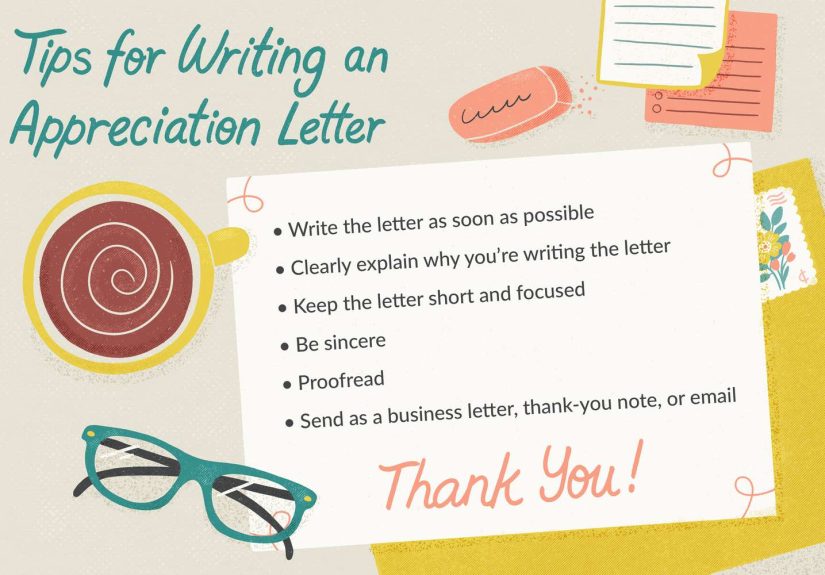
Be prompt
If the letter is tied to a recent event, send it soon. A quick note feels thoughtful. A note that arrives six months later can still be appreciated, but it may also feel like your calendar attacked you and won.
Match the format to the situation
An email works well for interviews, workplace recognition, and time-sensitive thanks. A printed or handwritten letter can feel more personal for mentors, teachers, retirement notes, donors, or major milestones.
Write for the reader, not for drama
Consider the relationship and your audience. A note to a supervisor should sound different from a note to a close friend. Professional appreciation letters should be polished, respectful, and easy to read.
Avoid generic flattery
“You are amazing” is pleasant but weak on its own. Pair praise with evidence. Specificity is what makes gratitude believable.
Proofread before sending
If you spell the recipient’s name wrong in a thank-you letter, the gratitude takes a dramatic tumble down the stairs. Check names, titles, dates, and tone.
Appreciation Letter Format
Here is a simple structure you can follow:
- Greeting
- Opening line of thanks
- Specific reason for appreciation
- Impact or personal meaning
- Closing line of thanks
- Sign-off
Appreciation Letter Examples
Example 1: Appreciation Letter to a Coworker
Dear Alicia,
Thank you for all your help during the quarterly reporting cycle. Your attention to detail and willingness to jump in when deadlines got tight made a huge difference.
I especially appreciated how you double-checked the client data and caught several errors before the report went out. That saved the team time and helped us avoid confusion later. Your calm attitude also made a stressful week much easier to manage.
I am grateful to work with someone so dependable and thoughtful. Thank you again for your support.
Best regards,
Jordan
Example 2: Appreciation Letter to a Boss or Manager
Dear Mr. Reynolds,
I wanted to express my sincere appreciation for the opportunity to lead the new onboarding project. Your trust in me gave me the confidence to step into a bigger role.
I also appreciate the guidance you offered throughout the process. Your feedback helped me think more strategically, and I learned a great deal from the way you approached both planning and communication.
Thank you for your leadership and for creating an environment where growth feels possible. I truly value your support.
Sincerely,
Maria Chen
Example 3: Appreciation Letter to an Employee
Dear Daniel,
Thank you for the outstanding work you have done over the past few months. Your consistency, initiative, and positive attitude have not gone unnoticed.
Your leadership during the system transition was especially impressive. You helped train newer team members, kept communication clear, and handled unexpected issues with professionalism. Because of your effort, the transition went far more smoothly than expected.
We deeply appreciate your contributions to the team. Thank you for the energy and excellence you bring to your work each day.
With appreciation,
Lauren Brooks
Operations Director
Example 4: Appreciation Letter to a Teacher or Mentor
Dear Professor Ellis,
I want to thank you for the guidance and encouragement you gave me during my final year. Your advice helped me grow not only as a student, but also as a more confident person.
I especially appreciate the time you took to review my graduate school application materials and talk through my goals. Your support made a stressful process feel manageable, and your belief in my potential meant more than I can say.
Thank you for your patience, wisdom, and generosity. I will carry your lessons with me for a long time.
Warmly,
Elena
Example 5: Appreciation Letter After an Interview
Dear Ms. Patel,
Thank you for taking the time to speak with me today about the marketing coordinator position. I enjoyed learning more about your team and the creative direction of the brand.
Our conversation about campaign storytelling and audience engagement made me even more excited about the role. I appreciate the chance to discuss how my content strategy experience and project coordination skills could support your goals.
Thank you again for your time and consideration. I enjoyed our conversation and appreciate the opportunity to be considered.
Sincerely,
Hannah Lee
Example 6: Appreciation Letter to a Client or Customer
Dear Mr. Gomez,
Thank you for your continued trust in our team. We truly appreciate the opportunity to work with you and support your business.
Your partnership over the past three years has meant a great deal to us. We are especially grateful for your openness, collaboration, and confidence in our recommendations as your needs have grown.
We value the relationship we have built and look forward to continuing to serve you. Thank you again for your business and support.
Best regards,
North Harbor Consulting
Short Appreciation Letter Template
If you need a quick starting point, use this:
Dear [Name],
Thank you for [specific action or support]. I truly appreciate the time, effort, and care you put into [situation].
Your help made a real difference by [impact]. I am grateful for your support and wanted to make sure you knew how much it meant.
Thank you again.
Sincerely,
[Your Name]
Common Mistakes to Avoid
Being too vague
Generic gratitude is better than none, but it is far less memorable. Add details.
Writing too much
An appreciation letter should not become a memoir. Stay on point.
Sounding overly formal or unnatural
Professional does not mean cold. Warmth is allowed. In fact, it helps.
Overpraising
If your note sounds like you are nominating someone for sainthood because they answered one email, scale it back.
Sending one identical note to multiple people
When possible, personalize each message. People can usually tell when they received the copy-and-paste version with their name awkwardly stapled on top.
When to Send an Email Instead of a Letter
Choose email when speed matters, such as after a job interview, after a meeting, or after receiving timely help at work. Email is also practical when you are thanking multiple colleagues or maintaining business communication.
Choose a printed or handwritten appreciation letter when the relationship is personal, the occasion is significant, or you want your gratitude to feel more memorable. A physical note can be especially effective for mentors, retiring colleagues, donors, long-term clients, or teachers.
Personal Experiences and Lessons About Appreciation Letters
One of the most interesting things about appreciation letters is that people rarely forget receiving a thoughtful one. They may not remember every meeting, every Monday, or every painfully cheerful corporate slogan on the office wall, but they often remember a sincere note. That is because appreciation feels personal. It tells someone, “I noticed what you did, and it mattered.” That simple message can stay with a person much longer than most people realize.
Many professionals have had the experience of sending a quick thank-you note after an interview, only to receive a warm reply that opens the door to future conversation. Even when a job offer does not happen, appreciation can help preserve a connection. A respectful, well-written note leaves behind an impression of maturity, professionalism, and genuine interest. In some cases, that impression matters later when another opportunity appears.
In workplace settings, appreciation letters can also change the tone of a team. A manager who writes specific notes of recognition often earns more trust than one who relies only on public praise or generic compliments. Employees can tell the difference between “Great job, team” and “Thank you for staying late to solve the customer issue on Thursday. Your patience and clear thinking protected the account.” The second one feels real because it is real.
On a personal level, writing appreciation letters can be surprisingly emotional. When people sit down and describe exactly how someone helped them, they often realize the impact was bigger than they first thought. A teacher did more than grade papers. A mentor did more than offer advice. A friend did more than show up. Writing the letter helps clarify that value.
There is also something refreshing about appreciation in a time when most communication is fast, skimmed, and half-finished. A thoughtful letter requires attention. It asks the writer to slow down, reflect, and choose words with care. That effort is part of the gift. It tells the recipient they were worth a few uninterrupted minutes, which is honestly a luxury in modern life.
The best experiences tied to appreciation letters usually share one thing: specificity. The letters that people save are rarely the most polished ones. They are the ones that feel honest. They mention the moment, the action, the kindness, the impact. They sound like a real person taking the time to say a real thank you. That is why appreciation letters continue to matter. They are simple, but they create connection, and connection is never outdated.
Conclusion
A great appreciation letter is not about fancy language or dramatic emotion. It is about sincerity, clarity, and detail. Thank the person directly, mention what they did, explain why it mattered, and keep your tone warm and appropriate for the relationship. Whether you are writing to a coworker, manager, teacher, employee, mentor, client, or interviewer, the right words can strengthen a connection and leave a lasting positive impression.
If you have been meaning to write one, this is your sign. Open the document, write the first line, and let gratitude do the heavy lifting. For once, your inbox can contain something that does not cause stress.