Table of Contents >> Show >> Hide
- Lucy Was Never Meant to Be a Solo Act
- The Big Reveal: Meet Australopithecus deyiremeda
- Why It Took So Long to Solve the Mystery
- What Made Lucy’s Neighbor Different?
- Why This Discovery Changes the Human Evolution Story
- The Real Star of the Story Is Scientific Patience
- Experiences Related to Lucy’s Long-Lost Neighbor: Why This Kind of Discovery Feels So Personal
- Conclusion
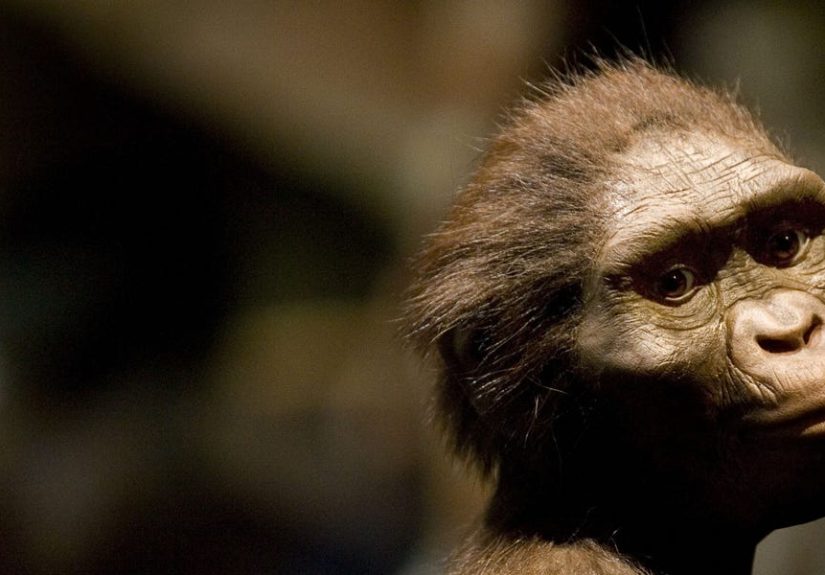
For decades, Lucy has enjoyed a very exclusive kind of celebrity. She is one of the most famous fossils ever discovered, a 3.2-million-year-old member of Australopithecus afarensis whose skeleton helped scientists understand that walking on two legs arrived long before the giant human brain did. Lucy became the poster fossil for early human evolution, the star student, the headline act, the one whose name people actually remember after leaving a museum gift shop.
But science loves ruining tidy stories, and honestly, good for science.
Researchers have now made a stronger case for the identity of Lucy’s long-debated neighbor in Ethiopia: a different hominin called Australopithecus deyiremeda. This species appears to have lived alongside Lucy’s kind in the Afar region during the middle Pliocene, which means our ancient family tree was not a neat, single-file march toward humanity. It was more like a crowded neighborhood with several relatives trying different survival strategies at the same time.
That matters because the old textbook version of human evolution often looked too clean. First one ancestor, then the next, then the next, as if evolution politely waited its turn. The new research says otherwise. Lucy was not alone. Her world included another upright-walking hominin with a very different foot, a different diet, and likely a different relationship to the landscape. In other words, early human evolution was less a ladder and more a messy, fascinating braid.
Lucy Was Never Meant to Be a Solo Act
Lucy still deserves every bit of her fame. Discovered in Ethiopia in 1974, she gave paleoanthropologists an unusually complete glimpse into an early hominin body. Her small brain, humanlike pelvis, and evidence of upright walking helped reshape how researchers think about the sequence of human evolution. Australopithecus afarensis, Lucy’s species, lived in eastern Africa for a long stretch of time and adapted well enough to leave behind a rich fossil record.
For years, that abundance made Lucy’s species feel like the obvious main character of her era. If you found bones from roughly the same time and place, it was tempting to assume they belonged to something close to A. afarensis. But fossils have a habit of being stubborn little troublemakers. Every now and then, a bone appears that does not want to fit the script.
That is exactly what happened with the Burtele Foot, a partial foot discovered in Ethiopia in 2009 and described a few years later. From the beginning, it looked odd. It came from sediments dating to about 3.4 million years ago, right in Lucy territory, but it did not look like Lucy’s kind of foot. Instead of a more humanlike big toe aligned for efficient upright walking, this foot retained a more grasping setup better suited to climbing. It still showed bipedal ability, but not in the same way as A. afarensis.
That immediately raised a juicy question: if this foot did not belong to Lucy’s species, then who exactly was walking around nearby?
The Big Reveal: Meet Australopithecus deyiremeda
The strongest current answer is Australopithecus deyiremeda, a species first named in 2015 from jaw and tooth fossils found in the Woranso-Mille area of Ethiopia. Even back then, the discovery hinted that Lucy’s era may have included more than one hominin species living in the same region at the same time. That idea was exciting, but the case was incomplete. Researchers had the jaws and teeth. They had the strange foot. What they did not yet have was a confident way to link them all together.
That gap is what made the new research so important. Continued fieldwork recovered additional fossils from the same general horizon, including more teeth and a juvenile mandible. With that richer sample, researchers argued that the dental and jaw anatomy matched A. deyiremeda closely enough to make the Burtele Foot assignment far more convincing. In plain English, the mystery neighbor finally got a better ID badge.
And what an ID badge it is. A. deyiremeda was not just “Lucy, but slightly different.” It appears to have represented a distinct experiment in being an early hominin. That is the kind of phrase scientists love, because it sounds cautious, but it is actually thrilling. Distinct experiment means evolution was testing multiple body plans and lifestyles at once.
Why It Took So Long to Solve the Mystery
Part of the delay came down to how species are identified in paleoanthropology. A foot can tell you a lot, but skulls, jaws, and teeth usually carry more diagnostic weight when researchers decide whether fossils belong to a new species. Naming a species from postcranial bones alone is a risky move. Nobody wants to build a whole branch of the human family tree from what turns out to be one weird toe having a bad day.
So scientists waited. They kept digging. They looked for specimens found in clearer association with the foot-bearing layers. That patient approach may not make for fast headlines, but it makes for better science. The result is a stronger, better-supported argument that the Burtele Foot belonged to A. deyiremeda, not to Lucy’s species and not to some unidentified ghost hominin floating forever in scientific limbo.
There is also a broader lesson here: paleoanthropology often works like detective fiction written by rocks. One fossil offers a clue, another changes the timeline, and then ten years later a jawbone strolls in and flips the whole case. It is slow, occasionally maddening, and strangely delightful.
What Made Lucy’s Neighbor Different?
A Foot Built for a Different Kind of Bipedalism
The biggest headline feature is the foot. Lucy’s species had a more adducted big toe, closer to the efficient push-off system seen in later hominins and modern humans. By contrast, A. deyiremeda seems to have retained a more opposable, grasping big toe and other traits associated with climbing. That does not mean it was not bipedal. It means its bipedality likely looked different and may have been less efficient on the ground, while giving it advantages in trees.
This is a huge deal because it suggests early human relatives did not all arrive at upright walking in exactly the same way. There was no single universal blueprint stamped onto every hominin body at once. Different lineages could be upright, but upright in different styles.
Teeth That Hint at a Different Menu
The research did not stop at anatomy. Scientists also analyzed carbon isotopes in tooth enamel, which works like a dietary receipt nobody expected to survive for millions of years. The results suggest that Lucy’s species was more of a mixed feeder, using a broader range of foods from trees, shrubs, and grass-based resources. A. deyiremeda, meanwhile, appears to have relied more heavily on C3 resources, meaning foods associated with trees and shrubs rather than a broader grass-heavy menu.
That difference matters because species can coexist more easily when they are not competing for exactly the same foods. If Lucy’s species was more flexible and A. deyiremeda was more specialized, the two could have shared a landscape without constantly trying to eat each other’s lunch. In ecology, that kind of niche separation can make all the difference.
Primitive in Some Ways, Distinct in Others
The newly described material also suggests that A. deyiremeda retained some more primitive dental and skeletal traits compared with A. afarensis. That does not make it “less evolved,” because evolution does not hand out gold medals for looking modern. It simply means the species followed a different path, keeping some older features while developing its own mix of adaptations.
That is what makes the find so rich. Instead of treating human evolution as a straight line from ape-like to humanlike, it reveals a patchwork of traits, habitats, and behaviors. Some hominins were better climbers. Some were broader feeders. Some had feet that would make your podiatrist nervous. All of them were part of the same grand evolutionary experiment.
Why This Discovery Changes the Human Evolution Story
The biggest shift is conceptual. For a long time, popular storytelling about human origins leaned toward simplicity. One ancestor replaced another in a more or less orderly sequence. But discoveries from eastern Africa have been piling up for years, and they increasingly point toward diversity, overlap, and coexistence. Lucy’s long-lost neighbor fits squarely into that more complicated picture.
At Woranso-Mille, researchers now argue they have especially clear evidence that two related hominin species occupied the same place at the same time. That makes the site incredibly important. It gives scientists a rare chance to compare neighboring species directly rather than inferring coexistence from fossils found far apart in geography or time.
And once you accept that coexistence, several implications follow. Early hominins likely partitioned habitats and foods. Upright walking evolved in multiple forms. Adaptability, not just linear progress, may have been the true superpower. The species that left descendants were not necessarily the “best” in some universal sense. They were simply the ones whose traits kept working as climates shifted, predators prowled, and ecosystems changed.
This also makes Lucy more interesting, not less. She is no longer the lone icon standing under a spotlight. She is part of a bustling evolutionary community. Her species looks more adaptable when compared with a more specialized neighbor. Her body becomes more meaningful when placed beside another hominin body solving similar problems in a different way.
The Real Star of the Story Is Scientific Patience
There is something wonderfully humbling about the fact that this revelation did not come from one dramatic fossil popping out of the ground fully labeled. It came from years of fieldwork, painstaking comparisons, micro-CT scans, isotopic analysis, and the willingness to say, “We are not sure yet,” until the evidence improved.
That kind of patience rarely gets top billing, but it deserves applause. The public often sees fossil discoveries as cinematic moments: a brush sweeps away dust, somebody gasps, and history changes. Real science is more patient, more technical, and frankly more admirable. A field team returns year after year. Sediment layers are checked and rechecked. Teeth are sampled with tools small enough to make a dentist feel seen. Then, after enough evidence accumulates, a once-mysterious foot finally gets a name.
That is not slow science. That is careful science. And careful science is how you keep the human story from turning into a guessing contest with excellent museum lighting.
Experiences Related to Lucy’s Long-Lost Neighbor: Why This Kind of Discovery Feels So Personal
One reason this story lands so well with readers is that it feels bigger than one fossil. Even if you have never taken an anthropology course and could not identify a metatarsal in a police lineup, there is something instantly gripping about the idea that a world-famous fossil had a neighbor we did not fully understand until now. It turns a scientific paper into a human experience of surprise, revision, and wonder.
For museum visitors, discoveries like this change the whole emotional texture of an exhibit. Lucy is already impressive on her own, but once you know she lived in a landscape shared with other hominins, the display stops feeling like a lonely ancestor trapped in glass. It starts to feel like a snapshot from a living world. You can imagine paths crossing, habitats overlapping, and different bodies navigating the same risky terrain. Suddenly the past feels less flat and more inhabited.
For students, the experience is equally powerful because it breaks the bad habit of thinking science is a pile of finished facts. This discovery shows that major questions can stay open for years, even when the fossils are already in hand. A foot was found in 2009. It was clearly important. But its owner remained uncertain until more evidence arrived. That teaches a beautiful lesson: knowledge grows by revision. Science is not weak when it changes its mind. Science is working.
For people who love the adventure side of discovery, there is also something irresistible about the fieldwork itself. Imagine going back to the same harsh landscape again and again, trusting that the ground still has more to say. Imagine sorting sediments, collecting fragments, comparing teeth, scanning jaws, and slowly realizing that you are not just cataloging bones. You are reconstructing a neighborhood from 3.4 million years ago. That is a wild sentence, and yet here we are.
This kind of research also changes how many readers experience the idea of being human. The old story suggested a straight march toward us, as if evolution had a clear destination and a tidy map. The newer story is messier and, in many ways, more relatable. There were multiple ways of moving, eating, and surviving. Some lineages were generalists. Some were specialists. Some climbed better. Some walked more efficiently. Being human, even in deep time, was never about one perfect template.
There is comfort in that. It suggests that variation is not a side note in our history. Variation is the story. Diversity, experimentation, and adaptation were present near the beginning of our lineage, not just at the end. Lucy’s long-lost neighbor is a reminder that our origins were crowded with possibilities.
And maybe that is why stories like this stick. They do not just tell us who lived millions of years ago. They remind us that the past is still open to discovery, that certainty is often provisional, and that one odd-looking fossil can patiently wait for years before changing the conversation. Not bad for a foot, really.
Conclusion
The identification of Lucy’s long-lost neighbor as Australopithecus deyiremeda adds more than a new name to the fossil record. It strengthens the case that multiple hominin species shared the Ethiopian landscape during the middle Pliocene and that they did so with different bodies, diets, and ecological strategies. Lucy’s world was not simple. It was crowded, experimental, and surprisingly sophisticated.
That is exactly what makes this discovery so exciting. It does not replace Lucy. It gives her context. It shows that early human evolution was not a lonely climb toward modernity but a branching, overlapping, deeply creative process. And every time scientists return to those Ethiopian sediments, they remind us of a truth that never gets old: the story of human origins is still being written, one stubborn fossil at a time.