Table of Contents >> Show >> Hide
- From One “Fire” Gown to a Whole Brand
- Why Colorful Wedding Dresses Are Having a Moment
- How “Going Viral” Actually Works (and Why It’s Not a Plan)
- Turning a Viral Moment Into a Real Business
- Practical Considerations Brides Don’t Want to Learn the Hard Way
- Specific Examples of Color Stories That Photograph Like Magic
- Experience Add-On: What It’s Like to Work With a Wedding Dress Artist (500+ Words)
- Conclusion: The Future Isn’t WhiteIt’s Custom
Weddings are basically the Olympics of personal style: months of training (read: planning), a huge audience (your families, your friends, your group chat),
and one outfit that will be photographed from angles you didn’t know existed. So when an artist-bride decided a standard white gown wasn’t going to cut itand
showed up in a dress that looked like it was gently on fire (visually, not literally)the internet did what it does best: it fell in love, hit “share,”
and accidentally launched a business.
This is the story of how a single viral “fire” wedding dress became a spark for a full-blown colorful wedding dress brand, and why the bigger trend behind it
(non-white bridal fashion, personalization, and wearable art) is only getting hotter. Pun intended. Respectfully.
From One “Fire” Gown to a Whole Brand
The origin story is wonderfully simple: an artist wanted her wedding dress to look like her. Not a default setting. Not a “close enough.”
Something that felt like a canvas and a celebration at the same time.
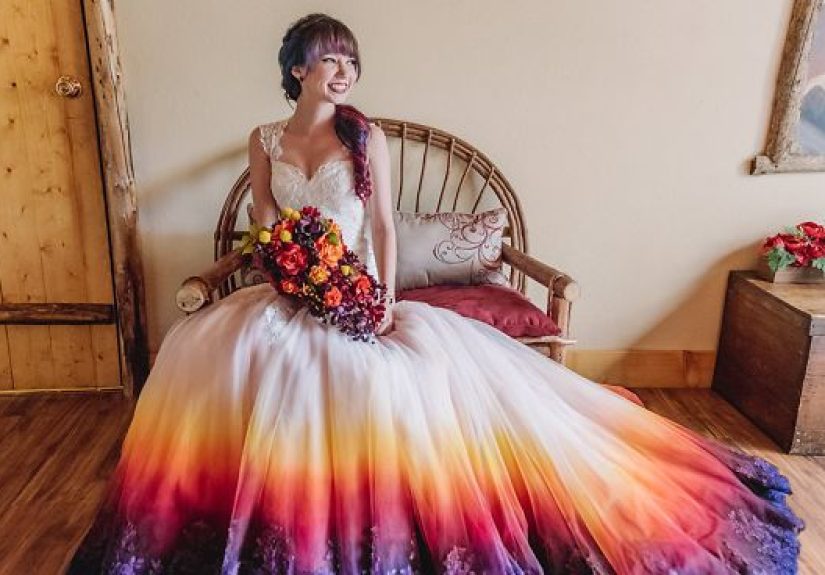
In Taylor Ann Linko’s case, that meant taking her own bridal gown and airbrushing color into itcreating a bold, flame-like gradient that looked like sunset
had decided to RSVP. Photos from the wedding circulated online and the dress went viral, triggering a very modern chain reaction:
attention → messages → requests → orders → business.
What happens next is the part most people underestimate. A viral moment is not a business model. It’s a traffic spike. Turning it into a real
business requires structure, repeatable decisions, and enough boundary-setting to keep your creativity alive.
The practical pivot that makes the story especially interesting: rather than only doing custom work on dresses that clients sent in, Linko shifted toward
sourcing gowns herselfoften discontinued boutique samples, secondhand finds, or donated dressesthen transforming them into one-of-one wearable artwork.
That move isn’t just aesthetic; it’s operational. It protects creative vision, simplifies logistics, and helps the final product feel truly curated instead of
“custom by committee.”
Why Colorful Wedding Dresses Are Having a Moment
The “fire” dress didn’t go viral in a vacuum. It landed in a cultural moment where brides are increasingly choosing individuality over tradition, and
“bridal” no longer automatically means “white.”
Personalization is the new luxury
In a world where you can buy almost anything instantly, what feels special is what feels specific. Brides are putting meaning into details:
embroidery with an inside joke, veils that look like paintings, dresses that match a cultural tradition, or color palettes tied to a place, a season, or a story.
A colorful gown can do that in one glance.
Bridal fashion has been quietly moving beyond white for years
Bridal runways and trend forecasts routinely include “not-so-white” gownssoft blush, champagne, icy blue, black accents, florals, ombré effects, and
unexpected texture. The modern bridal look is less about “rules” and more about “energy.” Is it romantic? Dramatic? Minimal? Maximal? A colorful dress can
communicate that instantlywithout you having to explain it to Aunt Linda.
Color photographs like a personality, not just a garment
If you’ve ever looked at wedding photos and thought, “Wow, everyone looks… beige,” congratulations: you have eyes. Color creates contrast, depth, and mood.
It can amplify golden hour, stand out against greenery, and turn movement into something cinematic. In short: color helps your photos look like a story,
not a catalog page.
How “Going Viral” Actually Works (and Why It’s Not a Plan)
Let’s demystify the magical thinking. “Viral” isn’t a spell you castit’s a set of conditions that sometimes align. Research-backed marketing thinking tends
to come back to a few repeat themes: people share what makes them look interesting, helpful, in-the-know, emotional, or connected. The best viral content
creates a strong reaction and makes sharing feel like a social win.
A “fire” wedding dress checks those boxes effortlessly. It’s surprising (wedding dress, but make it sunset), emotionally resonant (self-expression on a big day),
and visually irresistible (people basically share pretty things the way squirrels store acorns).
The bigger point for artists: if a piece of work goes viral, you don’t need to become a full-time internet performer. You need to build a bridge from attention
to action. That means: a clear place to buy, a way to understand pricing, and enough information to reduce customer hesitation.
Turning a Viral Moment Into a Real Business
The romantic version of this story is “internet fame equals success.” The real version is more like: “suddenly you have 200 DMs, a full-time job,
and a cat that still expects dinner.” Here are the business moves that separate a fleeting viral moment from a sustainable brand.
1) Choose a business format you can survive
There are two common paths for an artist making custom fashion:
commission-based (clients request specific work) and product-based (you create pieces and sell them as finished items).
Commissions can be lucrativebut they come with timelines, expectations, fit issues, shipping stress, and “Can we make it more… blue?” feedback loops.
Product-based work gives you more control, clearer inventory, and a more scalable workflow.
Many successful wearable-art brands end up with a hybrid: a limited number of commissions per year (with strong boundaries) plus one-of-one releases that let
the artist explore and stay inspired.
2) Make the process visible (without turning your studio into reality TV)
Short-form video and behind-the-scenes content work well for art businesses because the process is inherently satisfying: sketch → color tests → gradients → reveal.
Even if a viewer never buys, they understand the value. And when they do buy, they feel connected to the work, which reduces buyer anxiety.
3) Build trust like a professional, not like a “creative type” stereotype
Brides are not just buying artthey’re buying reliability. Clear timelines, clear policies, transparent pricing ranges, and honest descriptions of what’s possible
will win more customers than vague “DM me” energy.
- Clarity: What’s included? What isn’t? What happens if shipping is delayed?
- Consistency: A simple intake form beats 70 back-and-forth messages.
- Proof: High-quality photos on different body types, lighting conditions, and venues builds confidence.
4) Treat your platform like a storefront, not a diary
Social media can bring attention, but your “home base” should convert that attention into a real relationship. That can be an online shop, an email list,
or a portfolio site with inventory and FAQs. If your only sales channel is “hope the algorithm stays in a good mood,” your business is basically a house built
on a trampoline.
Practical Considerations Brides Don’t Want to Learn the Hard Way
Colorful wedding dresses are dreamy. They are also… textiles. Real-world, spill-prone, wrinkle-prone textiles. If you’re shopping for a painted or dyed gown
(especially one-of-one pieces), these considerations matter.
Fabric matters more than you think
Some fabrics accept dye and paint beautifully; others can resist or behave unpredictably. A good designer will test, plan, and choose methods based on the
textilenot just the Pinterest mood board.
Colorfastness and care are not optional topics
Ask how the color is set, what cleaning methods are recommended, and how the dress should be stored. If you’re traveling, ask about garment bags, folding,
and what to do if the dress gets damp (hello, beach weddings).
Photography and lighting change color
Warm indoor lighting can pull a gown more orange or gold. Shade can make blues and purples look deeper. Flash can flatten gradients. A good strategy:
look at real wedding photos of similar color palettes, not just studio images.
Safety and compliance (especially if you’re buying from a business)
“Fire dress” is a visual conceptyour gown should not be literally flammable in any unusual way. In the U.S., general wearing apparel has flammability standards,
and reputable makers take material safety seriously. If you’re buying a professionally sold garment, it’s reasonable to ask questions about materials,
treatments, and safe-use guidance without feeling like you’re being “too much.” It’s your wedding. Be “too much.”
Specific Examples of Color Stories That Photograph Like Magic
If you love the idea but don’t know where to start, here are popular “color stories” that tend to look incredible in real weddingswithout feeling like a costume.
Sunset Ombre
Think coral → orange → gold → soft blush. It flatters a wide range of skin tones and glows at golden hour. This is the spiritual cousin of the viral “fire” look.
Aurora Gradient
Cool-toned blendsicy blue, lavender, and soft mintfeel modern and ethereal. Great for winter weddings, art-gallery venues, and “I want magic but make it chic.”
Ocean Wash
Seafoam, teal, and deep blue can read romantic or dramatic depending on intensity. Perfect for coastal weddingsor for anyone whose vibe is “mermaid, but employed.”
Wildflower Accents
A mostly traditional gown with hand-painted florals or color at the hem gives a playful twist while keeping the silhouette classic. Great for brides who want
a “yes, but not too much” approach.
Ember-to-Ash
A smoky gradientwarm at the base fading into charcoal or soft graycan be stunning for modern venues. It’s bold, editorial, and surprisingly wearable.
Experience Add-On: What It’s Like to Work With a Wedding Dress Artist (500+ Words)
The first thing most brides say after commissioning a painted or dyed wedding dress is some version of: “I didn’t realize how emotional this would be.”
Not because the process is stressful (though deadlines are real), but because you’re not just picking a dressyou’re collaborating on something that feels like
a portrait of your personality.
The experience often starts with a feeling, not a color code. Brides describe sunsets from a specific trip, a favorite painting, a childhood place, or even a
bouquet they’ve had pinned for years. And then comes the surprisingly grounding part: translating that emotion into a practical plan. Artists will ask questions
most bridal salons don’t: What time is your ceremony? Indoors or outdoors? What does your venue look like? What colors are your florals? Do you want the dress
to be the main characteror a co-star?
One common “aha” moment is learning that subtle can be harder than bold. A soft gradient that looks effortless often requires multiple layers, careful
blending, and a deep understanding of how fabric will absorb and reflect color. Brides who expected a quick “dip-dye” effect often leave the process with a new
appreciation for the craftbecause wearable art has to move, photograph, and survive hugs from relatives wearing too much cologne.
Photographers also tend to love these gownsfor practical reasons. A colorful dress gives them an instant focal point and makes composition easier.
Movement shots look more dynamic because the gradient changes as the fabric shifts. Even detail photos (hem, bustle, train) suddenly have a story to tell.
Brides often say their wedding album feels more “editorial” without needing a high-fashion budgetbecause the dress itself creates the visual drama.
The most important experiential lesson, though, is timeline management. Traditional dress shopping has built-in pacing: buy, alter, pick up, done.
With an artist-made gown, you’re adding creative production time. Brides who had the smoothest experiences typically did three things:
- They decided early. Even if the final color plan evolved, they locked in the idea months ahead so production didn’t collide with final fittings.
-
They trusted the artist’s process. They provided inspiration, then let the maker interpret itrather than trying to micromanage a gradient the
way you might tweak an online cart. - They planned the “supporting cast.” Shoes, bouquet, veil, and accessories were chosen to complement the dress, not compete with it.
There are also some candid, funny realities. Like: once you post a teaser, strangers on the internet may develop strong opinions about your wedding dress
(which is a bold hobby, but okay). Or: people will ask if you’re “allowed” to wear color, as if there’s a bridal police unit with a ticket book.
Brides who thrive in this space tend to have one thing in common: they’re not trying to look like a bride from a template. They’re trying to look like
themselveson a day that deserves it.
In the end, the best “experience review” is simple: a colorful, artist-made dress often feels less like something you rented from tradition and more like
something you created on purpose. And that’s a memory that outlasts any trend cycle.
Conclusion: The Future Isn’t WhiteIt’s Custom
The viral “fire” wedding dress story works because it’s equal parts art, internet chaos, and smart business evolution. One artist made something fearless for
her own wedding, the world noticed, and she turned that attention into a brand built on individuality and one-of-one craftsmanship.
More broadly, colorful wedding dresses are rising because modern brides want meaning, personality, and joynot just tradition. Whether you choose a subtle blush
wash or a full sunset train, the point is the same: your wedding outfit should feel like you, not like a default setting.