Table of Contents >> Show >> Hide
- Why the Psion Look Still Works So Well
- The Raspberry Pi Makes the Concept Possible
- What Makes a Psion-Inspired Raspberry Pi Laptop Beautiful?
- The RasPSION and the Maker Spirit Behind It
- Modern Hardware Makes the Idea Even Better
- Design Challenges You Cannot Ignore
- Who Actually Wants a Raspberry Pi Laptop Like This?
- Why This Kind of Project Has Real SEO-Worthy Staying Power
- What the Best Version of This Laptop Looks Like Today
- Experience: What It Feels Like to Live With a Psion-Inspired Raspberry Pi Laptop
- Conclusion
- SEO Tags
Note: This article is formatted for direct web publishing and does not include citation artifacts or unnecessary markup.
Some gadgets fade into the background of tech history. Others refuse to leave quietly, like that one stylish friend who still looks cooler in a 1990s jacket than the rest of us do in brand-new clothes. The Psion Series 5 belongs firmly in that second category. Its sliding hinge, compact footprint, and genuinely usable keyboard made it feel less like a toy and more like a tiny machine for serious thinking. So when makers began building a Raspberry Pi laptop inspired by Psion, the appeal was immediate: take a beloved old-school form factor, add modern brains, and create something that feels both nostalgic and strangely ahead of its time.
That is exactly why the idea of a beautiful Raspberry Pi laptop inspired by Psion continues to capture attention. It is not just about making a portable computer. It is about making one with character. In a world of flat black rectangles, a Pi-powered machine with a clever hinge, a snug keyboard, and a sense of mechanical theater feels refreshing. It invites you to open it, tinker with it, and maybe even grin a little while doing it.
Why the Psion Look Still Works So Well
The original magic of Psion hardware came from a design that felt purposeful. Instead of a standard laptop clamshell, the display moved upward and inward with a pivoting motion that made the machine feel sturdy, compact, and surprisingly elegant. It looked smart because it was smart. The hinge was not a gimmick; it improved balance, protected the screen, and made the device feel more robust on a desk or in your lap.
That design language still matters today. Makers and hardware fans love devices that reveal their function through motion. When a screen glides into place rather than simply flopping open, the experience feels intentional. A Psion-inspired build taps into that emotional response. It turns a DIY computer into an object with personality.
This is also why a retro-inspired Raspberry Pi project can stand out even in the age of mini PCs, tablets, and foldables. It offers what many modern devices do not: tactile satisfaction. You do not just power it on. You unfold it like a tool built for ideas.
The Raspberry Pi Makes the Concept Possible
The Raspberry Pi has always been ideal for creative portable builds because it sits in a sweet spot between capability, cost, and flexibility. It is small enough to fit into compact enclosures, powerful enough to run Linux comfortably, and open enough to encourage experimentation. For years, makers have turned Pi boards into handhelds, cyberdecks, portable terminals, and laptop-like machines. A Psion-style laptop is one of the most charming versions of that tradition.
Part of the appeal is practical. A Raspberry Pi can handle writing, coding, light browsing, media playback, terminal work, retro gaming, and hardware projects without demanding a full-size laptop chassis. And newer Pi hardware has made the dream even more realistic. A modern Pi setup can support better thermals, faster storage, improved wireless connectivity, and smoother desktop performance than older generations.
That matters because the fantasy here is not just “tiny computer, cute hinge, done.” The fantasy is carrying a machine that feels handmade and useful at the same time. The Raspberry Pi lets builders chase both goals without spending absurd money or locking themselves into proprietary parts.
What Makes a Psion-Inspired Raspberry Pi Laptop Beautiful?
1. The hinge is the star
Let us be honest: if the hinge is bad, the whole project loses its swagger. A Psion-inspired laptop lives or dies by the way the screen moves. The best builds use a pivoting mechanism that raises the display as the lid opens, creating that signature tucked-in look. It gives the machine a mechanical identity, and it also helps stability by shifting the screen into a more balanced position.
2. The keyboard has to earn its keep
Portable DIY computers often stumble at the keyboard. Too cramped, too mushy, too awkward, and suddenly your cool retro project becomes a monument to thumb fatigue. A beautiful Pi laptop cannot just look like a serious machine; it has to feel like one. Even a compact Bluetooth keyboard can work if the key spacing is sensible and the layout does not force your hands into origami mode.
3. The case should look intentional
Some Raspberry Pi projects proudly wear their DIY roots with exposed screws, visible cutouts, and enough cable drama to make an electrician nervous. That has its own charm, but the Psion-inspired approach calls for more refinement. Laser-cut panels, carefully shaped 3D-printed parts, clean port access, and a well-resolved silhouette all help the build feel cohesive rather than improvised.
4. The screen should match the mission
A portable Pi display does not need to be giant, but it does need to feel usable. A 7-inch screen has long been a practical choice for Raspberry Pi builds because it keeps the device compact while still supporting real desktop interaction. Newer display options give makers more flexibility with orientation, touch capability, and sharper presentation, which opens the door to designs that feel far more polished than earlier experimental builds.
The RasPSION and the Maker Spirit Behind It
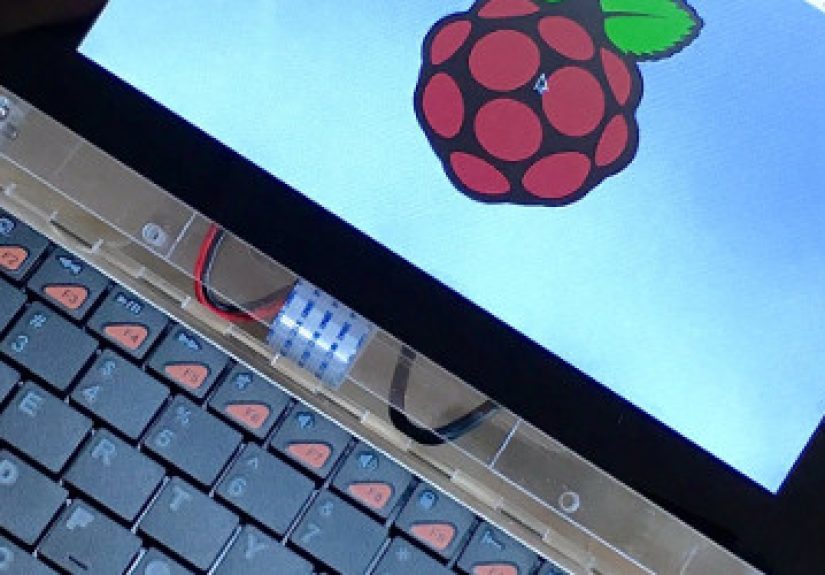
One of the most memorable examples of this idea is the RasPSION, a maker project that combined a Raspberry Pi, an official 7-inch display, a Bluetooth keyboard, a battery pack, and a Pi camera inside a laser-cut case with a hinge inspired by Psion machines. It stood out because it did not merely imitate an old device cosmetically. It translated the spirit of Psion into a modern DIY object.
That distinction matters. Copying a vintage machine can feel like cosplay for hardware. Interpreting it can feel like design. The RasPSION landed on the right side of that line. It respected the old form factor while embracing the maker mindset: use accessible parts, solve the mechanical puzzle creatively, and build something delightful enough that other people immediately want one too.
That project also helped prove a broader point: a Raspberry Pi laptop build does not have to be bulky, ugly, or purely experimental. With care, it can be compact, elegant, and surprisingly practical.
Modern Hardware Makes the Idea Even Better
If you revisit the concept today, the hardware landscape is friendlier than ever. Raspberry Pi boards are faster, storage options are better, cooling solutions are smarter, and portable display choices have improved. Builders can now combine classic design inspiration with modern creature comforts, including faster boot times, more responsive desktop performance, and more reliable wireless connectivity.
That means a modern DIY Raspberry Pi laptop can move beyond novelty. It can serve as a writing machine, a coding station, a field terminal, a retro gaming unit, or a portable Linux box for travel and tinkering. Not a replacement for every full-size laptop, of course, but absolutely a real computer for real tasks.
This is where the Psion inspiration becomes especially smart. The design keeps expectations grounded. Nobody opens a Psion-style Pi laptop expecting a workstation with sixteen browser tabs, three external monitors, and a video-editing timeline the size of Nebraska. The promise is different: portability, focus, personality, and enough power to do meaningful work without drowning in bloat.
Design Challenges You Cannot Ignore
Power and battery management
Portable Raspberry Pi projects always run into the same question eventually: how do you power the thing elegantly? A battery pack is easy in theory, but integrating it cleanly into a compact enclosure is much harder. You need enough capacity for usable runtime, stable power delivery, safe charging, and a layout that does not turn your beautiful little machine into a chunky brick.
Thermals and airflow
Small computers have a talent for acting adorable right up until they get warm. Then they become tiny reminders that physics is undefeated. A well-designed Pi laptop needs room for airflow, sensible component placement, and in some cases active cooling. Thermal planning is not glamorous, but it is the difference between a sleek portable Linux machine and a hand warmer with ambitions.
Input compromises
Trackpads, pointing sticks, touchscreen controls, or simple external mice all come with trade-offs. The smaller the machine, the tougher the decision. Some builders embrace a minimal approach and prioritize keyboard-first workflows. Others add touch input or detachable accessories. The right choice depends on the project’s mission, but the biggest mistake is pretending the compromise does not exist.
Durability
A Psion-inspired hinge looks brilliant, but it also raises the stakes mechanically. This is not a flat box with a screen bolted on top. It is a moving system with alignment concerns, wear points, and repeated opening stress. A successful build needs more than style. It needs repeatable motion, solid anchoring, and tolerances that do not drift after a week of use.
Who Actually Wants a Raspberry Pi Laptop Like This?
More people than you might think. Makers love it because it turns familiar components into a personal statement. Writers and coders appreciate it because a compact Linux machine can be wonderfully distraction-light. Students like the affordability and educational value. Retro tech fans adore the Psion lineage. And tinkerers, naturally, see the entire thing as a delightful invitation to spend a weekend adjusting hinges, rerouting cables, and muttering, “No, no, that panel should sit flush.”
There is also a deeper audience here: people who are tired of sealed, disposable hardware. A Pi laptop project represents the opposite philosophy. It is understandable. It is repairable. It is customizable. You can swap parts, change software, redesign the shell, or rebuild the entire machine around a new board revision. In a world where many gadgets are less “owned” than “temporarily tolerated,” that freedom feels refreshing.
Why This Kind of Project Has Real SEO-Worthy Staying Power
From a content perspective, the phrase Beautiful Raspberry Pi Laptop Inspired By Psion works because it hits multiple search interests at once. It speaks to Raspberry Pi enthusiasts, retro computing fans, DIY laptop builders, industrial design nerds, and portable Linux users. It balances technical curiosity with emotional appeal. People are not searching only for specs. They are searching for an idea: a portable computer that feels cool again.
That is why articles on this topic continue to resonate. They live at the intersection of nostalgia, maker culture, and practical computing. They also invite longer reading because the audience wants more than a product blurb. Readers want to know why the design matters, how the build works, what compromises are involved, and whether the final machine is a novelty or a genuinely useful device.
What the Best Version of This Laptop Looks Like Today
The ideal modern version would combine a compact Raspberry Pi board, a crisp 7-inch display, a genuinely usable keyboard, thoughtful cooling, and a hinge that echoes the Psion’s elegant motion without feeling fragile. It would have enough battery life for a solid session away from a desk, enough port access for real tinkering, and enough polish that you would not feel embarrassed pulling it out in public.
It would not try to beat a premium ultrabook. That would miss the point entirely. Instead, it would offer something rarer: charm, focus, repairability, and the kind of hands-on satisfaction that only a well-executed DIY machine can provide. It would feel like a computer you chose, not one that an algorithm, a retailer, or a marketing team gently herded you toward.
And yes, it would probably inspire conversation every single time someone saw it. That alone is worth something in an age when most laptops are visually indistinguishable from one another unless you count sticker density as a personality trait.
Experience: What It Feels Like to Live With a Psion-Inspired Raspberry Pi Laptop
Using a Psion-inspired Raspberry Pi laptop is not like using a normal laptop, and that is exactly the point. The experience starts before the screen even lights up. You reach for the device, open the lid, and the hinge performs its little piece of engineering theater. The display rises into place with purpose. It does not just open; it arrives. That moment changes the tone of the interaction. Suddenly, you are not checking email on a generic slab. You are operating a machine that feels chosen, almost curated.
The first surprise is how focused it makes you feel. A compact Raspberry Pi laptop does not invite chaos. It invites a task. Sit down to write, and you write. Open a terminal, and you tinker. Load a project, and you concentrate. There is something about the smaller screen, the tight keyboard footprint, and the handmade enclosure that nudges your brain toward intentional computing. It is less “infinite scroll machine” and more “let’s actually do something useful.” Frankly, many modern devices could learn a thing or two.
There is also a quiet joy in the imperfections. Maybe the keyboard is a little smaller than ideal. Maybe the battery life is good rather than miraculous. Maybe the case has a tiny quirk where one corner reminds you that this was built by a human being, not stamped out by a robot army in a spotless factory. But those flaws often make the machine more lovable, not less. They tell a story. Every unusual port placement or clever workaround becomes part of the laptop’s personality.
Carrying it around feels different too. A Psion-inspired Pi build tends to attract the exact right kind of attention. Not the flashy “look at my luxury gadget” kind, but the curious “what on earth is that, and why do I suddenly want one?” kind. Makers recognize the effort. Retro fans recognize the reference. Linux users recognize the spirit. Even people who know nothing about Raspberry Pi can tell the device is interesting because it looks like it belongs to a parallel universe where computers stayed inventive.
Then there is the satisfaction of ownership. Not ownership in the legal sense, but in the emotional sense. When you use a machine like this, you understand it. You know why the hinge moves the way it does. You know what powers the display. You know where the compromises live and why they were made. That creates a stronger connection than most off-the-shelf hardware ever manages. The laptop becomes part tool, part project, part conversation piece.
And perhaps that is the best reason this concept keeps resurfacing: it makes computing feel personal again. A beautiful Raspberry Pi laptop inspired by Psion is not just a clever build. It is a reminder that technology can still be playful, specific, and deeply satisfying. It can still make you smile when you open the lid. In an industry crowded with sameness, that little smile is no small achievement.
Conclusion
The charm of a beautiful Raspberry Pi laptop inspired by Psion goes far beyond retro aesthetics. It represents a different philosophy of computing, one that values tactile design, smart mechanical ideas, and the freedom to build something that feels uniquely yours. From the original RasPSION concept to today’s more capable Raspberry Pi ecosystem, the idea has only become more compelling.
If you love portable Linux, DIY hardware, retro-inspired design, or simply the thought of a computer with more character than a thousand identical clamshells combined, this kind of build is easy to understand and even easier to admire. It is proof that old ideas do not need to stay old. Sometimes they just need a Raspberry Pi, a clever hinge, and a maker with excellent taste.