Table of Contents >> Show >> Hide
When most people think of Will Smith, they picture the wise-cracking hero
from Men in Black or the charming guy who somehow talks his way out
of every disaster. But behind the scenes, Smith has quietly built a powerful
career as a producer, shaping stories, launching stars, and using his
companies to push projects that might not have existed without him.
From heartfelt dramas to superhero experiments, from remakes that reframe
childhood classics to intimate biopics, the best Will Smith produced movies
reveal what he cares about most: family, perseverance, representation, and
big emotional swings. This list looks at the top films he’s produced (or
co-produced), why they matter, and how they helped define his legacy far
beyond acting.
Why Will Smith as a Producer Matters
With his production banner (first Overbrook Entertainment and later
Westbrook), Will Smith stepped into the role of tastemaker as well as
movie star. Instead of just signing on to projects that came across his
desk, Smith used his influence to:
- Champion Black leads and diverse casts in mainstream genres.
- Tell inspirational true stories about grit, hustle, and faith in yourself.
- Build vehicles for rising talent, including his own kids and younger actors.
- Blend commercial appeal with emotional depthat least when the risks pay off.
Looking at his best produced films, you can see a pattern: Smith loves
underdogs, redemption arcs, complicated families, and stories where
stubborn belief in a dream changes everything. Even when the movies aren’t
perfect, his fingerprints are on the themes.
Best Will Smith Produced Movies
1. The Pursuit of Happyness (2006)
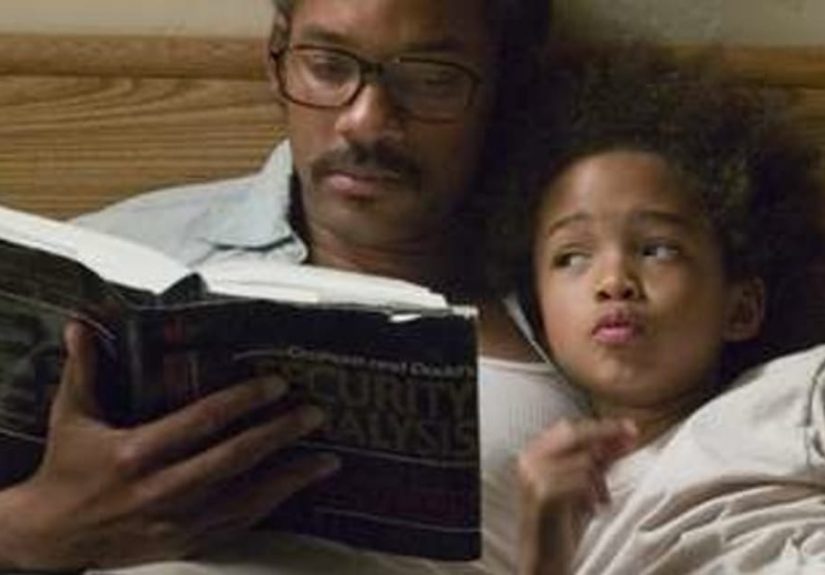
If you had to pick one film that sums up Will Smith’s producing philosophy,
The Pursuit of Happyness would be it. Based on the real
story of Chris Gardner, the movie follows a struggling salesman who risks
everything to break into finance while raising his young son alone.
Smith doesn’t just star; he produces a film that leans hard into themes of
resilience, parental sacrifice, and the American dream. It’s not a flashy
blockbuster it’s a grounded, street-level survival story where the
“special effects” are overdue bills, unpaid parking tickets, and the
crushing weight of being told “no” over and over.
The movie’s success showed studios that audiences would show up for an
emotional, Black-led drama about poverty, ambition, and dignity. It also
helped solidify Smith as a serious actor while proving that his production
instincts could deliver both awards buzz and box-office returns.
2. Hitch (2005)
Before rom-coms were regularly led by Black male stars, Will Smith helped
produce and headline Hitch, a sleek New York romance about
a “date doctor” who secretly coaches men on how to land their dream partner.
On paper, the concept could have been obnoxious. In practice, Smith’s
producing and performance choices keep the tone light and human. The
protagonist isn’t a manipulative pickup artist; he’s a guy teaching
socially awkward clients to be vulnerable and respectful, while his own
love life collapses in ironic fashion.
As a producer, Smith helped prove that a global audience would embrace a
Black lead in a mainstream romantic comedy without the story being about
race. The film’s worldwide success opened doors for more diverse casting in
studio rom-coms and gave Smith a blueprint for pairing genuine heart with
broad commercial appeal.
3. Hancock (2008)
Long before “gritty superhero deconstruction” became a streaming category,
Will Smith produced and starred in Hancock, a messy but
fascinating spin on the superhero genre. Instead of a noble, polished
savior, we get a lonely, alcoholic, PR nightmare of a hero who causes more
property damage than he prevents.
As a producer, Smith took a risk: this isn’t a standard origin story, and
for much of the runtime we’re not even sure we like Hancock. The movie
leans into questions about public image, redemption, and whether a deeply
flawed person can still be heroic.
While critics were split, audiences turned out, and the film helped
demonstrate that audiences were ready for superheroes who didn’t look or
behave like comic-book Boy Scouts. You can see echoes of Hancock in
later anti-hero projects, even if those later titles got more refined
scripts and bigger cinematic universes.
4. Seven Pounds (2008)
Seven Pounds might be Will Smith’s most divisive produced
film, but it’s also one of his most ambitious. The story follows a man
haunted by a terrible mistake who sets out to transform the lives of seven
strangers in drastic, life-altering ways.
As a producer, Smith leans into big, melodramatic swings: nonlinear
storytelling, emotional twists, and a heavy moral burden on its main
character. The movie asks uncomfortable questions about guilt, atonement,
and whether one life can ever truly balance the scales for another.
For viewers who connect with it, Seven Pounds lands like an
emotional freight train, and it cemented Smith’s interest in producing
films that prioritize feelings over quips. Even if you don’t love the
ending, you can’t accuse the movie of playing it safe.
5. The Secret Life of Bees (2008)
Unlike many of his produced films, Will Smith doesn’t appear on screen in
The Secret Life of Bees. Instead, he works behind the
scenes to bring Sue Monk Kidd’s beloved novel to the big screen.
Set in the 1960s American South, the film follows a young white girl who
runs away from an abusive home and finds refuge with three Black sisters
who run a bee farm. It’s a story about chosen family, grief, and the quiet
power of Black women creating their own sanctuary in a hostile world.
From a producing standpoint, this movie shows Smith’s willingness to back
female-driven, ensemble storytelling that doesn’t center him. The cast
including Queen Latifah, Dakota Fanning, Jennifer Hudson, Alicia Keys, and
Sophie Okonedo gives the film a rich, intergenerational texture that’s
rare in commercial dramas.
6. The Karate Kid (2010)
With The Karate Kid remake, Will Smith puts on his producer
hat and his proud-dad hat at the same time. The film relocates the classic
underdog story from the San Fernando Valley to Beijing, casting Jaden Smith
as a new kid struggling to adapt to life in China and Jackie Chan as his
reluctant mentor.
This isn’t just a nostalgic cash-grab. As a producer, Smith supports a
version of the story that leans into culture shock, cross-cultural respect,
and a more grounded portrayal of mentorship. The dynamic between Jaden and
Chan gives the movie heart, and the Chinese locations make the training
sequences feel fresh instead of recycled.
The result is a family-friendly movie that introduces a new generation to
the core themes of the original discipline, resilience, and respect
while giving Smith’s son a star-making role and strengthening his
partnership with Jackie Chan.
7. After Earth (2013)
Let’s be honest: After Earth is not anyone’s pick for “best
Will Smith movie.” Critics were harsh, and the film didn’t become the franchise
launcher its producers hoped. But from a producing perspective, it’s an
important swing worth talking about.
The story began as a simple father-and-son survival idea that Will Smith
helped develop into a science-fiction epic set a thousand years in the
future. As a producer, he co-financed and co-shaped a film that puts a
young Black teen front and center in a big-budget sci-fi environment a
rarity at the time.
Even though the movie stumbled, it represents the risky side of Smith’s
producing choices: he’s clearly not afraid to back unconventional tonal
mixes (somber sci-fi, family drama, survival thriller) and try to build
world-spanning franchises around his family. Not every experiment works,
but the ambition is undeniable.
8. Annie (2014)
With Annie, Will Smith and his fellow producers bring a
classic Broadway musical into the 21st century. Instead of a curly-haired
redhead in the Great Depression, we meet a modern foster kid in New York
City, played by Quvenzhané Wallis, navigating social media, viral politics,
and updated musical numbers.
Smith’s producing influence can be felt in the film’s casting and tone:
diverse leads, hip-hop and pop flourishes, and a kid-friendly energy that
doesn’t erase the harder realities of foster care. It’s a bright, glossy
movie, but underneath the sparkle is a story about a child learning that
stability and affection aren’t the same thing as flashy promises.
The movie didn’t win over every critic, but it gave a new generation their
own version of Annie one where a Black girl gets to be the hero
of a major studio musical, and where the soundtrack nods to Jay-Z as much
as traditional show tunes.
9. Life in a Year (2020, Executive Producer)
In Life in a Year, Will Smith moves fully into the
mentor-producer lane. He doesn’t appear in front of the camera, but he and
Jada Pinkett Smith serve as executive producers on a romantic drama starring
Jaden Smith and Cara Delevingne.
The movie follows a high-achieving teen who learns that his girlfriend is
terminally ill and decides to give her a lifetime of experiences in the one
year she has left. It’s a smaller, more intimate film than many of Smith’s
earlier producer credits, but it fits neatly into his long-standing
obsession with time, regret, and making every moment count.
From a producing standpoint, Life in a Year shows Smith’s
willingness to keep backing projects led by younger, diverse casts in
genres like teen romance that are often dominated by white leads. It’s
the kind of “mid-budget emotional drama” that’s increasingly rare, quietly
kept alive by producers with enough clout to get them made.
10. King Richard (2021)
King Richard might be the purest distillation of Will
Smith’s producing and acting strengths in one package. The film dramatizes
the early lives of Venus and Serena Williams through the eyes of their
father and coach, Richard, played by Smith, who also serves as a producer
alongside the Williams sisters.
It’s a sports movie, but it’s really about parenting strategy, long-term
vision, and the tension between “pushing your kids” and “protecting your
kids.” As a producer, Smith backs a script that doesn’t overly sanitize
Richard; he’s flawed, stubborn, and occasionally infuriating, but he’s also
deeply committed to shielding his daughters from the pressures of early
fame.
The movie earned critical praise, multiple major award nominations, and an
Oscar win for Smith’s performance. Beyond trophies, though, it helped
solidify his legacy as a producer who cares about real-life stories of
Black excellence told with nuance, compassion, and plenty of on-court
drama.
What These Movies Reveal About Will Smith as a Producer
Taken together, these films cover a surprising amount of ground: rags-to-riches
biopics, romantic comedies, superhero experiments, historical dramas, teen
romances, and musicals. But there are clear threads:
-
Family is everything. Whether it’s the Gardner family
in The Pursuit of Happyness, the Williams sisters in
King Richard, or mentor-student bonds in The Karate Kid,
Smith gravitates toward stories where loved ones are both the pressure
and the prize. -
Underdogs rule. Just about every protagonist in these
movies starts on the outside: poor, overlooked, underestimated, or
emotionally broken. -
Representation matters. Smith consistently uses his
producing power to put Black leads and diverse casts into genres that
used to be overwhelmingly white: rom-coms, sports dramas, sci-fi,
musicals, and YA romance. -
He’s not afraid to miss. Projects like After Earth
might not have landed, but they show a willingness to risk big budgets on
unconventional ideas rather than playing it safe.
For fans, that mix of crowd-pleasing sentiment and risk-taking ambition is
part of what makes Will Smith’s produced filmography so interesting. You’re
not just watching what he’s hired to do you’re watching what he chooses
to put his name and money behind.
Experiences and Takeaways from Watching Will Smith Produced Movies
Beyond box-office numbers and award tallies, the real impact of Will
Smith’s produced movies shows up in how audiences experience them. Ask
people which of these films stuck with them, and you’ll hear stories that
sound less like casual movie chatter and more like personal milestones.
For many viewers, The Pursuit of Happyness is the film they put on
when life feels impossible. The sight of Chris Gardner sleeping in a subway
bathroom with his son, then showing up to work the next morning, has become
a kind of emotional shorthand for “keep going, even when you’re completely
wrecked.” People talk about seeing it during their own financial crises or
career pivots and feeling just enough hope to take another step instead of
giving up.
Hitch, on the other hand, tends to show up in people’s romantic
timelines. It’s the movie couples watched on early dates, the comfort film
friends queued up after a bad breakup, the rom-com that convinced some
skeptics that love stories could be funny without being corny. A lot of
viewers remember laughing at the “dancing” scene or the disastrous first
dates and quietly thinking, “Okay, maybe my own awkwardness is not the end
of the world.”
With The Karate Kid, especially for younger audiences, the impact
is physical as much as emotional. Kids walked out of the theater trying
kicks in the parking lot, begging their parents for martial arts lessons,
and quoting training lines like personal mantras. For immigrant families or
kids who felt out of place, the story of a boy adapting to a new culture
while learning to stand up for himself often felt deeply personal.
Even the more controversial films, like Seven Pounds and
After Earth, tend to spark intense conversations rather than
casual shrugs. Some viewers argue passionately about the ethics of the
choices in Seven Pounds, or debate whether the film is manipulative
or profound. Others look at After Earth as an example of how hard
it is to balance an intimate father-son story with blockbuster expectations
and what can be learned when a high-profile experiment doesn’t quite
work.
King Richard lands differently again. For many parents, it’s both
inspiring and uncomfortable viewing. The film prompts real-world questions:
How far is too far when pushing your kids toward greatness? What does it
mean to protect children from a system that doesn’t see them as fully human
yet? And for Black viewers in particular, the movie’s depiction of the
Williams family navigating tennis a historically white, elite sport
feels like a mirror of their own experiences in spaces where they’re
outnumbered but not outclassed.
Taken together, these experiences highlight what’s unique about Will
Smith’s work as a producer: the movies invite people to see themselves on
screen, but they also challenge viewers to reflect on the kind of lives
they want to build. It’s no coincidence that so many of his produced films
revolve around work, sacrifice, family strategy, and redefining success.
They’re not just stories you watch and forget; they’re stories people turn
into reference points for their own lives.
That might be the most lasting legacy of Will Smith’s producing career so
far. Whether he’s backing a grounded, true-story drama or a high-concept
genre swing, the goal isn’t just to entertain for two hours. It’s to leave
you walking out of the theater or closing your laptop thinking, “Okay, what
am I going to do with my own shot at this?”
SEO Meta (JSON)