Table of Contents >> Show >> Hide
- What Exactly Is Bibasilar Atelectasis?
- Why It Happens: Common Causes (and Why the Bases Are Targets)
- Bibasilar Atelectasis Symptoms
- Is It the Same as Pneumonia or a “Collapsed Lung”?
- How Doctors Diagnose Bibasilar Atelectasis
- Treatments for Bibasilar Atelectasis
- Home Care: What You Can Do (Safely) Alongside Medical Guidance
- Prevention Tips (Especially After Surgery)
- Outlook: How Long Does Bibasilar Atelectasis Last?
- Frequently Asked Questions
- Real-World Experiences: What People Commonly Describe (and What Helps)
- Conclusion
Quick disclaimer: This article is for education, not a diagnosis. If you’re struggling to breathe, have chest pain, or look/feel unusually “not okay,” treat it like an emergency and get medical help right away.
“Bibasilar atelectasis” sounds like a spell from a wizard movie, but it’s really a description of what’s happening in the lowest parts of your lungs. “Bi” means both sides, “basilar” means the bases (the bottom), and “atelectasis” means some of the tiny air sacs (alveoli) in an area of lung have collapsed or aren’t fully inflated. Think of it like a few rooms in the basement of a house with the lights off and the doors stuckair isn’t moving in and out the way it should.
The good news: bibasilar atelectasis is often mild and reversible, especially when it’s caused by short-term things like shallow breathing after surgery or being stuck in bed with a nasty cold. The “take-this-seriously” news: it can also be a clue that something else is going on (like mucus plugging, fluid around the lung, or an airway blockage) that needs attention.
What Exactly Is Bibasilar Atelectasis?
Atelectasis means part of the lung isn’t expanding well. When it’s bibasilar, it’s happening in the lower (basal) areas of both lungs. This is common because the lung bases are “dependent”gravity and body position make them more prone to under-ventilation, especially when you’re lying down, sedated, or breathing shallowly.
Importantly, bibasilar atelectasis is a finding, not a personality trait. It’s often spotted on a chest X-ray or CT scan, sometimes when imaging is done for a completely different reason. In many people, it’s small areas of partial collapse that improve when the underlying cause is fixed.
Why It Happens: Common Causes (and Why the Bases Are Targets)
There are two big buckets of causes:
- Obstructive atelectasis: Something blocks airflow into part of the lung (like thick mucus, a foreign object, orless commonlya tumor).
- Non-obstructive/compressive atelectasis: Something prevents the lung from expanding fully (like fluid around the lung, pressure, or very shallow breathing).
1) Shallow breathing after surgery (the #1 classic)
After anesthesia, your breathing can be slower and shallower. Add pain (especially after abdominal or chest surgery), and your body “votes” to take tiny breaths instead of deep ones. That’s a recipe for underinflation at the lung baseshello, bibasilar atelectasis.
2) Mucus plugging and poor airway clearance
Thick secretions from colds, pneumonia, asthma/COPD flare-ups, or dehydration can clog smaller airways. When air can’t get past the plug, that area of lung can collapse. This is more likely if you can’t cough effectively (because of pain, weakness, sedation, or being on a ventilator).
3) Prolonged bed rest, low mobility, or “I’ve been horizontal all week”
When you’re not moving muchafter illness, injury, or long hospital staysyour lungs don’t get the same natural “expansion workouts” you’d get from walking, sitting upright, and taking occasional deep breaths. The bases suffer first.
4) Compression from outside the lung
Fluid around the lung (a pleural effusion), inflammation, or other pressure in the chest can physically keep lung tissue from inflating. This can create atelectasisoften in the lower areas because fluid settles there.
5) Risk factors that stack the odds
- Smoking
- Obesity or untreated sleep apnea
- Older age or frailty
- Chronic lung disease (COPD, bronchiectasis, asthma)
- Neuromuscular weakness (weaker cough and shallow breathing)
Bibasilar Atelectasis Symptoms
Symptoms depend on how much lung is affected, how fast it developed, and whether there’s an underlying problem (infection, obstruction, fluid, etc.). Small areas may cause no symptoms at all.
Common symptoms
- Shortness of breath (especially when walking or climbing stairs)
- Faster breathing or feeling like you can’t take a satisfying deep breath
- Cough (dry or with mucus, depending on the cause)
- Low oxygen levels (sometimes noticed in the hospital with a pulse oximeter)
- Chest discomfort (often more “tightness” than sharp pain)
Signs that need urgent evaluation
- Severe trouble breathing, gasping, or inability to speak in full sentences
- Blue/gray lips or fingertips
- Chest pain that feels heavy, crushing, or spreads to arm/jaw
- Confusion, fainting, or extreme drowsiness
- High fever, shaking chills, or coughing up blood
Is It the Same as Pneumonia or a “Collapsed Lung”?
People use “collapsed lung” casually, but medically it can mean different things:
- Atelectasis: part of the lung isn’t inflated well (often partial).
- Pneumothorax: air leaks into the space around the lung, pushing it inward (can be sudden and serious).
Atelectasis and pneumonia can look similar on imaging and can even occur together. A helpful rule of thumb: pneumonia is infection/inflammation, while atelectasis is underinflation/volume loss. Your clinician sorts this out using symptoms (fever? cough? sputum?), exam, oxygen levels, and imaging patterns.
How Doctors Diagnose Bibasilar Atelectasis
Diagnosis usually starts with context: “Post-op day 1,” “been on the couch with the flu,” “COPD flare,” or “can’t stop coughing.” Then they may use:
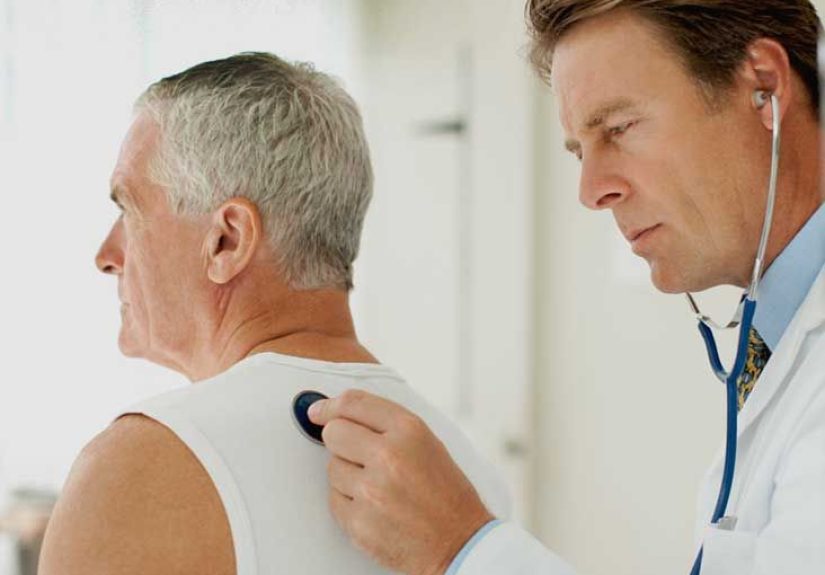
Physical exam
- Reduced breath sounds at the bases
- Crackles or popping sounds (sometimes)
- Faster breathing or increased effort
Pulse oximetry and sometimes blood gases
A finger pulse-ox clip checks oxygen saturation. If oxygen is low or the situation is complex, an arterial blood gas test may be used to evaluate oxygen and carbon dioxide levels.
Imaging
- Chest X-ray: often the first test. It can show hazy areas, lines at the bases, or signs of volume loss.
- CT scan: provides more detail and helps identify causes like mucus plugging, tumors, or compression.
- Ultrasound: sometimes used in hospitals to assess fluid and lung changes at the bedside.
Treatments for Bibasilar Atelectasis
The main goal is simple: re-expand the lung tissue and fix what caused it. Treatment ranges from “do these breathing exercises” to proceduresdepending on severity and cause.
1) Lung expansion: deep breathing and “wake up the bases”
If you’re in a hospital (especially after surgery), you’ll hear this phrase a lot: “Take deep breaths, cough, and move.” It’s not because nurses enjoy naggingit’s because it works.
- Incentive spirometry: a handheld device that encourages slow, deep breaths. Used correctly and consistently, it helps recruit underinflated areas. (Bonus: it gives you something to “win” at while lying in bed.)
- Directed coughing: deep breaths followed by a strong cough helps clear secretions.
- Positioning: sitting upright and changing positions helps ventilation and drainage.
Reality check: Incentive spirometers are common, but research suggests the biggest benefit often comes when they’re part of a full bundledeep breathing, coughing, early mobilization, and good pain controlrather than used alone. In other words, the plastic gadget is helpful, but it’s not magic.
2) Get moving (yes, even a little counts)
Walking, sitting up for meals, and getting out of bed as early as medically safe can significantly reduce atelectasis risk and help resolve mild cases. Movement naturally increases depth of breathing and helps loosen mucus.
3) Airway clearance: break up and remove mucus
If mucus is part of the problem, your care plan may include:
- Hydration (thinner mucus is easier to clear)
- Humidified air or nebulized treatments as prescribed
- Chest physiotherapy (percussion/vibration and breathing techniques)
- Bronchodilators if wheezing/airway narrowing is present
- Mucolytics in selected cases (your clinician decides what fits)
4) Oxygen support (when needed)
If oxygen levels are low, supplemental oxygen can help while the underlying issue is treated. In some cases, clinicians may use positive pressure support (like CPAP/BiPAP) to help keep airways open and recruit lung volumeespecially if sleep apnea, obesity hypoventilation, or significant atelectasis is involved.
5) Treat the root cause
- If infection is suspected: evaluation for pneumonia and treatment (which may include antibiotics, depending on the situation).
- If fluid around the lung is compressing it: treating the effusion (sometimes with drainage) can allow the lung to expand.
- If pain is limiting breathing: optimizing pain control is surprisingly “lung medicine,” because pain-free deep breaths prevent collapse.
- If an airway blockage is suspected: further imaging and, in some cases, bronchoscopy to remove mucus plugs or evaluate an obstruction.
6) Bronchoscopy (when obstruction is likely)
A bronchoscopy uses a flexible scope to look into the airways. It can help remove mucus plugs and identify or address blockages. This is typically considered when conservative measures aren’t enough or when imaging suggests an obstructing process.
Home Care: What You Can Do (Safely) Alongside Medical Guidance
If your clinician says your bibasilar atelectasis is mild and you’re stable, home strategies often focus on expanding the lungs and clearing mucus:
- Practice deep breathing: slow inhale through the nose, hold 1–2 seconds, slow exhale. Repeat several times, multiple sessions daily.
- Move regularly: short walks, gentle stair climbing (if safe), or simply sitting upright more often.
- Stay hydrated (unless you’ve been told to restrict fluids).
- Use prescribed inhalers correctly (proper technique matters more than people think).
- Manage reflux if it triggers cough (a surprisingly common “mucus-maker”).
- Avoid smoking and vapingthey irritate airways and thicken secretions.
Do not ignore worsening shortness of breath, new fever, chest pain, or steadily falling oxygen readings if you monitor at home.
Prevention Tips (Especially After Surgery)
If you’re heading into surgery or recovering from one, prevention is a team sport. Helpful strategies include:
- Early mobilization: get up and walk as soon as it’s safe.
- Deep breathing + coughing routine: schedule it like medicine.
- Incentive spirometer (if provided): use it as instructedslow, deep, consistent.
- Pain control: you can’t breathe deeply if every breath feels like stepping on a LEGO.
- Smoking cessation: stopping before surgery improves airway function and mucus clearance.
Outlook: How Long Does Bibasilar Atelectasis Last?
For mild, temporary atelectasis from shallow breathing or short-term mucus buildup, improvement can happen over days as breathing deepens, mobility increases, and secretions clear. When atelectasis is caused by ongoing problemslike repeated mucus plugging, significant fluid buildup, or an airway blockagethe timeline depends on treating the underlying cause.
One useful mindset: atelectasis is often a signal. Treat it, but also ask: “Why did this happen?” That question guides the most effective plan.
Frequently Asked Questions
Is bibasilar atelectasis serious?
It can be. Small areas may be minor and reversible. Larger areas, low oxygen, or atelectasis caused by obstruction, infection, or fluid may be more serious and needs prompt medical care.
Can it go away on its own?
Mild cases sometimes improve with deep breathing, coughing, hydration, and activityespecially after anesthesia or a brief illness. But “wait and see” isn’t a great plan if symptoms are worsening or oxygen is low.
Does everyone need antibiotics?
No. Atelectasis itself is not an infection. Antibiotics are used when there’s evidence of bacterial infection (like pneumonia), not just because an X-ray shows atelectasis.
Will I always feel it?
Not necessarily. Many people only learn about bibasilar atelectasis from imaging reports. Symptoms show up more when larger areas are involved or when there’s an underlying lung problem.
Real-World Experiences: What People Commonly Describe (and What Helps)
The word “experience” can mean two things here: what atelectasis feels like physically, and what the recovery process feels like emotionally. Below are composite, real-world patterns clinicians often hearshared to make the situation less mysterious and more manageable.
Experience #1: “I had surgery… and suddenly breathing felt like work.”
Many people first run into bibasilar atelectasis after abdominal surgery. They describe a strange combo: they’re not exactly “wheezing,” but they feel short of breath when they stand up, and their chest feels tight or heavy. Often, the biggest obstacle is painevery deep breath pulls on healing tissues. The turning point usually happens when pain is better controlled and a routine starts: sit up, take slow deep breaths, use the incentive spirometer, cough, and walk a short lap. People often say the spirometer felt silly at firstuntil they realized it was giving them feedback and a goal. One common “aha” moment: short, frequent sessions work better than one heroic session followed by four hours of forgetting.
Experience #2: “I wasn’t that sick… why am I so winded?”
Another pattern is the “mild illness, big couch time” scenario. Someone gets a respiratory virus, rests a lot, drinks less water than usual, and coughs weakly because everything hurts. They may not notice atelectasis specifically; they notice they can’t take a full breath and they get tired fast. Clinicians often focus on gentle lung expansion: hydration, frequent position changes, sitting upright, and short walks spaced through the day. People commonly report that the first day of moving around feels worse (because it’s uncomfortable and exposes how deconditioned they feel), but then breathing improves over the next few days as mucus loosens and the lung bases open.
Experience #3: “The scariest part was the oxygen number.”
When atelectasis is found in the hospital, pulse-ox numbers can become emotionally loud. A dip into the low 90s can feel alarming even when it’s expected and correctable. Many people describe relief when someone explains the plan clearly: “We’re going to expand the lungs, clear secretions, and get you moving. This number usually improves as we do that.” Having a concrete checklistten slow deep breaths, cough, sit up, walkturns anxiety into actions. It also helps to understand that oxygen may be used as a bridge, not a lifelong sentence.
Experience #4: “It felt like a setback… until I realized it was fixable.”
Emotionally, atelectasis can feel like your body is betraying you right when you’re trying to recover. The experience becomes easier when the condition is framed as mechanical and solvable: the lungs need expansion, like stretching a stiff muscle. People often do best when they treat lung exercises the way athletes treat rehabsmall, consistent repetitions. They also report that celebrating tiny wins matters: a slightly higher spirometer number, a longer walk, less breathlessness during a shower. Those small improvements add up.
If you take one practical lesson from these experiences, make it this: consistency beats intensity. Lung expansion is a frequent, gentle habitlike brushing your teeth, but for your alveoli.
Conclusion
Bibasilar atelectasis is a common, often reversible finding where the lowest parts of both lungs aren’t fully inflated. It’s frequently linked to shallow breathing after anesthesia, prolonged bed rest, or mucus buildup, but it can also point to compression from fluid or an airway blockage. The core treatmentsdeep breathing, coughing, mobility, hydration, and targeted therapies for the underlying causeare practical, effective, and (thankfully) not complicated. The key is recognizing when it’s mild and improving versus when symptoms or oxygen levels suggest you need urgent medical evaluation.