Table of Contents >> Show >> Hide
- Quick Verdict
- What Exactly Is Blood Sugar Complete?
- Ingredient-by-Ingredient Reality Check
- What Real Science Says About Blood Sugar Supplements
- Real Reviews: What Buyers Seem to Like
- Where Blood Sugar Complete Looks Strong
- Where It Still Falls Short
- Who Might Consider It
- Who Should Be Careful or Skip It
- Can Blood Sugar Complete “Up Sugar Level” Fast?
- Final Review Score
- Extended Real-World Experience Section: What People Usually Go Through
- Conclusion
If you have spent more than seven minutes online looking for a blood sugar supplement, you already know the vibe: bold promises, leafy labels, and enough “natural support” language to make your browser smell faintly like cinnamon. Blood Sugar Complete sits right in the middle of that crowded aisle. It sounds reassuring, it looks wellness-forward, and it clearly targets people who want help with glucose balance without turning their kitchen into a pharmacy.
But here is the grown-up answer: Blood Sugar Complete is best viewed as a support supplement, not a proven diabetes treatment. The best-documented public version of the product I reviewed is a capsule formula that combines chromium, cinnamon bark, nopal cactus, gymnema leaf, bitter melon, fenugreek seed, and stevia leaf. That formula makes sense from a marketing perspective because every one of those ingredients has some kind of blood-sugar reputation. The issue is that reputation and rock-solid clinical proof are not the same thing. In supplement land, ingredients often arrive wearing superhero capes. Human evidence usually shows up in sweatpants holding a clipboard.
Quick Verdict
Bottom line: Blood Sugar Complete looks more credible than the random miracle drops that seem to multiply on marketplace sites overnight, but the real-world evidence still lands in the “possibly helpful for some people, definitely not a replacement for medical care” category. If you are shopping for an all-in-one glucose-support supplement and you understand its limits, it may be worth considering. If you expect it to lower your A1C on autopilot while your diet, sleep, stress, and prescriptions do whatever they want, this product is not a magic wand. It is a maybe, not a miracle.
What Exactly Is Blood Sugar Complete?
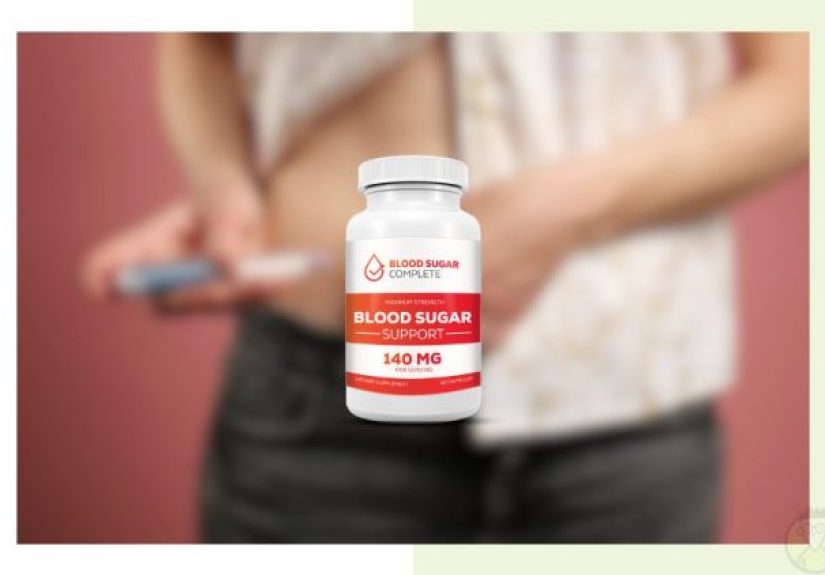
One thing shoppers should know right away is that “Blood Sugar Complete” is not a perfectly standardized product name online. Similar branding appears on different listings, including capsule formulas and liquid drops, which can make apples-to-apples comparison annoyingly hard. The clearest public formula I could verify is a capsule product marketed for blood sugar support and daily wellness. That version lists the following active ingredients per serving profile shown on the product page:
- Chromium – 240 mcg
- Cinnamon bark – 350 mg
- Nopal cactus – 350 mg
- Gymnema leaf – 250 mg
- Bitter melon – 45 mg
- Fenugreek seed – 45 mg
- Stevia leaf – 5 mg
The same public page says the suggested use is 1 capsule, 1 to 3 times daily. At the time of review, it also showed a regular price around $48, a subscription price around $36, and a customer rating of 4.3 out of 5 from 104 reviews, with 81% saying they would recommend it. That is decent social proof, but social proof is not the same thing as clinical proof. Five stars can tell you whether people like the experience. They cannot tell you whether a supplement outperforms placebo, meal changes, or simple timing effects on a glucose meter.
Ingredient-by-Ingredient Reality Check
Chromium: the classic blood sugar supplement ingredient
Chromium has been riding the blood-sugar-support train for years. The problem is that the scientific story is mixed. Some studies suggest it may help certain people, while mainstream diabetes guidance says the benefit is unclear and not reliable enough to recommend broadly. That makes chromium a reasonable “support” ingredient on paper, but not a slam-dunk reason to buy the product. It is the supplement equivalent of a player with potential who keeps showing up in scouting reports but never quite locks down the starting job.
Cinnamon: comforting spice, less comforting certainty
Cinnamon has a great publicist. It sounds natural, familiar, and charmingly non-threatening, like a blood sugar strategy that also belongs in oatmeal. Some studies have found improvements in fasting glucose, but major clinical guidance still says the evidence is inconsistent and not strong enough to treat cinnamon as a dependable blood sugar solution. In plain English, cinnamon is fine in your pantry. As a supplement strategy, it remains more “interesting” than “proven.”
Gymnema, nopal, bitter melon, and fenugreek: promising, but still not plug-and-play
This is where Blood Sugar Complete gets more interesting. Gymnema is commonly marketed as a sugar-craving and glucose-support herb. Nopal cactus is often pitched for blood sugar and digestive support. Bitter melon has long been associated with diabetes support in traditional practice. Fenugreek has small studies behind it as well, especially when taken with meals. Taken together, these ingredients create a formula that sounds thoughtful rather than random.
Still, thoughtful is not the same as settled science. Bitter melon has limited human data and safety questions at larger or less controlled intakes. Fenugreek may help some people, but it also comes with interaction concerns, especially for people on blood thinners. That means the ingredient list is not silly, but it is also not a free pass. A formula can be logical and still not have strong proof that the exact finished product will move the numbers in a meaningful, consistent way.
Stevia: low-calorie sweetness, not a glucose rescue tool
Stevia makes sense here because it contributes sweetness with negligible calories, and it fits the product’s “keep things gentle and plant-forward” image. But it should not be confused with a treatment. It is more of a formulation helper than the star of the show.
What Real Science Says About Blood Sugar Supplements
This is the section where the marketing fog usually clears. U.S. medical guidance is pretty consistent: no dietary supplement has enough evidence to be relied on as a primary way to manage or prevent type 2 diabetes. That does not mean every ingredient is useless. It means the evidence is not strong, consistent, or product-specific enough to justify replacing standard care. Major diabetes organizations keep returning to the same boring, deeply inconvenient truth: healthy eating, physical activity, weight management when appropriate, and prescribed medication still do the heavy lifting.
That matters because supplements are often sold with language that sounds one step away from “fix your glucose naturally.” Regulators have repeatedly warned companies not to market supplements as if they cure or treat diabetes. So when reviewing Blood Sugar Complete, the smartest lens is not “Will this solve my blood sugar?” but rather “Could this be a reasonable add-on for some people, if used carefully and with realistic expectations?” That is a much better question, and usually a much safer one.
Real Reviews: What Buyers Seem to Like
On the public capsule page, the product’s rating sits in respectable territory, and several verified buyers describe feeling that it helped support lower readings or better control when used regularly. A couple of positive reviews mention pairing the capsules with the brand’s glucose tea and feeling that the combination helped them get their sugar “under control.” That kind of feedback is common in the supplement world: people often feel best results when a product becomes part of a larger routine involving fewer carbs, more attention to meals, and more frequent monitoring.
There are also weaker signals that keep the review honest. Not every negative comment is about side effects; some are about shipping or a product not arriving, which affects trust and value. On broader brand review pages, the tone is mixed in a realistic way: some people are enthusiastic, some say they are still waiting to see real changes, and some mainly like the taste or customer service. That actually makes the review picture more believable. When every review sounds like a movie trailer voice-over, it is time to put your wallet in witness protection.
Where Blood Sugar Complete Looks Strong
- The formula is coherent. The ingredients are at least relevant to the blood-sugar-support conversation.
- The public labeling is more transparent than ultra-vague miracle products. You can see the ingredient list and amounts.
- Customer sentiment is positive overall. A 4.3-star average is not perfect, but it is not a disaster either.
- It fits an “adjunct” role well. For someone already working on food choices and consistency, it may feel like a useful add-on.
Where It Still Falls Short
- No strong public evidence for the exact finished formula. Ingredient logic is not the same as product proof.
- Supplement-quality uncertainty still matters. Public marketing pages can emphasize testimonials more than independent verification.
- Interaction risk is real. That is especially true for people taking insulin, other glucose-lowering drugs, or blood thinners.
- Reviews are anecdotal. They are useful for customer experience, not for establishing medical effectiveness.
Who Might Consider It
Blood Sugar Complete may make sense for adults who want a blood-sugar-support supplement, prefer capsules over messy dropper bottles, and understand that the goal is support, not treatment. It may also appeal to people who already track fasting glucose, post-meal readings, or A1C with a clinician and want to add one variable carefully. In that setting, you can at least evaluate whether the product changes anything for you over time instead of relying on vibes, hope, and a very persuasive Instagram comment section.
Who Should Be Careful or Skip It
- Anyone taking insulin or prescription glucose-lowering medication
- Anyone on warfarin or with a bleeding-risk issue
- Pregnant people
- People with kidney concerns or complicated medication regimens
- Anyone tempted to replace prescribed diabetes care with a supplement
If any of those sound like you, the smartest move is to ask your clinician or pharmacist first. Herbal supplements can interact with medications, and “natural” does not automatically mean gentle, predictable, or harmless.
Can Blood Sugar Complete “Up Sugar Level” Fast?
Not really, and this is an important distinction. Blood Sugar Complete is marketed as a product for healthy glucose support, not for rescuing a low blood sugar episode. If your goal is to up sugar level quickly because your glucose has dropped too low, this is the wrong tool. Acute low blood sugar needs fast-acting carbohydrates, not a botanical support capsule. If you are having lows, that is a diabetes-management conversation, not a supplement-shopping problem.
Final Review Score
Formula logic: 7.5/10
Transparency: 7/10
Scientific confidence: 4.5/10
User sentiment: 7/10
Value: 6.5/10
Overall: 6.7/10. Blood Sugar Complete is not junk, but it is not a breakthrough either. It is a reasonable, better-than-average supplement formula in a category where people often want certainty and mostly get nuance. If you use it, use it like a supplement: cautiously, consistently, and with measurements. Do not use it like a miracle. Your pancreas hates being cast in fantasy fiction.
Extended Real-World Experience Section: What People Usually Go Through
The real experience of using a product like Blood Sugar Complete is usually much less dramatic than the ads suggest. Week one is often powered by hope. People start the capsules, promise themselves they are done with late-night snack raids, drink more water, maybe skip a few desserts, and then stare at the glucose meter like it owes them a standing ovation. Sometimes numbers improve quickly. Sometimes they do not. Sometimes the “improvement” is really the result of eating fewer refined carbs for three days and going on two evening walks. Supplements love taking credit for lifestyle cleanup. That is one of their favorite hobbies.
By week two or three, users usually fall into one of three camps. The first group feels encouraged because readings seem steadier, cravings feel a little quieter, or they simply like having a routine that makes them pay attention. The second group feels uncertain because they do not see a dramatic difference and are not sure whether to keep going. The third group gets annoyed because the product costs real money and their numbers are still behaving like rebellious teenagers. That range of experience is normal. Blood sugar is influenced by meals, sleep, stress, exercise, illness, medication timing, hormones, and body weight. A capsule enters that messy system as one small factor, not the conductor of the orchestra.
Another common experience is that people confuse “I feel better” with “my glucose control is better.” Those two things can overlap, but they are not identical. You might feel more in control because you are paying more attention. You might snack less because starting a supplement puts you in a health-focused mindset. You might like the routine enough that you stop skipping breakfast or start checking your readings consistently. All of that can matter. But the most useful question is still the unglamorous one: what happened to fasting glucose, post-meal spikes, and A1C over time?
Reviews also show that experience is not just about biology. It is about convenience, shipping, trust, and whether the product feels worth the cost. A supplement can have a decent formula and still lose points if shipping is slow or results feel too subtle for the price. That is why “real reviews” matter, but also why they need context. A five-star review may reflect taste, easy ordering, fast delivery, or personal optimism just as much as it reflects measurable blood sugar change. A one-star review might be about service rather than the supplement itself. Good reviews tell you what buying and using the product feels like. They do not settle the science.
The healthiest mindset is to treat Blood Sugar Complete like a controlled experiment, not a lucky charm. Pick a timeframe. Keep diet reasonably consistent. Track fasting and post-meal readings. Pay attention to medication timing. Notice whether cravings, energy, or digestive comfort change. Then decide. That approach is less exciting than “my aunt’s neighbor dropped her sugar overnight,” but it is a lot more useful. Real progress in blood sugar management usually comes from habits that survive ordinary Tuesdays, not from dramatic stories that sound great in comment sections.
So yes, some people will try Blood Sugar Complete and genuinely like it. Some will feel nothing. Some will decide it is a solid sidekick but not the hero. That may be the fairest summary of the real-world experience. It can be part of a better routine, but it probably is not the routine itself. The product may support the process. It does not replace the process.
Conclusion
Blood Sugar Complete earns a cautious thumbs-up as a support supplement with a sensible formula and decent user sentiment, but not as a proven solution for diabetes or high blood sugar. The ingredients are relevant. The marketing is familiar. The reviews are encouraging enough to justify curiosity. But the strongest evidence in diabetes care still points back to the fundamentals: smart food choices, physical activity, weight management when needed, proper monitoring, and prescribed treatment when indicated. If you want to try Blood Sugar Complete, do it with eyes open, expectations calibrated, and your actual numbers in front of you. Hope is nice. Data is nicer.