Table of Contents >> Show >> Hide
- What Your Furnace Blower Motor Actually Does
- The “Blower Speed Trick” for More Usable Heat
- Safety First: What Pros Do Before Changing Blower Speed
- Blower Motor Types: Why It Matters for Speed Adjustments
- How Pros “Boost” Furnace Output with Blower Adjustments
- Side Effects of Changing Blower Speed
- Simple Ways to “Boost” Your Furnace Before Touching Blower Speed
- FAQs About Blower Motor Speed and Furnace Output
- Real-World Experiences: Living with Blower Speed Tweaks (Extra Insights)
If your house feels chilly even though the furnace has been chugging away for hours, there’s a good chance the problem isn’t the furnace itself – it might be the blower motor speed. The right blower speed can make your home feel warmer, your system run smoother, and your energy bills a little less painful.
And yes, there is a “trick” here – but it’s not a magic button. It’s understanding how blower speed works and how a small, smart adjustment (done safely and usually by a pro) can boost your furnace’s usable output and comfort without replacing the whole system.
In this guide, we’ll break down what blower motor speed actually does, when changing it can help, when it can hurt, and what HVAC pros typically do when they “tweak the blower.” By the end, you’ll be informed enough to have a real conversation with a technician instead of just nodding at jargon like “CFM,” “static pressure,” and “ECM motor.”
What Your Furnace Blower Motor Actually Does
Your furnace has two main jobs:
- Burn fuel (or use electric resistance) to create heat.
- Use the blower fan to move that heat into your home through the ductwork.
The blower motor is the part that pushes air across the heat exchanger and out the supply ducts. Its speed controls how many cubic feet of air per minute (CFM) the system moves. Change the speed, and you change:
- Supply air temperature – Slower air picks up more heat (warmer air); faster air picks up less heat per pass (cooler but more volume).
- Comfort and drafts – Higher speed often means more air noise and drafty vents; lower speed feels gentler but may not reach distant rooms as well.
- Motor energy use – The fan itself uses electricity, and power draw depends on speed and static pressure in the duct system.
Most furnaces leave the factory with “default” blower settings that work okay in many homes. But ducts, filters, and real-world static pressure vary a lot, which is why good installers and techs often adjust blower speed during commissioning or tune-ups.
The “Blower Speed Trick” for More Usable Heat
Here’s the basic idea behind the “trick”:
In heating mode, slightly reducing blower speed (within the manufacturer’s acceptable range) can increase the temperature of the air coming out of your vents and make your home feel warmer and more comfortable.
When air moves more slowly across the heat exchanger, it spends a bit more time there and absorbs more heat. You get hotter supply air and fewer “cool-feeling” blasts of air. Many furnaces are intentionally set to a lower blower speed in heating than in cooling for this very reason.
But – and this is a big but – you can’t just drop the blower speed without thinking. If you go too low, you risk:
- Overheating the heat exchanger (high temperature rise).
- Tripping safety limits and shutting the furnace down.
- Hurting efficiency and shortening equipment life.
So the “trick” isn’t “always slow it down.” The trick is having the blower set so your furnace stays in the manufacturer’s recommended temperature rise range, your static pressure is reasonable, and your comfort is maximized. That’s why HVAC pros check numbers, not vibes.
When Slowing the Blower Can Help
Dialing the heating blower speed down a notch can sometimes help when:
- The air from the vents feels lukewarm, even though the thermostat says the furnace is running.
- You feel drafts or “windy” vents that don’t feel particularly warm.
- The installer left the blower on a higher universal speed that’s better suited to cooling than heating.
In those cases, a pro may move the heating speed from a “high” tap to a “medium” tap or adjust an ECM setting to reduce airflow slightly while keeping temperature rise in spec.
When Speeding the Blower Up Makes Sense
Increasing blower speed can be the right move when:
- The furnace is hitting its high-temperature limit and shutting off (short cycling) because air isn’t moving fast enough.
- You’ve upgraded to a more restrictive high-MERV filter and airflow dropped.
- Some rooms get little airflow and ducts are borderline undersized.
In these situations, a higher blower speed can move more air across the heat exchanger, lower the temperature rise, protect the furnace, and improve air delivery (as long as static pressure stays within acceptable limits).
When You Should Absolutely Not Touch Blower Speed
You should never start swapping wires and flipping dip switches if:
- You don’t know how to measure temperature rise or static pressure.
- You’re not comfortable working around electricity or gas.
- Your furnace manual specifically warns against homeowner adjustments.
Many pros straight-up tell homeowners that randomly changing blower speed can damage equipment or hurt performance. They’re not just gatekeeping – the blower speed has to match furnace size, ductwork, and coil.
Safety First: What Pros Do Before Changing Blower Speed
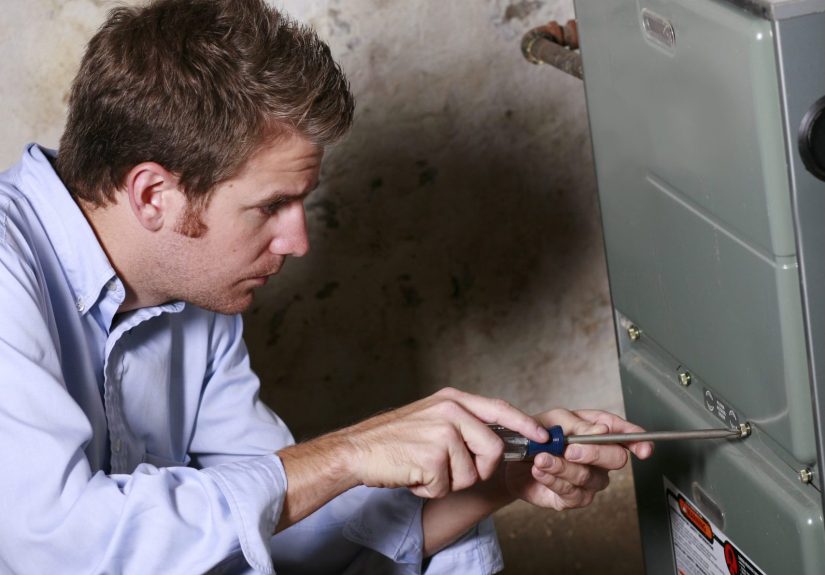
Every legitimate HVAC guide says the same thing: power off first, then open the panel. Before changing blower speed, a tech will:
- Shut off the furnace at the breaker and service switch.
- Verify power is off before touching any wiring or components.
- Often turn off gas if they’ll be inside the burner compartment for a while.
Then they’ll usually:
- Check and replace dirty filters that are choking airflow.
- Inspect the blower wheel for dust buildup that reduces CFM.
- Look at the duct system for obvious restrictions (closed registers, crushed flex, blocked returns).
Only once they know the system is reasonably clean and unobstructed do they consider adjusting blower speed.
Blower Motor Types: Why It Matters for Speed Adjustments
How you adjust blower motor speed depends heavily on the type of motor:
1. PSC (Permanent Split Capacitor) Single-/Multi-Speed Motors
These are older, less efficient motors with multiple speed “taps.” Each speed has its own colored wire (e.g., black for high, blue for medium, red for low). The control board assigns one speed for cooling, one for heating, and sometimes one for continuous “fan on.”
Changing the heating blower speed often means moving the heating call wire to a different speed tap on the board (for example, from high to medium). It sounds simple, but the tech should verify the new airflow is still within the furnace’s rated range.
2. ECM Variable-Speed or Constant-Torque Motors
Newer high-efficiency furnaces often use ECM (electronically commutated) motors. These adjust speed automatically to maintain airflow or torque, and they’re more efficient and quieter.
Instead of simple wires, ECM motors usually rely on dip switches, programming pins, or a control board configuration. A tech may:
- Set airflow for a specific CFM per ton (for cooling) and a lower CFM for heating.
- Use dip switches or installer menus to tweak the heating airflow by ±6–18% depending on design.
3. Two-Stage and Variable-Capacity Furnaces
These systems are designed to run at lower blower speeds most of the time. They ramp up only when needed to meet demand, which improves comfort and reduces noise. Blower speeds here are tightly coordinated with the control logic of the furnace – random changes can cause weird behavior or error codes.
How Pros “Boost” Furnace Output with Blower Adjustments
Here’s a simplified version of what a competent HVAC technician might do when asked to “make the furnace heat better” using blower settings:
Step 1: Define the Actual Problem
They’ll ask questions like:
- “Is it not hot enough, or is it hot but uneven?”
- “Do you feel strong airflow from the vents or just a gentle breeze?”
- “Has anything changed recently – new filter, duct work, renovation, new thermostat?”
Step 2: Measure Temperature Rise
Using a thermometer or probe, they measure the air temperature going into the furnace (return) and coming out (supply). The difference is the temperature rise. The furnace nameplate will list an acceptable range, often something like “Temperature Rise: 35–65°F.”
If the rise is:
- Too low – Air is moving too fast; blower speed may be too high.
- Too high – Air is moving too slowly; blower speed may be too low or ducts are restricted.
Step 3: Check Static Pressure
Static pressure is basically “air resistance” in your duct system. High static pressure means your blower has to work hard to move air, which affects both airflow and motor life. Pros measure this with a manometer at test ports on the supply and return.
If static pressure is already too high, increasing speed may not help – it might just stress the motor more and still not move enough air.
Step 4: Adjust Speed and Re-Test
Only after these measurements do they adjust blower speed (taps or ECM settings), then recheck:
- Temperature rise (must be in spec).
- Static pressure (kept in a safe range for the blower and ducts).
- Amperage draw on the motor (should not exceed rated current).
This is the “boost your furnace output with this trick” in practice: fine-tuning blower speed until the furnace delivers its rated heat comfortably and safely.
Side Effects of Changing Blower Speed
Even when done correctly, changing blower speed can have noticeable side effects:
- Noise: Higher speeds usually mean more fan noise and duct “whoosh.” Lower speeds are quieter.
- Comfort balance: Slower speeds often feel warmer and gentler but might not push air as well to distant rooms.
- Humidity control (in systems with AC or heat pumps): Higher airflow can reduce dehumidification; lower airflow can increase it, but only to a point before you hurt efficiency.
- Efficiency: Too low airflow can reduce furnace efficiency and risk overheating; too high airflow can waste blower energy and deliver cooler-feeling air.
Simple Ways to “Boost” Your Furnace Before Touching Blower Speed
Before you even think about blower adjustments, hit the easy wins that nearly every HVAC pro recommends:
- Replace the air filter regularly. A clogged filter is like making your furnace breathe through a pillow – the blower works harder, airflow drops, and comfort suffers.
- Check that all supply and return vents are open. Don’t hide vents behind furniture or rugs.
- Seal obvious duct leaks. Leaky ducts in basements or attics dump heat where nobody is sitting on the couch enjoying it.
- Use reasonable thermostat settings. Cranking the thermostat doesn’t make the furnace blow hotter air – it just runs longer.
These steps improve airflow and reduce static pressure, which makes any future blower adjustment work better.
FAQs About Blower Motor Speed and Furnace Output
Does lowering blower speed always make my house warmer?
No. It can make the air at the vents feel warmer, but if you go too low on airflow, the furnace may overheat or fail to deliver enough heat to distant rooms. The key is staying within the furnace’s rated temperature rise and airflow range.
Can I change blower speed myself?
Technically, some homeowners do. Practically, it’s safer and smarter to let a pro handle it. You need basic electrical safety knowledge, the furnace manual, and ideally tools to measure temperature rise, static pressure, and motor amps.
Will adjusting blower speed void my warranty?
If your changes cause overheating or incorrect operation, it can absolutely lead to warranty issues. Many manufacturers expect adjustments to be done by licensed technicians following their instructions.
Is upgrading to a variable-speed blower worth it?
In many cases, yes. Variable-speed furnaces and ECM motors are quieter, more efficient, and better at maintaining even temperatures, though they cost more up front. Over time, the energy savings and comfort can make the upgrade worthwhile for many households.
Real-World Experiences: Living with Blower Speed Tweaks (Extra Insights)
So what does this all look like in everyday life? Let’s walk through a few realistic scenarios that show how blower motor speed tweaks can play out.
Case 1: The “Always Cold Living Room” Problem
Imagine a two-story home where the thermostat is in a cozy hallway, but the big open living room never quite warms up. The homeowner notices strong airflow but lukewarm air at the vents. The furnace cycles on and off frequently, and the family is wrapped in blankets half the winter.
An HVAC tech comes in, measures temperature rise, and finds it’s on the low end of the nameplate range – air is moving quickly but not picking up as much heat as it could. Static pressure is acceptable, and the ducts are reasonably sized.
The tech drops the heating blower speed one tap. After the adjustment, the temperature rise moves toward the middle of the spec range, and the air from the vents feels distinctly warmer. The furnace runs a bit longer per cycle, but the house feels more consistently comfortable. The “trick” wasn’t anything exotic – just aligning blower speed with what the furnace and ductwork can actually handle.
Case 2: The Overheating Furnace with New Filters
In another home, the owner upgrades to ultra-high MERV filters to help with allergies. Great idea for air quality, not so great for static pressure. A few weeks later, the furnace starts short cycling – turning on, running briefly, then shutting down on a high-limit safety.
Here, the blower speed had been set for a more open, less restrictive filter. The new filters added resistance, dropping airflow and pushing the temperature rise above the safe range. Instead of blaming the furnace, the tech explains what changed: the system is now starved for air.
The fix? They either choose a less restrictive filter or increase blower speed (within reason) to move enough air through the tighter filter. Once the airflow is restored, temperature rise returns to normal, the furnace stops tripping, and the homeowner keeps better filtration without sacrificing performance.
Case 3: Upgrading to a Variable-Speed Furnace
A third homeowner is tired of noisy, on–off blasts of air and hot-cold swings. Their old single-speed furnace works, but it’s loud and not particularly efficient. They upgrade to a high-efficiency furnace with a variable-speed ECM motor.
Instead of one or two fan speeds, the new blower ramps gently up and down. Most of the time it runs at low speed, quietly circulating warm air and keeping temperatures steady. When it’s really cold or the thermostat is raised several degrees, the blower speeds up just enough to meet demand.
There’s no magical “trick” here – it’s just better control over blower speed. But from the homeowner’s perspective, it feels like the system “just knows” what the house needs. And over a season or two, the electric and gas bills confirm that smarter airflow really does pay off.
What You Can Take Away from These Stories
All three scenarios share the same core lesson: blower speed is not a random setting; it’s a tuning knob that affects heat output, efficiency, and comfort. When used thoughtfully – with measurements, not guesswork – it can turn a “meh” furnace into one that feels noticeably better without replacing every major component.
As a homeowner, your best move is to:
- Keep filters clean and vents open.
- Pay attention to how the air feels and sounds at the registers.
- Ask your HVAC technician specifically about temperature rise, static pressure, and blower settings during maintenance visits.
That simple question – “Is my blower speed set correctly for heating?” – can open the door to exactly the kind of fine-tuning that boosts furnace output and comfort. The “trick” isn’t a secret; it’s having a pro who’s willing to dial in the details.
In short: don’t be afraid of blower motor speed – just respect what it controls. Used wisely, it’s one of the most powerful tools for squeezing the best real-world performance out of the furnace you already own.