Table of Contents >> Show >> Hide
- What Is a Blox Fruits Trade Calculator?
- How Trading Works in Blox Fruits (So the Calculator Makes Sense)
- The Three Numbers That Matter: Price, Value, and Demand
- How Trade Calculators Decide Win/Fair/Lose (W/F/L)
- Step-by-Step: Use a Blox Fruits Trade Calculator in 60 Seconds
- Specific Examples: What a Calculator Helps You Catch
- Permanent Fruits and Game Passes: Why They Warp the Market
- Common Mistakes That Turn “Fair” Into “Why Did I Do That?”
- Scam-Proofing: The Safe-Trading Checklist
- Pro Tips for Consistently Better Trades
- FAQ: Blox Fruits Trade Calculator Questions People Actually Ask
- Player Experiences: 500+ Words of Trade-Life Lessons (The Fun Part)
- Conclusion
Trading in Blox Fruits is a lot like ordering food with friends: everyone swears their pick is the best,
nobody wants to overpay, and somehow there’s always one person trying to trade you “a totally rare item” that feels suspiciously like a napkin.
That’s why a Blox Fruits Trade Calculator existsto take the “trust me bro” out of negotiations and replace it with numbers,
trends, and a little sanity.
In this guide, you’ll learn what a trade calculator actually measures, how Blox Fruits trading rules can block a “fair” deal from even going through,
and how to use calculators and value lists without turning into a spreadsheet goblin. You’ll also get real, practical examples and a long section of
player-style experiences at the end (because nothing teaches faster than a story about someone accidentally paying “mythical prices” for “rare results”).
What Is a Blox Fruits Trade Calculator?
A Blox Fruits trade calculator is a toolusually on a third-party trading websitethat estimates whether a trade looks like a
Win, Fair, or Lose (often written as W/F/L). Instead of relying on vibe checks,
it combines a few signals to estimate relative worth: community trading value, demand/popularity, and sometimes the in-game price of an item.
Here’s the key idea: the game has official prices (like Beli or Robux costs), but the community also creates “market value” based on what
players actually want right now. A good calculator tries to model that living, breathing economywhere a fruit can spike in demand because it’s meta,
recently reworked, hard to find, or just got hyped by a thousand videos overnight.
How Trading Works in Blox Fruits (So the Calculator Makes Sense)
Before you trust any calculator, you need to understand the in-game trading systembecause sometimes a trade can be “fair” on paper and still fail
due to game rules.
Where you can trade
- Café (Second Sea): A popular safe-zone trading hub where many players gather to swap stored items.
- Mansion (Third Sea): Another major safe-zone trading hub, often packed with higher-level traders and bigger offers.
What you can trade
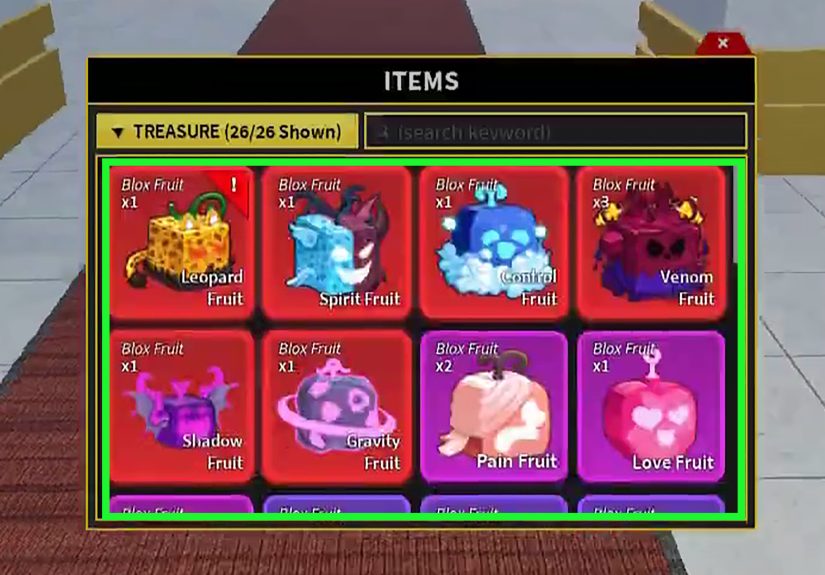
Trading generally revolves around stored fruits and certain Robux-related items such as game passes and some
purchasable items (and in some cases, permanent items if they’ve been stored properly). The important part is the word stored:
trading pulls from your storage/inventory slots, not from something you’re holding in your hand like a pirate showing off a shiny coin.
Hard limits that affect every trade
- Item slots per trade: There’s a cap on how many items you can put in a single trade window per side.
- Value-difference rule: Trades can be blocked if the price/value gap between both sides is too large.
- Trade cooldowns/limits: You can’t trade endlessly all day; there are built-in limits that reset over time.
- Storage constraints: If you don’t have inventory space, trades can fail or be impossible to accept.
A calculator helps with the “is this a good deal?” question. But you still need to pass the game’s “is this trade allowed?” question.
That’s why the smartest traders use a calculator and check the in-game rule restrictions before they celebrate.
The Three Numbers That Matter: Price, Value, and Demand
Most trade calculators blend three concepts. Different sites label them differently, but they generally map to:
1) In-game price (Beli/Robux)
This is the official cost set by the game (especially visible for items tied to Robux). It’s useful, but it doesn’t always predict trading value.
Sometimes an item is “cheap” in-game but trades higher because it’s convenient, rare in circulation, or essential for progression.
2) Community trading value
This is the big one. It’s the market’s best guess at “what people will actually pay.” A community value can shift quickly with updates,
new metas, or changes in supply. Think of it like the stock market, except instead of quarterly earnings you have raid builds, PvP combos,
and someone yelling “W OFFER!!!” in all caps.
3) Demand (popularity)
Demand explains why two items with similar “value” can trade differently. A high-demand fruit is easier to flip (trade again),
so traders often pay a premium for it. Demand also acts like an early-warning system: when demand drops, the “value” often follows.
How Trade Calculators Decide Win/Fair/Lose (W/F/L)
In most calculators, your offer and their offer each get a total value score. The tool then labels the trade:
- Win: You’re receiving more value/demand than you’re giving.
- Fair: Both sides are roughly even.
- Lose: You’re giving more than you’re receiving.
That sounds simple, but real trading is messy. So a good calculator also helps you answer the more important question:
“Even if it’s fair, is it smart for me?”
Example: A trade can be “fair” but still bad if you’re giving away four easy-to-trade items for one item that’s hard to move later.
Or you might accept a small “L” if it completes a goal (like upgrading your build, unlocking progress, or setting up a future flip).
Step-by-Step: Use a Blox Fruits Trade Calculator in 60 Seconds
- Pick a reliable calculator/value list. Use one that updates values regularly and clearly separates value, demand, and price.
- Add your items. Select what you’re offering (fruits, game passes, stored items).
- Add their items. Select what you’re receiving.
- Check W/F/L AND demand. If the trade is “Fair,” look at demand to judge how easy it will be to trade later.
- Sanity-check the in-game rules. Confirm slot limits, price-difference restrictions, and that both players have storage space.
- Negotiate the “tiny add.” If the calculator shows a slight imbalance, a small add-on can turn a shaky deal into a clean one.
Specific Examples: What a Calculator Helps You Catch
Because trading values shift over time, the safest way to learn is by patterns, not rigid “this fruit equals that fruit forever” claims.
Here are examples of what calculators help you notice, even when the exact numbers move.
Example 1: “Fair value” but terrible demand
You offer a popular, high-demand fruit. They offer two items that add up to “fair value” but have weak demand.
The calculator might label it “Fair,” but the demand score tells you the truth: you’re trading a fast-selling item
for slow-moving inventory that might sit in your storage like leftovers you keep “meaning to eat.”
Example 2: The in-game rule trap (value difference)
Sometimes two sides agree on a trade, but the game blocks it due to the value/price difference restriction.
A calculator that shows trade difference or “allowed vs not allowed” can save you from ten minutes of
confused chair-sitting followed by, “Wait… why is the Accept button mad at us?”
Example 3: The “4-slot problem”
You’re trying to upgrade into a single higher-tier item by bundling multiple smaller items.
But trade windows have a limited number of slots. A calculator helps you optimize:
instead of throwing in four random items, you choose the four that maximize value and demand.
That’s how you turn “I’m offering a pile of stuff” into “I’m offering a clean package deal.”
Permanent Fruits and Game Passes: Why They Warp the Market
Permanent items and game passes often behave differently than normal fruits because they represent Robux value, long-term convenience,
and account-wide benefits. That’s why you’ll see them command “overpay” offers from players who want quality-of-life boosts
(like storage space) or permanent access to a fruit they love.
This is also where scams and confusion tend to spikebecause players talk fast when Robux is involved. If you’re trading around
permanents/game passes, use a calculator, check demand, and never rush. A fair trade today is still fair tomorrowunless it wasn’t fair.
Common Mistakes That Turn “Fair” Into “Why Did I Do That?”
Chasing hype without checking stability
If a fruit is exploding in popularity, values can be unstable. Calculators that show demand trends or recent trade activity are especially useful here.
If you buy at peak hype, you might be the person holding the bag when demand cools off.
Ignoring storage space
Trades can fail if either player can’t store what they’re receiving. Before you trade, make sure you have roomespecially if you’re receiving
multiple fruits or a new item type.
Confusing “price” with “value”
In-game price is official, but trading value is social. A calculator exists because those two numbers often disagreesometimes dramatically.
Don’t let a big in-game price convince you it’s automatically a big trading win (or vice versa).
Scam-Proofing: The Safe-Trading Checklist
Most Blox Fruits trading scams don’t come from the trade windowthey come from deals made outside official systems:
“Give me this first, then I’ll give you that.” That’s classic scam territory.
- Never do “trust trades.” If someone says “you go first,” your wallet should develop legs and run away.
- Avoid off-platform deals. Trades that require external payments, accounts, or “middleman” arrangements are high risk.
- Use official report tools. If someone is scamming or pressuring you into suspicious deals, report it through the platform’s tools.
- Slow down at the Accept button. Double-check every item. Scammers love last-second swaps.
Pro Tips for Consistently Better Trades
Trade for demand first, value second
High-demand items are easier to flip. Even if two trades are “equal value,” the one that gives you higher demand usually keeps you flexible.
Bundle smart
If you only have a limited number of item slots, use calculators to build the strongest 3–4 item package you can.
Aim for a mix of value and demand so your offer feels “liquid,” not “random.”
Negotiate with small adds
When a trade is close, don’t jump straight to a major overpay. Add a small, high-demand item to push it into “fair”
while keeping your bigger assets intact.
Use two sources when the trade is huge
For big, high-stakes deals, compare at least two calculators/value lists. If they disagree wildly, it’s a sign the market is volatileor the list is outdated.
FAQ: Blox Fruits Trade Calculator Questions People Actually Ask
Is a trade calculator “official”?
Usually not. Most trade calculators are community tools built on player trends. They’re helpful, but they’re not the game itself.
Why do different calculators show different values?
Because each site tracks the market differently. Some weigh demand more, some track recent trades, and some update faster than others.
Treat calculators like weather forecasts: useful, but not a guarantee.
What does W/F/L mean?
W/F/L stands for Win, Fair, or Loseshorthand for how the trade looks based on estimated values and trends.
Can a trade be “fair” and still be a bad idea?
Absolutely. If you’re trading away flexible, high-demand items for something hard to trade later, “Fair” might still feel like an L in real life.
Player Experiences: 500+ Words of Trade-Life Lessons (The Fun Part)
If you hang around the Café or Mansion long enough, you’ll start seeing the same trading stories repeat like a looping sea shanty. Here are some
experience-style lessons that mirror what many traders run intoespecially the moment they start using a Blox Fruits trade calculator.
1) The “I got a Fair trade… why do I feel broke?” moment.
One common experience is accepting a calculator-labeled “Fair” deal that looks perfect on paperonly to realize you traded away an item that
everyone wants for something that is technically equal value but painfully slow to move. The next day you’re back at the trade tables,
and suddenly nobody wants what you just received unless you discount it. This is where you learn the first real rule of trading:
liquidity matters. High demand is not just a bonus statit’s your ability to recover, pivot, and upgrade without begging for offers.
2) The “chair simulator” experience.
Trading hubs can feel like a waiting room. You sit, you stand, you sit again. Someone joins, then immediately leaves. Another person joins and opens with
“add” before you even put an item in. A calculator helps here because it gives you confidence to move fast when a deal is goodand to shut down bad deals
quickly. Instead of negotiating for 20 minutes just to learn it’s a loss, you can glance at a value/demand read and decide whether it’s worth continuing.
Over time, this reduces trading fatigue. You spend less time arguing and more time upgrading.
3) The “hype spike” roller coaster.
A fruit becomes trendy. Your feed fills with “NEW BEST BUILD” videos. Suddenly everyone is offering big. The calculator’s demand score climbs,
and the value often climbs with it. Theninevitablythings cool off. Players move to the next shiny thing. And now the fruit you overpaid for
is still strong, but fewer people are desperate for it. Traders who use calculators well learn to spot the difference between
healthy demand and temporary hype. The goal isn’t to avoid hype entirely (profit often lives there),
but to avoid being the last buyer at the peak.
4) The “tiny add” miracle.
Many memorable trades come down to small additions. A deal is close, both sides are stubborn, and the chat starts to feel like a courtroom drama.
Then someone tosses in a small, high-demand add-on, and suddenly the trade flips from “meh” to “done.”
This is where calculators shine: they help you choose the right add. Not the biggest addthe smartest add.
Over time, players build a mental toolbox of small items that consistently smooth negotiations without draining their vault.
5) The “I almost got scammed, but I slowed down” lesson.
The most important experiences aren’t about profitthey’re about protection. A lot of players remember the first time someone tried to rush them:
“accept fast,” “don’t check,” “it’s the same,” “trust.” A calculator can’t stop every scam, but it can remove the pressure of uncertainty.
If you already know the value range, you’re harder to manipulate. Combine that with a simple habitpause before accepting and verify every slot
and your chances of getting tricked drop dramatically.
The end result of all these experiences is simple: a trade calculator doesn’t replace your judgment; it strengthens it. It turns trading from
“emotional bargaining” into “informed decision-making,” while still leaving room for strategy, goals, and the occasional fun gamble.
Use the tools, learn the patterns, and remember: the best traders aren’t the loudestthey’re the calm ones who always seem to be upgrading.
Conclusion
A Blox Fruits Trade Calculator is your shortcut to smarter tradeshelping you compare value, demand, and fairness while avoiding
the most common traps: bad liquidity, hype spikes, inventory issues, and rushed decisions. Use calculators to estimate W/F/L, but always sanity-check
the in-game rules and your personal goals. Sometimes the best trade isn’t the biggest “Win”it’s the one that moves you closer to the build,
item, or flexibility you actually want.