Table of Contents >> Show >> Hide
Breast shapes are a lot like eyebrows: sisters, not identical twins. Some are round, some are fuller on the bottom, some sit farther apart, and some prefer to ignore symmetry altogether. In other words, there is no single “correct” breast shape, no gold-medal geometry, and definitely no universal blueprint hidden in a secret drawer somewhere.
If you have ever looked in the mirror and wondered whether your breasts are “normal,” here is the reassuring answer: probably yes. Breast shape can vary widely based on genetics, hormones, age, body weight, pregnancy, breastfeeding, and how your connective tissue behaves over time. Popular labels such as round, teardrop, asymmetrical, side-set, or tubular are mostly descriptive terms. They can be useful for understanding bra fit or explaining a cosmetic concern, but they are not a scorecard for health, beauty, or femininity.
This guide breaks down what breast shapes really mean, why breasts change over time, what kinds of variation are usually harmless, and which changes deserve a call to a healthcare professional. Because breast knowledge is power, and also because panic-googling at 1 a.m. is exhausting.
What determines breast shape?
Breast shape is influenced by a mix of anatomy and life experience. Breasts contain glandular tissue, fatty tissue, connective tissue, ducts, the nipple, and the areola. The amount and distribution of fat and glandular tissue can affect whether breasts look fuller on top, fuller on the bottom, wider set, narrower, or more projected. Connective tissue and skin elasticity also matter because they help support breast tissue against gravity, which, to be fair, is extremely committed to its job.
Genetics
Genes help determine your baseline breast size, the way tissue develops during puberty, nipple and areola appearance, and how much natural asymmetry you have. If the women in your family have fuller lower poles, larger areolas, or noticeable size differences from side to side, you may see similar traits.
Hormones
Estrogen and progesterone shape breast development during puberty and continue to affect the breasts during menstrual cycles, pregnancy, breastfeeding, and menopause. That is why breasts may feel fuller, more tender, or lumpier at certain times of the month, then settle down again later. Hormones are basically interior designers with very strong opinions.
Age
Breasts do not stay frozen in their teenage form. Over time, glandular tissue may shrink, fatty tissue may change, and the connective tissue that supports the breasts may lose elasticity. This can make breasts seem softer, less full, or lower on the chest than they used to be. These changes are common and often have more to do with time and hormones than anything dramatic or dangerous.
Pregnancy, breastfeeding, and weight changes
Pregnancy and breastfeeding can change the volume and distribution of breast tissue, sometimes temporarily and sometimes for good. Weight gain or weight loss can also affect breast shape because breasts contain fatty tissue. The result may be more fullness, less fullness, more sagging, or a shift in how the breasts sit in a bra.
Common breast shapes
There is no official medical taxonomy that sorts all breasts into neat little shape buckets, but these common descriptive labels can help explain normal variation.
Round
Round breasts tend to have fairly even fullness on the top and bottom. In bra-fitting language, this shape often fills many standard bra cups with fewer fit surprises. In real life, though, even round breasts can have subtle side-to-side differences.
Teardrop
Teardrop breasts are usually a bit fuller on the bottom than the top. This shape is extremely common. They may look gently sloped rather than equally full above and below the nipple.
Bell-shaped
Bell-shaped breasts are often narrower at the top and fuller toward the bottom, especially in people with larger breast volume. They can overlap visually with teardrop breasts, just with a more pronounced lower fullness.
Asymmetrical
Asymmetrical breasts differ in size, shape, height, or fullness from one side to the other. Mild asymmetry is very common. One breast may sit slightly lower, feel fuller on the outside, or simply be a bit larger. Most of the time, this is a normal body variation rather than a medical problem.
Side-set or wide-set
Side-set breasts have a wider space between them. Some people also describe them as wide-set. They may naturally point a bit outward rather than straight ahead. This can affect cleavage and bra choice, but it is still well within the realm of normal.
East-west
East-west is another informal term for breasts whose nipples point outward in opposite directions. It sounds like a road trip, but it is simply a visual description, not a health diagnosis.
Slender
Slender breasts may have a narrower base and more length than width. They may look longer or less full through the upper breast. Again, this is just one version of normal anatomy.
Relaxed or pendulous
Some breasts have looser tissue and a softer, lower hang, especially with age, after pregnancy, or after weight changes. Clinicians may use the term ptosis for sagging or drooping. That sounds intimidating, but in many cases it simply describes the way breast tissue sits on the chest wall.
Tubular
Tubular breasts are a specific developmental variation in which the breasts may look narrow, oval, or tube-like rather than round. They can also involve a wider gap between the breasts, larger areolas, or downward-pointing nipples. Tubular breasts are generally harmless, though some people seek evaluation because of appearance or breastfeeding concerns.
What is considered normal?
Normal is broad. Very broad. It includes differences in shape, size, nipple direction, areola color, areola size, breast density, and how the breasts change over time. Breasts are not required to match each other, behave consistently during your cycle, or look like a lingerie ad assembled by a committee.
It is normal for one breast to be slightly larger than the other. It is normal for areolas to be round, oval, darker, lighter, larger, or smaller. It is normal for nipples to be flat, more prominent, or even inverted if they have always been that way. It is also normal for the breasts to feel fuller or more tender before a period and to change with pregnancy, breastfeeding, weight changes, and menopause.
Breast density is another normal variable. Dense breasts have more fibrous and glandular tissue and less fatty tissue. This does not mean anything is wrong, but it matters because dense tissue can make mammograms harder to interpret and is associated with a higher risk of breast cancer. Breast density is something you learn from imaging, not from just looking in the mirror.
When a change is worth checking out
Most breast shape differences are harmless. What matters more is whether a change is new, sudden, or clearly different from your usual pattern. A lifelong size difference is one thing. A sudden shape change in one breast is another.
Make an appointment if you notice:
- a new lump or thickened area that feels different from surrounding tissue
- a sudden change in the size, shape, or contour of one breast
- skin dimpling, puckering, redness, or an orange-peel texture
- a nipple that newly turns inward
- spontaneous discharge from one nipple, especially if it is bloody
- a rash, scaling, or persistent skin change on the nipple or areola
- persistent focal pain that does not follow your usual cycle or keeps getting worse
Many of these changes turn out to be benign, including cysts, fibrocystic changes, infections, or noncancerous growths. Still, it is smart to get them checked rather than trying to negotiate with your anxiety in the bathroom mirror. Self-awareness matters because some breast cancers are found between routine mammograms.
Breast shapes and bra fit
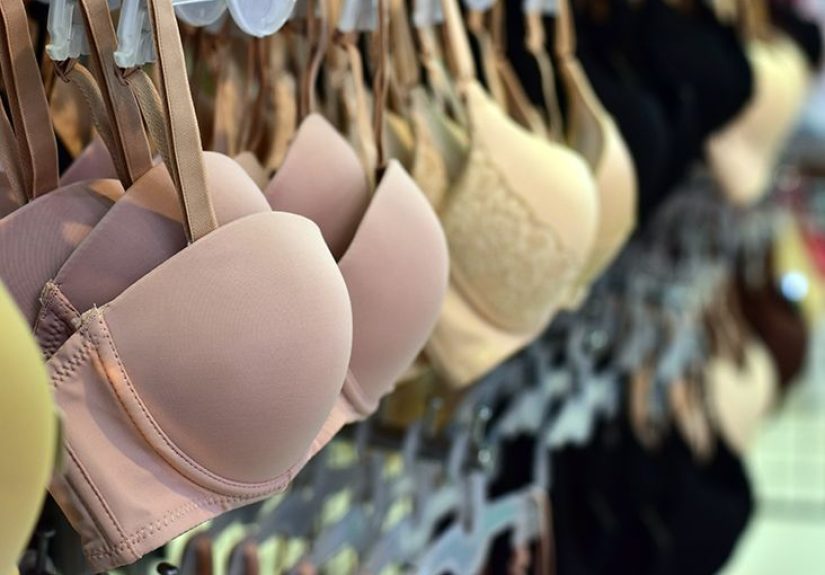
Breast shape can make a huge difference in how a bra fits. A cup size alone does not tell the full story. Two people may both wear the same size but need totally different styles because one has fuller bottoms, another has more side fullness, and a third has significant asymmetry.
For example, fuller-bottom breasts may do well with bras that provide lift from below. Side-set breasts may feel better in styles that bring tissue inward. People with asymmetry often fit the larger breast and use a removable insert on the smaller side if they want better balance in clothing. If underwires dig, cups gape, straps slide, or the band rides up, shape may be the issue, not the number on the tag. Bra sizing can feel like a prank, but a good fit really can improve comfort, posture, and confidence.
Breast self-awareness without obsession
You do not need to memorize every pore on your areola like you are studying for a final exam. But it is helpful to know what is normal for you. That means paying attention to how your breasts usually look and feel across your cycle and over time. If you menstruate, the week after your period is often a better time for self-checking because the breasts may be less swollen or tender.
Breast self-awareness is different from performing a rigid, anxiety-inducing monthly inspection with a stopwatch. The goal is familiarity, not fear. If something changes and stays changed, especially on one side, bring it up with a healthcare professional.
For screening, current U.S. guidance for average-risk women recommends mammography every other year starting at age 40 through age 74. If you have a strong family history, prior chest radiation, certain genetic risk factors, or previous high-risk findings, your screening plan may need to start earlier or include additional imaging.
Experiences people often have with breast shapes
One of the most common experiences is realizing that one breast does not match the other. This often becomes obvious during puberty, when one side seems determined to show up early while the other side is apparently still reading the invitation. For many people, the difference becomes less dramatic over time, but some degree of asymmetry remains into adulthood. This can affect bra fit, swimsuit shopping, and self-confidence, especially if tight clothing makes the difference more noticeable. In daily life, though, mild asymmetry is so common that it is better viewed as a body variation than a body flaw.
Another frequent experience is cyclical change. Breasts may feel bigger, heavier, or lumpier before a period and then calm down afterward. Someone might spend three days convinced that catastrophe has arrived, only for the “problem” to vanish after their cycle starts. This pattern is often linked to normal hormonal fluctuation or fibrocystic change. It can still be uncomfortable, but it usually follows a familiar rhythm. Keeping track of symptoms in relation to the menstrual cycle can help people tell the difference between “my usual hormonal nonsense” and “this is new and needs attention.”
Pregnancy and breastfeeding also change the relationship many people have with their breasts. A person who once had very even, full breasts may later notice more softness, more asymmetry, or larger areolas. Another person may find that one breast produces more milk than the other and stays slightly larger even after weaning. These shifts can feel surprising, especially when the body no longer resembles its earlier version, but they are common after the breast tissue expands and then settles. For some people, the emotional part is bigger than the physical part: they are not just noticing a new shape, they are adjusting to a new identity and a new body at the same time.
There is also the experience of aging into a breast shape that seems less “perky” than it used to be. The word sagging gets thrown around with all the subtlety of a falling piano, but softer or lower breasts with age are expected changes. Skin elasticity shifts, tissue distribution changes, and gravity remains undefeated. Many people only start worrying because they have absorbed years of edited, airbrushed imagery that treats natural evolution like a design error. In reality, relaxed breasts are still normal breasts.
Some people experience persistent frustration because ready-to-wear bras seem designed for an imaginary standard breast. A person with side-set breasts may struggle to get centered support. Someone with a fuller lower breast may find that the cup wrinkles on top. A person with tubular breasts may feel that nothing sits quite right, no matter what the size tag says. This can lead to unnecessary shame when the real problem is poor garment design, not defective anatomy. Often, a better style, a fitter who understands shape, or small adjustments like inserts or different cup constructions can make a big difference.
Finally, many people describe a turning point when they stop asking, “Do my breasts look normal?” and start asking, “Are these changes normal for me?” That shift is powerful. It moves the focus away from comparison and toward self-awareness. Instead of chasing symmetry or perfection, they pay attention to comfort, function, health, and what has actually changed. That mindset is both calmer and smarter. Your breasts do not need to look like anyone else’s. They just need your attention when something truly changes.
Conclusion
Breast shapes come in a wide range, and most differences in contour, fullness, nipple direction, or symmetry are completely normal. Shape is influenced by genetics, hormones, age, pregnancy, weight changes, and natural tissue support. Informal labels like round, teardrop, asymmetrical, side-set, or tubular can be helpful for description, but they do not define your health or your worth.
The most important takeaway is not to chase some imaginary perfect breast shape. It is to know your baseline, expect change over time, and get new or suspicious changes checked promptly. In other words: curiosity is good, panic is optional, and comparison is rarely useful.




![How to create a content style guide [+ free guide & examples]](https://2quotes.net/wp-content/uploads/2026/03/how-to-create-a-content-style-guide-free-guide-examples-tuSyLoTW-thumb.jpg)