Table of Contents >> Show >> Hide
- Who Was Gareth Williams?
- The Grim Discovery in a North Face Bag
- Early Investigation: Espionage, Private Life, and Public Curiosity
- Coroner vs. Police: Two Conflicting Narratives
- Could He Really Have Locked Himself in the Bag?
- The Leading TheoriesAnd Why None Are Proven
- Why the Case Still Fascinates
- What We Actually Know
- Lessons from the Gareth Williams Case
- Experiences and Reflections: Living with Unanswered Questions
If you pitched this as a spy thriller, an editor might tell you to dial it back:
a brilliant British codebreaker, working with MI6 and GCHQ, found dead in his London flat,
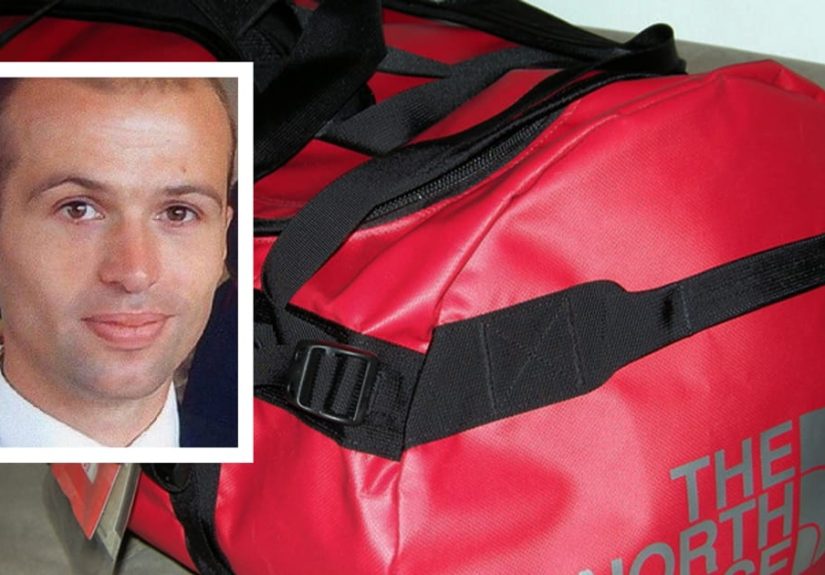
naked, locked inside a red North Face sports bag sitting in his bathtub. The bag is
padlocked on the outside. The key is somehow inside, under his body. There are no
fingerprints on the lock, no sign of forced entry, and the heating is turned up high in
the middle of August.
But this isn’t a Netflix plot. It’s the real-life case of Gareth Williams, sometimes
dubbed the “spy in the bag,” whose 2010 death in Pimlico has become one of the most
puzzling and controversial mysteries in recent British history. Official versions and
expert opinions disagree, conspiracy theories thrive, and a straightforward answer still
refuses to appear.
Who Was Gareth Williams?
Gareth Wyn Williams wasn’t just another civil servant. Born in 1978 in Anglesey, Wales,
he was a mathematical prodigy who began studying university-level math while still in
secondary school and graduated with a first-class degree at just 17. That rare talent
eventually led him to GCHQ, the UK’s signals intelligence agency, and then on
secondment to SIS, better known as MI6.
Colleagues and family described him as quiet, intensely private, and highly dedicated to
his work. Friends didn’t talk about wild nights out or reckless behavior; they remembered
a cyclist, a puzzle-solver, and a man who lived a fairly orderly life. Professionally, he
worked on highly sensitive projects, collaborating with American partners including the NSA
on intercepting and analyzing communications linked to terrorism and organized crime.
In short: the sort of person who, if found dead in deeply bizarre circumstances, was never
going to slip quietly out of the news cycle.
The Grim Discovery in a North Face Bag
In August 2010, Gareth failed to show up for work in London. After several days with no
contact, colleagues requested a welfare check. On August 23, police arrived at his
government-owned flat in Pimlico. Inside, they found an eerily tidy apartment, curtains
drawn, and the heating inexplicably on full blast despite the summer weather.
In the en-suite bathroom, officers discovered a bright red North Face holdall placed in
the bathtub. A reddish liquid was seeping out. When they cut open the bag, they were hit
by the overpowering smell of decomposition. Inside was Gareth’s naked body, curled up
in a fetal position. The zippers of the holdall had been secured together with a small
padlock. The key, incredibly, was found inside the bag, underneath his body.
There were no signs of a struggle, no obvious injuries, no evidence that someone had forced
their way into the flat. Forensically, it was almost too clean: there were no usable
fingerprints on the padlock or the rim of the bathtub. This “absence of evidence” became
one of the core reasons many observers suspected that more had happened here than an
eccentric DIY escape act gone wrong.
Early Investigation: Espionage, Private Life, and Public Curiosity
From day one, media coverage mixed the gravity of a suspicious death with the voyeurism
that often surrounds intelligence scandals. Reports surfaced that Gareth had occasionally
browsed bondage websites and owned a significant collection of high-end women’s clothing
found in the flat. These details fueled lurid headlines about a possible sex game gone
fatally wrong.
But key investigators and the coroner would later stress that there was no evidence
linking those private interests directly to his death. Williams’s family strongly rejected
the idea that he lived a risky or reckless double life, and the inquest ultimately treated
the more sensationalized claims with skepticism.
Meanwhile, the case drew international attention. Because of Gareth’s work with GCHQ and
MI6and reports of cooperation with the NSAthe FBI was briefed, and various intelligence
angles were considered. Was this a targeted hit by a foreign power? A botched operation?
An internal security failure? Or something more mundane and tragic that just happened to
involve a spy?
Coroner vs. Police: Two Conflicting Narratives
The 2012 Inquest: “Unnatural and Likely Criminally Mediated”
In 2012, coroner Fiona Wilcox delivered a narrative verdict that electrified public
interest. After hearing evidence from forensic scientists, pathologists, and bag-locking
experts, she concluded that Gareth Williams’s death was “unnatural and likely to have
been criminally mediated.” In plain English: on the balance of probabilities, someone else
was involved and his death was likely unlawful.
The inquest noted that it would have been “highly unlikely” for Gareth to have locked
himself inside the North Face bag, especially without leaving fingerprints. The lack of
forensic tracesno prints on the padlock or the bathwas seen as suspicious rather than
reassuring.
The 2013 Met Police Review: “Probably an Accident”
A year later, the Metropolitan Police came out with a very different emphasis. After a
further review in 2013, Scotland Yard announced that the “most probable” scenario was
that Gareth had locked himself in the bag and died by accident. In this version, the
tragedy was the result of a solo escapology or bondage experiment gone fatally wrong,
not a murder or spy-vs-spy operation.
This conclusion directly clashed with the coroner’s earlier stance and left many people,
including Gareth’s family, deeply dissatisfied. Critics argued that the “self-inflicted
accident” theory demanded a series of improbable feats: getting into the bag, pulling the
zippers closed, locking the padlock from the outside, avoiding leaving fingerprints, and
then somehow dropping the key under his own body.
The 2024 Forensic Review: No New DNA, No New Answers
Hope for a scientific breakthrough resurfaced when an independent forensic review was
commissioned, leveraging more recent advances in DNA technology. The results, announced
in 2024, were anticlimactic: no new DNA profiles were found, and there was no firm
evidence that a third party was in the flat at the time of Gareth’s death. The review
essentially left the police position intactsuggesting he was likely alonewhile doing
nothing to close the credibility gap with the coroner’s earlier findings or with public
skepticism.
Officially, the case remains open to new information. Unofficially, it remains stuck in a
strange limbo between “probably an accident” and “this really doesn’t look like one.”
Could He Really Have Locked Himself in the Bag?
One of the most persistent questions in the Gareth Williams case is also the most
practical: is it physically possible to lock yourself in that kind of bag?
During the inquest, experts conducted hundreds of attempts to replicate the scenario by
climbing into a similar North Face holdall and locking it from the inside. Across around
400 attempts, none of the volunteers fully succeeded. One expert said there was a
“theoretical” possibility it could be done, but in real-world conditionsconfined space,
stress, and no second chancesit would be extremely unlikely.
Later, a search-and-rescue specialist, Peter Faulding, tested the same idea again as part
of a Channel 5 documentary, reportedly trying to lock himself into a comparable bag
hundreds of times. He concluded that even an expert escape artist would struggle, putting
himself firmly in the “someone else must have done this” camp.
The police, for their part, maintain that “unlikely” does not equal “impossible.” This is
the pivot point of the entire case: whether you see the bag as a bizarre but plausible
one-person accident, or a staging that almost screams third-party involvement.
The Leading TheoriesAnd Why None Are Proven
Over the years, several theories have circulated about how and why Gareth Williams died.
None of them have been conclusively proven, but they explain why the phrase “some suspect
foul play” refuses to disappear.
1. A Sex Game Gone Wrong
This is the tabloid favorite: Gareth, exploring bondage or escapology, climbs into the
bag voluntarily and miscalculates his safety margin. The wardrobe of women’s clothing and
his documented visits to bondage sites are used as supporting details.
The problem? There’s no clear evidence of another participant, no signs of a planned
“session,” and nothing to link those private interests directly to the bag scenario.
The coroner and family both pushed back hard against over-interpreting his personal life,
and the absence of gloves, fingerprints, and clear staging marks still feels odd if this
was purely solo experimentation.
2. Espionage and Foreign Involvement
Given Gareth’s work on sensitive communications, Russia and other foreign actors have
inevitably appeared in speculative accounts. Some former intelligence figures and media
commentators have floated the idea that he might have been targeted for recruitment,
refused to cooperate, and paid the priceor that he uncovered something dangerous.
However, no solid, publicly available evidence directly ties his death to a foreign
operation. These theories live in the gray zone of “plausible but unproven,” fueled by
logical possibility and the long history of intelligence rivalries, but not backed by
conclusive facts.
3. An Accident, Poorly Managedand Possibly Covered Up
Another theory sits halfway between accident and conspiracy: perhaps Gareth died during a
private experiment or operation, and otherspossibly colleagues or security personnel
discovered the scene and attempted to “tidy up” in a way that protected secrets but
destroyed evidence. This could, in theory, explain the lack of fingerprints, the delayed
missing-person report from MI6, and the family’s ongoing belief that “secret services
dark arts” might have played a role.
Again, though, this remains in the realm of suspicion rather than proven fact. Official
investigations have never publicly admitted any such scenario.
Why the Case Still Fascinates
The Gareth Williams story sits at the intersection of several things the public finds
irresistibly compelling: secret intelligence work, an apparently impossible crime scene,
institutional opacity, and a victim whose brilliance makes his death feel like a loss far
beyond the personal level.
Documentaries such as The Spy in the Bag: New Revelations, along with detailed
investigative pieces in outlets like Wired and long-read features across British and
international media, have kept the case alive in the public imagination. Some focus on
the science of the bag; others on the politics of intelligence accountability, or on the
very human grief of a family who feel they never got the full truth.
Add in fictionalized versionssuch as the BBC drama London Spy, loosely inspired
by the caseand Gareth Williams has become as much a cultural reference point as a real
person whose death is still not satisfactorily explained.
What We Actually Know
Strip away the speculation and you’re left with a surprisingly short list of solid facts:
- Gareth Williams was a gifted mathematician and codebreaker working for GCHQ and MI6.
- He was found dead on August 23, 2010, inside a locked North Face holdall in his bathtub in Pimlico.
- There were no signs of forced entry, no obvious injuries, and no clear forensic evidence of another person in the flat.
- The 2012 inquest concluded his death was “unnatural and likely to have been criminally mediated.”
- The 2013 Metropolitan Police review said the most probable explanation was a self-inflicted accident.
- A 2024 forensic review found no new DNA evidence and did not alter the official police position.
Everything beyond thatmotives, timelines, and who (if anyone) was with Gareth in his
last momentsremains uncertain.
Lessons from the Gareth Williams Case
The “spy in the bag” mystery isn’t just a true-crime curiosity; it’s also a case study in
how we deal with uncertainty, especially when secrecy and national security are involved.
For one, it highlights how delayed reporting and poor coordination between agencies can
compromise an investigation. The coroner openly criticized MI6 for failing to raise the
alarm sooner when Gareth did not show up for work, noting that this delay likely cost
investigators valuable forensic evidence.
It also shows how quickly a person’s private life can be turned into a public spectacle,
sometimes overshadowing a sober look at the facts. The more sensational aspects of
Gareth’s personal interests grabbed headlines, but they may have distracted from harder,
less dramatic questions about procedure, accountability, and the physical realities of
the crime scene.
Finally, the case underlines something uncomfortable: sometimes, even with modern forensic
tools, expert witnesses, and years of review, the truth remains stubbornly out of reach.
Not every story gets a tidy third act.
Experiences and Reflections: Living with Unanswered Questions
When you dig into a case like Gareth Williams’s, you quickly realize that the “mystery”
isn’t just about what happened in that Pimlico bathroom. It’s also about how people respond
when the usual narratives don’t quite fit.
For many readers, the first reaction is disbelief: how can a grown man zip and padlock
himself into a North Face holdall without help? If you’ve ever tried to cram a weekend’s
worth of clothes into a suitcase and had to sit on the lid, the idea of folding yourself
into a bag, grabbing a padlock, sliding it through the zippers, and dropping the key under
your own body feels almost absurd. That physical implausibility is exactly why so many
people instinctively lean toward foul play.
Then there’s the spy factor. Most of us will never know what it’s like to handle classified
intelligence or sit at the intersection of global surveillance systems. Cases like this
become a rare, if imperfect, window into a world we’re usually only allowed to see in
fiction. That gap between the secrecy of Gareth’s job and the public nature of his death
fuels suspicion: if agencies can’t tell us what he was working on, can we trust them to
tell us everything about how he died?
On a more personal level, the story taps into a quieter, more universal experience: living
with questions that never fully resolve. Most of us won’t face mysteries on the level of
an MI6 codebreaker, but almost everyone has some version of an unanswered “why” in their
livesa sudden loss, an inexplicable decision, a friendship or relationship that ended
without closure.
In that sense, Gareth’s case is a magnified version of something many people know
emotionally, if not factually: sometimes you have to keep going without the clean, logical
explanation you feel you deserve. Families in unsolved or disputed cases often describe
this as a kind of limbo, a state where grief can’t fully settle because the story still
feels incomplete. Gareth’s relatives have openly expressed that they do not feel they’ve
been given the whole truth, and you can sense, even from a distance, how heavy that must be.
For journalists, investigators, and true-crime fans, the Williams case is also a reminder
to be careful with the stories we build. It’s tempting to pick a theoryspy assassination,
sex game gone wrong, tragic accidentand then search for details that back it up. But the
responsible approach is messier: holding multiple possibilities in mind, respecting the
evidence, and admitting where the facts simply run out.
Finally, there’s a broader civic lesson. When institutions handle sensitive cases badly
late reporting, inconsistent messaging, or visible reluctance to release informationthey
don’t just damage trust in that one investigation. They fuel a general sense that powerful
organizations can’t be fully trusted, which in turn supercharges conspiracy theories even
in cases where the simplest explanation might actually be true. Whether Gareth Williams
died because of foul play or a tragic solo experiment, the way his case was managed will
be studied for years as an example of how not to balance secrecy, transparency, and
public confidence.
In the end, “British Gareth Williams found dead in a North Face bag” remains a headline
that feels more like the hook for a thriller than the closing line of a real investigation.
Some suspect foul play; others say accident. For now, the only honest answer is that the
full story is still zipped upsomewhere between what we know, what we can prove, and what
we may never be allowed to see.